
 +995 551 50 18 84




If you wish to buy a ready-to-move-in flat in Georgia — one that you can view, assess the condition of and move into once the paperwork is finalised — you are dealing with the secondary market. Buying a second-hand property in Georgia involves several consecutive steps: selecting a property, checking the details in the Public Register, carrying out a legal assessment of the seller’s documents, physically inspecting the flat, agreeing on the terms of payment, signing the contract, registering the title with the authorities and taking possession of the property. Foreign nationals are generally entitled to purchase flats in Georgia; however, the specific property and the seller must be verified before any money is transferred.
The secondary market is attractive because of its transparency: the flat already exists and can be viewed. At the same time, there are certain specific considerations to bear in mind — the property’s history, any potential encumbrances, technical defects in the building and risks associated with the financial transactions. This guide covers the entire process, from choosing a property to receiving the keys.
Buying a second-hand flat in Georgia: the key points in a minute
In general, a foreign buyer may purchase a ready-to-move-in residential flat in Georgia. To complete the transaction, it is necessary to verify the registered owner and the property via the NAPR, agree on the contract and payment terms, register the transfer of ownership, and take possession of the flat by signing a handover certificate.
| Question | Short answer |
|---|---|
| Can a foreigner buy a flat? | Generally speaking, yes, subject to the legal status of the property and restrictions on agricultural land |
| Do you need a residence permit to buy a property? | No, a residence permit in itself is not a general prerequisite for a purchase |
| Tax on a standard flat purchase | There is usually no separate tax on the transfer of title payable by the buyer |
| Property registration | 150 GEL — 4 working days; 270 GEL — 1 working day; 350 GEL — on the day of application |
| NAPR electronic statement | 13 GEL — 1 working day; 52 GEL — on the day of application |
| Verification of signatures via NAPR | 7 GEL, if the relevant service is used |
| Do I need a notary? | Not in all transactions; it depends on the documents and the procedure followed |
| Is it possible to buy online? | Yes, through a representative with the appropriate power of attorney |
| When does the buyer become the owner? | Following the state registration of the transfer of rights |
| Does buying a property lead to a residence permit? | Not automatically; for one of the short-term residence permit schemes, you must own suitable property worth more than the equivalent of $150,000 and meet other conditions |
The NAPR timeframes relate to the registration service, not the entire transaction. Verification of documents, bank transfers and the handover of the flat may take additional time.
The rates have been confirmed on the official website NAPR.
What counts as a second home
For the purposes of this article, ‘second-hand property’ refers to a ready-to-move-in flat that is being resold by the current owner. It is important to understand that the mere fact of registration of ownership does not automatically determine the market segment. Check the status of the building and the property, the seller and the subject matter of the contract — these factors determine which market you are dealing with.
The secondary market does not necessarily mean an old Soviet-era building. A ready-to-move-in flat in a new development, built three years ago and being resold by a registered owner, also falls within the secondary market. If the seller transfers rights under a contract for a property under construction, the legal structure of the transaction may be different.
This distinction is of practical importance. A purchase on the secondary market means that the property has already been registered, it has a cadastral code, details of the title can be checked with the National Agency of Public Registry of Georgia (NAPR), and the transfer of title takes place via the standard procedure: a contract plus state registration.
Second-hand properties and new-builds: a comparison
| Criterion | Secondary housing | New-build (under construction) |
|---|---|---|
| Actual readiness | The property is available for viewing | The flat will be ready at some point in the future; it is not possible to assess its current condition |
| Opportunity to view | Yes: the flat, the entrance hall, the courtyard, the neighbours | Restricted: project, showroom or lower floors only |
| Due diligence | The current title to the property, its history of ownership transfers and any encumbrances are checked | The developer, planning permission documents and the terms of the contract are checked |
| Additional costs | Notary (if required), registration, and possibly renovation | Registration after handover, often involving finishing work or additional payments |
| Occupancy period | Following the completion of the formalities and the actual handover of the flat | Once construction has been completed and the project has been handed over |
| Key risks | Hidden defects, history of encumbrances, technical condition of the house | Construction delays, changes to specifications, developer risks |
| Room for negotiation | Generally speaking, it depends on the seller and the property | It depends on the developer and the market situation |
Pros and cons of secondary housing
The main advantage of a second-hand flat is the chance to assess what you’re buying before handing over the money. You’re not looking at a rendering, but at real windows, walls and building services. You can walk through the entrance hall, have a look at the courtyard, chat to the neighbours, and check whether the lift is working and how well the building is maintained. The actual infrastructure of the neighbourhood – shops, transport links and car parks – is already in place, and you can check it out in person rather than just on a map.
Another practical advantage is speed. Once the contract has been signed, the title registered and the flat has actually been handed over in a vacant and ready-to-use condition, you can move in or start preparing to let it out. The rental income you receive will depend on demand, the condition of the property, the terms of the current tenancy and management costs. If the seller is open to discussing the price and the property has been on the market for some time, there is genuine scope for negotiation.
On the secondary market, you can also gauge actual rental demand: by looking at property listings and consulting property management companies, you can get a sense of how readily flats in that particular block are being let.
The drawbacks are also significant. Hidden technical issues are the main risk in the second-hand property market. Outdated services, unauthorised alterations, signs of water damage beneath fresh plaster, and outstanding utility bills. The property’s ownership history may be unclear: multiple transfers of title, inheritance, and potential disputes. A limited choice of floor plans and the need for an additional budget for repairs are further arguments against such purchases.
Who is best suited to buying a second-hand home?
- For those who want to move in quickly and aren’t prepared to wait for the building to be completed.
- Buyers for whom it is essential to view the flat before paying.
- For investors who wish to start preparing the property for letting immediately after completion of the sale.
- For those who choose a specific house or street, rather than just a neighbourhood.
- Buyers on a fixed budget who wish to negotiate the price.
- For people who value an established infrastructure and neighbours they know.
The choice between the secondary and primary markets depends on the specific property, the price, the reasons for buying and one’s willingness to accept the risks associated with each option. There is no one-size-fits-all answer here.
How to look for a second-hand flat and compare listings
Start by considering your budget, the purpose of the purchase and your essential requirements for the property. Don’t rely solely on photographs: check whether the flat is ready to move into, who the registered owner is, whether there are any tenants, and whether furniture is included in the price.
Listings can be viewed on the MyHome.ge and SS.ge websites, as well as through estate agents. However, the price quoted in a listing does not necessarily correspond to the final transaction price.
| What to compare | How to check |
|---|---|
| Price per square metre | Divide the cost of the flat by its floor area, checking which floor area is specified |
| State of repair | View the flat and assess whether any additional work is required |
| Object status | Request a cadastral code and a NAPR extract |
| Floor and view | Check in person, rather than just from photographs |
| Monthly payments | Request property management fees and utility bills |
| Room for negotiation | Compare similar offers and discuss the terms with the seller |
| Readiness for handover | Find out when the seller or tenants will vacate the flat |
For the initial shortlist, select 5–10 properties, then narrow the list down to 2–3 flats for technical and legal checks. This is the recommended procedure, not a mandatory requirement.
Where to buy a second-hand property
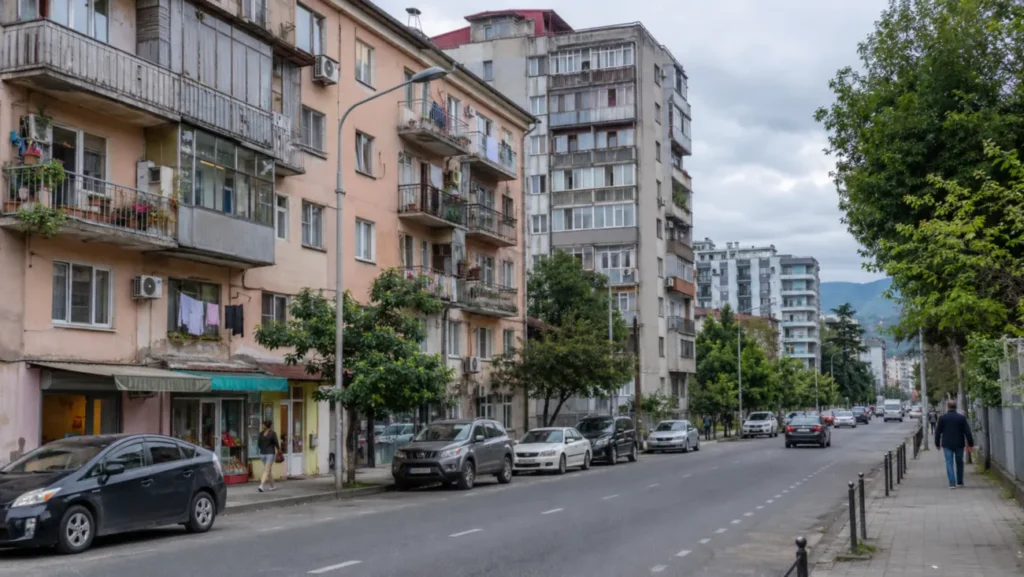
The choice of location directly determines what the flat will be suitable for and what costs you can expect after the purchase.
Batumi — one of the most vibrant markets for ready-to-move-in properties in Adjara. A significant proportion of the available properties are concentrated here: flats by the sea, in the Old Town, in the central districts and along the New Boulevard. In Batumi, it is crucial to pay attention to humidity: the coastal climate creates conditions conducive to mould growth in poorly ventilated rooms. In Batumi’s tourist sectors, demand can vary significantly depending on the season. For a specific property, analyse monthly bookings, comparable listings, actual rates and management costs.
When considering year-round rentals, it is worth assessing the location in terms of its accessibility for long-term tenants: transport links, shops and parking. Property management companies in Batumi operate in different ways, and the condition of communal areas varies depending on the specific residential complex.
Tbilisi — a market for permanent residence and long-term lettings. The capital offers a more diverse housing stock; long-term rental demand should be assessed separately by neighbourhood and type of flat. Older properties in Vake or the historic centre are attractive for their atmosphere, but require careful inspection of the condition of the floors, electrical wiring and utilities. Saburtalo is a more modern residential area with well-developed infrastructure. When choosing a property in Tbilisi, transport links, proximity to the metro and the condition of the building’s internal infrastructure are important factors.
Gonio and the surrounding area — a resort area south of Batumi. The secondary market here is limited, and the infrastructure is less developed. Properties in Gonio are suitable for personal use or seasonal letting, but for permanent residence, you need to carefully assess transport links and the availability of amenities. Price data for the Gonio market is patchy: it is best to refer to current listings and the opinions of local experts.
Price trends in the residential property market are monitored by the National Statistics Service of Georgia (Geostat), although historically the index has primarily covered new residential properties in Tbilisi. It is not possible to apply this data to the secondary market in Batumi or Gonio without further analysis. It is best to check actual transaction prices with specialists working in the specific market.
For more information about the city’s districts, see the article ‘Batumi: overview of neighbourhoods, infrastructure and house prices“.
Where to buy a second-hand flat
| Location | What is it suitable for? | What to check particularly carefully |
|---|---|---|
| Batumi (city centre, boulevard) | Personal use, short-term lettings, resale | Humidity and ventilation, home management, parking, seasonal demand |
| Batumi (residential areas) | Long-term let, permanent residence | Transport links, condition of the property, communal facilities |
| Tbilisi (city centre, Vake) | Permanent residence, long-term tenancy | Condition of floors and services in older buildings, parking |
| Tbilisi (Saburtalo, new neighbourhoods) | Permanent residence, rentals for families | Management company, transport, infrastructure |
| Gonio and the surrounding area | Holiday accommodation, seasonal rentals | Transport distance, seasonal variations in infrastructure, facility management |
How can you tell if the price of a second-hand flat is overpriced?
Don’t compare a flat with the average price for the city; instead, compare it with similar properties in comparable buildings and locations.
For example, a customer is considering three hypothetical offers:
| Flat | Area | Price | Price per m² |
|---|---|---|---|
| А | 45 м² | $63 000 | $1 400 |
| B | 50 m² | $75 000 | $1 500 |
| В | 60 m² | $84 000 | $1 400 |
The prices in the table are for illustrative purposes only and are provided solely to explain the calculation.
The same price per square metre does not necessarily mean the purchase is equally good value. Take into account the condition of the property, its legal status, the floor it is on, the view from the window, whether there is a lift and parking, management fees, and the need for additional investment.
To work out the total cost, compare:
The price of the flat + registration fees + necessary repairs + furniture and appliances + other costs associated with getting the flat ready.
Do not use the advertised yield or the price of a similar flat in another neighbourhood as the sole basis for your decision.
Ready-to-move-in flats in Batumi
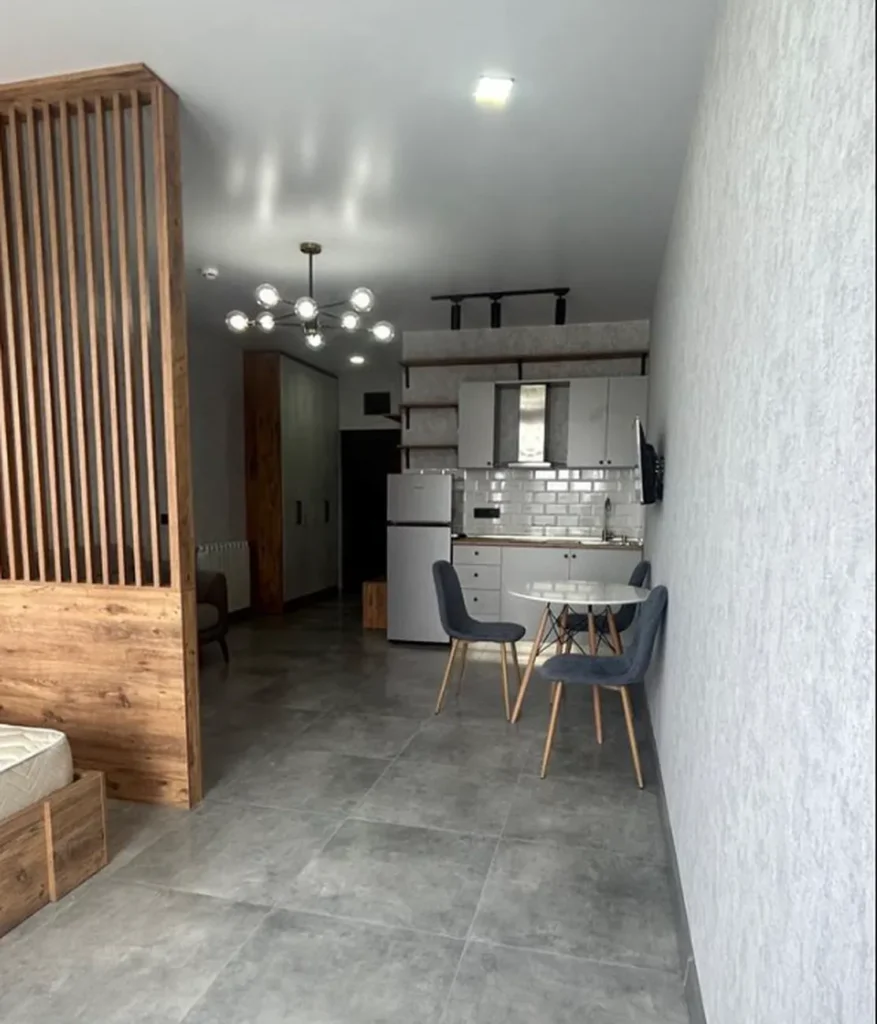
 Вторичная недвижимость


 39м²

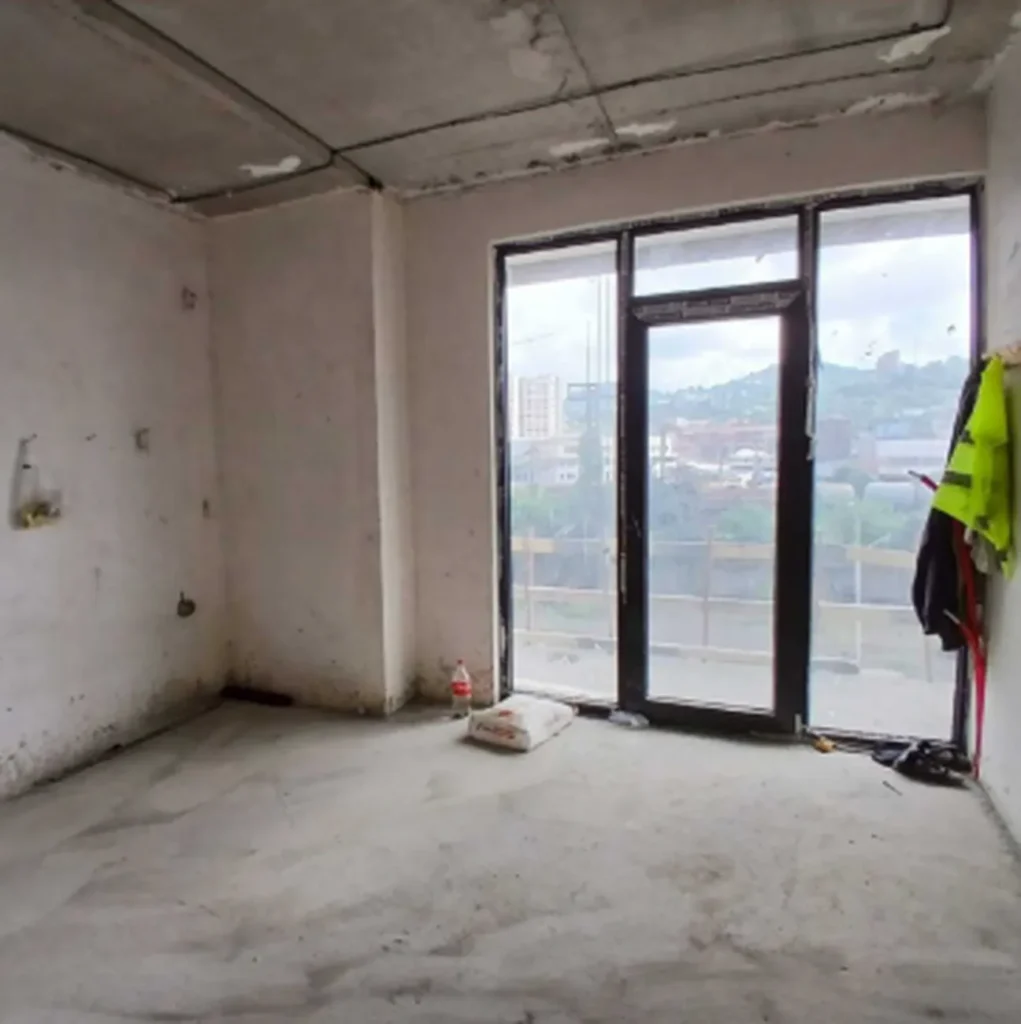
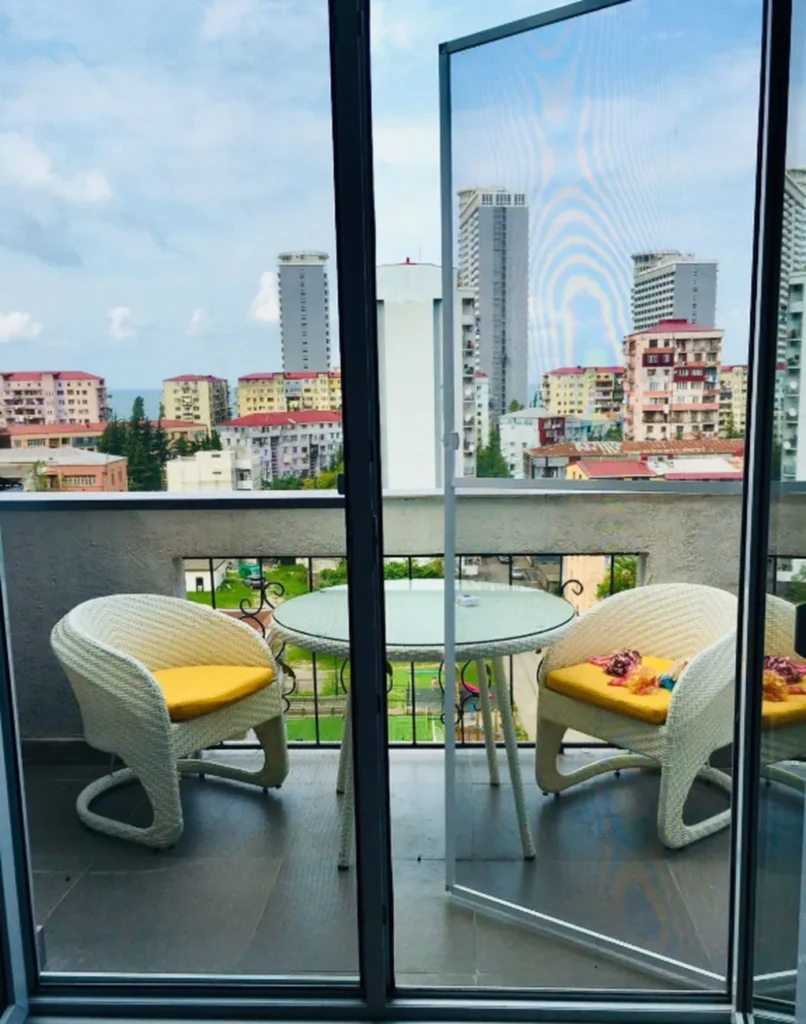
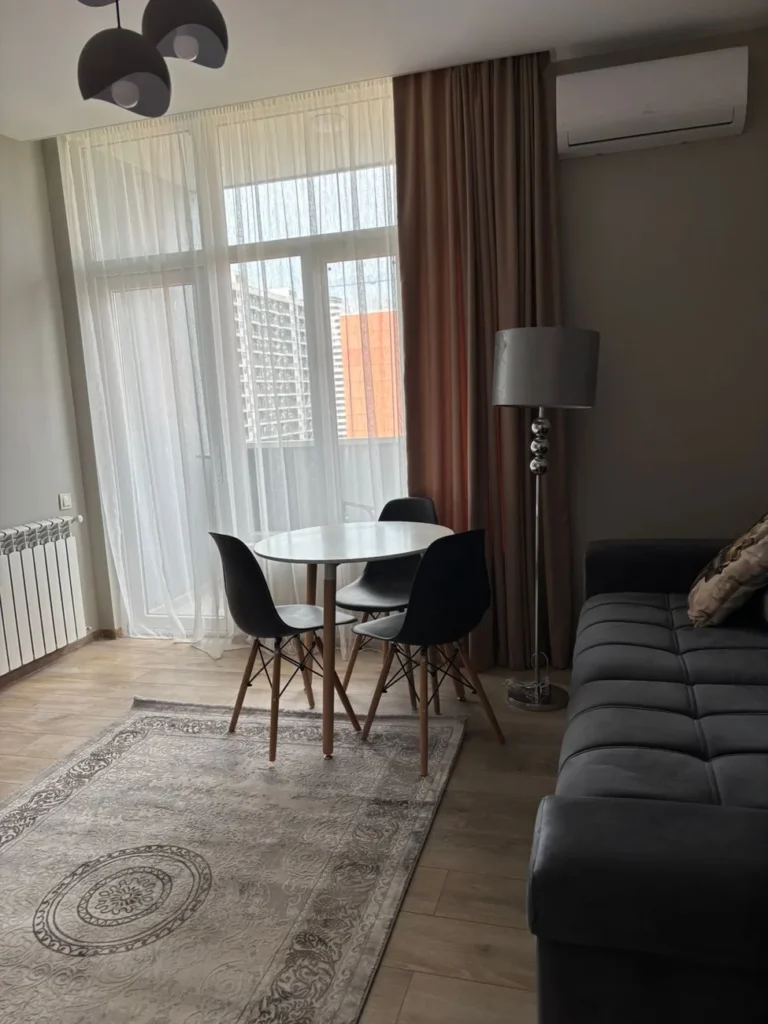

 Batumi, New Boulevard
How to check the condition of a flat
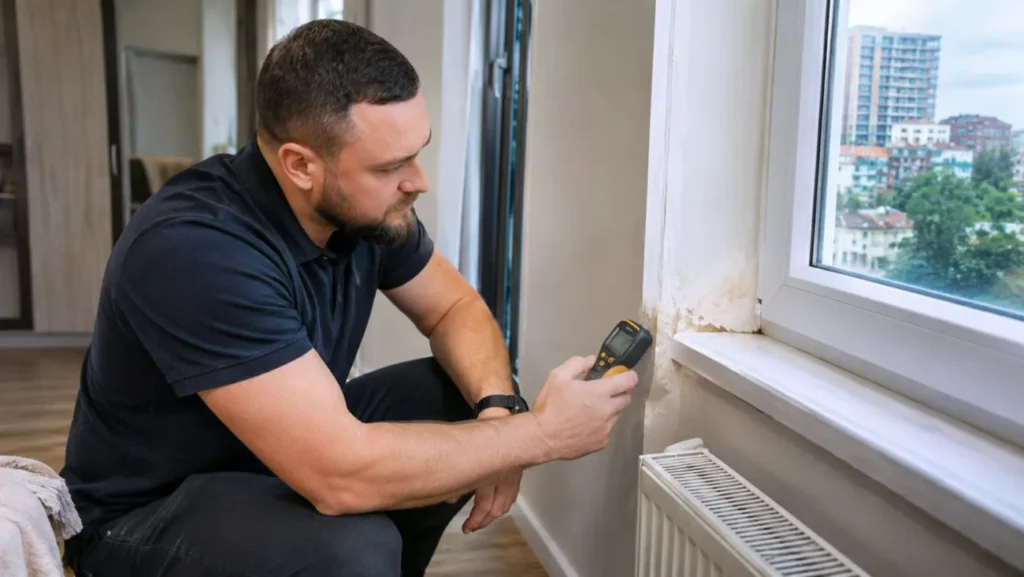
You need to inspect not only the flat itself, but also the building. This is one of the key differences between the secondary market and buying directly from a developer: you have the opportunity to view the actual property, and it is worth making the most of this opportunity.
Start with the communal areas. The condition of the entrance hall, the lift, the letterboxes and the entrance area is an indication of how well the building is managed. Take a look at the building’s façade: cracks, flaking plaster or obvious signs of water damage on the eaves may indicate problems with the roof or load-bearing structures.
Once inside the flat, the first thing to do is check the humidity levels. This is particularly important in Batumi: the coastal climate creates a favourable environment for mould in poorly ventilated rooms. Check the corners of the rooms, particularly in the bathroom and kitchen, as well as the spaces behind furniture and window reveals. A small patch of condensation and black mould on a load-bearing wall are problems of varying severity. If you have any doubts, seek advice from a specialist.
Windows and glazing determine thermal insulation and running costs. Plastic profiles should be checked to ensure they fit tightly, are free from cracks and that the fittings are in good working order.
Electrical wiring in houses built between the 1970s and 1990s often needs to be checked to ensure it can cope with modern loads. An electrician will assess whether replacement is necessary and how much it will cost following an inspection: the specific condition depends on whether any refurbishment work has been carried out. Check whether there are any circuit breakers in the fuse box.
Check that the water supply and drainage systems are working properly: turn on a tap, check the water pressure and make sure there are no leaks. Soundproofing between floors is an important factor for both living in the property and letting it out.
Check that the layout matches what is shown in the documents. An unregistered alteration may cause problems when it comes to selling the property or taking out a mortgage. Not every alteration constitutes a breach, but an unauthorised one requires legal assessment.
Flat inspection checklist
- Condition of the façade: cracks, signs of water ingress, damage to the roof.
- Entrance hall, lift, communal areas: cleanliness, condition, safety.
- Humidity and ventilation: corners, slopes, the bathroom, the kitchen — any signs of mould or condensation.
- Windows: airtightness, fittings, condition of the frames.
- Electrical wiring and fuse box: presence of circuit breakers, visible signs of overheating or outdated protection.
- Water supply and drainage: pressure, leaks, meters, risers.
- Heating: type of system, operational condition, evenness of heating.
- Layout: compliance with documentation; evidence of wall relocations or demolition.
- Furniture and appliances included in the price: condition, defects.
- Soundproofing: noise from neighbours, the street and the lift shaft.
If you have any concerns about the structural safety of the property, serious cracks in load-bearing walls or the condition of the building services, it is advisable to engage a specialist in the relevant field to carry out a technical survey before signing the contract.
Don’t want to view dozens of flats yourself?
Please tell us what sort of flat you’re looking for: by the sea or in a residential area, for permanent residence or to let out. We’ll help put together a selection to suit your budget and your requirements regarding the condition of the property.
What to ask the seller before paying a deposit
| Question for the seller | Why ask? |
|---|---|
| Why is the flat being sold? | To understand the circumstances and timing of the sale; this answer is no substitute for carrying out your own checks |
| How long has the seller owned the flat? | To investigate the history of the acquisition |
| Have there been any leaks or major repairs? | To assess technical risks |
| What are the monthly service charges for the building? | To calculate the content |
| Is there a current tenancy agreement? | To check residents’ rights |
| Which pieces of furniture and appliances will be left behind? | To include the list in the contract |
| When will the flat be completely vacated? | To agree on a date for the handover |
| Is there a mortgage, a dispute or any other restrictions? | To compare the response with the documents |
It is advisable to support answers to key questions with supporting documents and to set them out in the contract.
Verification of documents and the owner
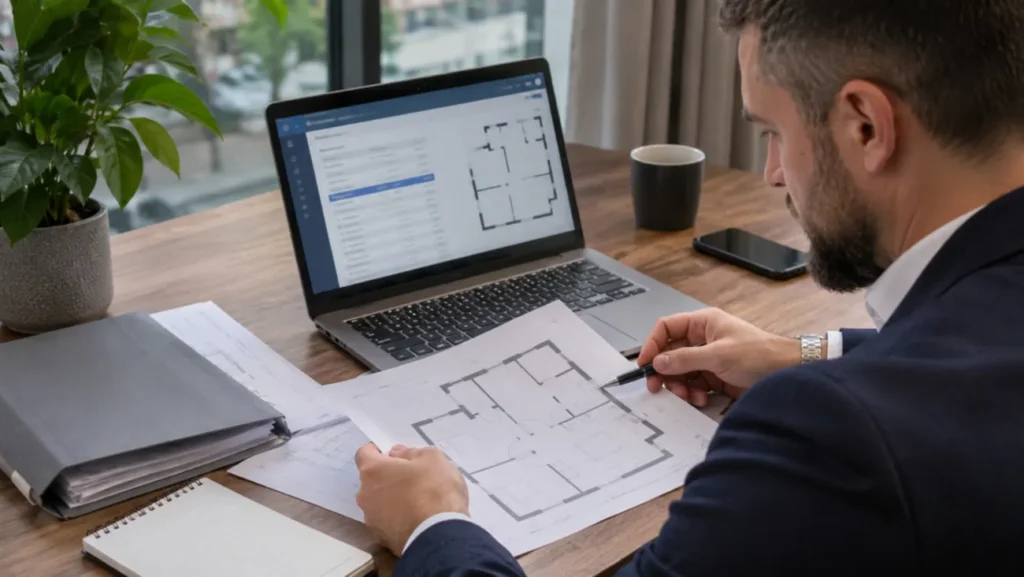
This is the most important section in terms of the legal security of the transaction. You can check the condition of the flat yourself, but it is best to have a solicitor assist with the verification of the documents.
Check via the Public Register
The National Agency for the Public Register of Georgia (NAPR) is a government body responsible for maintaining the register of rights to immovable property. Before any transfer of funds takes place, it is necessary to request an extract from the register using the property’s cadastral code. The extract shows who the registered owner is, the property’s characteristics and — most importantly — whether there are any records of restrictions or encumbrances.
How to check an flat yourself via NAPR
- Ask the estate agent to provide the cadastral code for the specific flat.
- Visit the official website NAPR.
- Find the service for obtaining an extract from the Public Register and submit a request using the property ID.
- Compare the cadastral code, address, floor area, intended use and details of the title holder with the seller’s documents.
- Check the records for mortgages, attachments, prohibitions, liabilities and other registered restrictions.
- If the details do not match or there is an unclear entry on the statement, please pass the documents on to a solicitor before making the payment.
- Just before the transaction is finalised, please check the latest information again.
The extract confirms the details on record at the time it was issued, but does not replace a check of the property’s history, the tenancy agreement and the actual condition of the flat.
What to do if problems are found during a flat inspection:
| What has been discovered | What should a buyer do? |
|---|---|
| The owner’s details match | Continue checking the remaining documents |
| The statement shows a different owner | Suspend the transaction until the seller’s authority has been verified |
| Mortgage registered | Agree with the bank on the procedural arrangements for repayment and the removal of the encumbrance |
| The area or purpose does not match | Clarify the documents and the legal implications of the discrepancy |
| Is there a seizure or a ban? | Do not proceed with the calculations without a legal analysis |
| There are no recorded restrictions | Continue the check: the absence of any records does not rule out other risks |
Any entry relating to a mortgage, attachment, prohibition on disposal, legal claim or other restriction must be assessed on a case-by-case basis. The possibility of disposal and the consequences for the purchaser depend on the type of entry, the law and the terms agreed with the interested parties. The sale of a flat does not, in itself, discharge a registered mortgage. If the encumbrance remains in place, the buyer acquires the property subject to the mortgage, but this does not mean that they automatically assume the seller’s personal debt to the bank. The procedure for repaying the debt and discharging the mortgage must be agreed with the lender and formalised in writing before the transaction is completed.
Ask for a current statement – not one from yesterday, and not the one the seller shows you. An encumbrance can be registered or removed within a few days.
The extract reflects information on registered rights and restrictions as at the date it was issued. It does not guarantee the absence of unregistered claims, legal disputes or other circumstances that may affect the transaction. Where necessary, please check the title deeds and the property’s history separately. The extract alone does not replace a full legal due diligence check.
For more information on working with NAPR and verifying a property, please see the article ‘How to check a property in Georgia before buying“.
Seller’s documents
Verifying the seller is a separate but equally important step. Start by verifying their identity: the passport details must match the information in the register regarding the rights holder.
The basis on which the seller acquired the flat — whether through a sale and purchase agreement, a gift, inheritance or a court ruling — is significant. A flat inherited may be the subject of disputes amongst the heirs, which the seller may have failed to disclose. It is worth checking the title arising from a court ruling separately.
If the seller is acting through an authorised representative, you must request the original document or a duly certified copy and verify its validity, as well as the representative’s authority to carry out the specific transaction and to receive payment. If you have any doubts, contact the principal directly.
If the flat was purchased by the seller whilst married, the spouse may have rights to the jointly acquired property. A solicitor will examine the legal status of the property and the specific circumstances; where necessary, they will ensure that consent is obtained.
In the event of the sale of a flat that has already been let to a tenant, the purchaser generally assumes the rights and obligations of the landlord (Article 572 of the Civil Code of Georgia). Before signing, check the current tenancy agreement and whether the tenant is actually living there, and agree on the lawful procedure for vacating the flat.
Before the transaction, request information from service providers and the management organisation regarding any outstanding debts and the procedure for changing the payer. Do not automatically assume that all the seller’s debts become the buyer’s debts: the consequences depend on the contract, the nature of the payment and the applicable rules. Ensure that the seller settles any identified amounts and provides confirmation of payment.
Documents and legal risks
| What to check | Why is this necessary? | What to do if you have a problem |
|---|---|---|
| Extract from the Public Register (current) | Reflects the registered rights and restrictions as at the date of issue | Assess each entry individually; do not transfer any money until the legal implications have been clarified |
| Document proving the seller’s identity | Matches with the register data | Investigate the cause of the discrepancy; if there are any suspicions, halt the transaction |
| Basis for the acquisition of ownership | Understand the property’s history and the risks of a dispute | Ask a solicitor to check the document for any signs of a dispute |
| Power of Attorney for a Representative | To verify the scope of authority, validity and that no revocation has taken place | Request the original document; check the authority to act in relation to the specific transaction; if in doubt, contact the principal |
| The sales assistant’s marital status | A spouse’s potential rights to property | Forward the analysis to a solicitor; if necessary, draw up a consent form |
| The presence of tenants and tenancy agreements | The purchaser assumes the rights of the lessor (Article 572 of the Civil Code of Georgia) | Check the contract and the actual place of residence, and agree on the handover procedure in the sale and purchase agreement |
| Amounts owed to service providers and the management organisation | The transfer of liability depends on the nature of the payment and the contract | Request information from suppliers; ensure that any debts identified are settled by the seller, with confirmation provided |
| Consistency between the actual layout and the documents | An unauthorised alteration complicates the transaction | Assess whether the property can be legalised or whether it should be abandoned |
Until key legal issues have been clarified — such as the existence of any restrictions, confirmation of authority, and the rights of third parties — you should not make an unconditional, non-refundable payment.
How much does it cost to buy?
The budget for buying a second-hand flat consists of several parts, and the price of the property is just one of them.
State registration of ownership rights. According to official figures NAPR (checked on 2 November 2026): 4 working days — 150 GEL (standard fee), 1 working day — 270 GEL, on the day the application is submitted — 350 GEL.
In addition, please allow for the cost of the NAPR extract, if required: online – 13 GEL for 1 working day or 52 GEL on the day of application; paper copy – 20 GEL and 75 GEL respectively. When verifying the parties’ signatures directly as part of the registration procedure, NAPR charges 7 GEL for this service; whether this service is required depends on the method of document processing.
Notarial services in Georgia are required in a number of situations — for example, where a representative acting under a power of attorney is involved. The cost depends on the notary and the terms of the contract.
Legal support — costs that are often underestimated. A qualified lawyer minimises risks which, should problems arise, would prove considerably more costly. Bank charges and currency exchange fees depend on the payment method: before signing, agree with the bank on the acceptable method of payment, the currency and the necessary documents proving the source of funds.
Taxation when buying a flat in Georgia warrants special attention. As a rule, there is no specific tax levied on the buyer solely for the standard purchase of a flat. Please check the property tax, rental income and subsequent sale separately. For the property tax rules applicable in 2026, please refer to the current regulations of the Revenue Service as they relate to your specific income and assets. For further details, please read the article ‘Property taxes in Georgia“.
Renovations, furniture and appliances — the cost of this work depends on the condition of the flat and your requirements.
Total cost of purchase
| Object of expenditure | Commitment | How to calculate |
|---|---|---|
| Price of the flat | Obligatory | Negotiable; check current market rates by looking at recent adverts |
| Deposit / Advance payment | By arrangement | The portion of the flat’s price that is taken into account when the transaction is finalised |
| State registration of rights | Obligatory | 150 GEL (4 working days), 270 GEL (1 working day), 350 GEL (on the day of application) |
| NAPR extract | If necessary | 13–52 GEL online; 20–75 GEL on paper |
| Verification of NAPR signatures | When using this service | 7 GEL |
| Notary services | As required | At the notary’s standard rate; please check in advance |
| Legal support | Recommended | As agreed with the solicitor; depends on the scope of work |
| Translation of documents | If necessary | At the translator’s or agency’s rate |
| Bank charges and currency exchange | For non-cash payments | It depends on the bank, the amount and the sender’s country |
| Technical assessment | If you wish | By arrangement with a specialist |
| Utility bills (to be settled by the seller) | If available | To be finalised before the contract is signed |
| Renovations, furniture, appliances | Condition of the flat | Personalised quote |
| Post-purchase running costs | Regularly | Utility bills, property management, insurance |
Example of a budget for buying a second-hand flat for $100,000
Let’s assume that a buyer has chosen a flat costing $100,000 and plans to complete the transfer of ownership within four working days and receive an electronic NAPR statement.
| Consumption | Amount |
|---|---|
| Price of the flat | $100 000 |
| Registration of a right | 150 GEL |
| NAPR electronic statement within 1 working day | 13 GEL |
| Verification of NAPR signatures, where applicable | 7 GEL |
| Cadastral plan, if required | 7 GEL |
| Legal support | On the advice of a solicitor |
| Translation of documents | As required |
| Bank charges | According to the bank’s rates |
| Renovation and furniture | Based on an individual quotation |
Total for the public services listed: 163 GEL for registration and an electronic extract, or 177 GEL if signature verification and a cadastral plan are also required.
This does not represent the full cost of processing the transaction. Banking, legal and technical costs are calculated separately. Who is to pay for each specific service should be agreed in the contract.
What taxes might you have to pay after making a purchase?
| The situation | What to consider |
|---|---|
| A standard flat purchase by a private individual | There is not usually a separate tax on the transfer of title |
| Ownership of a flat in 2026 | For the property of an individual, excluding land, an exemption applies where the family’s income for 2025 does not exceed 100,000 GEL |
| Household income in excess of 100,000 GEL | Tax on the relevant property — between 0.8 and 1% of its market value |
| Handover of residential property | A special scheme (5%) is available for eligible income earned by individuals; the conditions for its application should be checked |
| Flat for sale | Tax liabilities may arise depending on the length of ownership, the type of property and the circumstances of the transaction |
| Land ownership | Land tax is treated separately and may be payable regardless of household income |
From 2026, the family income threshold for exempting individuals’ assets, other than land, from property tax has been increased from 40,000 to 100,000 GEL. When determining tax liabilities, account is taken of family composition, types of income and the specific characteristics of the taxable property. Separate rules apply to land.
You can check the current terms and conditions on the official website of the Georgian Revenue Service — rs.ge.
How the transaction works

Buying a second-hand flat involves several interlinked stages. The order in which these are carried out may vary depending on the terms of the transaction; however, the due diligence on the property, the seller and the payment arrangements must be completed before any irreversible financial commitments are made.
Stages of the purchase process
- Selection of the property and agreement on the key terms. Viewing the flat, preliminary discussions on price and terms.
- Checking the seller and the documents. A current extract from the NAPR, verification of identity and authority, and an analysis of the grounds for acquiring the right.
- Physical and technical inspection. Inspecting the condition of the flat and the building, either on your own or with the help of a specialist.
- Agreement on a deposit or advance payment (if applicable). The terms and conditions, legal consequences and return procedure must be set out in writing.
- Drafting the contract. A detailed description of the property, prices, tenancy periods, payment arrangements, conditions for vacating the property, and a list of furniture and appliances.
- Determining the payment method. Agreeing with the bank on the method of payment, the documents proving the source of funds and the procedure for confirming the payment.
- Signing and submitting the documents for registration. At the House of Justice or through an authorised body.
- Checking the registration result. Obtaining confirmation via NAPR that the title is registered in the buyer’s name.
- Handover of the flat and the keys. Signing the handover certificate; recording meter readings.
Deposit and advance payment — different instruments with different legal consequences. If the sum is legally classified as a deposit, in the event of a breach of obligation by the transferring party, it may be retained by the recipient; in the event of a culpable failure to perform by the recipient, they are obliged to return double the amount of the deposit (Articles 421–423 of the Civil Code of Georgia). The consequences of an advance payment and other preliminary payments should be determined by a written agreement and the circumstances of its termination. Before signing, check with a lawyer to clarify the specific terms of your agreement and the legal consequences it entails.
Sale and purchase agreement — the key document of the transaction. It must clearly specify the property’s cadastral code and details, the price and payment terms, the deadline for vacating the flat, a list of furniture and appliances (if included in the price), and the responsibilities of the parties. For more details on the structure and key points, see the article ‘Contract for the Sale and Purchase of Property in Georgia“.
Which terms are particularly important in a contract for a second-hand flat?
| Condition | What to record |
|---|---|
| Subject matter of the transaction | Cadastral code, address and details of the flat |
| Price | Total agreed amount and currency of payment |
| Payment | Payee, payment deadlines, payment confirmation, what to do if registration is refused |
| Encumbrances | Procedure for their settlement and documentary evidence |
| Vacuating the flat | The specific date for the handover of the vacant premises, if agreed |
| Furniture and appliances | List of assets to be transferred and their condition |
| Utility payments | Procedure for settling debts and recording meter readings |
| Liability of the parties | Consequences of a breach of material terms |
If the flat is being sold with an outstanding mortgage or with tenants in place, a standard short-form contract may not be sufficient. The specific terms and conditions must be agreed with a solicitor.
Payment. A documented bank transfer records the fact of the payment, its amount and its purpose. Set out in the contract the sequence of steps for submitting the application for registration and making payments, the conditions for refunding or withholding the payment in the event of a refusal to register, and the method of confirming the transfer. If a conditional payment instrument agreed with the bank is available, verify it in writing before signing the contract.
Do not transfer any money until the legal status of the property has been clarified. The method of payment and the timing of payment in relation to the registration of title are terms of the contract that must be agreed in advance.
Registration is carried out through the House of Justice or its regional offices. According to Article 183 of the Civil Code of Georgia, ownership of immovable property arising from a transaction comes into effect upon registration in the Public Register — the signing of the contract does not in itself constitute a transfer of title. The official deadlines and registration fees are published by NAPR. For more details on the procedure, see the article ‘How is property registration carried out in Georgia?“.
Handover of the flat. Once confirmation of the registration of the title has been received, a handover report is drawn up. This document records the condition of the flat at the time of handover, meter readings, the set of keys and any items handed over. The report protects both parties from any subsequent claims.
What to do after buying a flat
Once the title has been registered, the transaction still requires a few further administrative steps.
- Obtain confirmation of the registration of the right in your name.
- Please keep your contract, proof of payment and registration documents.
- Please sign the handover certificate, stating the condition of the flat.
- Make a note of the meter readings and take photographs.
- Collect all sets of keys and arrange for the access codes to be changed.
- Please contact your utility providers and the property management organisation to update your billing details.
- Please check that there are no outstanding payments as stipulated in the contract.
- If the flat is intended for letting, make sure it is ready for use and check your tax liabilities separately.
Keep hold of the receipts for the handover of the flat and any payments: you may need them in the event of any future disputes.
Purchase of a second-hand property by a foreign national
Foreign nationals are generally permitted to purchase standard flats in Georgia. Before proceeding with the transaction, check the cadastral details of the property and the associated land rights: agricultural land is subject to a separate legal regime, and this should not be confused with the purchase of a flat.
You will need to provide proof of identity to complete the transaction. In practice, additional information may be requested at various stages — during banking transactions, at the notary’s office or when submitting the documents for registration. Banks in Georgia carry out checks on the source of funds in accordance with financial monitoring requirements; please check the transfer options, processing times and required documents for the specific buyer and transaction.
If the buyer is unable to be present in person, the transaction is carried out through a representative acting under a duly executed power of attorney. If the power of attorney is drawn up outside Georgia, check in advance whether the country of issue requires legalisation or an apostille, whether any exemptions apply under an international treaty, and what requirements apply to the translation and format of the document.
Buying a flat in Georgia does not automatically grant a residence permit. One possible option is a short-term residence permit for owners of eligible property (excluding agricultural land) with a verified market value exceeding the equivalent of 150,000 USD in GEL; other conditions also apply. The purchase of a property and immigration status are separate legal matters requiring individual consideration.
Are you looking for property in Georgia whilst living in another country?
Please specify your budget, preferred city and the purpose of your purchase. The Residence will help you find suitable properties and explain which documents need to be checked before the transaction.
Take the quiz and receive a selection
Risks and mistakes made by the buyer
When buying a second-hand flat, problems may arise due to insufficient verification of documents, hidden technical defects, unclear terms and conditions in the contract, or dishonest behaviour on the part of those involved in the transaction.
Buying a property without checking the Public Register is one of the most serious mistakes, as the buyer may not be aware of any registered encumbrances until the money has been transferred. A mortgage, attachment or legal claims that have not been checked prior to the transaction may only come to light after it has been finalised. Paying a deposit without setting out the terms in writing increases the risk of a dispute over the purpose of the payment, the grounds for withholding it and its refund. However, the absence of a separate written agreement does not in itself mean that the buyer automatically forfeits all their rights.
Paying an unauthorised person is a serious risk when conducting transactions through representatives. If the power of attorney has not been verified, the money may end up in the hands of someone who was not entitled to receive it.
Failing to respect the rights of co-owners creates grounds for challenging the transaction after it has been completed. A flat with unauthorised alterations may cause difficulties when it comes to selling or taking out a mortgage at a later date. Unclear deadlines for vacating the flat, where these are not specified in the contract, are a common source of conflict. A discrepancy between the actual price and the price stated in the documents creates tax and legal risks for both parties.
An illustrative example. The flat is on the market at an attractive price, and the buyer is prepared to pay a deposit. Upon checking the land registry, it transpires that a mortgage in favour of the bank is registered against the property. The seller assures you that ‘everything is being sorted out’, but there is no written confirmation of repayment or the removal of the charge. Paying a deposit in this situation means that the buyer is financing the seller without any guarantee that the matter with the lender will be resolved. The correct course of action is to halt the transaction and wait for documentary confirmation.
Circumstances in which a transaction should be suspended for verification
- The register contains an entry relating to a mortgage, attachment or other restriction — without a clear repayment plan or documentary evidence.
- The seller is acting under a power of attorney which cannot be verified or confirmed with the principal.
- The basis of the seller’s right is a recent inheritance where there are other potential heirs.
- The actual layout differs significantly from the one shown in the documents, with no explanation provided.
- The seller is refusing to provide information regarding debts owed to service providers and the management organisation.
- The flat is currently occupied by tenants, and the procedure for vacating the property and the relevant deadlines are not set out anywhere.
- The price is significantly below the market level for no apparent reason.
Resolvable issues are those that can be resolved before the transaction is finalised, with supporting documentation. Situations where the seller is unwilling to provide the necessary documents or is rushing the process without explanation require separate consideration. Sometimes, the right decision is to walk away from the property.
Take a look at the analysis of ‘5 main mistakes when buying a flat in Georgia“.
How to choose a flat to suit your needs
The same item may be a good choice for one purpose but a poor one for another.
Permanent residence Priority is given to transport links, proximity to schools, clinics and shops, and the condition and management of the property. A family-friendly layout, heating and soundproofing are important. Maintenance costs must be predictable. A seaside location within a tourist area may not be suitable for permanent residence due to seasonal noise.
Long-term lease This requires an assessment of demand in a specific building and neighbourhood: transport links, proximity to employment centres, and a reputable management company. A flat with an expensive refurbishment in a location without sustained demand represents an expense with no guarantee of a return on investment.
Daily rental In Batumi, demand may be highly seasonal. Cleaning, maintenance and management costs reduce the actual income. Liquidity on resale depends on market conditions rather than past income.
Before buying, clearly define your priorities: which is more important – living comfort, investment yield or resale potential? The answer to this question determines which features of the property and its location you should assess first.
Find a second-hand property in Georgia that suits your needs. If you’re looking at a flat in Batumi, Tbilisi or Gonio, Take a quick property search. The Residence will help you identify suitable options, taking into account your budget, location and plans for the purchase.
Results
Second-hand property in Georgia is suitable for a wide range of buyers: those who want to view the property before paying, get the keys quickly, start preparing for letting, or secure a specific location. However, simply checking the price is not enough.
Three checks you must not overlook: a current extract from the Public Register, including an analysis of each entry relating to encumbrances; confirmation of the seller’s authority and their title to the property; and a physical inspection of the flat, including an assessment of the building’s structural condition.
An independent solicitor is required when the property’s history is unclear, the seller is acting through a representative, there are entries in the land register regarding restrictions, or the ownership situation raises questions. Legal support is an expense that protects a significantly larger sum.
The terms of the transaction — the payment arrangements, the timing of payments in relation to registration, the deadlines for the transfer, and the treatment of debts and encumbrances — must be clear and set out in writing before the first payment is made. Once the money has been transferred, it is considerably more difficult to change the terms.

The NAPR rates and the legal provisions set out herein were verified against available official sources on 2 November 2026. Other market data should be verified at the time of the transaction. For complex transactions and non-standard situations, it is recommended that you seek individual legal advice.
 Property in Montenegro
 Property in Cyprus
 Real estate in UAE
 Property in Bali
 Property in Thailand
 Property in Spain
 Property in Saudi Arabia
 Property in Turkey
 Property in Zanzibar
 +995 551 50 18 84
 hello@residence-estate.ge
 Georgia, Batumi, Sherif Khimshiashvili str. 1, office 1204



 Get catalogue of TOP-7 objects