
 +995 511 114 899


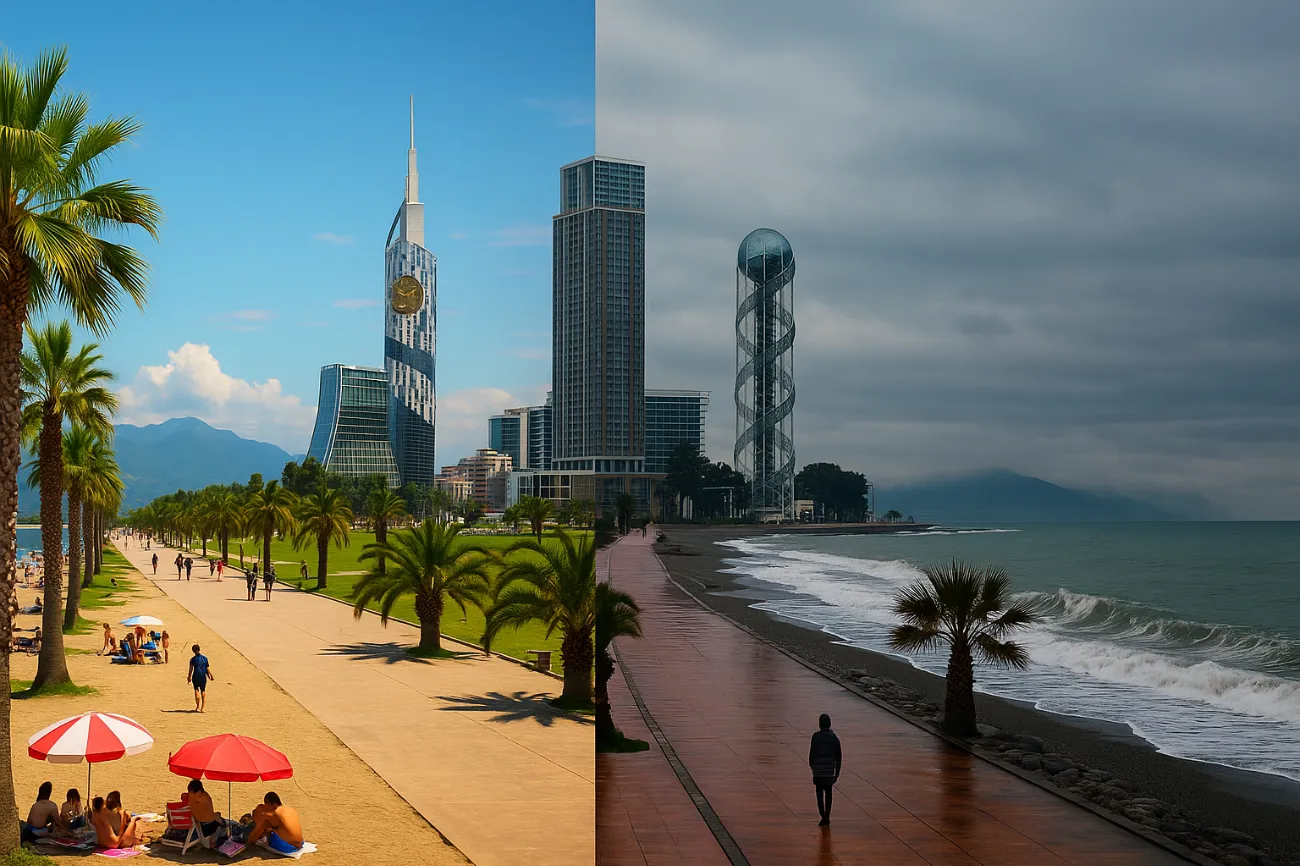

Is it possible to live comfortably in Batumi for permanent residence, and not only to "winter" or visit in summer. The answer to this question determines the budget, the choice of neighbourhood, the format of renting/buying a home, as well as expectations in terms of climate, infrastructure and legal conditions. Below is a structured justification of what decisions the reader will be able to make from the first section and what figures are important to know before moving.
Briefly: It is realistic to live in Batumi all year round. But because of its seasonality, the city has "two lives": in summer - a resort with warm sea, noise and high prices; in winter - mild climate, rainfall, quiet rhythm and noticeably more affordable housing. The key to success is to calculate the costs soberly and choose a dwelling suitable for winter (heating, ventilation, dehumidification).
Which decisions are answered by the question
- Residential Scenario: moving to Batumi for permanent residence, seasonal wintering or visits "just for holidays".
- Budget and cost of living: how much it costs to live in Batumi in high and low seasons - rent, utilities, food, transport.
- Housing and infrastructure: how aparthotels for tourists differ from flats for year-round living; what household risks to consider (heating, humidity, interruptions).
- Legal regime: Visa-free stay up to 365 days, "visaran", purchase of real estate by foreigners, taxes for residents and remote professionals.
"If you are a remote specialist and you are happy with a mild winter by the sea, Batumi all year round is a workable scenario. If you expect the infrastructure of a metropolis and a dry climate, you should consider the 'summer only' format or combine Batumi with other cities".
Batumi in summer and winter: two different cities?
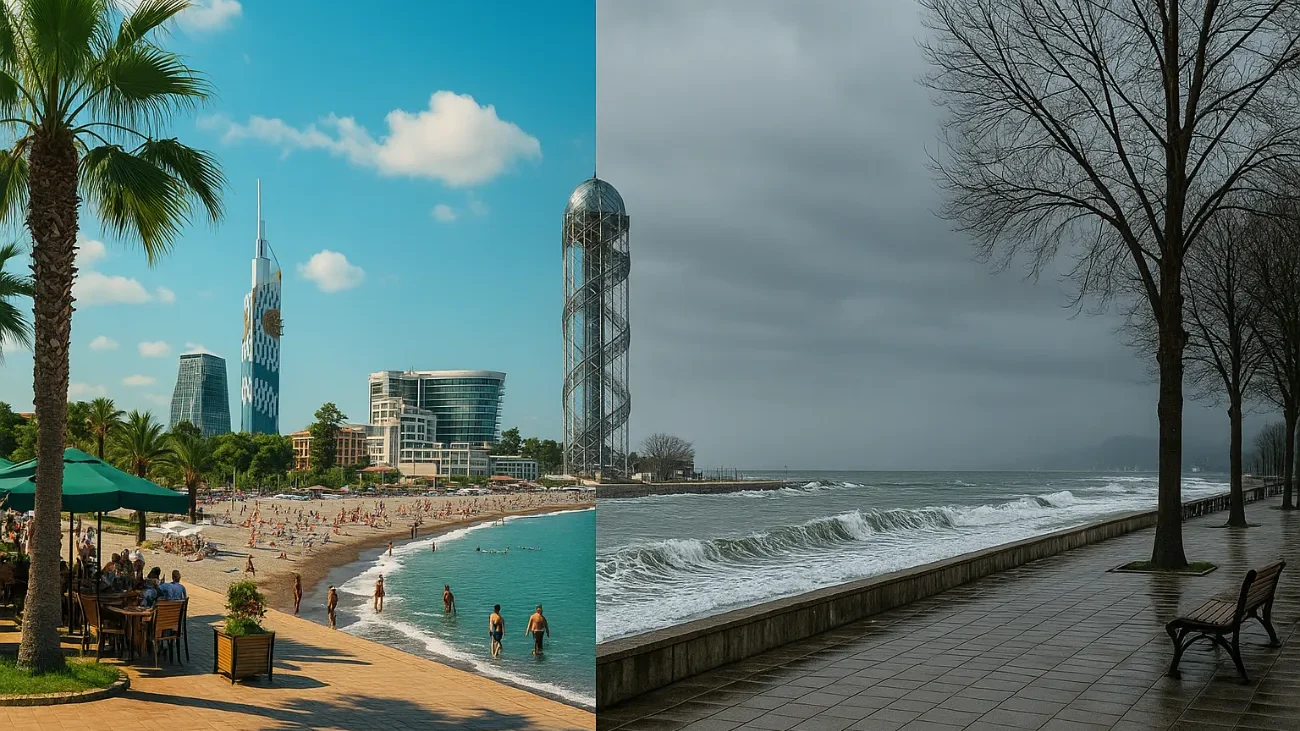
The resort Batumi lives in two rhythms. In the summer. is a bustling seaside city full of beaches, festivals and high pressure on infrastructure. In the winter. - a calm seaside centre with mild temperatures, frequent rainfall and noticeably lower housing prices. Climate and seasonality set the tone for lifestyles, spending and expectations of the city all year round: in summer, the average daytime temperature is approx. +27°Cand in the winter it's about +10°C in high humidity and gale force winds. According to developers' publications and local statistics - about ~192 sunny days in a year.
Key Thesis: Yes, Batumi feels like two different cities in season. This is important to keep in mind when planning living in Batumi all year roundbudget and housing requirements.
Climate and atmosphere by season
- Summer (June-September): It is consistently warm, sunny and humid; the sea water is often at around +24...+27°C. The peak of the tourist season is July-August: beaches and boulevards full, festivals and concerts, late opening of cafes and bars.
- Winter (November-March): without frost, but with frequent rain and gusty winds; walking along the seafront is comfortable in "dry windows", but humidity can be felt indoors. Some of the tourist establishments close until spring, and the rhythm of life slows down considerably.
"In summer, Batumi is a resort with overloaded infrastructure and an endless promenade of people; in winter, a chamber seaside town with rain, greenery and sparse queues."
Seasonal costs: How much it costs to live, benchmarks ($)
Ranges are averaged across the market and are highly dependent on neighbourhood, housing condition and personal preference.
- Rental Housing: off-season studio/1-room - $300-500/month.and in the summer, the same options - $800-1 200+. In a "year-round" contract, owners often put down a . summer surcharge ~$70-100 (equivalent to ~200 GEL) for the peak season month - discuss in advance.
- Utilities: electricity without heating - $30-60/month.; in winter when heated by air conditioner/heater - $60-120. Water and gas are often cumulative $5-15. Home internet - $10-15/month. Possible short term outages during storms - check with home.
- Catering and Café: summer fruits/vegetables at markets - usually $0.7-1.5/kg for seasonal positions; lunch in a canteen/café - $5-8 per person. During the high season, some establishments increase their prices, and waiting time is growing. The dynamics is influenced by the lari exchange rate.
- Transport and taxis: city bus - approx. $0.15-0.25 per trip; taxis within the centre are usually $3-6. In the summer, waits and "peak hour" prices may be higher due to demand.
Budget Conclusion: wintering in Batumi is noticeably cheaper due to rent and less fuss; in summer, short-term rentals, meals "by the sea" and taxis during rush hours become more expensive.
Infrastructure and everyday comfort
- Summer: maximum open cafes, services and entertainment, increased street traffic, noise on seaside streets until late in the evening. Water/electricity loads are higher, queues at popular places are also higher.
- Winter: supermarkets, markets, hospitals and public services are operating normally; some tourist activities are on pause. From the domestic nuances - high humidity in flats without good ventilation and heating. Air dehumidifier (one time) $120-200) and winter-summer air conditioning noticeably increase comfort.
- Communications: Stable home internet from major providers is usually available all year round; mobile internet packages - $5-10/month.. In severe storms there may be brief power/signal outages - it's worth having a powerbank and a mobile tariff with 'giveaway'.
What to choose: "summer" or "winter" Batumi?
- In the summer. The city is chosen by those who value the sea, events and a busy resort environment, while being prepared to put up with noise and overpaying for space and time.
- In the winter. Batumi suits a relaxed routine: walks along the sea on clear days, mountain outings on weekends, moderate costs and fewer queues.
Seasonality in Batumi is pronounced and affects everything from spending to daily routine. For those considering transfer to Batumi or wintering in BatumiIt is worth evaluating the city in both phases: spend a week in summer and a week in winter, calculate the budget with reserves and choose accommodation adapted to the humid climate.
Cost of living in Batumi all year round: myths and reality
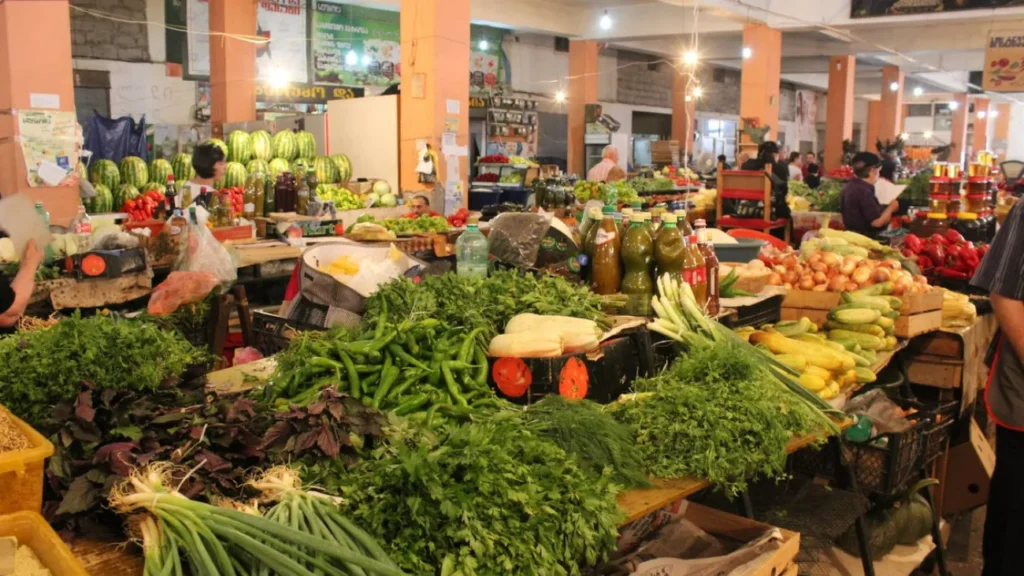
The topic "how much does it cost to live in Batumi" is consistently at the top of the list of requests of those who are considering moving to Batumi or wintering at the sea. Below is a structured picture of costs, taking into account seasonality, housing and local infrastructure. Figures are given in $, benchmarks are based on the 2024-2025 market and data from open sources: reviews and community experience), directories and guides, materials on communal specifics, climate slices and developer reports.
Key finding: living in Batumi all year round is noticeably cheaper in winter due to rent and lower demand, and noticeably more expensive in summer due to seasonal mark-ups on accommodation and meals by the sea. Realistic monthly budget for one person: $900-1 400 out of season and $1 400-2 200 in summer, depending on the level of housing and consumption habits.
Myths and reality
- Myth: "It's always cheap in Batumi."
Reality: Seasonality matters. In the off-season, the studio costs $300-500/month, July-August - $800-1 200+ for the same metreage. - Myth: "Utility bills are pennies, you don't have to count them."
Reality: without heating - $30-60/month for electricity, with heating in winter - $60-120. Water/gas usually $5-15, home internet - $10-15. - Myth: "Groceries are always cheap."
Reality: In summer, seasonal vegetables/fruits are really cheaper ($0.7-1.5/kg), more expensive in winter; the lari exchange rate affects imports. - Myth: "The internet and connectivity are flawless."
Reality: mobile packages and wired internet are available and affordable ($5-15/month), but there are brief outages during storms - need a "spare" sim card/powerbank.
Seasonal cost variance: benchmark by item ($/month)
| Object of expenditure | Autumn-Winter (low season) | Summer (high season) |
|---|---|---|
| Rent 1komn. | $300-500 | $800-1 200+ |
| Utilities (electricity, water, gas) | $40-80 | $60-130 |
| Internet home. | $10-15 | $10-15 |
| Meals at home | $180-260 | $220-320 |
| Café/coffee breaks | $80-150 | $120-220 |
| Transport (city) | $12-30 | $15-40 |
Important: In the case of a "year-round" contract, landlords often prescribe a summer surcharge of the order of $70-100 (about GEL 200) for July-August - discuss in advance.
The structure of the monthly budget: what is the main expenditure?
- Housing (rental): the main driver of spending. The low season is $300-500 for a 1-bedroom; high - $800-1 200+.
- Utilities: electricity $30-60 (higher in summer with active air conditioning); winter with heating - $60-120. Water/gas $5-15. Internet Home. $10-15.
- Nutrition: food basket for one person when cooking at home - $180-300 depending on the season and habits; visits to cafés will add to the $80-200.
- Transport: public transport and the occasional taxi - $15-40 per month.
- Mobile connectivity/internet on a smartphone: 10-25 GB packages - $5-10/month.
Groceries and catering: examples of prices ($)
- Market (summer): tomatoes, peaches, figs-- $0.7-1.5/kg; suluguni cheese - $4-6/kg; chicken - $4.5-6/kg.
- Market (winter): "green" basket is more expensive by 20-60% due to seasonality and imports.
- Supermarkets: bread - $0.6-0.9, milk - $1.1-1.5/l., eggs (10 eggs) - $3-4.
- Cafes/diners: a home-cooked meal $5-8; a cup of cappuccino-- $1.5-2.5; a portion of khinkali (10 pieces) -. $3.5-5. In the summer by the seafront, there's a surcharge.
Transport, communications and internet
- Buses around the city: ~$0.15-0.25 per trip, convenient for daily needs.
- Taxi: short trips within the centre - $3-6; higher during peak season/peak hour due to demand.
- Mobile connectivity: local SIM cards with 10-25 GB - $5-10/The quality of internet in the city is good, but in bad weather there may be brief disruptions.
- Home Internet: packages from the major providers-- $10-15/month.
Health and education
- Health Insurance: for residents and expats - on average $20-50/month per adult (depending on coverage).
- Private medical consultations: $20-40 for an initial appointment; diagnostics and dentistry - separate tariffs.
- Kindergartens/schools: private gardens - about $150-300/month; private/international schools - approx. $250-700/month. (depends on the language of instruction and programme).
Hidden and "forgotten" costs
- Air Dehumidifier: purchase $120-200 - Almost a must-have for winter in humid conditions.
- Heaters/heat pumps: purchase $60-150 (unless the flat has adequate heating).
- Seasonal rent surcharge: is fixed in "all year round" contracts - $70-100 in the month of peak season.
- Cleaning/laundry services: from $10-20 per session (on request).
Monthly budget scenarios ($)
- Solo, economy (winter): rent $400 + utilities/internet $70 + groceries $200 + transport/communication $25 + cafe $80 = ~$775.
- Solo, comfort (winter): rent $500 + utilities/internet $90 + groceries $250 + transport/communication $35 + cafe $150 = ~$1 025.
- Solo, comfort (summer): rent $950 + utilities $110 + groceries $300 + transport/communication $45 + café $200 = ~$1 605.
- Couple with child (winter): rent $550 (1-2-room) + utilities $100 + groceries $420 + transport/communication $60 + kindergarten $200 + cafe/leisure activities $180 = ~$1 510.
- Couple with child (summer): rent $1 100 + utilities $120 + groceries $520 + transport/communication $80 + kindergarten $200 + café/leisure activities $260 = ~$2 280.
"The myth of 'always cheap' Batumi is crumbling against the reality of the summer season. For living in Batumi all year round lay down a double scenario: winter budget - basic, summer budget - with an allowance for rent and meals in tourist locations".
Housing and infrastructure: how comfortable is it to live permanently?
For those considering life in Batumi all year roundThe quality of housing and availability of infrastructure are more important than the beach picture. Resort houses in the centre of the seafront and complexes in residential areas have different objectives: the former for short-term tourists, the latter for long-term stays. Below is a systematic breakdown by key criteria: housing types, engineering and utilities, noise and humidity, house management, transport, medicine, schools and digital environment.
Real estate in Batumi
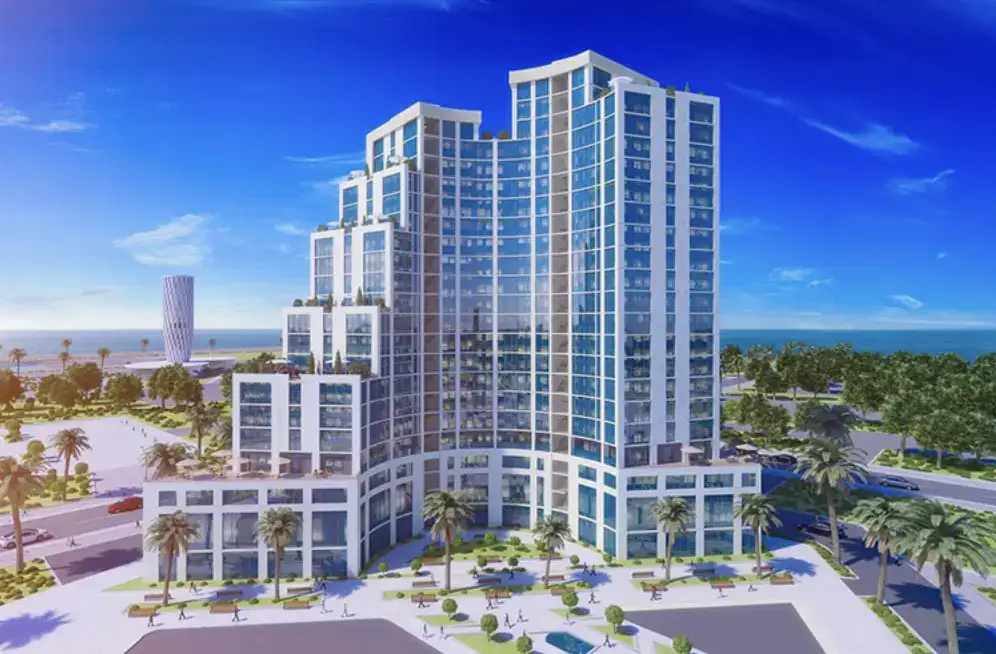

 Batumi
 from 29.4m²
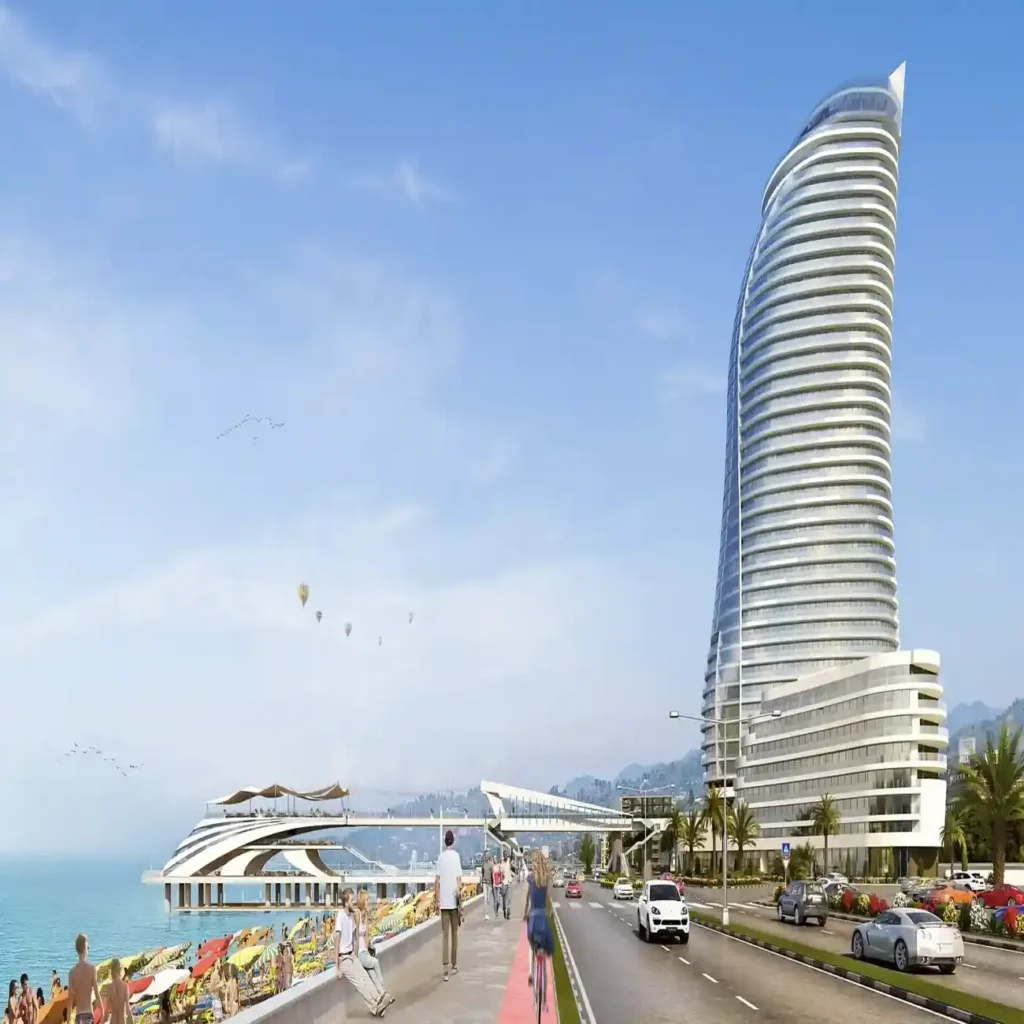 Batumifrom 39.1m²
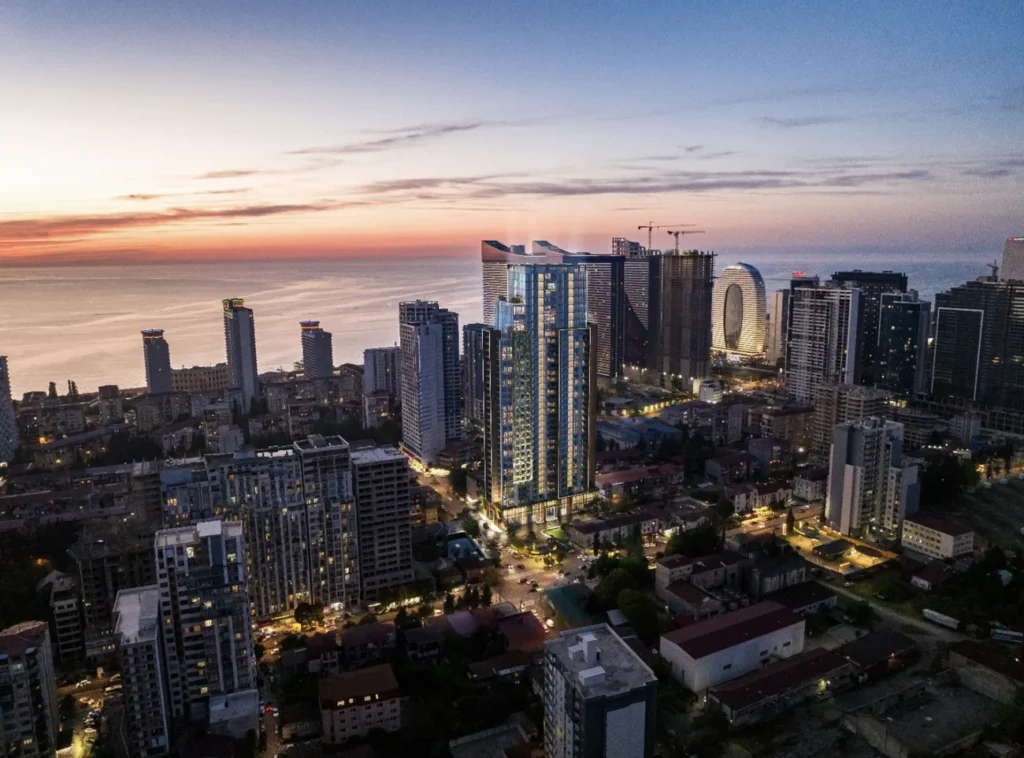 Batumifrom 27.7m²
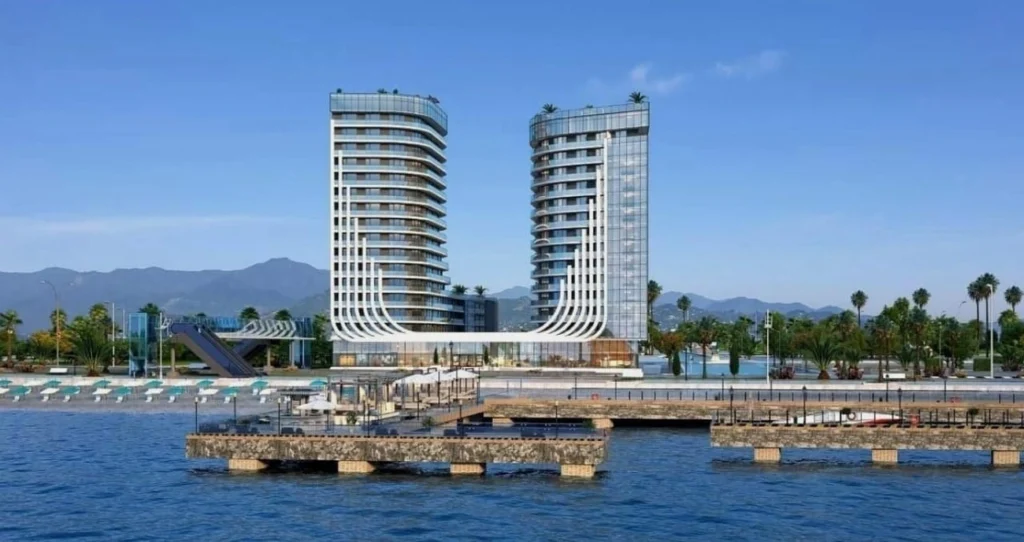 Batumifrom 48m²
Key finding: For permanent residence in Batumi look for a flat with well thought-out engineering (heating, ventilation, double-glazed windows), adequate house management (concierge, maintenance, generator/reservoir) and quiet location outside the first line of noisy promenades in summer.
1) Types of accommodation: holiday flats vs flats for permanent residence
- Resort apartments (first to second line off the boulevard): compact studios 25-35 m², minimal kitchen, often no fixed heating, air-conditioning, basic noise protection. The idea is "to spend the night and go to the sea". Management through a management company, utilities + "condo-fees" according to the tariff of the complex.
- Flats for year-round living (dormitories, 3-10 min to the sea): kitchen 8-12 m², pantry/closet, double-glazed windows, winter-summer air conditioning, sometimes gas heating or infrared panels, storage space. Houses 2018+ have better waterproofing/facades than earlier waves of construction.
Price ranges (rentals): 1-bedroom in the off-season - $300-500/month.and in the summer. $800-1 200+; "all year round" with summer surcharge ~$70-100/month for July-August is standard practice.
"Many new apartment complexes in Batumi are designed for short holidays. For a permanent residence, pay attention to the size of the kitchen, heating and ventilation - this is critical in winter"
2) Engineering and utilities: heating, water, electricity, internet
- Heating: There is almost no centralised heating; winter-summer inverter air conditioners and electric/gas heaters are common. In the winter. budget for electricity $60-120/month. with regular heating (in the off-season - $30-60)
- Water and pressure: in high-rise buildings the tank/pump is important; on upper floors without them there may be pressure dips during peak hours. Water/gas - usually $5-15/month.
- Electricity and failures: During storms, there are brief power/internet outages; in some homes, preventive maintenance. Check for diesel generator in the complex and the status of the power grid.
- Internet: 50-100+ mbps fibre optics - $10-15/month., 10-25 GB mobile packages - $5-10/month.. Keep a "backup" SIM for remote operation.
Important: humid climate and rain (around +10°C in winter, frequent precipitation) increase the risks of condensation and mould - without a dehumidifier and ventilation it will be uncomfortable.
3) Noise, humidity, wear and tear: what affects comfort
- Noise in the summer: first line by the boulevard - music, bikes, tourist traffic until late at night. Solutions: windows to quiet courtyard, floor 15+, double-glazed windows, sleeping quarters. Seasonality of noise is confirmed by resort reviews.
- Dampness and mould: coastal zone + rainfall = necessity dryer ($120-200), regular ventilation and roof/facade leakage control.
- Lifts and controls: in some houses there are "paid lifts" by token/coin; ask about tariffs and service company in advance.
4) House management and maintenance: how much does it cost
- Condo Fi/ Maintenance: in apartment complexes - fixed rate, often $0.5-1.5/m² per month (cleaning of common areas, concierge, lifts, sometimes a swimming pool/fitness centre). In the usual "residential" buildings - more modestly: $10-30/month. per flat (market practice).
- Car park: Street parking in dormitories is often free, but scarce in summer; renting a space in an underground car park - $20-60/month. (depends on the complex).
- Retrofitting for CoML: cupboards/storage, dishwasher, heaters, dehumidifier, textiles, small appliances - one-off budget $500-1 500 when renting a half-spartan apartment.
"A complex with normal control, a backup generator and adequate condo-fi is the key to trouble-free winterisation. Without this, even a new house can fall apart in everyday life.
5) Everyday infrastructure: what works all year round
- Supermarkets and markets: chains and farmers' rows are open all the time; prices for seasonal products are lower in summer and higher in winter.
- Medicine: Private clinics and public facilities in the city are available all year round; basic counselling - $20-40. Insurance for an adult - reference point $20-50/month.
- Education: private gardens ~$150-300/month., private/international schools - $250-700/month. (depends on the language/programmes).
- Co-working/remote work: day-pass $8-15month $100-150; home internet - $10-15/month.. For stability, a spare mobile internet connection.
- Transport: city buses ~$0.15-0.25 per trip; taxis in the centre $3-6 (higher in summer at the peak of demand).
- Seasonality of services: frontline restaurants are partially closed in the off-season; basic services (shops, hospitals) - without interruption.
6) Comfort map by location (general)
- First line of the boulevard: maximum events and views, minimum silence in summer; more often apart-format with condo-fia.
- 2-3 line and bedroom neighbourhoods: more "residential" layouts, quieter, easier parking and lower rent; 7-20 minutes walk/bus ride to the sea.
- High floors: more light and silence, but water pressure, lift operation and wind loads (creaks of facades in a storm) are critical.
7) Example of housing and living expenses structure ($/month)
| Article | Winter (low season) | Summer (high season) |
|---|---|---|
| Rent 1komn. | $300-500 | $800-1 200+ |
| Kondo-fee | $10-30 or $0.5-1.5/m² | $10-30 or $0.5-1.5/m² |
| Electricity | $30-60 | $35-70 |
| Water/gas | $5-15 | $5-15 |
| Internet home. | $10-15 | $10-15 |
| Car park (optional) | $20-60 | $20-60 |
Practical bottom line: The total "housing" cheque for one person in the off-season (rent+utilities+internet+condo) is often within the range of $370-605; in the summer. $855-1 305+ depending on the house, location and contract format.
The pros of living in Batumi all year round
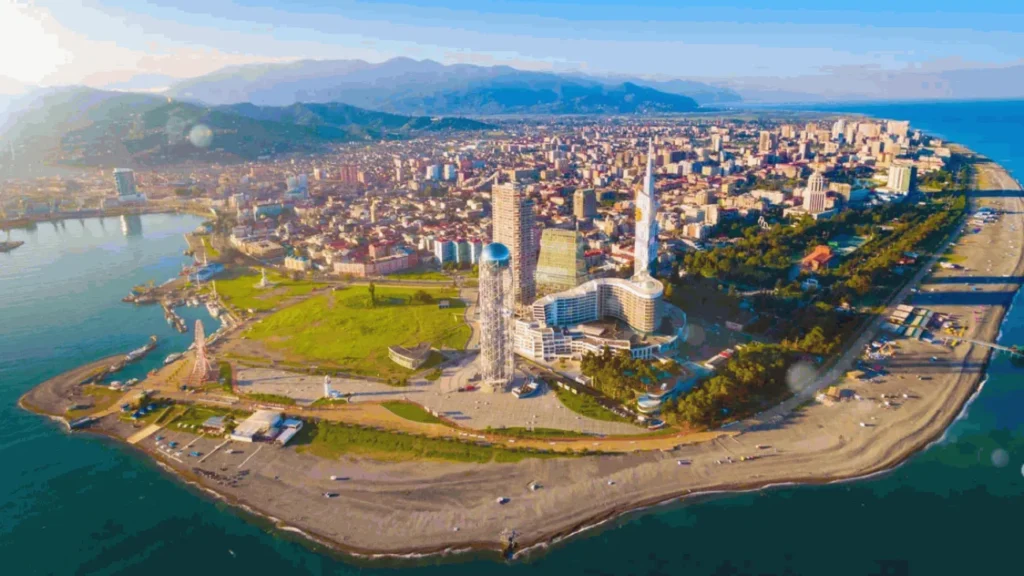
Batumi attracts those who are considering moving to Batumi, wintering by the sea and the format of "Batumi for permanent residence". Below is a systematic list of advantages, supported by figures and sources. For convenience, the key benefits are highlighted: climate, cost of living in Batumi out of season, simple rules of entry and property purchase, availability of communications and transport, security and infrastructure.
Key Thesis:living in Batumi all year round is comfortable and economically rational with the right choice of accommodation and seasonality: mild winters, affordable off-season prices, a working legal environment for foreigners and a developed urban infrastructure function 12 months a year.
1) Mild climate by the sea
- A frost-free winter: average temperature of about +10°Cand in the summer, about +27°C with a warm sea. This makes it possible to walk along the seafront and do outdoor sports all year round.
- Lots of sunny days: according to developer surveys - about ~192 sunny days in the year, which favourably distinguishes wintering in Batumi from cities with "grey" winters.
2) Cost-effectiveness out of season
- Rentals: in low season, a 1-room flat costs $300-500/month.and in the summer. $800-1 200+. With a "year-round" contract, owners often add a summer surcharge of the order of . $70-100 for the months of peak demand - this should be considered in advance.
- Products: Fruit and vegetables are noticeably cheaper in season: peaches/ figs/ tomatoes often $0.7-1.5/kg; in winter the basket is more expensive due to seasonality and imports.
- Utilities and internet: electricity without heating - $30-60/month, with heating in winter - $60-120; water/gas - $5-15. Home internet - $10-15/month.
Conclusion:wintering in Batumi is financially favourable: rent and food at home is cheaper, the city is quieter, and the infrastructure works steadily.
3) Accessible transport and communications
- Public transport: city buses cost approximately $0.15-0.25 per trip; taxis in the centre usually $3-6In the peak of summer, it is higher due to demand.
- Internet for remote work: 50-100+ Mbps fibre optics for $10-15/month; mobile packages 10-25 GB -. $5-10/month. A spare SIM is recommended in case of bad weather.
4) Simple rules of entry and stay
- Visa-free for up to 365 days: Citizens of a number of countries (including the Russian Federation and Ukraine) can stay in Georgia for up to one year without a visa; common practice is to visaran for a day in Turkey or Armenia to renew the term.
- Minimal bureaucracy for living and working: Many expats live and work remotely without a residence permit, taking advantage of the visa-free regime.
5) Real estate is available to foreigners
- Unlimited purchase: foreigners can freely purchase flats in Batumi, the registration of ownership is standardised and transparent.
- The threshold for a residence permit for real estate: The current rules provide for the possibility of obtaining a residence permit for the purchase of an object above a certain threshold (benchmark historically ~$100 000; terms and conditions should be checked at the date of the transaction).
"Resort property in Batumi" is not only an object for summer rent. The right choice of house and engineering makes it convenient for permanent residence: heating, ventilation, dehumidification are key parameters.
6) Suitable for remote work
- Co-working spaces and cafes: day-pass usually $8-15, monthly subscription $100-150; home internet is stable, mobile backup helps in storms.
- Urban-nature balance: After work, walks along the sea and trips to Adjara (mountain routes all year round in clear weather) are available.
7) Safe and friendly environment
- Low street crime: tourist and expat reviews note a high level of domestic safety; children often walk late into the night in the presence of adults.
- Language support: Many locals understand Russian and English, which makes adaptation and life easier.
8) Infrastructure works all year round
- Supermarkets, markets, pharmacies: operate without seasonal interruptions; in winter there are fewer queues and less tourist traffic.
- Medicine: private clinics and public facilities are available. Basic counselling is $20-40insurance for an adult - $20-50/month. (by coverage).
- Education and leisure activities with children: private gardens ~$150-300/month, private/international schools ~$250-700/month; entertainment - from the city's sports fields to the botanical garden (prices depend on season and programme).
9) Tax and business environment
- Simplified regimes for small businesses: Georgia has favourable taxation models for small turnovers (up to 1% in certain categories of sole proprietorships if the threshold is met) - details and actual limits should be checked with accountant/sources.
- Comfort for freelancers: clear rules, low entry threshold and minimum bureaucracy increase the attractiveness of "life in Georgia for foreigners" with remote income.
Minuses and pitfalls of permanent residence
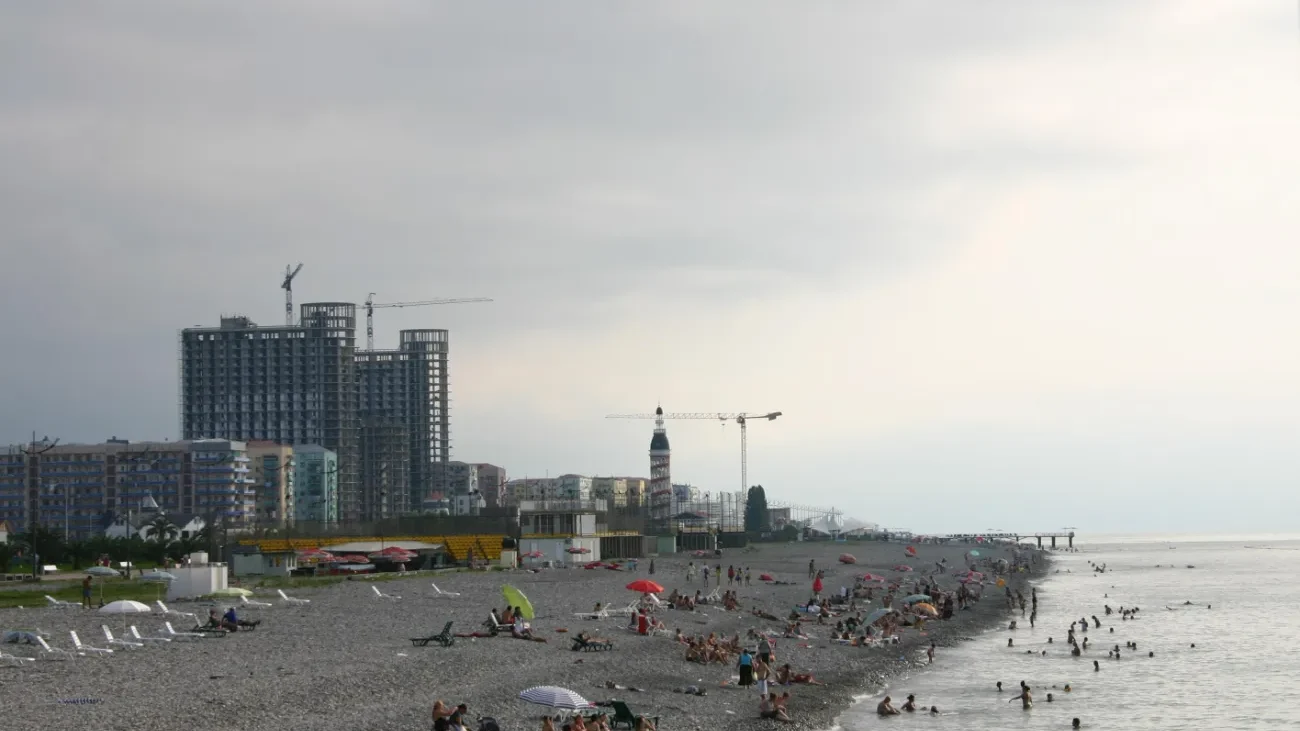
Beyond the postcards of palm trees and sea, Batumi has domestic and infrastructural specifics, which are especially noticeable when living all year round. Below is a systematic overview of the risks and costs, which are worth knowing about in advance to make a realistic assessment pros and cons of living in Batumi and not go wrong with the budget and expectations.
Key Thesis: "Batumi is a comfortable option for Cohabitation with the right choice of housing and spending regime. But high humidity, seasonal noise and occasional interruptions of public utilities are objective disadvantages that will require investment and discipline".
1) Humid climate, condensation and moulds
- Climate Factor: winter in Batumi is mild (≈ +10°C) but very humid; precipitation and fogs increase condensation in flats, especially on the first line and in old houses.
- Comfort Costs: air dryer $120-200, convector/inverter $60-150, antifungal products and ventilation are a must.
- Indirect Costs: The electricity bill in winter rises to $60-120/month. instead of conditional $30-60 without heating.
"High humidity is a major household challenge. Without a dehumidifier and intelligent ventilation, the risks of mould are high, especially from November to March" - important to consider when choosing a flat.
2) Winds and storms, coastal vulnerability
- Stormy periods: late autumn to winter. Wind gusts limit walks on the embankment, sometimes damaging facade elements and supply lines.
- Implications for everyday life: Localised light/internet outages for hours, rare gas/water cuts - reason to keep a powerbank, mobile internet and torches.
- Prevention: choose homes with standby generator and water tanks; check the condition of the roof and window assemblies before removal.
3) Seasonal noise, crowds and price hikes in summer
- Peak season: July-August. The first line turns into a "party until night" like in popular Black Sea resorts; traffic and queues grow.
- Money for silence: Noise insulation, tight curtains, sash sealing - one-offs $100-400 depending on the volume; priority - windows to the courtyard and floor above 10.
- Price Fork: rent for a 1-bedroom jumps from $300-500 off-season to $800-1 200+ in the summer; taxis on peak nights - $4-7 vs. $3-6 usually; waterfront cafes add a seasonal markup of 10-30%.
4) Utility and household "surprises"
- Lack of central heating: most homes rely on air conditioners/heaters. This increases bills and requires ventilation discipline.
- Shutdowns and preventive maintenance: There may be short-term light/gas/water cuts; some houses have token/coin "pay lifts" - lay in small regular payments.
- Reliability Reserve: UPS/UPS for router $80-150, additional mobile package 10-25 GB $5-10/month., lanterns/battery lamps $20-40.
"Batumi's communal realities are not a catastrophe, but neither are they the "European default standard". A house with a generator and a savvy MC is the difference between 'stable' and 'nervous' in winter".
5) Holiday apartments ≠ accommodation for permanent residence
- Plans for the short term: Studios 25-35 m² with kitchenette, poor noise insulation and no fixed heating - typical format on the first line.
- Additional Spending: Domestic refurbishment - dishwasher, cupboards, heating, dehumidifier - one off $500-1 500; condos in complexes - $0.5-1.5/m²/month.
- Dampness risk: especially in apartment stock with economical waterproofing; carefully inspect corners, balcony joints, ceiling after rains.
6) Limited choice of goods and entertainment out of season
- Retail and leisure: some tourist cafes and entertainment centres close in winter; it is easier to go to Tbilisi/online for rare brands and speciality goods.
- Import basket: appliances/brands may cost 5-20% more relative to larger markets; model selection is limited.
- Urban Environment: periodic complaints about the smell of sewage after heavy rains in some neighbourhoods - a typical problem of storm water drainage in seaside towns.
7) Legal and organisational nuances
- Visa-free and visaran: 365 day rule is a strong plus, but entry conditions to any country can change; "visaran" to Turkey/Armenia once a year requires planning, best not to leave as a family at the same time.
- Taxes and residency: It is important for remote professionals to keep track of their country's and Georgia's tax residency statuses, double taxation treaties and special regime limits; consulting an accountant - $50-150 for the session.
8) Local labour market and offline income
- Seasonality of the economy: offline opportunities are tied to tourism and service; off-season demand is lower and salaries are more modest than in the capital. For expats, the following is more relevant remote work.
- Income Stabilisation: co-working spaces $100-150/month., home internet $10-15/month.; back-up communication is mandatory in winter.
9) Transport parts
- It's expensive and takes longer in the summer: taxis grow due to demand, waiting times increase; public transport remains cheap but congested towards the boulevard.
- Car parking: in courtyards and along streets, spaces are limited in season; in complexes underground parking - $20-60/month.
Conclusion
The bottom line is simple and honest: Life in Batumi all year round is a realityIn summer, the city is a noisy and expensive resort in winter. In summer the city is a noisy and expensive resort, in winter - a calm sea rhythm and tangible savings on rent. A realistic budget for one - $900-1 400 off-season and $1 400-2 200 summer. For Cohabitation it is critical to check heating (inverter/heating), ventilation and humidity, noise and work of the Management Company; for long-term rentals, fix "summer surcharge" (~$70-100 for the peak month). In this way you will get exactly the experience that people come to Batumi for: the sea, greenery in winter, affordable living and stable infrastructure all year round.
Recommendation: Before deciding to move, check out the city in both seasons (at least a week each) and evaluate housing options in 2-3 lines from the sea - quieter in summer and cheaper with comparable comfort.
Your comfort is our concern. Our company is professionally engaged in the selection of property in Batumi for purchase: we make comparative analyses of locations and houses, check the property in the registry and the seller's documents, assess humidity and engineering risks, bargain for the price, accompany the transaction until registration and help with post-service (internet, condominium, rental management).
Get a free consultation - We will analyse your request and offer ready-made options to fit your budget.
 +995 511 114 899
 hello@residence-estate.ge
 Georgia, Batumi, Sherif Khimshiashvili str. 1, office 1204


 Get catalogue of TOP-7 objects