
 +995 551 50 18 84



Legal basis and peculiarities of real estate registration in Georgia
- Real estate registration in Georgia is done through the unified electronic Public Registry at the Ministry of Justice and usually takes from a few hours to 4 working days.
- Foreigners are free to purchase flats, houses and commercial property on an equal basis with Georgian citizens; the exception is agricultural land.
- A notary is not required for the transaction (except in certain cases), the package of documents is minimal: passport, contract and proof of payment are often sufficient.
- The state fee depends on the speed of registration: approximately $55-$128; there are no taxes on purchase.
- Key sources and references: Public Registry - National Public Registry Agency, Public Service Hall, profile reviews by Prian, Korter, Sea Inside.
Legislative framework and registration authorities
- The registration of property rights in Georgia is based on the norms of the Civil Code, the Law on Public Registry and by-laws of the Ministry of Justice. The register is maintained by the National Agency of Public Registry under the Ministry of Justice through the electronic system of registration of property rights.
- A network of Public Service Halls (Public Service Halls) provides document reception and one-stop-shop services: psh.gov.ge. Filing is possible in person, through a representative by power of attorney, and some services can be done remotely.
"The registration of ownership in Georgia is conducted through a single electronic registry, which ensures speed and transparency for applicants"
Rights of foreign purchasers
- Foreign citizens and foreign companies have the right to acquire ownership of flats, houses, offices, commercial premises and other non-agricultural objects - under conditions comparable to Georgian citizens.
- Restriction: agricultural land plots cannot be owned by foreigners; exceptions - inheritance or acquisition if Georgian citizenship is available.
Important: attempts to circumvent the ban on agricultural land through nominal structures with local legal entities carry a high legal risk of the transaction being invalidated. The conservative strategy is to exclude such properties or structure ownership in strict compliance with local law.
Procedure and electronic registry: what ensures transparency
- The process of registering real estate in Georgia formalised and standardised: contract + application + ID + confirmation of settlements → entry in the register → issuance of an up-to-date electronic statement with a QR code.
- Proof of ownership in Georgia - an electronic extract from the register. Paper "certificates" are not issued; the entry in the register and the electronic document, which can be checked online, have legal force.
- Data on the current owner, encumbrances (mortgage, seizure, lease) and characteristics of the object are requested by cadastral code. The extract can be obtained online if the code is available or at the House of Justice.
Documents and contractual requirements
- Minimum package: buyer's passport (for a foreigner), sale and purchase agreement, proof of payment (bank receipt / receipt), application form.
- Language and Form: the contract is drawn up in Georgian; usually a bilingual version (Georgian + buyer's language) is prepared. If the parties do not speak Georgian, an accredited interpreter is obligatory at the signing.
- Where to sign: at the House of Justice - on a standard form in the presence of a registrar (simple transactions), or at a notary with subsequent submission to the registry.
- Power of Attorney Transactions: if the power of attorney is issued abroad, the agreement is subject to mandatory notarisation.
Key norm: "Notarisation of real estate is not necessary for simple transactions, but is required for remote clearance under a foreign power of attorney or complex conditions (instalments, mortgages, corporate structures)."
Timing and cost of registration
- Standard term - 4 working days.
- Accelerated registration of real estate available for a surcharge: 1 working day or "same day" (a few hours) - provided by Justice Houses.
- State duty for registration of real estate in Georgia (indicative, including VAT 18%):
- Standard: 150 GEL ≈ $55
- Fast: 270 GEL ≈ $100
- Same day: 350 GEL ≈ $128
- Costs are by law often assigned to the seller, but in practice the parties may agree on a different allocation of costs.
Taxes and related payments on purchase
- Purchase Tax: no; only the state duty of the registry is payable upon transfer of ownership.
- Notary and translation: payable if necessary. Typical forks: notarised contract - from ~$70-$150+ depending on the tariff and complexity; translation and translator's presence - ~$4-$20 per page and ~$10-$20 for participation. Some agencies include translation in their services.
- Legal due diligence (due diligence of real estate in Georgia): market benchmark - about 1% of the object price for complex support (rights verification, contract, consultations).
Stages of the process of buying and registering real estate in Georgia
Below is the official, step-by-step procedure of how the registration of real estate in Georgia takes place: from preliminary inspection of the property to obtaining an extract from the Public Registry. We specify documents, deadlines, estimated costs in $, as well as provide links to authoritative sources.
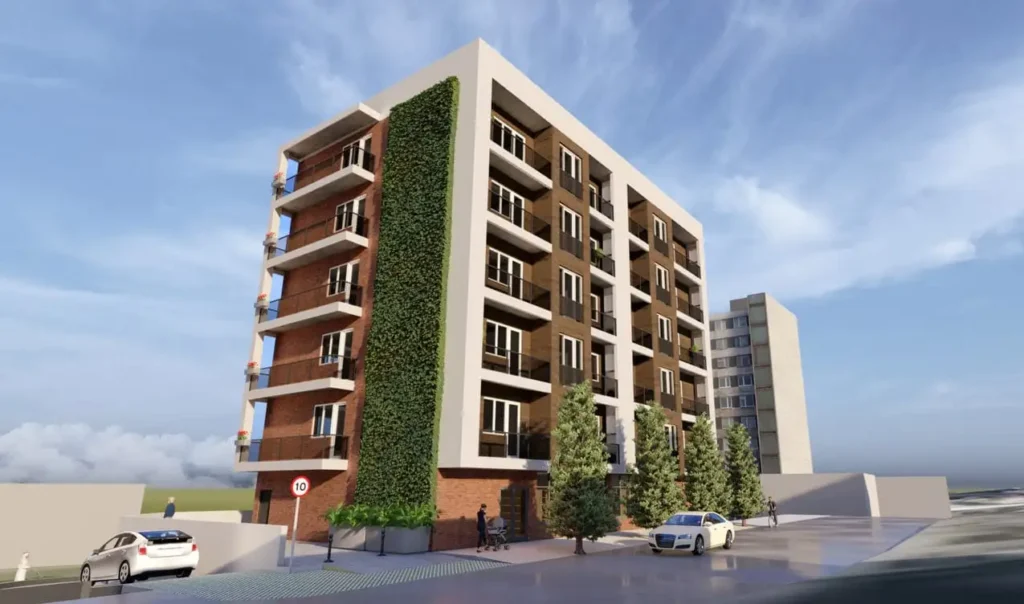
Real estate in Georgia


 Tbilisi, Isani
 from 24.6 m²


Step 1: Preliminary due diligence (due diligence) of the property and the seller Objective: confirm ownership, absence of encumbrances and legal risks before depositing money. What to check:
- An up-to-date extract from Public Registry (NAPR) by cadastral codeOwner, encumbrances (mortgage, seizure), restrictions and basic characteristics of the object.Compliance of the actual area and layout with the data of the register, legalisation of alterations, absence of the status of a cultural heritage object (if relevant).Status and capacity of the seller, marital status (consent of the spouse in case of jointly acquired property).
Step 2: Preliminary agreement and deposit (optional) Objective: fix the price and withdraw the object from sale while the documents for the main transaction are being prepared. Practice: the parties sign a short preliminary contract with the amount and terms; a deposit is made deposit and, if necessary, a record of the encumbrance (deposit) is registered in the registry.
- The amount of the deposit: generally 5-10% on the secondary market and 20-30% in a new building.Where to formalise: at a notary or at the House of Justice; by registering a record of the deposit, the object is effectively "blocked" from resale.
Step 3: Drawing up the main sale and purchase agreement Signing options:
- At the House of Justice on a standard bilingual form in the presence of the registrar (often for simple transactions).Notary with subsequent electronic submission to the registry (convenient in case of complex conditions, instalment, pledge or proxy transaction).
Key rule: for remote purchase by foreign power of attorney the main contract must be notarised.
Timeline: 1 day for preparation and signing (if documents are ready).
Expenses: notarial agreement $70-$150+ (depends on the tariff and complexity); translation of the contract $5–$10/страница, the presence of an interpreter $15-$30. If you register directly at the House of Justice without a notary - there may be no additional costs.
Step 4: Transfer of money and confirmation of settlement Settlement methods: bank transfer (international or within Georgia) or cash (more often in USD/GEL) - by agreement of the parties.
- Intra-Georgian transfers are usually fast; for large amounts, banks set the daily limits - International transfers may require supporting documents (source of funds, contract) from the sending bank.Document the payment: keep the bank receipt or receipt - these must be attached to the registration.
Cost Benchmark: Bank fees vary depending on jurisdictions and tariffs; for international transfers, lay a margin $50-$150 on commission/conversion. Intra-Georgian transfers - usually cheaper, but depend on the bank.
Step 5. Registration of ownership right in the Public Registry
Where to Serve: in any Public Service Hall. or through a notary (electronic filing). Document Packet:
- Application of the established form;Buyer's passport (for foreigners - foreign passport);Contract of sale (in Georgian/bilingual);Proof of payment (receipt/receipt);Additionally, if necessary: power of attorney, spouse's consent, other supporting documents.
State duty (including VAT 18%): standardly ~$55in one day - ~$100"same day," - ~$128. Legal effect: The right of ownership arises from the moment the entry is made in NAPR electronic registry. A separate "paper certificate" is not required.
Step 6: Obtaining a statement (proof of entitlement) and post-steps Extract from the register is available online (with a QR/barcode for authentication) or at the House of Justice. Notarisation of such a statement is usually not required. What to do next (recommended):
- Keep electronic and hard copies of the contract, receipts and statements (cloud and offline).Notify the management company/condominium (HOA), reissue utility bills.For investment purposes and HUD - prepare a valuer's report and a package of documents for the migration service (for objects from $100 thousand).
The process of real estate registration in Georgia is formalised and predictable: one visit, minimum package of documents, clear fees and fast deadlines. The key to a safe transaction is legal due diligence at the start and correct documentation of settlements.
Timeframe for registering real estate in Georgia: how long will it actually take?

The official timelines, fees and organisational details below are based on the Public Register (NAPR) and the Houses of Justice. For clarity, a comparison of the regimes, key factors that really affect duration, and cost benchmarks in $.
Basic registration regimes and state duty
Standard operating procedures for the transfer of ownership in Georgia is 4 working days from the moment the application is submitted to the House of Justice or electronically transmitted by the notary. This is established by practice and explanations of the state and relevant resources.
| Registration option | Due date | State duty (including VAT) | Benchmark at $ |
|---|---|---|---|
| Standard | 4 working days | 150 GEL | ≈ $55 |
| Accelerated | 1 working day | 270 GEL | ≈ $100 |
| Instant | On the same day (a few hours) | 350 GEL | ≈ $128 |
The filing of documents is done through the Public Service Hall or by electronic transmission by a notary public; the record and entry is kept by the National Agency for Public Registry (NAPR).
Key reference point: "Registration timescales range from a few hours (instant service) to 4 working days (standard)."
What really affects the deadline: delay and acceleration factors
- Completeness of documents at the time of filing. Errors in data (misprints in name/passport number, incorrect cadastral code) lead to return and resubmission - plus 1-2 days for corrections.
- The need for notarisation. For foreign power of attorney transactions, the main contract is notarised - add time for recording, translating and uploading the file to the registry.
- Availability of an interpreter. If the parties do not speak Georgian, an accredited interpreter is required at the signing - this organisationally adds 1-3 hours to the transaction day.
- PSH Branch Loads. During the season (e.g. summer in Batumi), the wait for an appointment window can increase; allow time for queuing, or choose morning slots.
- Bank Settlements. International transfers can take 1-3 banking days. If proof of payment is required by submission, the registration deadline will be pushed back to the time of receipt of funds.
- Encumbrances and associated permits. Withdrawal of the mortgage by the bank, consent of the spouse, permission of the guardianship authorities (if the share of a minor) - formally it is a pre-stage, but it is he most often "eats" the calendar time before registration.
Practical chronology of the transaction (benchmark)
- T-2/T-1 day: Due diligence, extract from the register, agreement on the terms and conditions of the contract. If necessary, appointment with a notary and translator.
- T0 (the day of the transaction): signing of the contract at PSH or at a notary; payment; submission of the application to the registry (on site at PSH or electronically by a notary).
- T0 + 2-6 hours: if you choose the "instant" service - ready record and electronic NAPR statement (QR code).
- T+1 working day: Expedited registration (at a rate of 270 GEL).
- T+4 working days: standard registration (at a rate of 150 GEL).
Legal point: ownership arises from the moment of making an entry in the NAPR electronic registernot from the date of signing the contract. A paper "certificate" is not required; an electronic statement is used as proof.
How much it costs to accelerate registration and when it is needed
The choice of accelerated mode is justified when:
- the buyer and seller are limited in time (business trip, tourist trip);
- need prompt re-registration for bank/third party settlements;
- an object with a high demand is purchased and quick fixation of the right is important.
Approximate cost of acceleration (the difference between standard and accelerated versions) - $45-$73 on top of the base tariff (between 150 and 270/350 GEL).
Costs when registering real estate: fees and additional costs

Official payments at the transfer of ownership in Georgia are transparent and predictable. Below is a cost structure with indicative amounts in $, when they are required and on whom they are usually imposed. We point out primary sources and explain how to optimise the transaction budget.
Key fact: when buying a home in Georgia no purchase tax; only the state duty of the registry (including VAT 18%) is paid. The costs of registration by law are often borne by the seller, but the parties are free to agree otherwise.
1) State duty for registration of ownership rights
What we're paying for: making a record of the transfer of ownership right in the electronic register of NAPR (through Houses of Justice).
- Standard (4 working days): 150 GEL ≈ $55
- Expedited (1 working day): 270 GEL ≈ $100
- Instant (on the day of submission, a few hours): 350 GEL ≈ $128
Who pays: by default - the seller (unless otherwise stated in the contract). In practice, the parties often split or transfer the expense to the buyer.
2) Notary services (if necessary)
When you need it: complex transaction terms (instalments/pledge), transactions under a foreign power of attorney (notarisation of the agreement is mandatory), execution in the absence of personal presence of the parties.
- Cost Range: benchmark $80-$160+ for a notarised contract (depends on the tariff and complexity).
- Many notaries file documents with the registry electronically, which saves a visit to the House of Justice.
Important: in case of a transaction under a power of attorney issued abroad, the main contract must be notarised (relevant for 2024-2025.
3) Contract translation and translation services
When you need it: if the parties do not speak Georgian. An accredited interpreter is required at the House of Justice; the contract is bilingual (Georgian + buyer's language).
- Written translation: benchmark $5–$10/страница
- The presence of an interpreter at the transaction: benchmark $15-$30
- Some agencies include translation in the cost of accompaniment.
4) Due diligence and support (due diligence)
What's included: checking the history of the object and the chain of rights, analysing encumbrances and risks, preparing the contract, supporting the submission to the registry.
- Cost Benchmark: around 1% of the object price for comprehensive support (market).
Recommendation: skimping on due diligence often leads to delays in registration (removal of mortgage, spousal consent) and unplanned expenses. Check the property before making a deposit.
5) Bank charges and settlements
When arising: when transferring money internationally for a transaction or for interbank transactions. Intra-Georgian transfers are usually instantaneous, but banks have daily limits.
- International translation: set a benchmark $50-$150 for commission and conversion (depends on the bank/country of dispatch).
- Intra-Georgian translation: usually cheaper; check your bank's rates.
- Document the payment: A bank receipt (or receipt) will be required for registration.
6) Real estate valuation for residence permit (if necessary)
When you need it: if the purpose is to apply for a residence permit on the basis of a purchase; to confirm the value threshold (currently the benchmark is from $100 000 for temporary residence permit) requires a report of an independent appraiser.
- Report Cost Benchmark: $100-$300 depending on the city, area and preparation time.
7) New buildings: connection of communications and final payments to the developer
When arising: When the house is handed over and the acceptance certificate is signed, the developer may charge one-off fees for commissioning/connecting utilities, registration of meters and access cards.
- Landmark: according to the price list of the developer; in a lot of projects there is a range of $100-$500+ (for premium complexes - higher). Please specify in the equity participation agreement/investment contract.
8) Real estate agency commission (if involved)
Who pays: In the Georgian market, the commission is more often paid by the seller; the services are often free of charge for the buyer. However, the conditions depend on the agreement of the parties.
- Commission Reference Point: ~3-5% from price (usually at the seller's expense).
Summary of a typical transaction budget (example)
Buying a flat for $100,000 with no loans and no complicated conditions:
- State duty for registration (4 days): ≈ $55 (or $100/$128 at acceleration)
- Translation and Interpreter: ≈ $30-$80 (depends on volume and tariffs)
- Legal Verification: ≈ $1 000 (1% of price; optional but recommended)
- Bank charges (international transfer): ≈ $50-$150
- Notary Public: $0 when executed at the House of Justice; for a notarised contract - ≈ $80-$160+
Total Benchmark: from $135-$285 in the basic scenario without a lawyer and notary; with full due diligence and notarisation - of approx. $1 265-$1 475. This is an estimate for planning purposes; final amounts depend on the enrolment mode chosen, the range of services and bank rates.
Pitfalls and risks when registering real estate in Georgia

Property registration in Georgia is fast and technologically advanced, but it is the "simplicity" that often relaxes buyers. Below is a systematic overview of the key risks and ways to minimise them, with references to primary sources and approximate costs.
Main Thought: The majority of problems do not arise at the registration stage per se, but rather prior to submission - with incomplete due diligence, errors in documents and non-transparent calculations.
1) Legal cleanliness: encumbrances, history of rights, conformity of the object
Risk: hidden mortgages, arrests, unregistered rights of third parties, discrepancy between the area/planning data in the register, shares of minors, lack of spousal consent.
- What to check: recent extract from Public Registry (NAPR) by cadastral code: owner, encumbrances, restrictions, basic characteristics.
- Family law aspects: consent of the spouse in the case of jointly acquired property, prohibition of alienation without the permission of the guardianship authorities in the case of shares of minors.
- Techcharacteristics: legalisation of alterations, accuracy of address, area and cadastral code, absence of the status of a cultural heritage object (imposes obligations).
Important: NAPR statement shows the current status and encumbrances, but does not always reveal potential claims (inheritance disputes, etc.). A full due diligence reduces the risk of a transaction being challenged.
Cost Benchmarks: Due diligence - approx. 1% of the object price (market); registration fees for filing - (market); and $55 / $100 / $128 depending on the urgency.
2) Restrictions for foreigners and specifics of objects
Risk: purchase of objects with limited turnover or special duties.
- Farmland: foreigners can't Acquire ownership of agricultural plots; inheritance or purchase is permissible if Georgian citizenship is available.
- Cultural Heritage: Historic buildings may have conservation status, which entails preservation and repair requirements - check the status in advance.
- Land Use Designation: The intended use (residential/commercial, etc.) does not change automatically when the ownership changes; a separate administrative procedure is required to change it.
Warning: attempts to "circumvent" the ban on agricultural land through nominal structures with a local legal entity carry a risk of invalidity of the transaction. The conservative position is not to buy such plots.
3) Powers of attorney, notarisation and language requirements
Risk: denial of registration due to the form of the transaction and language barriers.
- Foreign Power of Attorney: in case of remote purchase by power of attorney issued outside Georgia, the contract must be notarised.
- Contractual language: the text is written in Georgian; usually a bilingual version is made. If the parties do not speak Georgian, an accredited interpreter is required at the signing.
Cost Benchmarks: notary $80-$160+; translation $5–$10/стр.; presence of an interpreter $15-$30.
Key rule: simple transactions can be formalised at the House of Justice without a notary, but in the case of a foreign power of attorney, the notarial form is mandatory.
4) New buildings and the right of claim
Risk: Confusion between the "right of claim" in a property under construction and final ownership; delays due to the developer's authorisation documentation.
- During the construction phase, the following shall be recorded right of claim (reservation of the future flat) in the register; ownership is confirmed after commissioning of the building and acceptance certificate.
- Check with the developer: building permit, technical plan, bank accreditation of the project - an indirect indicator of reliability.
Cost Benchmarks: registration of the contract/right of claim - at NAPR tariffs (usually the same $55 / $100 / $128 depending on urgency); legal due diligence of the developer - from market practice ~1% prices (by arrangement).
Tip: fix the commissioning dates and liability for delays in the contract; check whether the developer has entered all documents into the registry before you submit them.
5) Errors in documents and identification
Risk: misprints in names, incorrect transliteration, incorrect passport number or cadastral code - grounds for returning documents and resubmission.
- The data in the contract must literally match with passport (Latin alphabet) and Georgian transliteration; address and cadastral code - as in the extract.
- Check that the statement shows the exact object (floor, apartment/parcel number) inspected.
Practice: any inaccuracy leads to correction and resubmission (minimum +1 day) and additional visits. Prevent this with a preliminary "checklist".
6) Fraudulent schemes and human error
Risk: transactions under cancelled powers of attorney, "double" promises to sell, concealment of encumbrances, unjustified cash advances.
- Demand recent statement from NAPR immediately before signing; check the validity of the power of attorney.
- Do not hand over a deposit without a written contract and an entry in the register; confirm all settlements with bank documents.
A technological barrier to fraud: a single electronic register with record verification (including blockchain technology) minimises the risk of rights forgery; the vulnerability lies in the negligence of the parties.
7) Settlements, AML checks and currency risks
Risk: transaction delay due to bank limits, source of funds checks, exchange rate difference on conversion.
- International transfers can go 1-3 banking days; banks have the right to request documents (contract, source of funds).
- Intra-Georgian transfers are faster, but daily limits apply - agree in advance.
- Fix the settlement currency and rate in the contract; keep receipts/receipts.
Cost Benchmarks: international commissions and conversion - usually $50-$150 depending on the bank/country.
8) Post-registration issues: utilities and management
Risk: technical blockages and domestic inconveniences due to unsettled accounts and management issues.
- Ask the seller for proof of no outstanding electricity, water, gas and condominium (HOA) fees.
- Immediately after registration, notify the management company and reissue personal accounts.
Reminder: Formally, debts are the responsibility of the former owner, but the "human factor" (failure to make payments/disconnections) can create problems for the new owner if contracts are not reissued in time.
Practical tips for buyers: a checklist before registering

This section is a concentrate of practice: what exactly to check and prepare before signing the contract and submitting to the Public Registry. We will outline the key steps, time and cost benchmarks in $, and provide references to authoritative sources.
Purpose of the checklist: minimise legal and organisational risks, shorten the registration period and avoid unnecessary expenses.
1) Documents and due diligence before depositing money
- Request a recent NAPR extract by cadastral code. Check the owner, encumbrances (mortgage, seizure), restrictions and basic characteristics of the property. The extract can be obtained online or at the House of Justice.
- Reconcile the technical data of the facility. The area, layout, apartment/plot number, address and cadastral code must literally match the extract. Make sure that alterations are legalised; for houses, that the land plot and the structure are registered.
- Check the seller's identity and family and legal circumstances. Passport data, legal capacity, consent of the spouse in case of jointly acquired property; in case of shares of minors - permission of the guardianship authorities.
- Eliminate "underwater statuses." Clarify whether the site is not a cultural heritage site (imposes obligations) and what the intended use of the land is.
- Ask for certificates of no utility debts and no condominium fees. This will reduce household risks after the transaction.
- If you're buying for residence permit: order an independent market assessment in advance (usually $100-$300) to confirm the price threshold (benchmark from $100,000).
- Due diligence from a lawyer. A full audit of the history of rights, encumbrances and documents is recommended (benchmark is ~1% of the object price).
Important: NAPR statement reflects the current status, but does not guarantee the absence of a potential claims (e.g. from heirs). An in-depth check by a lawyer reduces the risk of challenge.
(2) Treaty: form, language, notarisation
- Prepare a bilingual contract (Georgian + your language). If you do not speak Georgian, an accredited translator is involved in the signing. Orientations: written translation $5–$10/стр., the presence of an interpreter $15-$30 .
- Identify the location of the signing: House of Justice (simple transactions, no notary) or notary (complex terms, instalments, mortgages, corporate schemes).
- Purchase under a foreign power of attorney: the main contract must be notarised (current 2024-2025). Notary cost benchmark: $80-$160+.
- Terms of Reference for the contract: fix the full price, currency, settlement schedule, transfer of keys/possession, warranty statements of the parties (no hidden encumbrances), liability for breaches and dispute resolution regime.
- Preliminary contract and deposit (optional): deposit usually 5-10% (secondary) or 20-30% (new buildings). When a record of the deposit is registered in the registry, the object is "blocked" from resale.
Key rule: simple transactions can be authorised at the PSH without a notary. But In case of remote purchase by foreign power of attorney, a notarised form is mandatory.
3) Payment and confirmation of settlements
- Choose your payment method in advance: bank transfer (international/international) or cash (by agreement). For international transfers, please note the following commissions $50-$150 and 1-3 banking days for receipt.
- Agree on the currency and exchange rate. Define in the contract who bears exchange differences and commissions and in which currency the fulfilment of obligations is deemed to take place
- Support the payment with documentation. Keep the bank receipt or receipt - they will be attached to the registration of the right.
- Check your bank limits. Intra-Georgian transfers are usually instant, but each bank has different limits on the amount per day - check in advance.
Tip: synchronise the moment of payment and submission to PSH, so that in case of "instant" registration (same day) all documents - including payment documents - are ready.
4) Filing for PSH registration and speed selection
- Submit an application and a set of documents to PSH or ask the notary to send it electronically. Package: application form, passport, contract, proof of payment, power of attorney and spouse's consent if necessary.
- Select the registration mode and pay the fee: standard - $55 (4 working days), accelerated - $100 (1 day), "same day". - $128 (several hours).
- Control the outcome: After making the entry, you will receive an electronic statement with a QR code (no additional authorisation is usually required).
Legal point: ownership arises from the date of entry in the NAPR electronic register, not from the date of the contract.
5) Special cases: new buildings, houses, land, commerce
- New Buildings: during the construction phase is registered right of claim; ownership - after commissioning and acceptance certificate. Check the construction permit and the developer's documents.
- Private homes: make sure that the land and the building are correctly registered together; check the cadastral boundaries.
- Land (non-agricultural): check the intended use and possible restrictions (easements, protection zones). Foreigners are not allowed to buy agricultureof the land.
- Commerce: clarify the presence of tenants and terms of contracts - they remain valid when the owner changes; when buying on the company, prepare the founding documents.
6) Post-registration steps
- Re-register your utilities and bills with the condominium (HOA). Request final invoices from the vendor to avoid disconnections.
- Keep a set of documents. Contract, receipts, NAPR statement - keep in paper and electronically (cloud).
- Planning a residence permit: prepare the package for filing (contract, statement, appraiser's report, etc.).
Real-life examples and timelines: what happens in practice

In this section, practical scenarios reflecting how real estate registration in Georgia actually takes place: timelines, typical costs in $, bottlenecks. All cases are aligned with the regulations of the Houses of Justice and Public Registry (NAPR), and key figures are confirmed by relevant sources.
Timeline: from 2-6 hours (instant registration) to 4 working days (standard), as well as delays in identifying encumbrances.
Case 1. Express "same day" registration without pitfalls
Situation. The buyer chose a flat in Batumi and checked the object in advance (NAPR statement, no mortgage). On the same day the parties signed the contract in House of Justice (PSH) and applied for "instant" registration. The entry in the registry appeared in ~3 hours; the electronic extract - the same day.
- Deadline: 2-6 hours (instant service) - practice confirms.
- Expenses: state duty $128 (350 GEL); interpreter at signing (if required) $15-$30translation $5-$10/str.
- Documents: passport, contract, proof of payment.
Conclusion: if the documents are fully ready and there are no encumbrances, it is realistic to obtain ownership on the day of submission.
Case 2. "Hidden" mortgage and postponement of the registration date
Situation. When preparing the deal near Tbilisi, the check showed a mortgage in favour of the bank. The seller repaid the loan, but it took ~2 weeks to remove the mortgage (bank + update in the registry). The registration of ownership was carried out according to the standard regime.
- Deadline: 2 weeks for unencumbering + 4 working days for registration (or 1 day/same day for additional fee).
- Expenses: state duty: $55 (standard) or $100/$128 (acceleration); due diligence from a lawyer - a reference point ~1% of the object's price.
- Source of risk: ignoring the "encumbrances" field on the NAPR statement.
Conclusion: even "uncomplicated" mortgages move the timeline. The basic way to avoid postponement recent statement from the registry prior to signing and due diligence.
Case 3. Remote purchase under a foreign power of attorney
Situation. The investor formalises the transaction without visiting the country using a power of attorney issued abroad. Due to current regulations, the main contract is subject to notarisation; connect translator, notary and electronic filing with the registry.
- Deadline: day of transaction + 1 working day for registration (at a rate of 270 GEL) or "same day" for 350 GEL.
- Expenses: notary $80-$160+; translator/translator $5–$10/стр. и $15-$30; state duty $100 (1 day) or $128 (same day); international bank charges may apply $50-$150.
- Norma: in case of a foreign power of attorney, a notarised form of contract is mandatory.
Conclusion: remote purchase takes the same amount of time as in-person purchase, but adds a block of costs for a notary and translator. Otherwise, the procedure is standard; filing is often done electronically by a notary.
Case 4. New building: from the "right of claim" to the right of ownership
Situation. The buyer has entered into a contract with a developer at the excavation stage. The registry registered right of claim (reservation of the future flat). After commissioning of the building and acceptance certificate - registration of ownership.
- Deadline: registration of the claim - within 1 day/"same day" according to the tariff; final registration of ownership - in the selected mode (4 days, 1 day, "today") after commissioning of the house.
- Expenses: state duty for each registration: $55 (4 days) or $100/$128 (acceleration); possible developer's fees for connection of utilities - benchmark $100-$500+.
- Risks: Delayed commissioning, incomplete permit package from the developer; check building permit and project accreditation with the bank.
Conclusion: on new builds is happening at the very least two registration: of the claim and final ownership. Allow for the costs and timing of both stages.
Summary timeline and costs (by case)
| Scenario | Real term | Key spends |
|---|---|---|
| Risk-free express | 2-6 hours | State duty $128; translator $15-$30 |
| With a mortgage | ~2 weeks (withdrawal) + 1-4 days registration | State duty $55-$128; due diligence1% prices |
| By foreign power of attorney | 1 day/"today" after signing at the notary's office | Notary $80-$160+; translation $5–$10/стр.; state duty $100-$128 |
| New building | Registration of claim rights: 1 day/"today"; title - after commissioning | State fees for 2 stages: $55-$128 × 2; communications $100-$500+ |
What to expect on the ground: organisational nuances
- Queues and slot timing. During peak months (summer, Batumi/Tbilisi), it is useful to arrive at PSH opening; instant service depends on branch utilisation.
- Bank Settlements. International transfers take 1-3 banking days and cost $50-$150; for "instant" registration, it is better to have a ready-made receipt.
- Translator/language. If you do not speak Georgian, allow +1-3 hours to organise a bilingual contract and an interpreter.
Bottom line: In practice, registration in Georgia confirms the reputation of being "fast and transparent": with ready documents - on the same day; at standard feeding - 4 working days. Timing shifts are almost always related to encumbrances, settlements and the form of the transaction (notary, transfer).
Conclusion
Registration of real estate in Georgia - a really fast and transparent process: with the documents ready, the right can be formalised on the same day (instantaneous) or standard 4 working daysand fixed fees are approximated as follows $55-$128. That being said, the key to a safe purchase is to buy competently due diligenceA correct form of contract (especially in foreign power of attorney transactions) and documented settlements. If you are looking for a turnkey solution rather than a simple "flat search", our team is dedicated to finding property in Georgia for your purposes (investment, residential, rental), conducts due diligence, prepares bilingual contracts, organises translator/notary and registration in the House of JusticeWe can help you to complete the transaction remotely and advise on residence permit and taxes, if necessary. Contact us to discuss your task and get an initial consultation: leave a request via the form on the page or send us a message via messenger - we will respond promptly and offer a personalised plan of support until we receive your application extracts from the register.
 Property in Montenegro
 Property in Cyprus
 Real estate in UAE
 Property in Bali
 Property in Thailand
 Property in Spain
 Property in Saudi Arabia
 Property in Turkey
 Property in Zanzibar
 +995 551 50 18 84
 hello@residence-estate.ge
 Georgia, Batumi, Sherif Khimshiashvili str. 1, office 1204



 Get catalogue of TOP-7 objects