
 +995 551 50 18 84




Georgia is one of the few countries where a foreigner can buy property with minimal restrictions, register ownership in a single day and avoid paying stamp duty. It is hardly surprising that interest in the Georgian market is growing among overseas buyers: according to figures for 2025, foreigners account for 22% of all transactions in Tbilisi and up to 80% in Batumi.
Prices for new-build properties in Tbilisi have risen by 15.4% over the past year, whilst rental yields remain at 6.5–9.6% per annum in US dollars — one of the best figures in the region. At the same time, the entry threshold remains affordable: the average price per square metre in Tbilisi starts at $1,400, and in Batumi at $1,300.
My name is Roman, and in this article we’ll walk you through the entire buying process: from choosing a property and carrying out legal checks to registering ownership and obtaining a residence permit. No fluff — just the information a foreign buyer really needs to know.
Legal status of foreigners when buying property
Foreigners can buy property in Georgia on the same terms as Georgian citizens. No special permits, registrations or approvals are required — a passport is all you need. The main thing is to choose the right property, as the variety on offer is truly impressive.
What’s available to buy:
- flats and apartments in residential complexes
- commercial property — offices, shops, hotels
- plots of land for private housing construction (PHC)
- aparthotels and properties under management
The only restriction — agricultural land. Foreign individuals are not permitted to purchase such land. If you are considering a house with a large plot of land outside the city, you must check the land’s status separately before signing any documents.
Purchase via a legal entity. Registering a company in Georgia is straightforward and inexpensive. This not only allows you to circumvent restrictions on agricultural land, but also to optimise your tax position when running a letting business. Many investors who own several properties choose this particular option the way forward for long-term investments.
Do you need a estate agent in Georgia?
Georgian law does not require the involvement of an estate agent in a property transaction: the buyer is entitled to contact the seller directly and register the transfer of ownership at the House of Justice. However, there is a caveat that changes the whole dynamic of the situation — The buyer’s agent’s services in Georgia are free of charge.
The commission is always paid by the seller and is already included in the asking price. You don’t pay anything extra on top — you simply either receive professional assistance at every stage of the transaction or you don’t.
How much do estate agent’s fees cost?
| Market | Agent’s commission | Who pays? |
|---|---|---|
| All of Georgia (standard) | 3% as a percentage of the property’s value | Salesperson |
| Batumi | 5–10% of the property’s value | Salesperson |
An important feature of the market: the majority of properties in Georgia not exclusive — The same property is being marketed by several estate agents at the same time. Choosing an estate agent does not grant access to private databases, but determines the quality of the legal due diligence, negotiations and support provided.
How to check a estate agent before a transaction
There is no compulsory licensing of estate agency activities in Georgia — in theory, anyone can call themselves an agent. From 2023, this problem will be partially resolved by Georgian National Real Estate Association (GNARE): The organisation maintains a register of certified specialists who have completed professional training.
Before signing any documents, check the agent against the following three points:
- GNARE Register — find a specialist on the official list of certified agents
- Agency agreement — it must set out the terms of the commission and the scope of services
- Extract from the Public Register — A conscientious estate agent will arrange this themselves before the viewing; you can view the property on your own at napr.gov.ge
⚠️ Red flag: If an estate agent asks the buyer for a commission ‘for finding a property’ or ‘for showing the property’, this is a breach of standard market practice in Georgia. Either refuse, or set the terms in writing before entering into any agreement.
When you really need an estate agent
It is only sensible to consider a transaction without an agent if you already know the seller personally, can read documents in Georgian with ease, and understand the registration procedure in House of Justice. In other cases — particularly when buying remotely or in the secondary market — professional support reduces risks without incurring additional costs.
If you are considering a property in Batumi or Tbilisi, agency The Residence helps you find a property that meets your specific requirements — budget, location and reasons for buying. Specialists with between 3 and 7 years’ experience in the Georgian market will guide you through the entire transaction: from the legal due diligence of the property to registration at the House of Justice, including remote transactions and subsequent property management. Our aim is not simply to close a sale, but to find the property that is right for you.
Step-by-step instructions for buying a property
Buying property in Georgia can seem complicated, but with the right approach and preparation you can avoid the hassle and enjoy the process. Let's break down each step in more detail.
1. Searching and selecting an object
Start by defining your objective: whether you’re looking for a place to live, a long-term let or a short-term let — this will determine the city, the neighbourhood and the type of property. For long-term rentals in Tbilisi, Vake, Vera and Saburtalo are suitable, whilst for short-term lets, Sololaki and Mtatsminda are ideal. Batumi is the preferred choice for holiday rentals and aparthotels.
An important point to note about the Georgian property market is that most properties are listed with several agencies at the same time, and it costs nothing to approach any of them — in Georgia, the seller always pays the commission, so the buyer’s service is free of charge. The specialists at The Residence help you find a property that suits your specific needs and budget, check that it is legally sound, and support you throughout the transaction, from the first viewing right through to receiving the title deed.
Choice of property type
The type of property should be chosen based on the intended purpose — whether for residential use, long-term letting, short-term letting or resale, the properties will differ even within the same neighbourhood.
| Object type | Suitable for | Features |
|---|---|---|
| New-build property (primary market) | Investment, resale, letting | Payment by instalments from the developer, price increases as construction progresses, the developer needs to be vetted |
| Secondary market | Accommodation, long-term let | Ready for possession; signs of wear and tear are visible; a legal check for any encumbrances is essential |
| Apartment hotel | Passive income, short-term lettings | The management company takes care of letting the property, but takes 20–40% of the income and sets its own rules |
| Commercial property | Business, lettings to legal entities | Stable tenants, a higher entry threshold, capital gains tax 20% |
| A plot of land for individual housing construction | Building a house: a long-term investment | It is essential to check the land’s designated use before purchasing it |
New-build properties: what to look out for. The Georgian property market offers three stages of completion: shell, green and white. The price and the amount of investment required for refurbishment vary significantly depending on the stage.
Aparthotels: an important point to note. This arrangement is popular in Batumi, but requires particular caution. Before buying, be sure to check the management company’s terms and conditions: commission rates, letting rules, mandatory payments and penalties for breaching the terms of the contract. Some management companies effectively restrict the owner’s right to use their property themselves.
If you’re not sure which type of property is right for your needs, our experts will help you work it out: free of charge, with no pressure, and with detailed profitability calculations.
What budget is needed to buy property in Georgia?
Before you start looking for a property, it is important to understand the actual price levels on the market — these vary significantly depending on the city and neighbourhood.
Tbilisi — prices by district (new-build properties, figures for 2026):
| Neighbourhood | Average price per square metre | The character of the area |
|---|---|---|
| Vake, Mtatsminda | $2 900–2,945 | Premium, green neighbourhoods, high liquidity |
| Chugureti, Isani | $1 440–2 235 | Proximity to the city centre, tourist traffic |
| Saburtalo | $1 647 | A modern neighbourhood, high-rise demand for rentals |
| Didi Digomi, Gldani | $1 100–1,270 | New neighbourhoods, low entry threshold |
The average price on the Tbilisi market is from $1 400/m² on the primary market and from $1 370/m² on the secondary market. Prices have risen by 5.7% over the past year.
Batumi — new-build properties cost on average from $1 400/m². Properties on the seafront and in aparthotels managed by a management company are more expensive, whilst those in residential neighbourhoods are below average.
An important point to note: in Batumi, a high-quality new-build property (still at the structural stage) often costs more than a refurbished flat in an older building — due to the poor quality of the utilities in Soviet-era buildings.
Current properties in both cities, with transparent prices and legally verified documents, are available on our website.
2. legal due diligence of real estate
This is the most important step — particularly on the secondary market and when buying new buildings in Batumi. This step must not be skipped, even if the object appears to be ‘clean’ on the surface.
The check is carried out via Public Registry of Georgia. Since 2017, the register has been secured by blockchain technology, which prevents the falsification of documents. The extract has a unique international barcode and does not require notarisation.
What is included in the statement:
- owner details
- whether there is a charge against the property
- existing mortgage
- encumbrances, restrictions and third-party claims
For new-build properties, the building permit, the developer’s land rights and the project documentation are also checked. For aparthotels, the management company’s terms and conditions, mandatory payments and the letting procedure are checked. At The Residence, a legal due diligence check is carried out before any documents are signed – this is standard practice, not an additional service.
3. Booking and deposit
Once the property has been selected and the documents checked, the parties formalise their intention. On the secondary market, the deposit is usually 5–% of the property’s value; on the primary market (new-build), it is 5–30%. The conditions for the return of the deposit should the transaction fall through due to the seller’s fault must be specified in the reservation agreement. In some cases, the encumbrance is additionally registered in the Public Register – this protects the buyer from the property being sold to third parties in the meantime.
4. Drafting and signing the contract of sale
Once the property has been selected and the documents checked, the contract drafting stage begins. The contract is drawn up in two languages: Georgian and the buyer’s language (Russian, English, French or another). Three copies are drawn up: one for the seller and two for the buyer. Personal attendance is not required: a notarised power of attorney for a representative is sufficient – this is precisely how the majority of remote transactions are conducted through The Residence.
Private sellers often accept payment in US dollars in cash — the transfer is recorded by a receipt or notarised. Property developers mainly use bank transfers in lari. Ensure that the transfer details all the terms of the transaction, including the price, deadlines and any guarantees.
5. Registration of the transaction at the House of Justiceи
Arrange a visit to the House of Justice (psh.gov.ge) to officially register the transaction on the basis of the contract and proof of payment. This is a mandatory step that completes the purchase process. In Tbilisi and other major cities, the registration procedure is quick and efficient, thanks to the digitisation of processes. A passport is the only document required. The property can be registered in the name of an individual or a company.
| Option | Deadline | Cost |
|---|---|---|
| Standard registration | 4 working days | 150 lari |
| Accelerated | 1 working day | 270 lari |
| Urgent | On the day of the enquiry | 350 lari |
Please bear in mind the additional costs for notary fees, document translation and legal fees.
6. Obtaining an extract from the register
Once the transaction has been registered, you will receive an extract from the state register confirming your title to the property. This document serves as official proof that you have become the owner of the property in Georgia. Keep it in a safe place.
Buying property in Georgia is not just an investment, but an opportunity to become part of an amazing country. By following these steps, you will be able to enjoy your new home without any hassle.
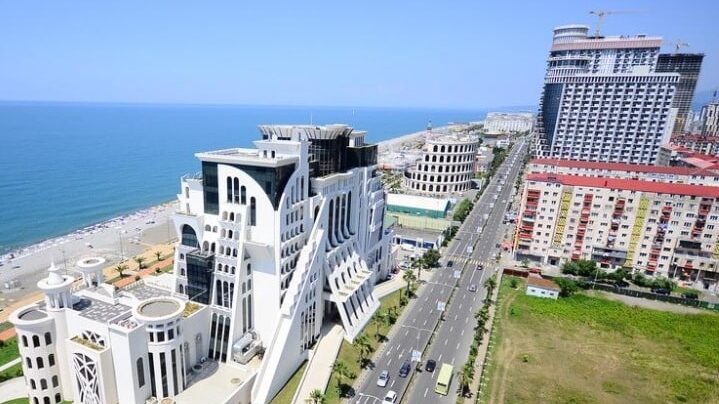
Buying property in Georgia remotely
It is not necessary to be present in person at the transaction — Georgian law expressly permits the purchase to be carried out through a representative acting under a power of attorney. The power of attorney must be drawn up by a notary in your country, certified with an apostille and translated into Georgian. From 2024, notarisation will be a mandatory requirement. The process, including translation, takes around two weeks.
The entire process, from booking to receiving the documents, takes an average of 3–4 weeks. The Residence provides comprehensive support for remote transactions: online viewings, legal due diligence, representation at the Court of Justice, and subsequent property management.
Residence permit when purchasing property in Georgia
Buying property entitles you to a residence permit — without any exams, business plans or interviews. The entry threshold depends on the value of the property:
| Cost of the property | Type of residence permit | Deadline |
|---|---|---|
| from $150,000 | Short-term | 1 year, renewable |
| from $300,000 | Investment | 5 years → indefinite |
The residence permit automatically extends to the spouse and children. After six years of legal residence, you can apply for permanent residency.
⚠️ From 1 March 2026, the minimum threshold has been raised from $100,000 to $150,000.
For full details on the terms and conditions, the required documents and any pitfalls, see our comprehensive guide: Residence permit in Georgia through the purchase of property.
Financial aspects
Buying property in Georgia requires careful planning and understanding of all financial nuances. Let's look into this in more detail.
Property taxes in Georgia
Georgia is one of the few countries with a minimal tax burden at every stage of property ownership.
| Operation | Bid | Note |
|---|---|---|
| Buying | 0% | Just the registration fee |
| Ownership | 0% – 1% | It depends on the family’s income |
| Rentals | 5% | From gross income |
| Sale of properties up to 2 years old | 5% | For residents |
| Selling a property after two years | 0% | Liberation |
| Commercial property for sale | 20% | Regardless of the duration |
| Gift/Inheritance (1st–2nd degree) | 0% | Full release |
There is no purchase tax. The annual property tax depends not on the value of the property, but on the household’s total income — if your income is up to 40,000 lari (~$14,000), you do not have to pay anything at all. Rental income is taxed at a fixed rate of 5%. If the property is sold after two years of ownership, no tax is payable — this is an important factor to bear in mind when planning your investment.
A detailed breakdown of each tax, filing deadlines and sample calculations can be found in our article ‘Property taxes in Georgia".
Property maintenance expenses
Utility bills in Georgia remain among the lowest in the region. Approximate monthly costs for a flat measuring 50–60 m² occupied by two people:
| Service | Tbilisi | Batumi |
|---|---|---|
| Electricity | 25–40 GEL | 25–40 GEL |
| Water | 10–15 GEL | 10–15 GEL |
| Gas (winter) | 80–150 GEL | - |
| Internet | 20–30 GEL | 20–30 GEL |
| Rubbish removal | 5–10 GEL | 5–10 GEL |
| Total (summer) | 60–95 GEL | 60–95 GEL |
| Total (winter) | 140–245 GEL | 60–95 GEL |
All prices are average figures and may vary depending on the residential complexes, neighbourhoods, management companies, etc.
The main difference between Batumi and Tbilisi is that there are no heating costs thanks to the subtropical climate. In new-build properties with central gas heating, winter bills in Tbilisi are significantly higher.
Detailed property management fees, broken down by service type, including costs for managing aparthotels and lifts, can be found in our article.
Mortgages and instalment plans
Foreign nationals can take out a mortgage with Georgian banks — most commonly with TBC Bank and Bank of Georgia. The main conditions for non-residents are:
- Interest rate — approximately 10% per annum in USD
- Initial payment — from 30% to 50%
- Proof of income is required
An alternative to a bank mortgage — interest-free instalment plan from the developer. Most developers in the primary market offer this payment plan for the duration of construction: the buyer pays 5–30% upon booking and settles the balance in instalments until the property is handed over. There is no overpayment, and no deposit is required.
The Residence’s specialists will help you find a property with suitable instalment payment terms or assist you with your application to the bank.
Opening a bank account in Georgia
A bank account in Georgia is not a prerequisite for buying property, but it does make financial transactions considerably easier — particularly in the case of a remote transaction or when subsequently letting the property.
The largest banks serving non-residents are TBC Bank and Bank of Georgia. Both offer multi-currency accounts in GEL, USD and EUR. It takes 1–2 working days to open an account; all you need is your passport and, in some cases, proof of income. You can open an account remotely or at a branch during your first visit to Georgia.
Detailed step-by-step instructions, a list of the necessary documents and a comparison of banks’ terms and conditions — in our article ‘Opening a bank account in Georgia".
How to transfer money to buy a property
The main methods of international money transfer for paying for property in Georgia:
| Method | Limit | Features |
|---|---|---|
| SWIFT transfer | No restrictions | Standard bank transfer, taking 2–5 days |
| Wise | Up to $1.6 million | Low fees, fast, convenient for individuals |
| PayPal | Up to $60,000 | Suitable for small amounts and deposits |
| Cash | No restrictions | These are recorded by a receipt or notarised |
| Cryptocurrency | No restrictions | Through a licensed crypto service |
How to choose the right property
The right property isn’t the one that appeals to you visually, but the one that suits your purpose. The location, type and layout of the property are chosen precisely with that in mind.
| Purpose | City | Neighbourhood | Object type |
|---|---|---|---|
| Holiday rentals | Batumi | City centre, waterfront | An aparthotel or a flat by the sea |
| Daily rental | Batumi / Tbilisi | City Centre, Sololaki, Mtatsminda | A flat in the city centre or a historic district |
| Long-term lease | Batumi / Tbilisi | New districts: Vake, Vera, Saburtalo | A refurbished flat, either on the secondary market or in a new-build development |
| Resale | Batumi / Tbilisi | Areas undergoing rapid development | A new-build property at an early stage |
| Relocation / Accommodation | Batumi / Tbilisi | City centre, the waterfront, Vake, Saburtalo | A flat or house to suit your needs |
| RESIDENCE PERMIT | Batumi / Tbilisi | Any | Property from $150,000 |
Yields, the choice between short-term and long-term rentals, and the criteria for selecting an investment property — we explore these in detail in the articles ‘How to choose residential property in Georgia for investment’ and ‘Short-term vs long-term rentals in Georgia: which to choose’.
Not sure where to start? Take our short quiz — in just 2 minutes, we’ll find options tailored to your goals, budget and city. Find a property →
Popular cities and neighbourhoods for investment:
- Tbilisi: The neighbourhoods of Saburtalo and Vake offer a variety of investment options. Saburtalo is known for its modern residential complexes and proximity to business centres, while Vake is known for its green areas and prestigious schools.
- Batumi: Waterfront apartments are becoming increasingly popular with tourists and investors. The proximity to the seafront provides not only great views but also easy access to cafes, restaurants and entertainment venues.
Tips for choosing a reliable property developer or seller:
Research the reputation of property developers. It is important to visit completed projects to assess the quality of construction. Talk to local residents or other buyers to learn about the real conditions and experience with the developer.
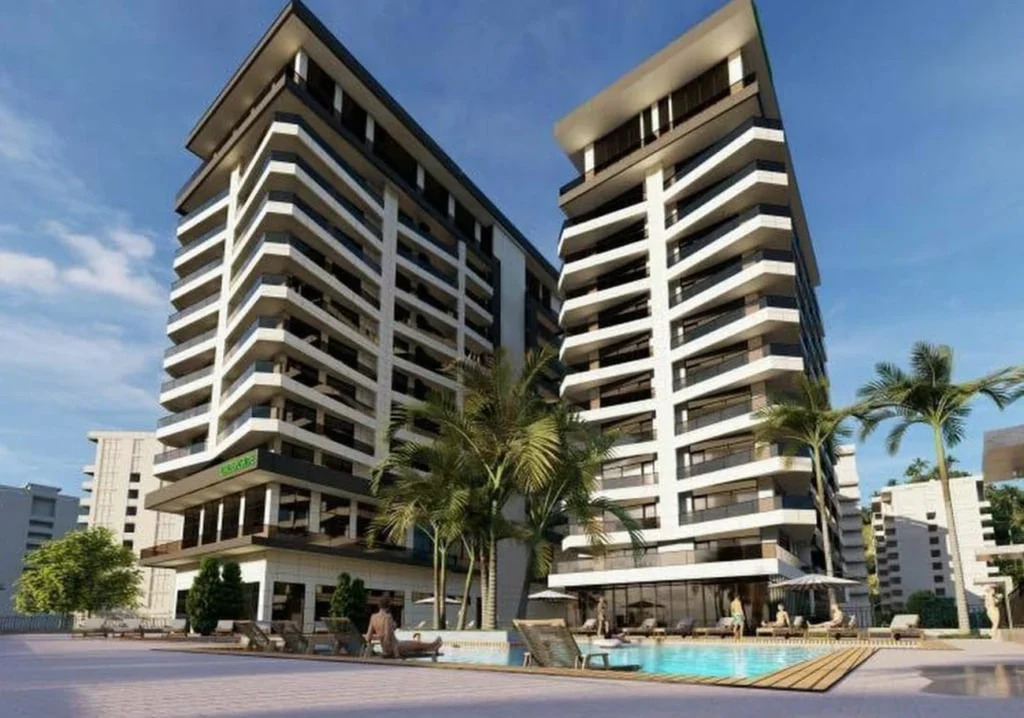
Residential complexes in Batumi


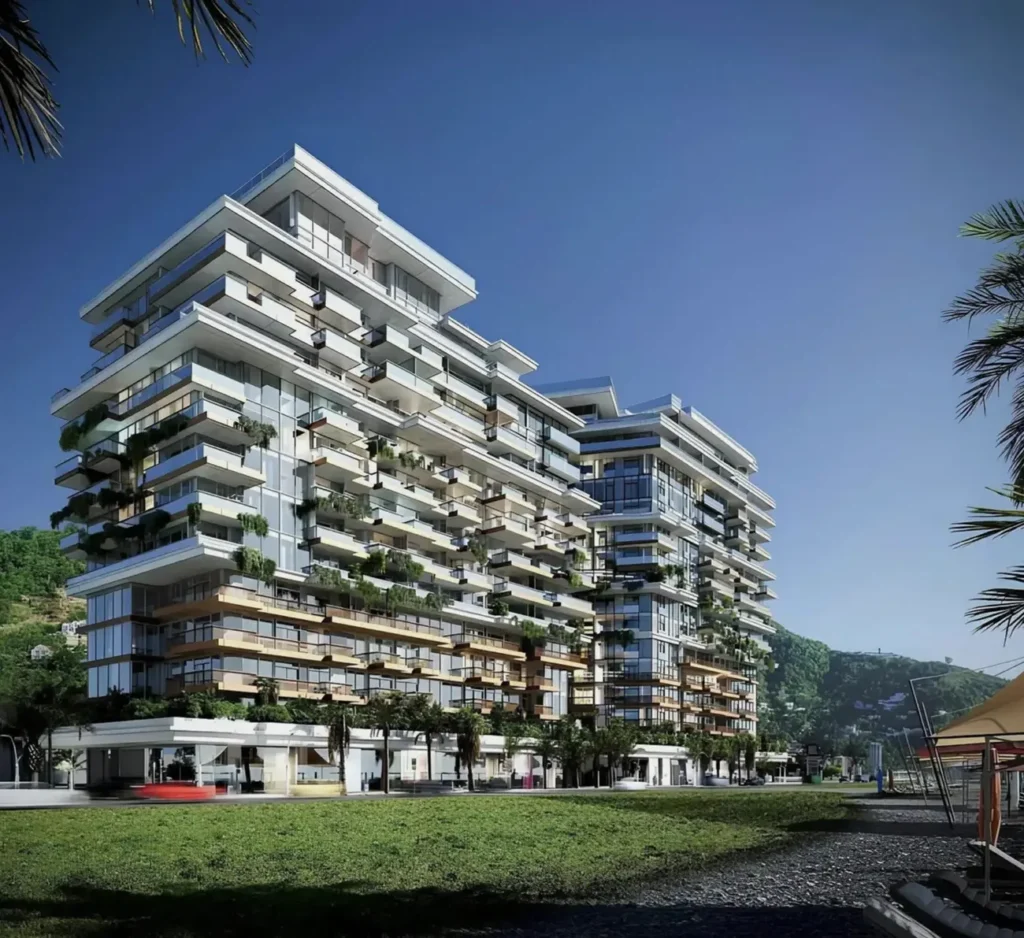

 Batumi, Gonio
 from 23.43m²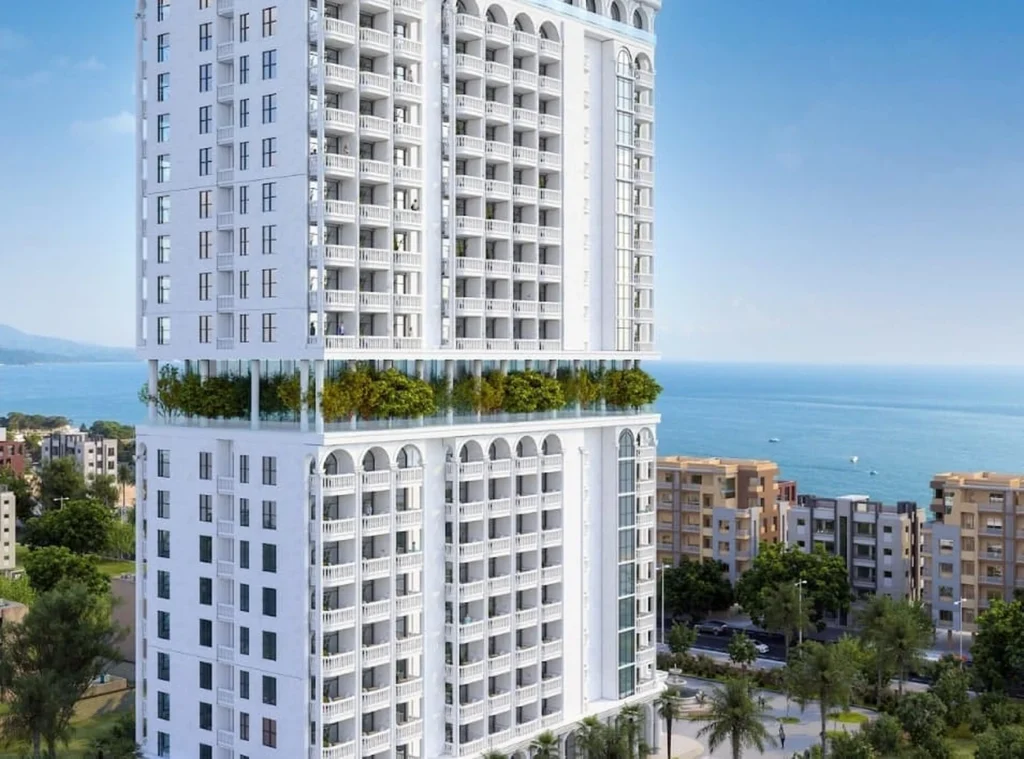
Assessment of infrastructure and amenities:
Make sure that your chosen neighbourhood offers everything you need for a comfortable life. In Tbilisi, a well-developed transport network and an abundance of shopping centres will make your daily life convenient. In Batumi, choose neighbourhoods with good transport links and proximity to major tourist attractions.
Development perspectives and personal preferences:
Determine what is more important to you - the dynamics of a big city or the tranquillity of a province. Borjomi and Signakhi, for example, offer a unique blend of nature and culture that may appeal to those seeking privacy and traditional Georgian charm.
With these factors in mind, you will be able to choose a property in Georgia that will not only be a good investment, but will also suit your personal preferences and life goals.
🔗 Useful links
- House of Justice of Georgia (justice.gov.ge)
Official site for real estate transaction registration and document verification. - National Agency of Public Registry (ANPR) (napr.gov.ge)
Checking cadastral data, ownership history and encumbrances on the object. - Tax Service of Georgia (rs.ge)
Information on property taxes, filing and payment of fees. - MyHome.ge
Largest secondary property search site in Georgia with up-to-date listings. - TBC Bank и Bank of Georgia
Georgia's largest banks for account opening, mortgages and money transfers. - Website of the Government of Georgia (gov.ge)
The official source of laws and changes in legislation.
 Property in Montenegro
 Property in Cyprus
 Real estate in UAE
 Property in Bali
 Property in Thailand
 Property in Spain
 Property in Saudi Arabia
 Property in Turkey
 Property in Zanzibar
 +995 551 50 18 84
 hello@residence-estate.ge
 Georgia, Batumi, Sherif Khimshiashvili str. 1, office 1204


 Get catalogue of TOP-7 objects