
 +995 551 50 18 84


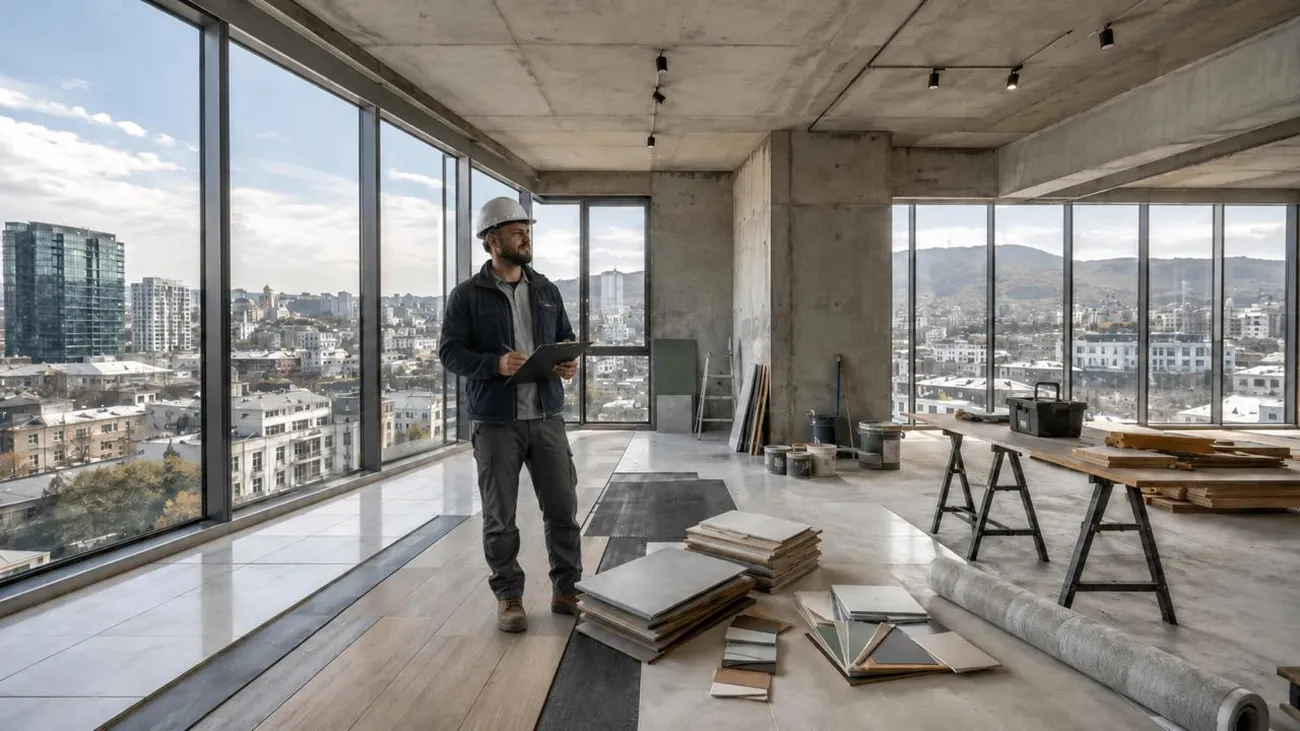

Buyers looking at listings for new-build properties in Batumi, Tbilisi or Gonio for the first time almost immediately come across three terms: ‘black’, ‘white’ and ‘green’ framework. At first glance, this is simply a marketing classification, but it actually reflects the actual stage of completion of the flat, and the amount of money and time required after signing the contract depends directly on this.
These terms are used quite widely in the Georgian new-build market, which is why they frequently appear in property listings and project presentations. However, it is more difficult for a foreigner comparing several projects from another country to make sense of this: one developer may refer to a ‘white shell’ as something that another developer considers a ‘green shell’, and the promotional description may be more general than the actual list of works to be completed at the time of handover.
This is where the main risk lies. The buyer sees the price per square metre, concludes that the offer is good value, but fails to take into account how much extra they will have to pay once they’ve collected the keys. The difference between a ‘black’ and a ‘green’ shell is not a matter of taste, but a question of budget, the timeframe for starting to let the property, and the extent to which the buyer will have to manage the refurbishment themselves or remotely.
Later in this article, we’ll look at what’s usually included in each type of framework, how this relates to actual costs, which option is best suited to different purposes — living in the property, letting it out, resale — and what you must check in the contract and when taking possession of the flat to ensure that the actual condition of the property matches what was promised at the time of sale.
What is a ‘frame’ in Georgia?
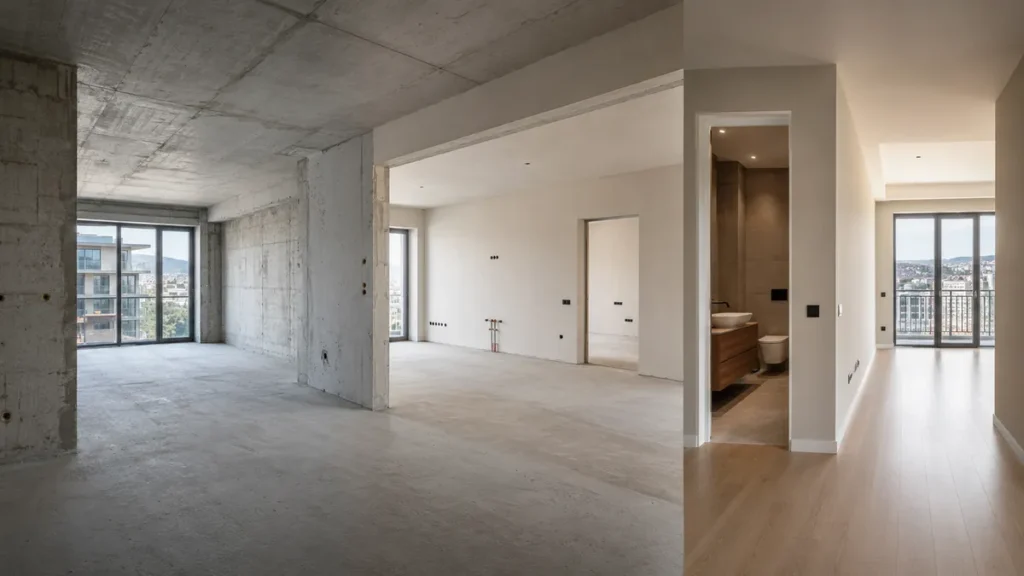
In Georgian property advertisements, the term ‘framework’ does not refer to the structural framework of a building, but rather to the stage of completion of a specific flat at the time of handover to the buyer. This is local market terminology that has become established in Batumi, Tbilisi and other cities, and replaces the classification into ‘shell’, ‘semi-finished’ and ‘finished’ states of completion, which is familiar to many buyers.
The difference in logic is significant. In the ‘rough/semi-finished/finished’ framework familiar to many buyers, expectations often seem clearer; yet even there, the scope of work must be verified against the documentation rather than simply taken at face value. In Georgia, however, the three terms — black, white and green — are used quite widely as part of general market terminology, but There is no single mandatory standard on the market that would regulate their composition. The developer decides for themselves what to include in each category and sets this out in their documentation.
This is precisely why the same phrase, ‘white shell’, can mean different scopes of work for two different developers. For one, it will be a flat with a screed floor, plastered walls and windows already fitted. For another, it might mean the same, plus rough electrical wiring; whilst for a third, conversely, it might mean no plaster on the walls. For a buyer comparing several projects, this poses a risk: they mentally equate similar terms, even though they are in fact comparing different levels of completion.
The same term, ‘pre-finish’ or ‘finish’, can mean different scopes of work depending on the developer. Therefore, when choosing a flat, it is best to consider not only the price per square metre, but also the city, the purpose of the purchase, the timeframe for renovation and whether you are prepared to carry out the finishing work yourself. To find verified properties with detailed information, Take our property matching test.
The marketing name of the building shell is a useful point of reference, but it is not a technical description of the flat. The actual scope of work must be set out in writing: in the contract, an annex to it, the finishing specifications or another document that forms part of the transaction. The name of the building does not replace the technical description of the flat in the contract. If an advert states ‘high-quality finish’ but the documentation either does not include a list of works or the list is vague, you should base your understanding on the terms set out in writing, rather than on the wording of the advert.
This leads to a practical conclusion for buyers: before comparing prices per square metre across different developments, it is worth requesting the exact specifications for each one. This is the only way to understand whether the offers are truly comparable or whether there are differences in the stage of completion hidden behind similar wording.
Black frame
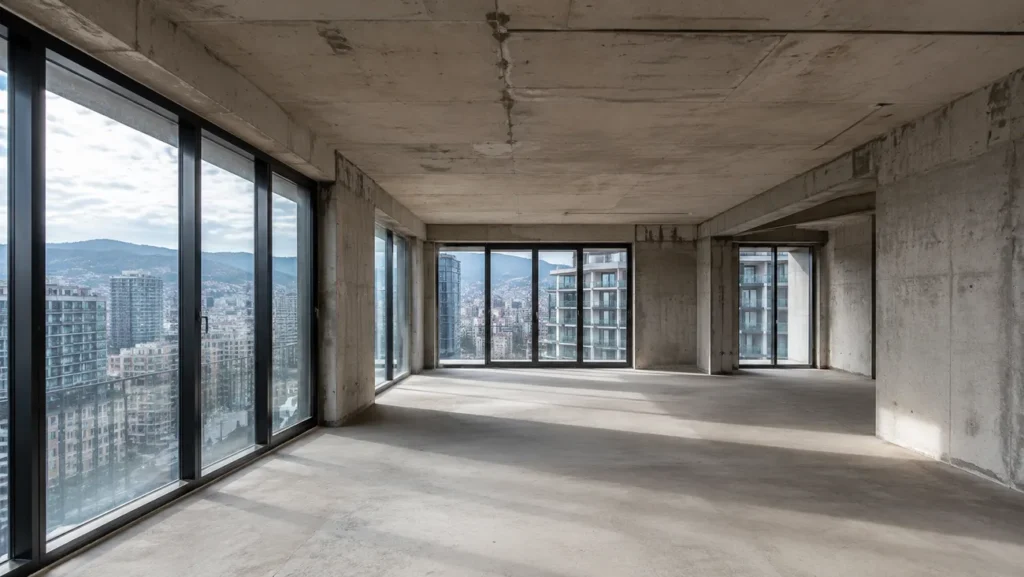
A black frame (rough finish) is the lowest of the three levels of completion for a flat. Usually, the main structural elements — load-bearing walls and external enclosures — have already been completed, whilst the connection of utilities or preparation for their connection depends on the specific project and specifications. That is generally where the work stops — from there on, the flat is essentially a blank canvas where the buyer will have to do absolutely everything themselves.
Other elements typically not included in a shell finish are: internal partitions, floor screed, wall plaster, electrical and plumbing installations inside the flat, the heating system, entrance and internal doors, and any finishing work. The word ‘usually’ is important here, because the exact list is always determined by the specific developer, and it must be checked against the specifications rather than a general description of the term.
Guidelines for rough finishing
| Parameter | Tbilisi | Batumi |
|---|---|---|
| Guide price per m² | In the districts of Tbilisi, prices for off-plan properties with a basic finish can start at around $1 100/m² in more affordable areas and be more expensive in central locations | In Batumi, prices are more heavily influenced by proximity to the sea; in some developments, prices for properties with a basic finish can start at around $850/m², but in central and coastal areas the price is significantly higher |
| What is usually done | Load-bearing structures, external walls, and sometimes windows, the front door or the preparations for these — depending on the project | Load-bearing structures, external walls, basic structural completion; the composition may vary significantly between complexes |
| What’s usually missing | Finishing works, plumbing, electrical work inside the flat, furniture, kitchen, appliances | Finishing works, furniture, appliances, a fully fitted bathroom and kitchen |
| What you must check | Specifications, the presence of windows and doors, utility connection points, and the actual floor area | Specifications, availability of utilities, condition of windows and doors, handover dates |
These figures should not be taken as a fixed market standard: the price depends on the area, the stage of construction, the developer, the view from the window, the floor level and the scope of work. Therefore, when comparing properties, it is important to consider not only the price per square metre, but also the actual condition of the flat.
This format is suitable for investors who already have a trusted renovation team and experience in supervising building works, as well as for buyers who want a completely open-plan layout and are not prepared to adapt to existing partitions. A shell finish offers maximum freedom: you can design the flat practically from scratch, choosing the layout of the rooms, materials and technical solutions to suit your needs.
However, this very freedom becomes a drawback for another category of buyers. For those who want to move in quickly after purchase or put the flat up to let straight away, a rough finish is usually not suitable: renovating from scratch takes considerably longer, requires constant supervision — which is particularly challenging if the buyer is in another country — and entails a larger budget for design, materials and contractors’ labour.
The advantages of a rough finish
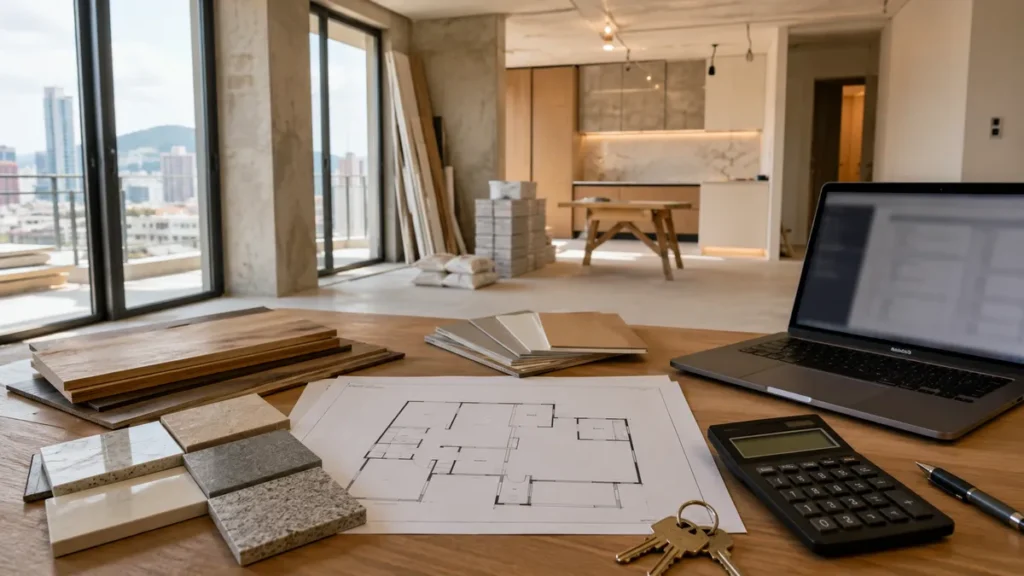
The main advantage is complete control over the final result. The buyer chooses the layout, materials and engineering solutions themselves, without overpaying for other people’s choices that will later have to be removed. This is particularly valuable if the flat is being bought to suit a specific lifestyle or particular requirements regarding the layout of the rooms. The starting price per square metre for a shell-and-core flat appears lower, but it should only be compared alongside future renovation costs — otherwise, the comparison will be incomplete. This option is also convenient for those planning to combine several rooms or alter the building services in a non-standard way — doing so in a finished flat is more complicated and expensive.
According to estimates by several companies operating in the renovation market in Georgia, the transition from a ‘black frame’ to a fully finished flat is usually more expensive than renovating a ‘white frame’ flat, as it involves a full cycle of engineering and finishing works.
The downsides of a rough finish
The main risk is underestimating the actual cost and timeframe of the renovation work. Many buyers compare purchase prices but fail to set aside a full budget for bringing the flat up to a live-in standard, and this can turn out to be a significant expense depending on the floor area, the renovation plan and the quality of the materials chosen. The second risk is the need for constant supervision of contractors, which is particularly challenging for buyers living in another country. The third issue is the unpredictability of timelines: a renovation from scratch depends on the team’s coordination, the availability of materials and logistics, and any of these factors could delay plans to put the flat up to let or to move in.
White frame
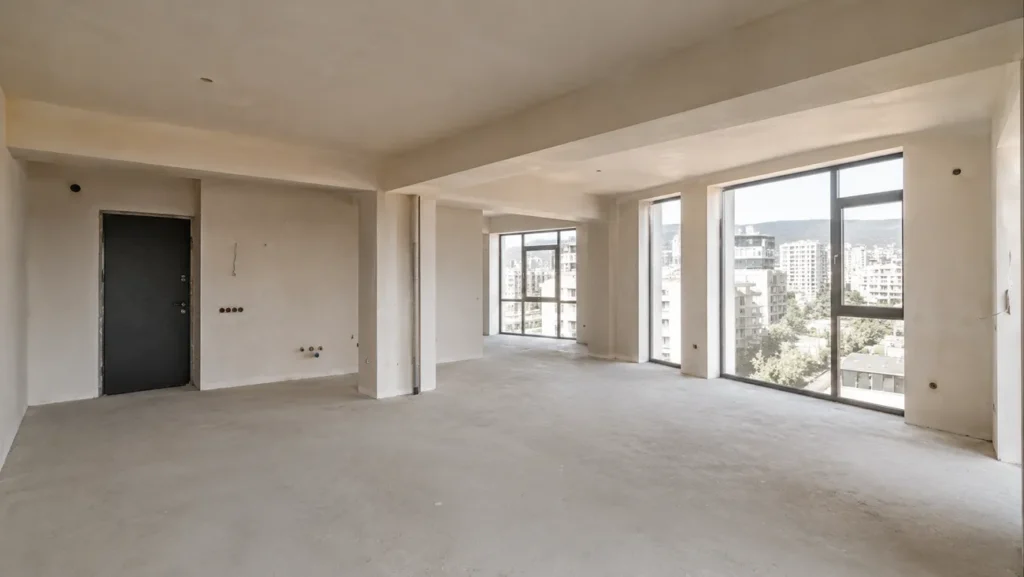
A white shell (pre-finish) occupies an intermediate position between a rough-out and a finished state, and is often seen as a compromise between the freedom to carry out renovations and the degree of completion of the flat. A ‘white shell’ is often cited as one of the most common formats for selling flats in new-build developments in Georgia; however, its widespread use does not imply standardisation of the scope of work — it can vary from one developer to another.
In practice, it is precisely pre-finishing It is considered one of the most common ways of selling flats in new-build developments in Georgia, as it allows the developer to complete the main construction work, whilst enabling the buyer to choose the finishing touches themselves.
For different developers, pre-finish work may include partition walls, plastering, screed, windows, a front door and some of the building services; however, the exact list should be checked against the specifications — the scope of work may be more extensive in one project and considerably more limited in another.
Landmarks on the white framework
| Parameter | Tbilisi | Batumi |
|---|---|---|
| Guide price per m² | For projects with a pre-finish in Tbilisi, prices by district can start at approximately $1 300/m² in more accessible locations and reach $2000+/m² in more expensive areas | In Batumi, pre-finishing work can begin at around $1 300/m² in certain areas, whilst in the Old Town, on the Boulevard and in central locations it will be significantly higher |
| What is usually done | Partitions, screed, plaster, windows, front door, some of the service connections | Windows, front door, screed, plasterwork, connection of main utilities — subject to the project |
| What the buyer is left with | Finishing works, bathroom fittings, lighting, kitchen, furniture, appliances | High-quality finish, furniture, appliances, fully fitted for living or letting |
| What you must check | The evenness of the walls and floor, the quality of the screed, the electrical work, the plumbing connections, the specifications | Scope of pre-finish works: condition of walls/floors, services connections, handover dates |
In many projects, some of the structural work has already been completed, so the buyer does not have to start from a completely empty concrete space; however, the exact scope of the remaining tasks depends on the specifications and the quality of the work actually carried out. All that remains for the buyer to do is to carry out the finishing work, install the plumbing, plan the lighting, and choose the kitchen, furniture and appliances. This is a significant amount of work, but it is less time-consuming and stressful than building from scratch — provided that the work specified has actually been carried out.
This format is well suited to buyers who wish to live in the flat themselves and have the opportunity to choose materials to suit their own taste, investors planning to let the property and keen to have control over the quality of the finishes, as well as those who want to be involved in the design but aren’t prepared to start with bare walls.
The risks here are not related to the volume of work, but to its quality. Screed and plaster are precisely the elements where defects are difficult to spot with the naked eye immediately after purchase, but which become apparent months later: cracks, unevenness, and flaking. The scope of work can also vary between different developers: for one, the ‘white shell’ may include electrical wiring throughout the rooms, whilst for another, it may only extend as far as the distribution board. Therefore, when inspecting the shell, it is worth checking particularly carefully the evenness of the walls and floor, the quality of the screed, the condition of all service connections, and whether the actual scope of work matches what is specified in the specifications.
If you are considering a flat with a semi-finished interior, compare not only the price per square metre, but also the scope of work listed in the specifications: partition walls, screed, plaster, windows, service connections and the extent of the future finishing work.
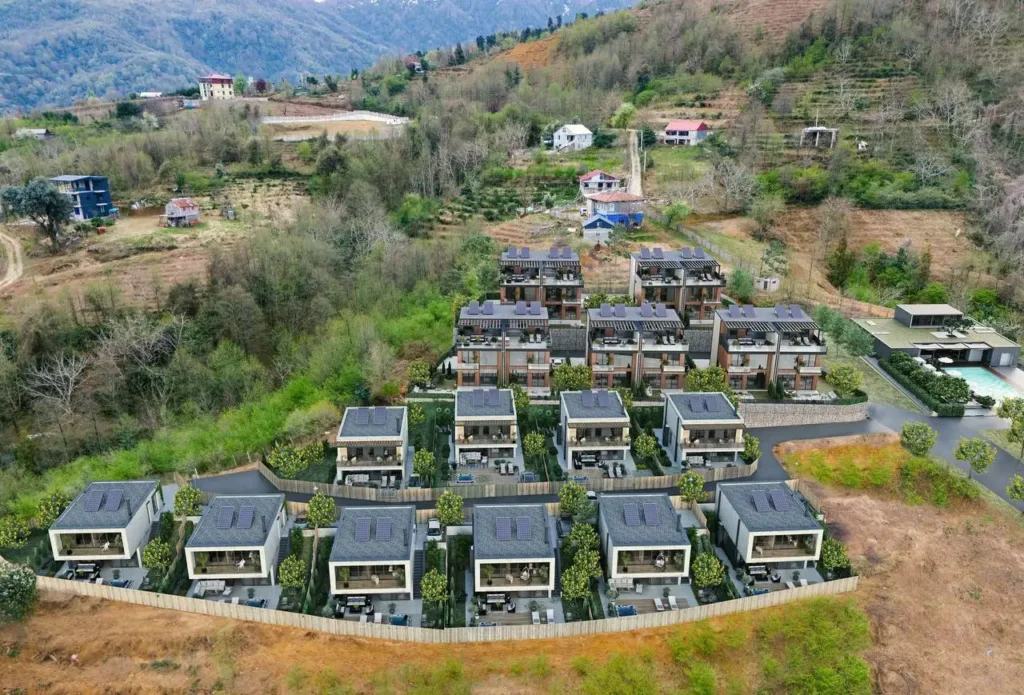
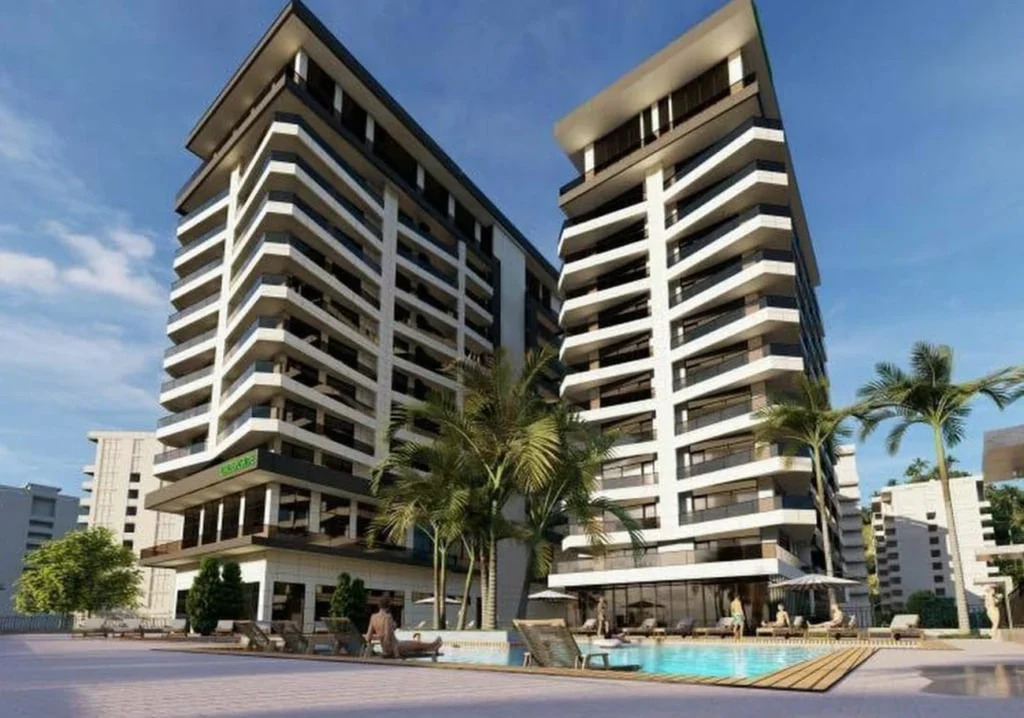
Take a look at the projects in Gonio with white frames

 from 43m²

Green frame
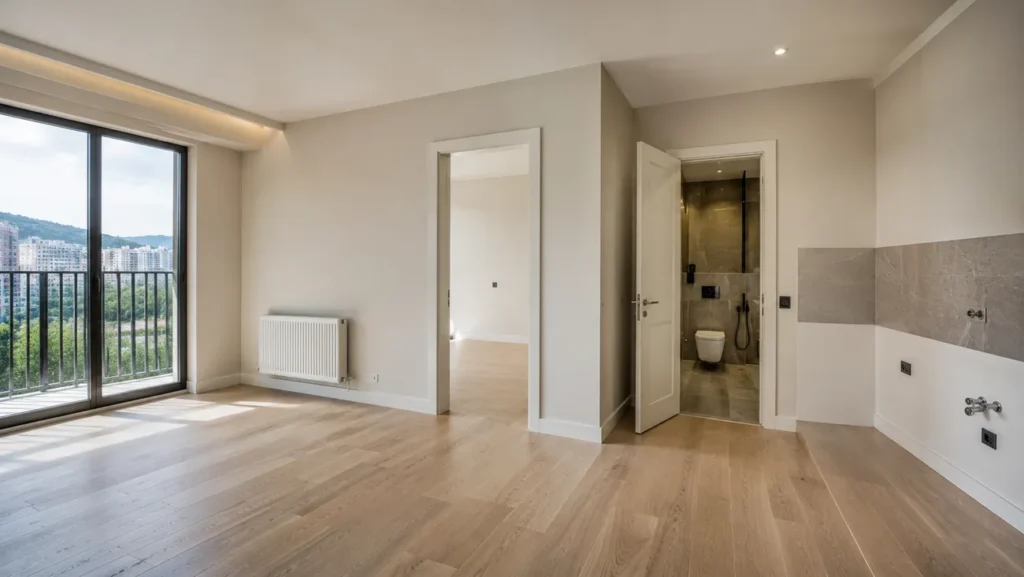
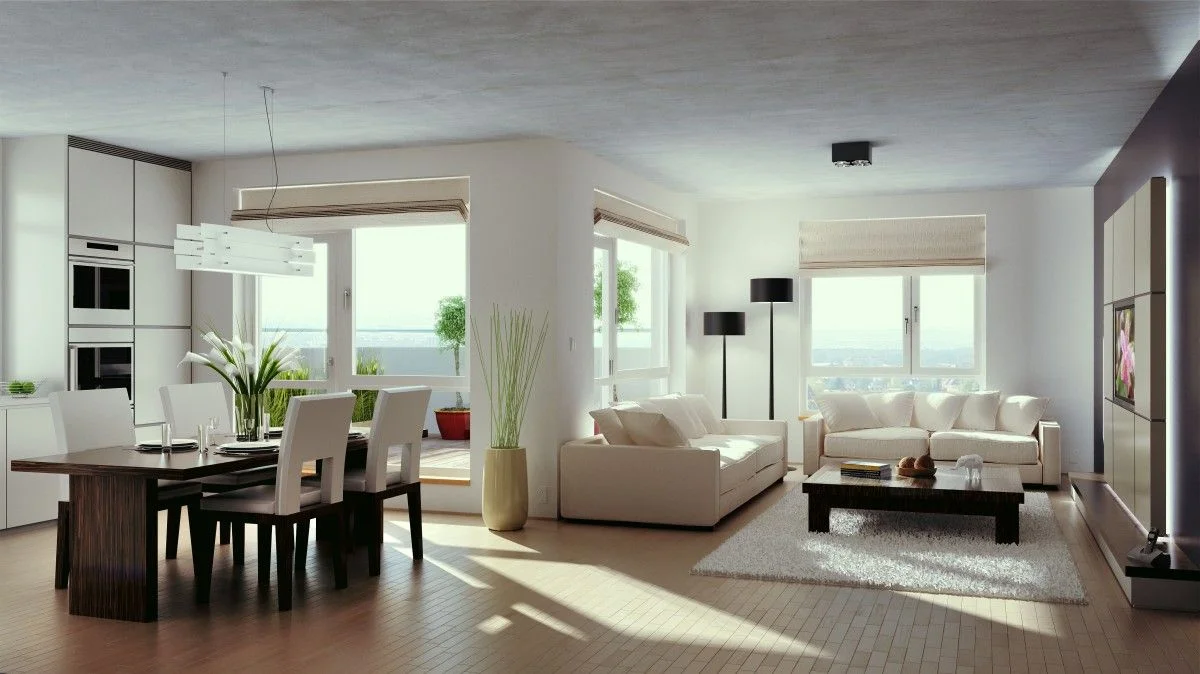
A ‘green frame’ (shell) on the Georgian market is usually closer to a fully finished flat, but does not always mean it is completely ready to move into. Depending on the project, it may include the finishing of walls and ceilings, a fitted bathroom, floor coverings, interior doors, and sometimes a kitchen or basic furniture — but only if this is explicitly stated in the specification, rather than being implied by default.
This is a key point: it would be a mistake to state that ‘pre-finish’ always means the property is fully ready with furniture and appliances, as the scope varies considerably from one project to another. For one developer, a ‘finished’ fit-out might include a fitted kitchen and air conditioning, whilst for another it might consist solely of the fit-out without any furniture. Therefore, the terms ‘turnkey’ and ‘shell’ are not synonyms, and it is incorrect to equate them.
Guidelines for the final finish
| Parameter | Tbilisi | Batumi |
|---|---|---|
| Guide price per m² | For fully finished properties in Tbilisi, prices by district can start at approximately $1 400/m² in more affordable areas and be higher $2 000/m² in upmarket locations | In Batumi, the cost of finishing work can start at around $1 400/m² in certain areas, but in the Old Town, on the Boulevard, in Gonio and by the sea, prices may be significantly higher |
| What is usually done | Finishing touches or near-finishing touches, finished surfaces, doors, a bathroom or preparation for one — it depends on the project | Finishes, flooring, doors, bathroom fittings or part of the specification; occasionally the kitchen or furniture, if specified in the specifications |
| What might not be included | Furniture, appliances, kitchenware, air conditioning, home décor, crockery, textiles | Furniture, appliances, kitchen fittings and management equipment for rental properties |
| What you must check | Finish specifications, materials, bathroom, doors, warranty terms, specifications | Furniture and appliances as per the list, standard of finish, estate regulations, ready to let |
This format is convenient for buyers who wish to move in quickly without lengthy renovation work, for investors keen to start letting the property as soon as possible, and for those buying a flat remotely who are unable to oversee the construction work on site. A ‘green shell’ can reduce the buyer’s involvement in the refurbishment, provided that the stated scope of work has actually been carried out and confirmed by the specifications — this is an important caveat, as in practice, additional work is sometimes required after handover.
That said, there is a downside. The final finish is usually carried out using standard materials chosen by the developer, which leaves less scope for personalised design. After the flat has been handed over, further work may be required – ranging from minor cosmetic touch-ups to the replacement of individual elements if their quality does not meet expectations. Therefore, even with a high-quality finish, the handover inspection remains a necessary step, rather than a mere formality.
A high-quality finish should be assessed not by its name, but by the list of works: exactly what has been fitted, what materials have been used, and what the buyer will need to purchase separately after taking possession of the flat.
A comparison of three options
Table 1. Rough, semi-finish and finish: a comparison
| Parameter | Rough finish | Pre-finishing | Finishing touches | What buyers should check |
|---|---|---|---|---|
| Level of readiness | Minimum | Medium | High, but not always complete | Scope of work as per the specification |
| Guide prices for Batumi, from $/m² | From $850/m² in individual projects | From $1 300/m² in certain areas | From $1 400/m² in certain areas | Area, distance from the sea, stage of the project, standard of finish |
| Guide to Tbilisi, from $/m² | From $1 100/m² in specific projects/areas | From $1 300/m² in more affordable areas | From $1 400/m² in more affordable areas | Area, project category, stage of construction, developer |
| Post-purchase repairs | Complete, from scratch | Finishing and engineering | Minor adjustments may be required | List of outstanding tasks |
| Check-in speed | The longest | Medium | It’s usually quicker once the finishing touches have been completed | Actual completion and handover dates |
| Design review | Maximum | High | Limited | Which materials have already been chosen? |
| The complexity of acceptance | Low at the start, high during the repair process | Medium | High-quality finish with great attention to detail | Quality of finishing work |
| Risk of additional costs | High | Medium | Lower than, but not zero | Full ‘turnkey’ quotation |
| Convenience for online shopping | Low | Average | Higher, but requires verification of documents, photo/video reports and acceptance | Remote control capability |
| Suitable for letting | It’s not much to look at without a bit of a fix-up | In principle, once the finishing work is complete | It might be snapped up more quickly if the finish and fittings meet the tenants’ requirements | Condition of furniture and appliances |
| Suitable for resale | It depends on the strategy | A flexible option | It’s handy for a quick transaction if the status has been confirmed | Quality of the work carried out |
| Who should choose this | For experienced investors and those looking to renovate a property to their own taste | Buyers who are prepared to carry out some renovation work | For those who want to be as little involved as possible in the building work | Consistency between the facts and the contract |
The prices in the table are not fixed market rates, but rather ‘from’ figures. In reality, the price per square metre depends on the area, proximity to the sea or the city centre, the stage of construction, the floor level, the view, the standard of the development, the payment terms and the actual finish.
Initially, a rough finish almost always appears cheaper per square metre, and this is the first thing that catches buyers’ attention. However, if you calculate the total cost – including renovation, materials, contractors’ labour and the time spent supervising the process – the difference compared to a white or green shell may narrow or disappear altogether, especially if you’re not carrying out the renovation yourself.
A finished interior is more convenient in terms of time and stress, but requires a more thorough quality check, as the buyer is less involved in the process and more dependent on the developer’s decisions.
A semi-finished fit-out is often a sensible middle ground for those who want to combine control over the design with a reasonable timeframe for moving into their flat.
How does the finish affect the budget?
The price per square metre quoted in the advert is only part of the cost of owning a flat. To understand the actual costs, you need to add the expenses involved in getting the property into a condition where it can be used: whether to live in it, let it out or prepare it for sale. It is the type of finish that determines just how large this additional budget will be.
In some cases, the cost of subsequent repairs may amount to 20-40% from the price of the flat itself, so it is not accurate to compare developments solely on the basis of the price per square metre. However, this proportion depends heavily on the standard of finish and the materials chosen.
A shell-only property usually requires the greatest investment after purchase, as the buyer pays for literally the entire scope of work — from design and partition walls to the final finishes, furniture and appliances. Many contractors in Tbilisi and Batumi publish indicative price ranges for renovation work — from a simpler, basic option to a higher-end, comprehensive refurbishment. These figures should only be used as a general guide: the final cost depends on the flat’s floor area, the materials chosen, the complexity of the project, exchange rates and the specific contractor, so it makes more sense to compare not the figure per square metre itself, but the total budget required to bring the property to a state where it is ready for use.
In practice, it is more convenient to quote renovation costs in dollars per square metre, as many foreign buyers compare projects in USD. Based on current quotes from renovation companies in Georgia and Batumi, the approximate figures are as follows: basic renovation — from approximately $95–130/m², a standard ‘turnkey’ refurbishment — around $160–260/m², designer or high-end refurbishment — from approximately $260–415+/m². At some companies, ‘turnkey’ packages including materials can start from $200–250/m², whilst more complex design solutions range from $330–500/m².
When choosing a flat, it is important to consider not only the price per square metre, but also the future budget required to bring the property up to the standard you require: renovation, furniture, appliances, timelines and managing the work. If you want to quickly work out which option suits your budget — a ‘black’, ‘white’ or ‘green’ shell — you can take A brief selection of properties based on the purchase objectives and criteria.
Guidelines for the cost of repairs after purchase
| Level of refurbishment | Guide price from $/m² | What it usually involves | Where this is most often relevant |
|---|---|---|---|
| Basic refurbishment | from $95–130/m² | Simple finishes, basic materials, a minimal scope of work with no complex design | White frame, partially black frame |
| Standard ‘turnkey’ refurbishment | from $160–260/m² | Finishing works, basic building services, bathroom, preparing the flat for occupation or letting | Black and white frame |
| Investment-grade refurbishment with fittings | from $200–250/m² | Renovation including materials, basic furniture, appliances or preparation for letting — this depends on the contractor | White frame, sometimes green frame |
| Designer / high-end refurbishment | from $330–500+/m² | Customised design, higher-quality materials, furniture, appliances and complex engineering solutions | Residential properties, premium rentals, apartments with views |
These figures should be regarded as initial guidelines rather than fixed prices: the final cost depends on the flat’s floor area, the initial condition of the finishes, the materials chosen, the building services work, furniture, appliances, exchange rates, the timeframe and the specific contractor.
Pre-finishing work shortens this list, leaving mainly the final finishing touches and furnishing the flat. The final fit-out reduces the time to let or move in the most, but this does not eliminate the costs of furniture, appliances, property management and the handover itself — even a fully finished property does not exempt you from these expenses.
When planning your budget, it is worth allowing not only for the renovation itself, but also for related costs: planning and design, delivery of materials to the site, payment for tradespeople’s work, any potential finishing touches after handover, connection to utility networks, as well as project management if the buyer is unable to be present on site in person.
If organised properly, renovating a medium-sized flat usually takes from 6 to 10 weeks, although the timeframe may be extended due to the complexity of the project, delays in the supply of materials or the contractors’ workload.
Table 2. What costs might arise after the purchase
| Consumption | Reference number: $ | Rough finish | Pre-finishing | Finishing touches | Commentary |
|---|---|---|---|---|---|
| Layout / Basic design | from $10–50/m² | Often needed | Sometimes you need | Usually not required | This is required if the layout is changing or if a precise estimate of the work is needed |
| Design project | from $20–50/m² | Often needed | If you wish | Usually not required | Particularly useful for rental flats or high-end refurbishments |
| Rough-in works | from $100–200/m² | The following are usually required | Partially | Usually, at a minimum | Electrical work, plumbing, service connections |
| Screed, walls, partitions | from $50–120/m² | The following are usually required | Often already completed | Usually carried out | Check what is included in the specification |
| Finishing touches | from $150–250/m² | Obligatory | Obligatory | Partially or not required | Floors, walls, ceilings, doors, basic finishes |
| Turnkey refurbishment (excluding furniture) | from $200–300/m² | Often relevant | This may be relevant | Usually just minor adjustments | It depends on the materials and the scope of the work |
| Turnkey refurbishment, including furniture and appliances | from $350–500/m² | Often relevant | Often relevant | Sometimes it is already partially enabled | Particularly important for rentals |
| Kitchen | from $1 500–3,000 | Usually, you need | Usually, you need | Sometimes switched on | It depends on the size, the fronts and the appliances |
| Bathroom | from $1 000–2 500 | In full | Partially | Usually ready, or requires further work | Check the plumbing, tiling and ventilation |
| Furniture | from $2 000–5 000 | Usually, you need | Usually, you need | Sometimes switched on | For rentals, it’s best to calculate this separately |
| Household appliances | from $1 500–3,500 | Usually, you need | Usually, you need | Sometimes switched on | Air conditioning, fridge, washing machine, hob |
| Repair Management / Technical Supervision | from 5-10% work budget | It is advisable | It is advisable | Sometimes you need to | This is particularly important when buying online |
| Handover of the flat | from $100–300 | It is advisable | It is advisable | It is advisable | You can do this yourself or with a specialist |
The prices in the table are indicative ‘starting from’ figures, not a standard price list. In a specific project, the final cost may be higher due to the flat’s floor area, the quality of materials, the complexity of the engineering works, the timeframe, logistics, furniture, appliances and tenancy requirements. Therefore, before buying, it is advisable to calculate not only the price of the property itself, but also a separate estimate for bringing the flat up to the required standard.
Specific figures are deliberately not given here as universal figures: they depend on the flat’s floor area, the materials chosen, exchange rates, the city and the specific contractor. However, even for flats of the same size, the difference between opting for a rough finish and a semi-finished finish can have a significant impact not only on the cost of the property itself, but also on the subsequent expenditure on finishing works, furniture and fittings — so it is worth factoring this difference into your calculations in advance, rather than assessing it after the event.
Which finish to choose
The choice of finish depends entirely on the purpose of the purchase. The same unfinished property may be an excellent option for an investor with an experienced renovation team, but completely unsuitable for a family wishing to move in two months after the transaction.
Table 3. Which finish is suitable for different purposes
| The buyer’s objective | The best option | Why | What to look out for |
|---|---|---|---|
| To live on one’s own | Pre-finishing or finishing | A balance between control and deadlines | Quality of finish, layout |
| Long-term letting | As-built or pre-as-built with repairs | Faster preparation for the tenant to move in | Wear resistance of materials |
| Rent out on a daily basis | Final version, with confirmed specifications | It could reduce downtime if the fit-out and furniture are actually ready for handover | Furniture and appliances provided, and the estate’s rules |
| Buy online | Finishing or pre-finishing with reliable repair monitoring | Less need to be physically present on site | Detailed photos, videos and specifications |
| Renovate to suit your own taste | Draft | Complete freedom in planning | An experienced contractor, a realistic budget |
| Sell on after the price has risen | It depends on the strategy | Flexibility depending on the market | Condition of the property at the time of sale |
| Minimise involvement in the repair work | Pre-cleaning | Fewer hassles after purchase | The actual volume of work remaining |
| Buy at an early stage | Draft or pre-final | Usually lower than the starting price | The developer’s reputation, completion dates |
For those planning to live in a flat on their own, semi-finished or finished interiors are usually more convenient, as they reduce the amount of personal oversight required during the renovation, whilst leaving scope for final design decisions. For long-term lettings, buyers often pay particular attention to the durability of materials, the ease of maintaining the flat and the neutrality of the interior, which will suit a variety of tenants.
If the aim is short-term letting, particularly in tourist destinations such as Batumi, a fully finished property with a pre-confirmed specification of furniture and appliances can reduce the time taken before the first guest checks in. However, it is important not to assume a ‘default’ specification, but to check a specific list with the developer and to clarify separately the complex’s rules and management conditions relating to short-term lettings.
A remote purchase is a distinct scenario in which rough and even pre-finish work place a significant burden on the buyer: they will either have to hire a site manager to oversee the renovation or fly out periodically to supervise the work. It is often more practical to consider a finished or pre-finished standard with reliable supervision of the renovation work, rather than relying on a single approach as the universally best option. You can read more about the mechanics of such a transaction in the article ‘How to buy property in Georgia remotely“.
Many renovation companies in Georgia already work with owners who are not on site, offering regular photo and video updates, technical supervision and a fixed-price quote, which reduces the need for owners to be physically present at the site.
For those who want to carry out a renovation entirely to their own specifications — with a non-standard layout, bespoke design or a redesign of the building services — a rough finish remains the logical choice, provided there is a reliable team and a realistic approach to the budget and timeframe.
If the aim is to resell once the property’s value has risen, the choice of finish depends on your overall strategy and holding period, rather than on any single, universal rule. The general principles for buying property safely in Georgia are set out in the article ‘How to buy property in Georgia“.
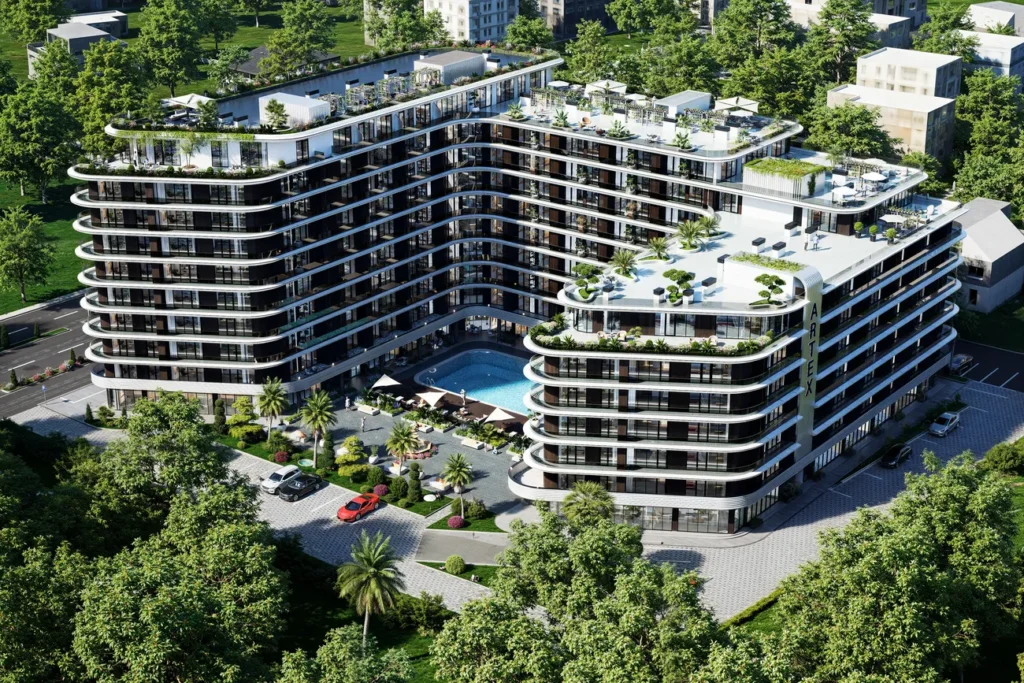
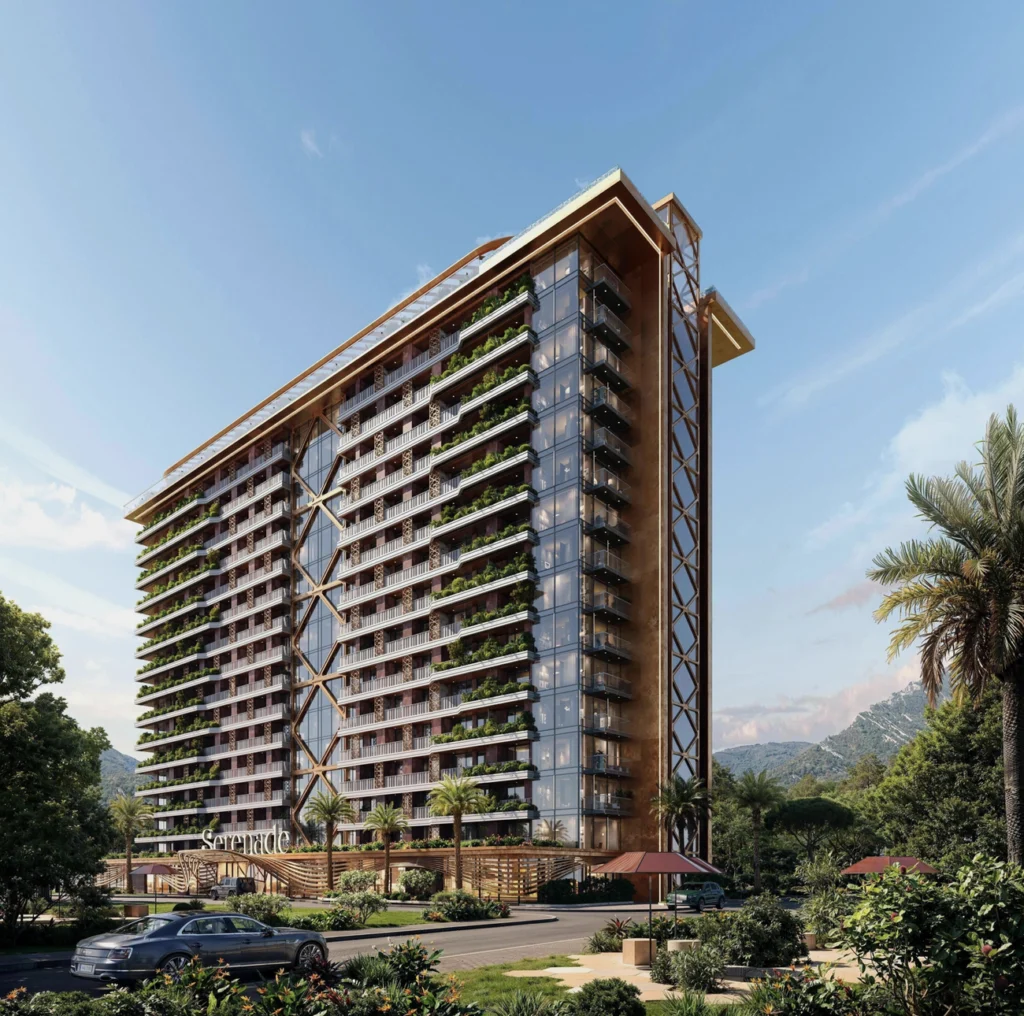
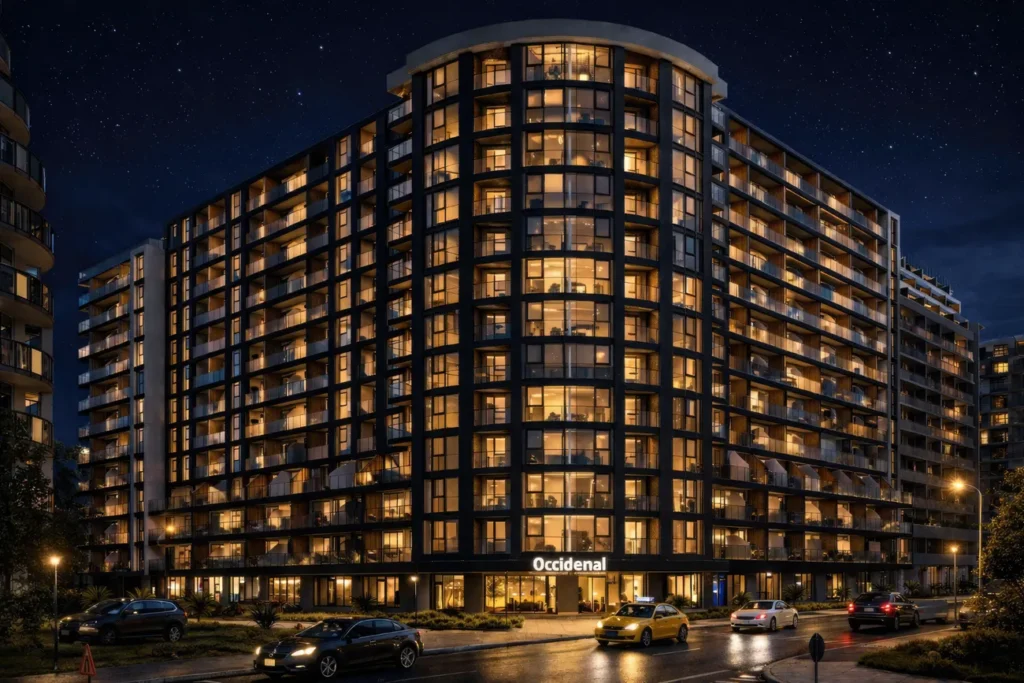
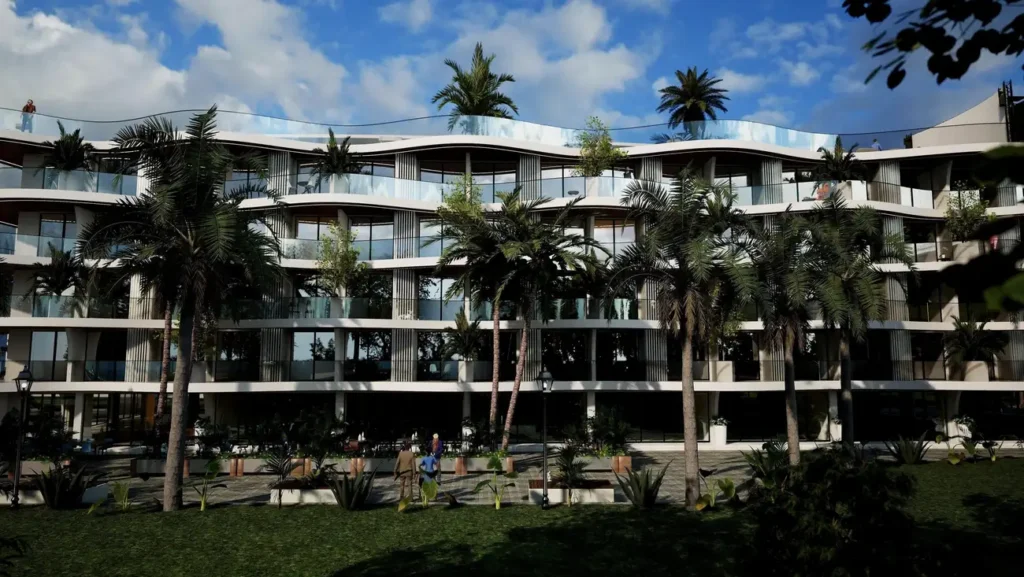
Below you can see examples of properties in various stages of completion — ranging from those requiring renovation to flats that are easier to prepare for living in or letting. Before making a choice, it is still worth checking the specifications, handover dates and the actual condition of the flat separately.
Properties in Batumi, with the layout you need



Batumi, Tbilisi and Gonio
The rationale behind choosing finishes varies slightly from city to city, as each location has its own buyer profile and its own scenarios for how the property will be used.
Batumi is often regarded as a holiday destination and an investment location. Therefore, factors such as the timeframe for commencing lettings, the level of furnishing, the presence of a property management company and the seasonality of demand are particularly important for buyers here: in resort developments, seasonality can have a significant impact on the timeframe for commencing lettings, so it is worth considering in advance whether the flat will be ready for the peak season.
Tbilisi is more geared towards buyers who are considering living in a flat or long-term rentals for local residents. The key factors here are the quality of the building and materials, the neighbourhood, transport links, local amenities — such as schools, shops and healthcare facilities — and the opportunity to renovate the property to suit one’s own tastes, as the length of ownership is often longer than in holiday developments.
Gonio is often regarded as a developing waterfront location, but it is important for buyers to assess the infrastructure, the stage of the project and the actual completion dates on a case-by-case basis, rather than relying solely on general expectations of the area’s growth.
What to see in the region:
- neighbourhood and transport links — how easy it is to get to the city centre, the seaside and the airport;
- construction stage — excavation, in-situ concrete, finishing works;
- the developer’s reputation — previous projects, adherence to deadlines;
- finish composition — a specific specification, not a general term;
- the dates for handing over the flat — as set out in the contract, not as agreed verbally;
- the presence of a management company — this is particularly important for letting;
- potential demand for rental accommodation in a specific part of the city or along the coast;
- post-purchase costs — repairs, furniture, maintenance, taxes.
This list is particularly useful for buyers who are comparing several cities at the same time: the standard of finish should not be assessed in isolation, but in conjunction with how quickly the location will enable them to achieve their purpose for buying the property — whether that be to live in it, let it out or resell it.
When comparing Batumi, Tbilisi and Gonio, it is worth looking not only at the city itself, but also at the condition of the flats: pre-finish, finish, rent-ready, the availability of property management and the project’s completion dates.
A selection of flats on Novy Boulevard [Batumi]
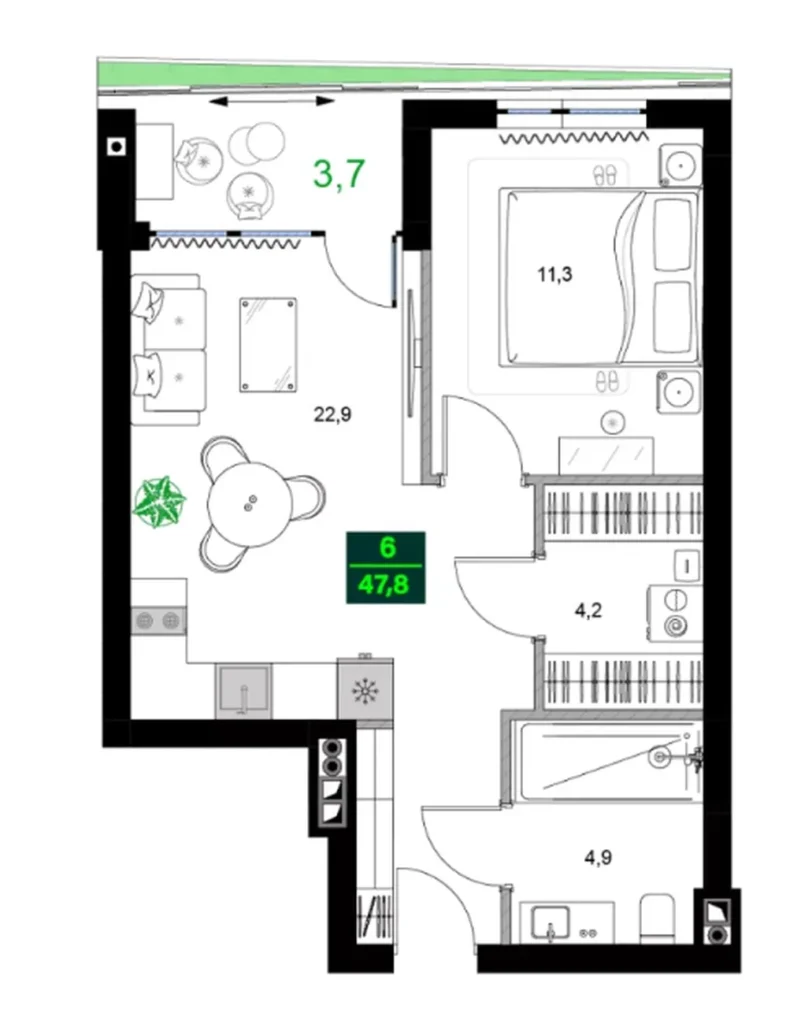

 Batumi, New Boulevard
 SUMMER 365

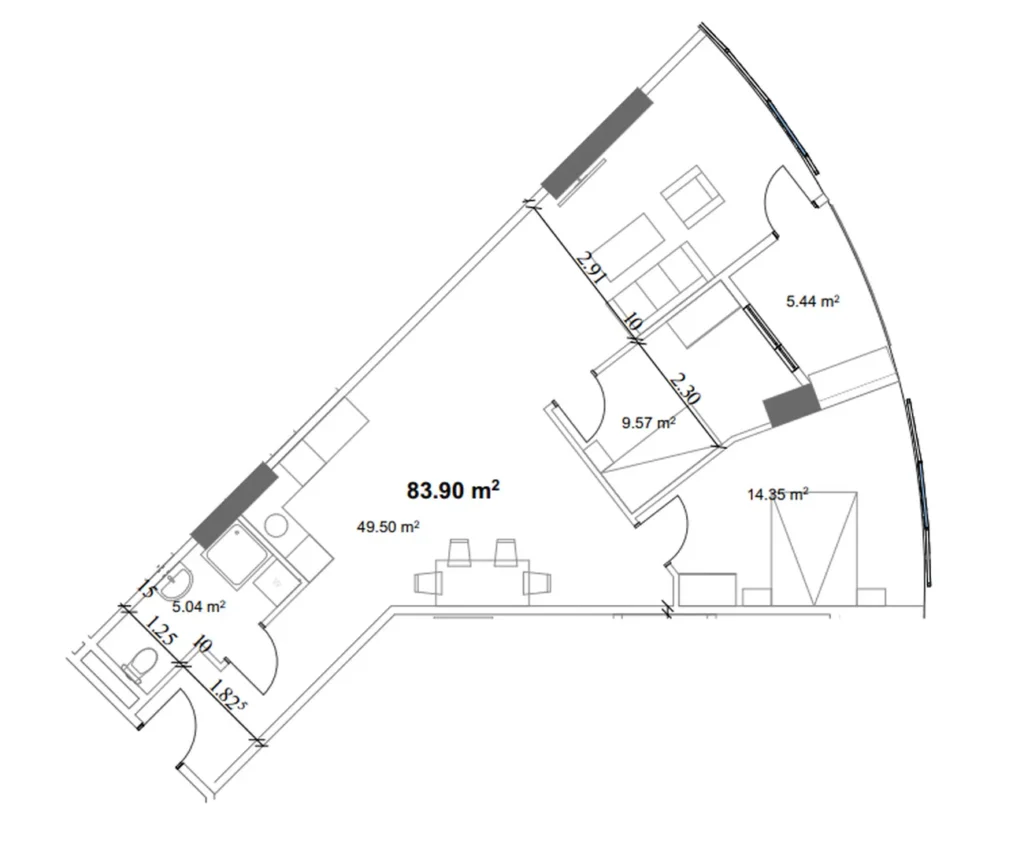 Batumi, New Boulevard
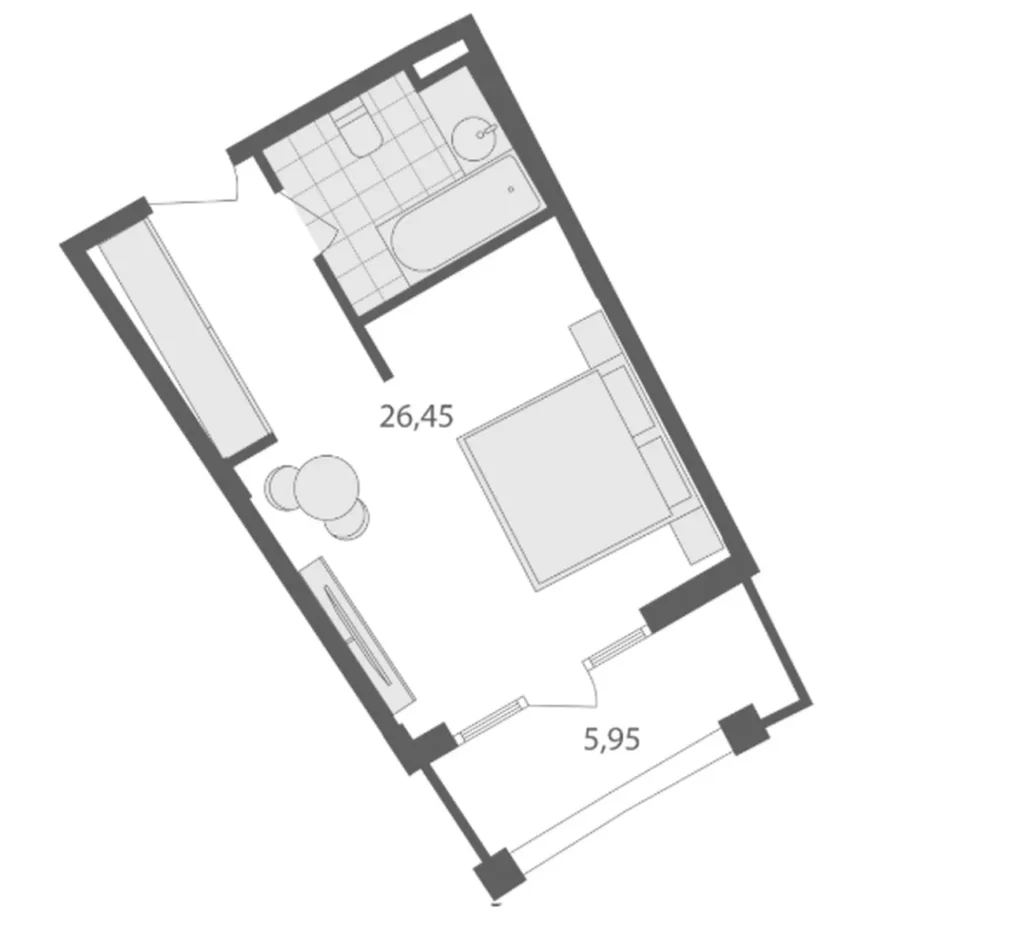 Batumi, New Boulevard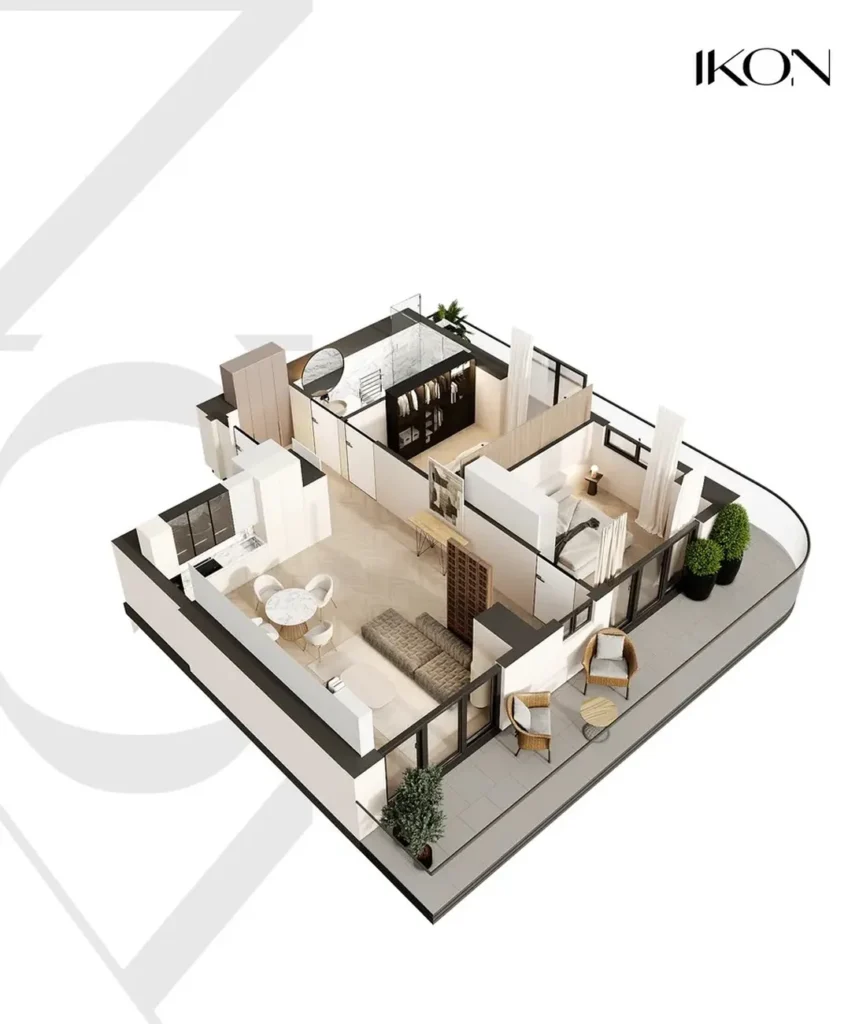
What to check in the contract
A description of the flat in an advert or a verbal explanation from a sales manager does not constitute a legally binding document. It is best to set out all essential terms in writing: if a promise is made only in a verbal conversation or general correspondence, it may be considerably more difficult to prove and ensure that it is honoured.
It is advisable to set out the details of the finish in a document that forms part of the transaction: in the contract, an annex, the technical specifications or a separate schedule of works signed by the parties. It is precisely this document that describes which materials are used, what work has been carried out, which utility services have been connected, and whether there are partitions, windows, doors and a bathroom, and in what form. Without a written list, the contract itself may only contain a general description of the finish without any specific details, and this poses a serious risk to the buyer.
When reviewing the documentation, it is worth paying attention to the handover dates for the flat — these must be specified precisely, rather than vaguely — and to the conditions under which the developer’s obligations are deemed to have been fulfilled. It is also worth clarifying the procedure to be followed if the actual condition of the flat at the time of handover differs from that set out in the specifications: what mechanisms are in place for rectifying defects and within what timeframe.
Foreign buyers, particularly those completing a transaction remotely, should check the documents before making payment, rather than afterwards. This applies not only to the specifications but also to more general issues: the status of the property and the development, registration details, restrictions or encumbrances, the developer’s rights to the plot or the building under construction, planning permission and compliance of the construction with the stated specifications. This area is regulated, in particular, by The Georgian Code on Spatial Planning, Architecture and Construction.
Property registration details and extracts are checked via online services National Agency for Public Registry of Georgia. NAPR is a state agency responsible for registering rights to immovable property, public-law restrictions and other registration data. The general legal framework governing the operation of this register is set out in The Georgian Law on the Public Register.
What to ask the developer:
- the sales contract itself, in its current version;
- an appendix setting out the finishing specifications;
- a floor plan of the flat, showing the floor area and layout of the rooms;
- the design documentation for the house as a whole;
- information on the planning permission and the status of the project;
- the exact dates for the handover of the flat;
- the conditions under which a change to the layout is possible;
- the rules and procedure for accepting an apartment;
- terms and conditions for rectifying defects after handover;
- information on the procedure for registering ownership;
- If the specification refers to specific materials, brands or equipment, is the developer permitted to substitute them, and under what conditions?
If you are comparing several new-build properties, it is important to establish in advance which developers are prepared to provide details of the specifications, handover dates, finishings and the terms for rectifying defects. When making your selection, you can immediately rule out properties where there is too much uncertainty regarding the documentation or the specifications. Get a selection Our specialist will assess the properties free of charge.
Each of these points addresses a specific risk: from vague descriptions of finishes to uncertainty regarding deadlines or the procedure for resolving disputes. The more detailed the documentation is at the signing stage, the fewer surprises there will be when the property is actually handed over.

Handover of the flat
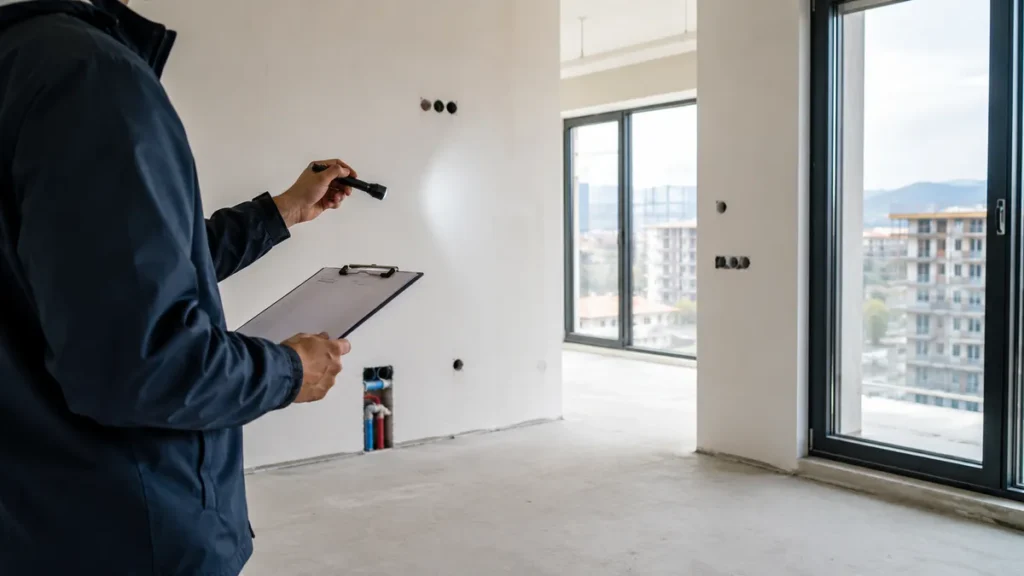
A handover inspection is required regardless of the type of finish — even if the flat is being sold as a ‘shell’ and appears ready to move into. The more complete the property is, the more specific details need to be checked, because finished interiors conceal more potential defects than bare concrete walls.
For a rough finish, the handover inspection focuses on the basic parameters: whether the actual floor area and layout correspond to the project documentation; the condition of the load-bearing structures and external walls; and the connection points to the building’s communal services, if these are provided for in the project. There are fewer details to check at this stage, but it is important to ensure that the geometry of the premises and the location of openings match the plan.
During the pre-finishing stage, the scope of the inspection is broader: the condition of the partitions, the evenness of the plaster and screed, the operation of the fitted windows, the quality of the front door, and the presence and condition of the basic electrical and plumbing installations. It is worth paying attention here to hidden defects — cracks in the screed and uneven walls — which will become apparent during the subsequent final finishing stage.
The final inspection is the most thorough: the quality of the finish, the functionality of the bathroom fittings, the condition of the floor coverings and interior doors, and, if furniture and appliances are specified in the specifications, whether their configuration and condition match what was stated. It is easier to overlook minor defects here, as the overall appearance of the flat gives the impression that it is completely ready for occupation.
Table 4. Acceptance checklist by type finishes
| What to check | Rough finish | Pre-finishing | Finishing touches | Potential risk |
|---|---|---|---|---|
| Area and layout | Obligatory | Obligatory | Obligatory | Non-conformity with the design |
| Walls and partitions | Load-bearing structures | Quality of installation | Final state | Cracks, deviations |
| Windows | Openings | Installation and leak-tightness | Fittings and double-glazed units | Draughts, condensation |
| Front door | Often missing | Installed | Finish | Quality of locks |
| Electrical systems | Connection points | Basic layout | Finish sockets and switches | Points that are not working |
| Plumbing | Not available | Basic entries | Installed equipment | Leaks, water pressure |
| Ventilation | Channels | Connection | Operational capability | Insufficient traction |
| Screed | Not available | Surface quality | Under the covering | Unevenness |
| Walls (finish) | Not applicable | Plaster | Finishing touches | Defects in paintwork/wallpaper |
| Bathroom | Not available | Preparation | Fully equipped | Quality of sanitary ware |
| Flooring | Not available | Not applicable | It has been established | Scratches, gaps |
| Furniture/appliances, if promised | Not applicable | Not applicable | Check against the specification | Discrepancy in the scope of supply |
| Communal areas of the building | Basic readiness | State of finish | Final view | Discrepancy with the advert |
The cost of a professional handover in Georgia is usually calculated either per square metre or as a fixed sum per property. In publicly available quotes for Tbilisi, handover costs range from 3 GEL/m², which, at the current exchange rate, is around $1.1–1.2/m². For Batumi, in certain clauses, the handover of the new building is specified as from €250 per property, and a visual inspection of a property up to 200 m² — from $150. These figures should be regarded as initial guidelines: the final price depends on the floor area, the type of finish, the scope of the inspection, whether a report is required, whether a specialist needs to visit the site, and the complexity of the property.
In practice, experts recommend checking at least 10 key elements flats: the layout of the rooms, windows, doors, building services, ventilation, the quality of the screed, finishes, plumbing, electrical installations and compliance with the specification.
Any defects found should be recorded in writing — either in the handover report or in a separate document containing photographs and a description. Verbal agreements regarding the rectification of defects are difficult to substantiate later should a dispute arise. The actual condition of the flat should be checked against what is specified in the contract and the specifications, rather than against general impressions gained from viewings or the project’s promotional materials.
Handover is not just a formality. It is the moment when the buyer checks that the promised finish matches the actual condition of the flat.
Mistakes made by buyers
Many of the problems that arise when buying a flat in a new-build property in Georgia stem from a failure to clarify the details at the outset. Here are the most common mistakes.
- Choosing a flat based solely on the price per square metre, without taking into account the stage of completion and associated costs.
- To automatically assume that a green shell is a fully finished flat, complete with furniture and appliances, without checking the specifications.
- Do not refer to the appendix containing the finish specifications; rely solely on the name of the finish.
- Do not include furniture, appliances and the connection of utilities in the budget when calculating the total cost.
- Underestimate the time needed for repairs and plan your move or the start of your tenancy without allowing for a buffer.
- Buying remotely without detailed photos, videos or verification of documents relating to the development and the developer.
- Do not check the developer’s reputation and previous projects before making a payment.
- Do not record defects in writing at the time of acceptance, relying on verbal promises that they will be rectified.
- Comparing projects in different areas without taking transport links and infrastructure into account.
- Failing to take into account the costs of managing and maintaining the property after purchase is particularly important for those planning to let out their flat.
Some of these risks can be mitigated by requesting specific details before payment, checking the documents and setting out the arrangements in writing — and, in more complex cases, by engaging a specialist to review the documentation.
Choosing a flat to suit your needs
Choosing the right finish ultimately comes down not to an abstract question of ‘which is better’, but to the buyer’s specific objective. For those planning to let out a flat, the speed of getting it on the market and the condition of the furniture are more important. For those moving in to live there themselves, the quality of the refurbishment, the layout and the ability to customise the interior to their own taste take centre stage. For investors considering resale, the property’s marketability and a realistic assessment of the additional costs required before it can be put on the market are more important. And for those buying remotely, the top priority is to minimise the need for personal supervision of the construction work.
Not sure which type is right for you — a black, white or green frame? Take our quick property selection quiz: we’ll take into account your budget, the purpose of your purchase, the city, your timeframe and your willingness to carry out renovation work. Find a property in Georgia
Whilst this selection process is no substitute for checking the documents and specifications yourself, it can help you narrow down your shortlist more quickly and rule out properties that are less suited to your stated purpose for buying — whether that be an urgent move, a long-term tenancy or an investment strategy with a view to resale.
Conclusion
Rough, semi-finished and finished finishes are not merely marketing terms, but different stages of an apartment’s completion, which directly determine the budget, timeframe and extent of the buyer’s personal involvement in the renovation. A rough finish offers maximum freedom in terms of layout, but requires supervision, time and a larger budget. Pre-finish is a sensible compromise between cost and readiness. Finish is more convenient for moving in quickly or starting a tenancy, but its specifications must be checked carefully and should not be taken at face value based on the name alone.
The key practical principle to take away from this entire article is this: you should not be comparing the names of the building frames, but rather the specific specifications, the contract, the actual condition of the property upon handover, and your own purpose for the purchase — whether it is to live in, let out or resell. Any of the three formats can be a good solution, provided it suits your needs and its actual composition is confirmed by documentation.
If you need to get to grips with a specific project or compare several options in Batumi, Tbilisi or Gonio, the team The Residence It can help you compare options and request documents and specifications from the developer, and, if necessary, engage a specialist to carry out a legal review of the contract.
 Property in Montenegro
 Property in Cyprus
 Real estate in UAE
 Property in Bali
 Property in Thailand
 Property in Spain
 Property in Saudi Arabia
 Property in Turkey
 Property in Zanzibar
 +995 551 50 18 84
 hello@residence-estate.ge
 Georgia, Batumi, Sherif Khimshiashvili str. 1, office 1204


 Get catalogue of TOP-7 objects