
 +995 551 50 18 84


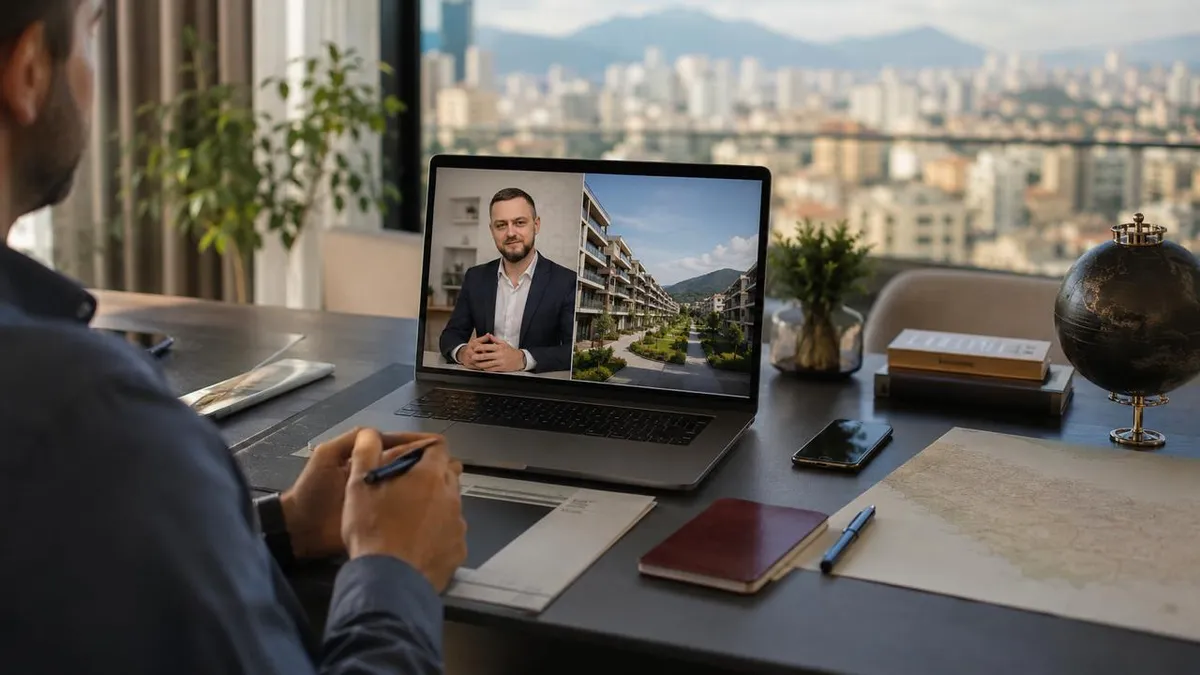

In recent years, Georgia has become a popular destination for foreign property buyers, particularly those considering Batumi, Tbilisi and coastal locations for living, renting or investing. Some buyers are based outside Georgia and are considering a purchase without visiting the country in person — neither to view the property, nor to sign the contract, nor to complete the registration.
The good news is that it is possible to buy property in Georgia remotely. Legally, a transaction can be arranged through a representative provided the documents are drawn up correctly, and in practice, many sellers, developers and estate agents work with overseas buyers remotely. The bad news: buying remotely requires preparation, attention to detail and a willingness to monitor every stage of the process. Distance does not protect against mistakes — it actually makes them more likely.
This article covers all the key aspects of a remote transaction: how to draw up a power of attorney and what to include in it, how to inspect the property before transferring funds, which payment methods are available when buying from abroad, how the registration of title takes place, what risks remote buyers face, and when it is actually worth travelling there in person. This guide is aimed at those who are just beginning to explore the subject but wish to understand it in sufficient depth to make informed decisions.
This article does not constitute legal advice. Requirements regarding documentation, procedures and payment are subject to change — before entering into a transaction, all details must be clarified with regard to the specific property, the buyer’s country and current practice.
Is it possible to buy property in Georgia remotely?
In many cases, the buyer’s personal presence may be replaced by that of a representative acting under a power of attorney, provided that the power of attorney, the transfer and the contract are drawn up in a form acceptable to the public register. This is common practice, but the specific procedure depends on the power of attorney, the notary, the seller, the type of property and the requirements of the public register.
If you would like to gain a better understanding of the entire property purchase process — from choosing a property and checking the documents to registering ownership and calculating all the costs — we recommend reading our in-depth article ‘How to buy property in Georgia“.
In essence, the stages of a remote and an in-person transaction are similar — selecting the property, negotiations, due diligence, payment and registration — but with a remote purchase, additional steps are involved, such as a power of attorney, the transfer of documents, a possible apostille or legalisation, and monitoring the representative’s actions. This means that monitoring the process requires considerable effort.
The most common properties purchased remotely are flats in new-build developments in Batumi, apartments in aparthotels, properties under construction, second-hand flats in Tbilisi, and small commercial premises. Less commonly purchased are houses, townhouses and plots of land.
An important restriction for foreign nationals: Foreign nationals can generally purchase flats, houses and commercial property in Georgia without obtaining a residence permit or a separate authorisation for the purchase itself, but the type of property and the status of the land must be checked separately. Restrictions apply to agricultural land: foreigners are generally not permitted to purchase such plots freely, except in cases provided for by law — for example, inheritance or specific investment scenarios (see Organic Law of Georgia on Agricultural Land Ownership). It is therefore important to check the land’s status before the transaction.
A remote transaction is suitable if the buyer chooses a flat in a new-build development with clear documentation, works with a trusted agent and is prepared to stay on top of things. It is less suitable if the property is unusual, the ownership history is complicated, the documents raise questions, or the buyer plans to live in the flat themselves and wants to get a feel for the neighbourhood first. In the latter case, a personal visit often pays off.
Key scenarios for remote transactions
Purchase by proxy
This is the most common method for a foreigner who is not in Georgia. The buyer draws up a notarised power of attorney in favour of a specific person — a lawyer, an agent or a trusted acquaintance — who then acts on their behalf: signing the contract, submitting documents to the public register and, where necessary, paying the relevant fees. The key here is to draw up the power of attorney correctly and ensure that the representative acts in the buyer’s best interests, rather than those of any other party to the transaction.
Buying from a property developer
Some developers working with overseas buyers offer remote procedures: online booking, video viewings, signing the contract through a representative, instalment plans and a fixed payment schedule. This is more convenient than the secondary market, but requires a thorough check of the developer, the planning permission documents and the terms of the property handover. Particular attention should be paid to properties under construction: here, it is important to understand exactly what you are buying, by when and on what terms.
Purchase on the secondary market
The secondary market requires a more thorough check. There are no standard contracts or transparent terms and conditions set by the developer here — every transaction is unique. You need to check the owner, the property’s history, the presence of any encumbrances, seizures and debts, the consent of co-owners (if applicable), and the condition of the flat and the building. It is more difficult to do this remotely, but it is possible — provided you have a reliable representative.
Table 1. Scenarios for buying property remotely in Georgia
| Scenario | When it’s time | What to check particularly carefully | Principal risk | How to reduce the risk |
|---|---|---|---|---|
| Through an authorised representative | Any type of property; the buyer is not in Georgia | The representative’s powers; the content of the power of attorney | A power of attorney with too broad a scope; a conflict of interest | Set out specific powers; work with an independent representative |
| From the developer | New-build, flats, excavation pit | The developer’s reputation, planning permission, instalment terms | Delay in delivery, failure to meet the promised standard | Check building permits and the developer’s project history |
| Secondary market | A ready-to-move-in property, in a specific neighbourhood, on a specific floor | Owner, encumbrances, debts, history | Hidden liabilities, housing and utility debts | Order an extract from the register, check for outstanding utility bills |
To put it simply, for a remote buyer, the most predictable scenario is usually one involving a completed property with transparent title registration, whilst the most risk-prone is a purchase at the construction stage, where, in addition to the transaction itself, one must assess the developer, the timetable, the status of the project and the terms of the contract. Purchasing through a proxy does not in itself make the transaction risky, but it does significantly increase the requirements regarding the power of attorney, the inspection of the property and the monitoring of each stage.
What to prepare before choosing a property
Buying a property remotely doesn’t start with viewing properties, but with answering a few basic questions. Skipping this stage means wasting time on properties that don’t match your actual goals and budget.
In practice, remote transactions are most often held up not by the choice of flat, but by the preparation of documents and funds. Therefore, before you begin, it is best to set aside a reserve not only for the property’s purchase price but also for associated costs: the transfer of a power of attorney, notary fees, state registration, an extract from the land register, bank charges and any interpreter’s fees. If you are buying a property from a developer, it is worth clarifying the payment schedule and the terms regarding late payments in advance.
Decide why you are making the purchase. Everything depends on this: the type of property, the location, the budget and the management requirements. A flat for your own use is different from an investment property intended for short-term lets. A property for a residence permit is different from a holiday home in the countryside. If your objective is unclear, choosing a property remotely is twice as difficult.
Set your budget in full. The price of the property is only part of the costs. You’ll also need to add the costs of drawing up a power of attorney, obtaining an apostille or consular legalisation, translating documents, notarial fees, registration fees, bank transfer charges, as well as the cost of a representative’s or agency’s services. If you’re planning to carry out renovation work, buy furniture or engage a property management company, these costs must also be factored into your budget.
Select a location and property type. Batumi is a popular choice for holiday rentals and seaside holidays. Tbilisi is ideal for long-term rentals, relocating and business. Gonio offers a quieter coastal alternative. Each location has its own unique characteristics, which are best understood before you start your search.
Sort out the payment in advance. How exactly will you be transferring the money? Which bank, and in which country? Is the bank able to make an international transfer to Georgia? Will it require documentation proving the source of the funds? It is best to sort out these issues before you find a property — otherwise, the transaction could come to a standstill at the most inconvenient moment.
Decide who will be your representative. This is one of the key considerations when buying online. The representative should be someone you trust, or a professional with clearly defined powers and independence from the seller.
If you’re not yet sure which property is right for your needs — whether for living in, letting or investment — you can start with a quick shortlist. Answer the following questions: a few questions, and the team at The Residence will find properties in Georgia to suit your budget and requirements.
Before selecting a property, it is useful for the buyer to prepare a basic set of documents in advance: a valid passport, the buyer’s name written exactly as it is to appear in the contract and the land registry, the representative’s details, and a clear understanding of which bank will be used for the payment and in which currency it will be made. This may seem like a minor detail, but it is precisely these details that can later cause delays.
Things to decide before entering into a transaction:
- Purpose of purchase (to live in, to let, as an investment, for a residence permit, for holidays)
- Total budget, including all expenses
- Preferred city and property type
- Status of the property (completed, under construction)
- Payment methods and the bank’s services
- Who will be the representative in Georgia?
- Criteria for inspecting a site
- Post-purchase management plan
Take a look at the latest properties in Georgia
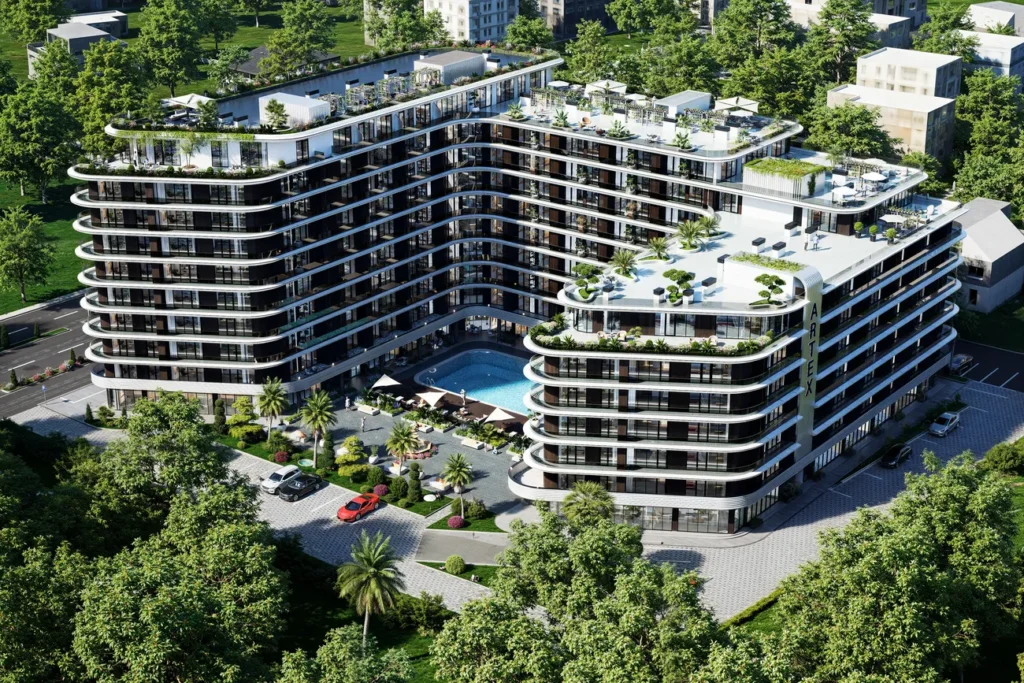

 Batumi, Airport area
 from 27.2m²
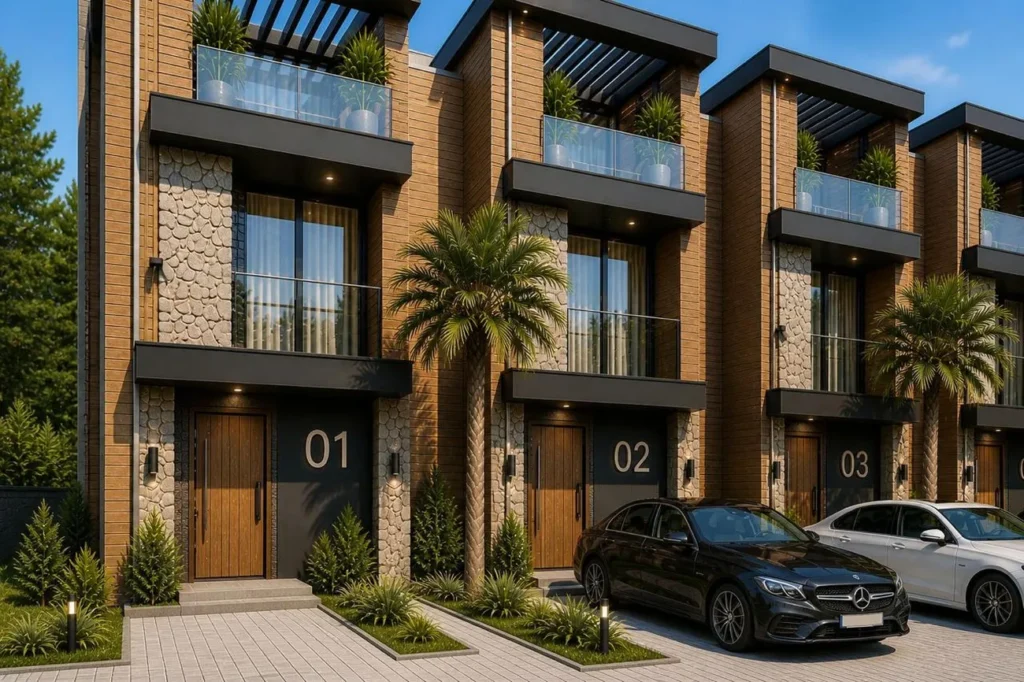
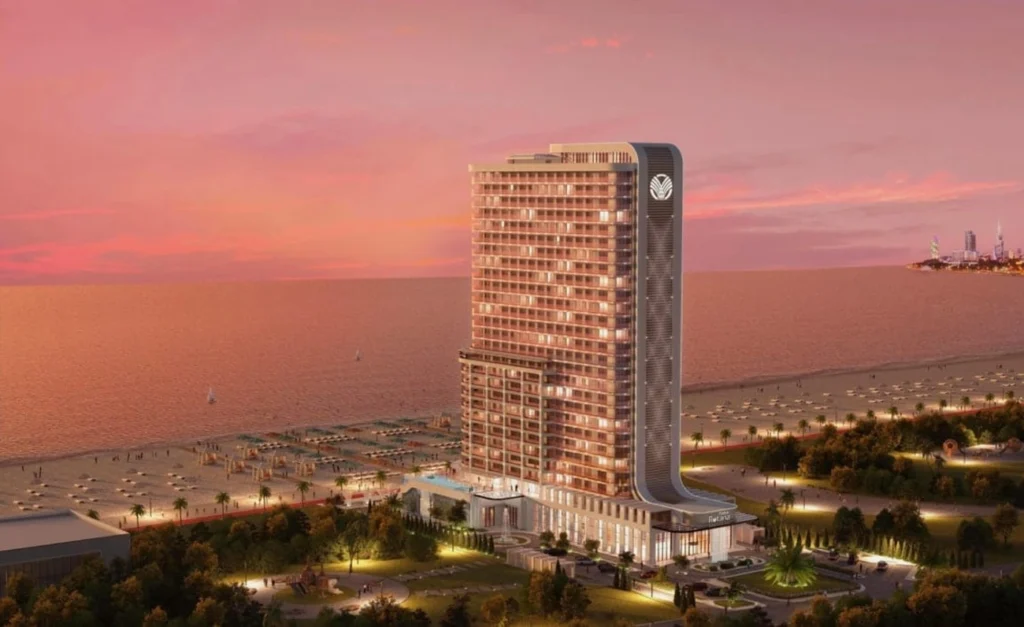

Do not transfer any money until a basic check of the property has been carried out, you have a clear understanding of the seller, and the contract has been agreed.
How to draw up a power of attorney
A power of attorney is a legal document which authorises your representative to act on your behalf. Without it, a remote transaction is not possible. However, the power of attorney must be drawn up correctly: it must specify precise powers that are clear to a Georgian notary and registrar, and must not include any unnecessary powers that could pose risks.
Who is eligible to be a representative? A representative may be any person whose powers of attorney have been duly drawn up and accepted by a notary and the public register: a lawyer, an estate agent, a colleague, an acquaintance or a relative. It is best to clarify the requirements regarding the representative’s identification and the form of the power of attorney for each specific transaction. The main thing is that they have no conflict of interest with the seller’s party.
Why should you avoid drawing up a ‘general’ power of attorney? A broad power of attorney, which allows a representative to carry out any transactions involving property, to sell, pledge or dispose of it as they see fit, poses a serious risk. If the authorised representative turns out to be dishonest, the consequences could be significant. It is wiser to draw up a document for a specific transaction with clearly defined powers.
It is safer to issue not a ‘blank’ power of attorney covering all actions, but a document setting out clear powers of attorney for a specific transaction, asset or task.
What a power of attorney should contain: the principal’s (the buyer’s) full details, the representative’s full details, and a clear description of the specific powers of attorney — to sign the contract of sale, submit documents to the public register, pay government fees, and obtain an extract from the register. It is advisable to specify the particular property (address or cadastral number) and the maximum transaction price. It is also worth explicitly stipulating a prohibition on sub-delegation if you do not wish your representative to delegate their powers to third parties.
Apostille and legalisation. A power of attorney drawn up abroad must be recognised in Georgia. If the power of attorney was issued in a country that is a party to the Hague Convention, an apostille is usually required. If the country is not a party to the Convention, consular legalisation may be required. However, for certain countries and documents, international agreements may be in place that simplify the recognition of documents — the procedure must be clarified specifically for the country in which the power of attorney was issued (for more details on the types of document legalisation, see the website PSDA). In practice, when submitting a foreign power of attorney in Georgia, a notarised translation into Georgian is usually also required; it is advisable to check the specific procedure with a notary before the transaction.
An important change in practice. According to legal reviews of the 2023 amendments (including an analysis by EY Georgia), if a contract is subject to registration in a public register and a party is acting under a power of attorney issued abroad, the contract may require notarisation in the form of a public deed. This procedure must be confirmed with a Georgian notary prior to the transaction — the specific requirements depend on the country in which the power of attorney was issued and the circumstances of the transaction.
Table 2. What to include in a power of attorney
| Power of Attorney section | What to specify | Why is this necessary? | The risk if this is not specified |
|---|---|---|---|
| Principal’s details | Full name, passport details, nationality | Customer identification | A document may be rejected by a notary or registrar |
| Representative’s details | Full name, passport or ID, contact details | Identification of the representative | The authorisation cannot be applied |
| The right to sign a contract | Contract type, property type, property | Basis for entering into a transaction | The representative will not be able to sign |
| The right to submit documents to the public register | Direct instruction | Registration without a buyer | Registration cannot be done remotely |
| The right to pay duties | Maximum amount | Payment for public services | Delay in registration |
| The right to receive a statement | Direct instruction | Proof of ownership | You won’t be able to get a statement without a buyer |
| Object-based restriction | Address or cadastral code | Protection against abuse | A representative may act in relation to other objects |
| Price limit | Maximum transaction price | Financial control | A sales representative may agree to an inflated price |
| Validity period | The specific expiry date | Term limits | An open-ended power of attorney — a constant risk |
| Prohibition on re-endorsement | An outright ban | Exclusion of sub-representatives | Your powers may be transferred to people you do not know |
Checking the property before payment
A buyer who is not in the area cannot come and view the flat in person. This is no reason to give up on the purchase — but it is a reason to take the due diligence process much more seriously than you would during a face-to-face viewing. No money should be transferred until the property has been checked against key criteria.
Extract from the public register — this is the key document you need to obtain before making any decision. An extract from National Agency of Public Registry of Georgia shows who the owner of the property is, and whether any encumbrances, seizures, mortgages, restrictions or easements have been registered. Data from the public register is of key legal importance for verifying registered rights, restrictions and encumbrances — which is precisely why an extract from the register is one of the most important documents prior to a transaction. The legal basis for maintaining the register and the powers of the NAPR are set out in The Georgian Law on the Public Register. To obtain an extract, you will need the property’s cadastral code.
Checking via the register is not an expensive procedure. According to current NAPR rates, an extract from the register costs 20 GEL per working day or 75 GEL on the day of application, and if ordered online, 13 GEL per working day or 52 GEL on the day of application. If a cadastral plan is required, it costs 7 GEL per working day or 26 GEL on the day of application to prepare.
| Service | In 1 working day | On the day of the enquiry |
|---|---|---|
| Extract from the register (when applying to NAPR) | 20 GEL | 75 GEL |
| Extract from the register (online) | 13 GEL | 52 GEL |
| Cadastral plan | 7 GEL | 26 GEL |
Cadastral code — the property’s unique identifier. To verify the property, you need to request this code from the seller or developer. If they do not provide the code, this is a reason not to proceed with payment and to investigate the matter further. Without the cadastral code, it is not possible to check the property in the register.
When buying on the secondary market, you should check: whether the seller is the registered owner; whether there are any charges or attachments on the property; and whether there are any outstanding debts to the management company or utility providers. It is also worth requesting the title deeds and, if the property was acquired during marriage, ensuring that the spouse’s consent has been obtained (where applicable).
When buying from a developer, it is important to check the planning permission, the selling company’s corporate documents, its track record of completed projects, the terms of the shared ownership agreement or the contract for the sale of a property yet to be built, as well as the terms of handover — the condition of the property, the timeframe and what happens in the event of a delay.
Why photos and videos aren’t enough. A beautiful rendering or video tour is marketing material, not a legal document or an assessment of the property’s actual condition. A video may conceal defects, noise, odours, the view from the window, and the condition of the entrance hall and car park. Where possible, it is worth arranging a video call with a live viewing – with a representative who will walk through all the rooms in real time, open the windows, show the view, and demonstrate the entrance area and grounds.
Ask the seller or the property management company about any outstanding utility bills. Buyers who are not based locally rarely do this — which is precisely why these debts can come as an unpleasant surprise later on.
Checklist to go through before making an online purchase:
- The property’s cadastral code has been obtained
- An extract from the public register has been requested and examined
- The owner is the same as the seller
- There are no encumbrances, attachments or mortgages, or these have been clarified
- The title deeds have been received
- The developer’s planning permissions have been checked (for new-build properties)
- Outstanding payments to the housing and utilities services and the management company have been clarified
- The condition of the flat has been confirmed by a live video tour
- The condition of the entrance hall, the building, the car park and the grounds has been checked
- The neighbourhood and its facilities have been reviewed (videos, maps, reviews)
- The terms of payment have been agreed and set out
- The terms and conditions for the transfer of the property are set out in the contract
- The possibility of registering ownership has been confirmed
Table 3. Inspection of new-build and second-hand properties
| What we’re checking | New building | Secondary market | Why is it important? |
|---|---|---|---|
| Extract from the register | Check the developer and the plot of land | Check the owner and any encumbrances | The basis for understanding legal compliance |
| Planning permission | Obligatory | Not applicable | Without authorisation, the property may encounter problems with registration |
| The developer’s project history | Completed projects, reputation | Not applicable | Reduces the risk of construction delays or projects being put on hold |
| Condition of the property | Construction stage, photos, work carried out | Live video review with a spokesperson | Compliance with the specifications |
| Housing and utilities debts | Not applicable (new object) | Request confirmation from the property management company and, where possible, details of the main utility services | Outstanding debts may complicate the transfer of services to the new owner |
| Terms of the contract | Deadlines, penalties, terms of termination | Status, assets being transferred | Remedies in the event of a breach of the terms and conditions |
| Cadastral code | To be confirmed once the property has been registered | Ask the seller in advance | Required for a registry check |
A step-by-step guide to remote transactions
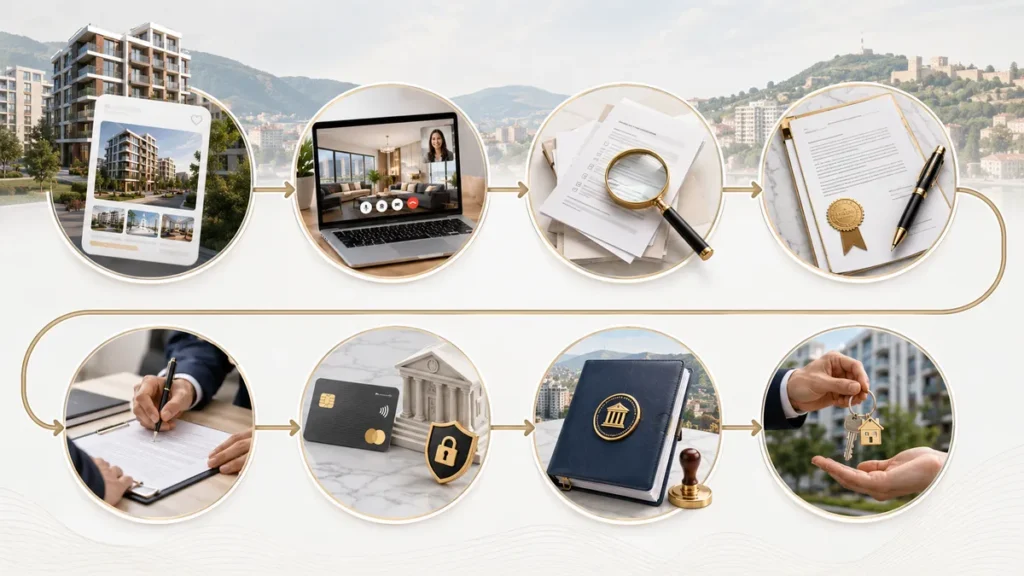
A typical outline of a remote transaction is set out below. The specific sequence of steps and their details depend on the type of property, the seller, the developer, the bank, the buyer’s country and the form of the power of attorney — not all transactions follow the same procedure.
- Initial consultation. Defining the objective, budget, location and requirements for the project.
- Selection of properties. Estate agent or independent search: new-build properties, the secondary market, flats.
- Remote views. Video reviews, live streams, and photo reports from the site.
- Preliminary inspection of the site. An extract from the public register, the cadastral code and documents from the seller or developer are required. The extract can usually be obtained within 1 working day (or on the day of the enquiry (for urgent processing). The cost is — 20 GEL (or 13 GEL (online), urgent — 75 GEL (52 GEL (online). If necessary, a cadastral plan can also be ordered — 7 GEL for standard processing, or 26 GEL on the day of the enquiry.
- Agreement on price and terms. Negotiations, recording of agreements.
- Drawing up a power of attorney. In most cases, translation and notarisation take from a few hours to 1 working day. In practice The cost is usually between 30 and 80 GEL per document, however, the final price depends on the language, the length of the text, the turnaround time and the rates charged by the specific translation agency and notary.
- Review of the contract. Reviewing the sale and purchase agreement — either on your own or with a solicitor. It is useful to familiarise yourself with the typical structure of a property sale and purchase agreement in Georgia in advance.
- Payment or deposit. In accordance with the agreed procedure, with a clear payment reference and bank details.
- Signing of the contract by a representative. If a transaction is carried out on the basis of a foreign power of attorney, check with the notary in advance whether the contract needs to be drawn up as a public deed: following the changes introduced in 2023, this procedure is often applied to such transactions.
- Submission of documents for registration. Once the entry has been made in the register, the purchaser receives an extract from the register confirming their title. Depending on the registration package chosen, this usually takes place on the day the documents are submitted, in 1 working day or in 4 working days. If you require an additional extract from the register after registration, you can order it separately: the cost is 20 GEL for receiving within 1 working day or 75 GEL on the day of the enquiry (when ordering online — 13 GEL и 52 GEL (respectively).
- Waiting for registration. The timeframes depend on the service selected and the circumstances of the transaction.
- Receiving confirmation of registration. Once an entry has been made in the public register, the purchaser receives an extract from the register confirming their title. Depending on the chosen tariff, this usually takes place on the day the documents are submitted, after 1 working day or after 4 working days. Once you have received the statement, it is advisable to check that all your registration details are correct.
- Handover of keys, acceptance of the property, and subsequent use.
The whole process can take anywhere from a few days to a few weeks — it all depends on how quickly the property is found, whether the power of attorney is ready, whether an apostille or legalisation is required, how quickly the bank processes the payment, and which registration speed you choose.
Government fees for registration and documents
| Service | Standard term | Urgent |
|---|---|---|
| Registration of Title (NAPR) | 4 working days — 150 GEL | 1 working day — 270 GEL On the day of submission — 350 GEL |
| Extract from the register (when applying to NAPR) | 1 working day — 20 GEL | On the day of the enquiry — 75 GEL |
| Extract from the register (online) | 1 working day — 13 GEL | On the day of the enquiry — 52 GEL |
| Cadastral plan | 1 working day — 7 GEL | On the day of the enquiry — 26 GEL |
What the buyer should monitor remotely at each stage:
- Who holds the original documents and where are they kept?
- When exactly is the contract signed, and on what terms?
- On what basis is the money transferred, and within what timeframe?
- Who submits documents to the register and when
- How and when will the registration record appear?
- How to obtain proof of ownership (a certificate)
- What happens to the property after the transaction?
Payments from abroad
Transferring money when making an online purchase is one of the most sensitive stages. An error in the payment details, an unclear payment reference or problems with the bank can delay the transaction or result in a loss of funds.
The main method — a bank transfer to the seller’s or developer’s account. Before making the transfer, you must ensure that the bank details have been provided directly by the seller (or their official representative), and not via a messaging app by a third party. You should check the details at least twice; ideally, confirm them via a voice call or video call.
Payment reference It is necessary to specify clearly: under which contract, for which property, and on what grounds. Vague wording may cause difficulties during subsequent audits.
What to do if the bank asks for documents. The bank may request documents proving the source of funds as part of its compliance and anti-money laundering procedures. The set of documents required depends on the bank, the sender’s country and the amount of the transfer. This is a standard procedure and no cause for alarm, but it is best to be prepared in advance: a contract of sale or booking confirmation, an invoice from the seller, and proof of income or the source of funds.
On cryptocurrency and informal schemes. Payments in cryptocurrency and via informal arrangements do occur in practice, but for the purposes of this article we have deliberately chosen not to treat them as the standard purchase scenario. For such payments, too much depends on banking compliance, the contractual structure and the tax implications in both the buyer’s country and Georgia.
Payment by instalments with the developer — a separate format. It is important to understand the following: the payment schedule, what happens in the event of late payment, the conditions under which the contract may be terminated, and how any amounts already paid are refunded.
It is best to transfer the money only once you have a clear understanding of the property, the seller, the contract, the bank details, the reason for payment and the procedure for registering ownership.
Table 4. Payment methods for online purchases
| Payment method | When it is used | What to check | Principal risk | Commentary |
|---|---|---|---|---|
| Bank transfer to the seller’s account | Secondary market, completed properties | Bank details, payment reference, contract | Error in payment details, data interception | Check the details in person, not via a messaging app |
| Transfer to the developer’s account | New-build properties, payment plans | Payment schedule, terms regarding late payments | Project delay, developer’s bankruptcy | Check the developer’s reputation and track record |
| Deposit / Down payment | Booking a property | Return Policy, Force Majeure | Loss of deposit in the event of cancellation | Set out the terms in writing |
| Instalment payment | Properties under construction | Penalties, conditions for termination, date of transfer | Failure by the developer to comply with the terms and conditions | Study the contract thoroughly |
Property registration
Signing the contract is an important step, but not the final one. In the case of property, state registration of the right in the public register is of key legal significance: it is the entry in the register that confirms the registered title.
The registration of property rights is carried out by The National Agency for the Public Register of Georgia (NAPR). Documents may be submitted via the appropriate channel for the transaction — for example, through the House of Justice, a notary, a representative or the available electronic services. The data in the register is of key legal significance for registered rights and restrictions by virtue of The Georgian Law on the Public Register.
What happens during registration. A representative (acting under a power of attorney) submits the contract and supporting documents to the public register. Once the details have been verified, an entry regarding the new owner is made in the register. The buyer receives an extract from the register confirming their title to the property.
Registration deadlines These depend on the service option chosen (standard or fast-track) and the circumstances of the specific transaction. You should not rely on other people’s examples as a guarantee — you should check the current processing times with NAPR or the agency.
At the time of this review, the official NAPR website lists the following standard fees for the registration of the creation, amendment or termination of a property right: 4 working days — 150 GEL, 1 working day – 270 GEL, registration on the day of application – 350 GEL. If the matter concerns not the registration of the right itself but, for example, the preparation of an extract from the register, separate fees apply.
What to check in your statement after registration:
- The owner’s name is correct
- The passport details match those on the buyer’s document
- The cadastral code corresponds to the property
- The address and floor area are as stated in the contract
- There are no unexpected or unauthorised entries in the encumbrances column
- The date of registration is shown
- If the name is in another language, check that the transliteration is correct
If the details on the statement are incorrect, NAPR offers a separate, free service to rectify technical errors; the agency’s webpage states that this takes 1 working day or is rectified on the day the request is made.
Why is this important? An error in your name or passport details in the register is no trivial matter. It could cause problems in the future when selling a property, inheriting it or receiving rental income. Once you have received your extract, it is best to check all the details straight away and, if necessary, arrange for them to be corrected.
Once the registration is complete, keep the following: the contract of sale, the extract from the register, all proof of payment, and documents relating to the registration costs. These will be useful for tax purposes, when letting the property, and in the event of a future sale.
How much does an online purchase cost?
The price of the property is only part of the cost. With a remote transaction, there are additional costs that would be lower – or non-existent – if you were to visit in person.
Drawing up a power of attorney — The power of attorney must be drawn up by a notary in the buyer’s country of residence. If an apostille or consular legalisation is required, Details regarding their processing, timeframes and cost should be checked with the relevant authorities in the country issuing the document, as these vary from country to country. Following this, in Georgia, the document is usually translated into Georgian and the translation is notarised.
Apostille or consular legalisation — may be required for the recognition of a foreign power of attorney in Georgia. The specific procedure depends on the country in which the document was issued and on international agreements.
Translation of a power of attorney into Georgian, certified by a notary. As a rule, this is done in Georgia. The translation and notarisation usually take from a few hours to 1 working day, and when the system is under heavy load — up to 2 working days. In practice, the cost of such services is usually from 30 to 80 GEL per document, however, the final price depends on the language, the length of the text, the turnaround time and the rates charged by the specific translation agency and notary.
Registration fee — a government fee for the registration of ownership rights and the issue of specific documents in the public register. The amount of the fee depends on the service selected and the speed at which it is provided. The current rates are set out below (should the rates change, it is advisable to check them on the official NAPR website).
| Public service | Standard term | Urgent processing |
|---|---|---|
| Registration of ownership | 150 GEL — 4 working days | 270 GEL — 1 working day 350 GEL — on the day of submission |
| Extract from the register (NAPR) | 20 GEL — 1 working day | 75 GEL — on the day of the enquiry |
| Extract from the register (online) | 13 GEL — 1 working day | 52 GEL — on the day of the enquiry |
| Cadastral plan | 7 GEL — 1 working day | 26 GEL — on the day of the enquiry |
Bank charges — In the case of an international transfer, fees may be charged by the sending bank, the correspondent bank and the receiving bank. The total amount of fees depends on the transfer method.
Services provided by a representative, solicitor or agency — if they’re chargeable. It’s best to agree on the terms in advance.
Additional costs — a video tour of the property, an independent valuation, and the provision of original documents and notarised copies, if required.
Table 5. Potential costs involved in a remote transaction
| Consumption | When it happens | Estimated timeframe | Approximate cost | Is it possible to avoid |
|---|---|---|---|---|
| Notarisation of a power of attorney | Prior to the transaction | It depends on the country of registration | In accordance with the notary’s fees in the country where the document is being drawn up | No, if the transaction takes place without the parties being physically present |
| Apostille / consular legalisation | Prior to the transaction | It depends on the country in which the document was issued | In accordance with the rates set by the competent authorities of the country of registration | In the case of a foreign power of attorney, the following is usually required (the procedure varies by country) |
| Translation and notarisation of a power of attorney | Prior to the transaction | Usually from a few hours to 1 working day (sometimes up to 2 working days) | Usually 30–80 GEL per document* | This is usually required when submitting a foreign document to the Georgian authorities |
| Registration fee | When submitting documents | 4 working days, 1 working day or on the day of submission | 150 GEL, 270 GEL or 350 GEL (depending on the registration period selected) | No, it is compulsory |
| Banking Commission | When transferring funds | Depending on the bank’s processing times (usually ranging from a few hours to several working days) | It depends on the bank, the currency and the amount of the transfer | Partially (depending on the choice of bank and transfer method) |
| Representative / agency services | By arrangement | Throughout the transaction | Under the terms of the contract | Yes, provided the transaction is handled by the company’s own representative |
| Renovation and furnishing | Once you have received the keys | It depends on the scope of the work | On an individual basis | It depends on the condition of the property and the purpose of the purchase |
| Property Management | After purchase | Following the transfer of the property into management | In accordance with the management company’s rates or the terms of the contract | Yes, when driving yourself |
The exact figures for each item depend on the country, the type of property, the urgency of the transaction and a number of other factors. Before proceeding with the transaction, it is advisable to draw up a comprehensive list of expected costs and check the current rates.
The risks of buying online
A remote purchase is not a simplified version of a standard transaction. It is the same transaction, but with less control and greater reliance on third parties. Understanding the risks is not a reason to abandon the purchase, but rather a basis for thorough preparation.
One of the most common mistakes made by online shoppers is to treat an online transaction as a mere formality. In practice, it is not the distance that makes it secure, but the verification of documents, payments and registration.
Table 6. Risks and safeguards
| Risk | How does it manifest itself? | How to reduce | At what stage should you check? |
|---|---|---|---|
| The power of attorney is too broad | The representative is authorised to carry out any actions in relation to the property | Set out specific powers and restrictions | Before drawing up a power of attorney |
| Hidden encumbrances | A pledge, attachment or restriction not identified during the inspection | Order an extract from the register, examine all the details | Before payment |
| The property does not match the description | The flat looks different from the video | Arrange a live video call, request a report from a representative | Before signing the contract |
| Error in the details | The money is going to the wrong recipient | Check the details in person with the seller, rather than via correspondence | Before translation |
| Translation without a contract | The money has been transferred, but there is no legal basis for this | Do not transfer funds until the contract has been signed and checked | Before payment |
| Housing and utilities arrears | Utility bills are settled after the purchase | Request confirmation from the management company and suppliers before the transaction | Prior to the transaction |
| Unclear terms and conditions for payment by instalments | Late payment penalties, unclear terms of termination | Examine the contract with the developer in detail | Prior to signing |
| Buying based on renderings | The object does not match the visualisation | Check the stage of construction, request photos from the site | Before payment |
| Registration errors | Incorrect data in the register | Check your statement immediately after registration | After registration |
| Unrealistic expectations regarding rent | Real income is lower than forecast | Don’t focus on advertising metrics; research the rental market | Before you buy |
| Lack of a management plan | The flat is standing empty or incurring costs without yielding any return | Identify the management company or structure before the transaction is finalised | Before you buy |
| Conflict of interest involving a representative | The representative also works for the retailer | Engage an independent solicitor or agent | Before drawing up a power of attorney |
Would you like us to carry out the initial due diligence for you? Answer three short questions, and we’ll shortlist properties that match your requirements, review the key documents relating to them, and advise you on what to look out for in your specific purchase scenario: Get a selection of properties
Batumi, Tbilisi or Gonio
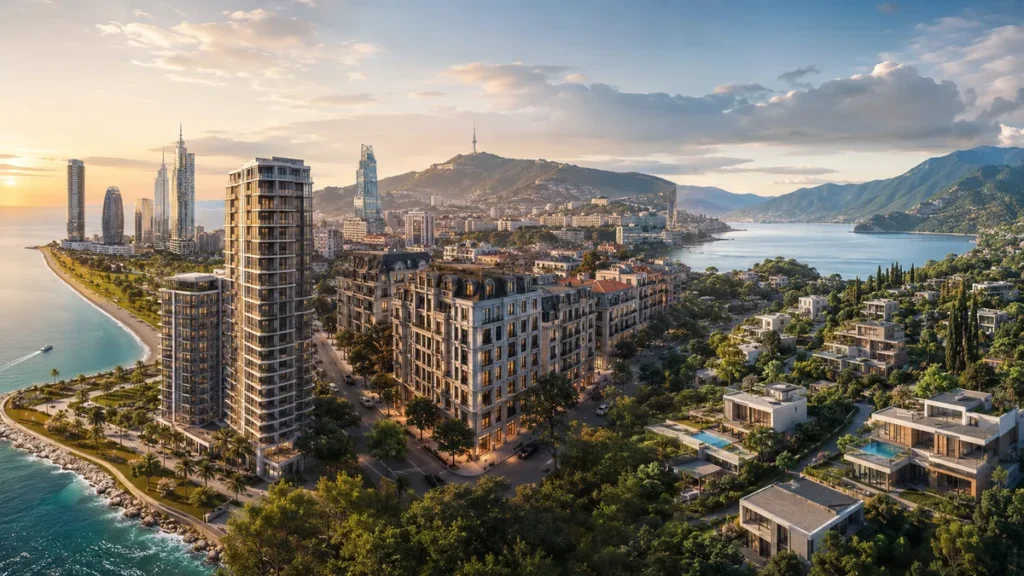
For a remote buyer, location is not just a matter of personal preference. Different cities and neighbourhoods involve different types of properties, different levels of demand, different risks and different due diligence requirements.
Batumi It is often considered by buyers from further afield, particularly if their plans involve the seaside, holidays or holiday lets. There is a lot of construction going on here, with plenty of aparthotels and a well-established infrastructure for holiday lets.
Key points to check when buying a property remotely in Batumi: the property’s location in relation to the sea and the city centre (which does not always match the description), seasonal demand for rentals, the presence of a management company and its terms and conditions, parking and the building’s facilities, the view from the window, and noise levels. You can find out more about Batumi’s neighbourhoods and prices from the location guide on the agency’s website.
Tbilisi These properties are more often considered for long-term letting and permanent residence: demand here is driven by various groups of tenants, including local residents, students and foreign nationals. Seasonal fluctuations are less pronounced than in Batumi.
Key points to check: the neighbourhood (Vake, Saburtalo, Didube, Gldani — each has a different demographic and different prices), transport links, the availability of the metro or minibuses, and the demand for long-term rentals specifically in the chosen neighbourhood. If the buyer is considering Tbilisi as a place to live, a personal visit is particularly advisable.
Gonio It is regarded as a more peaceful coastal location near Batumi, close to the Turkish border. It is quieter here, nature is closer, and the density of development is still lower. Before buying, it is important to assess the infrastructure, the prospects of a specific development and transport links.
Key points to check: the stage of development of the specific project and neighbourhood, transport links, access to shops and healthcare, and the location’s long-term prospects. For a buyer purchasing remotely in Gonio, it is particularly important to view an up-to-date video tour of the neighbourhood, rather than just the property itself.
Take a look at the projects in the Gonio area


Table 7. How to choose a location for a remote purchase
| Location | Who it suits | What to check remotely | Potential risk |
|---|---|---|---|
| Batumi | Holiday rentals, leisure, investment | Distance from the sea, management company, seasonality | Unrealistically high expectations regarding returns |
| Tbilisi | Long-term rentals, expats, life and business | Neighbourhood, transport, demand for rentals | Choosing the wrong neighbourhood without visiting it in person |
| Gonio | A peaceful holiday, a promising investment | Infrastructure, transport, stage of development | Market immaturity, lower liquidity |
| Kobuleti and the coast | For buyers considering a more low-key or seasonal format | Seasonality, management, transport, tourist numbers | High seasonality |
What to do after your purchase
Buying a property isn’t the end of the story. For those living abroad, it marks the start of a new phase: managing the property from afar.
Collection of documents and keys. Once registration is complete, the representative receives an extract from the register and the keys to the property. You should request the original documents — the contract, the extract and proof of payment — and keep them in a safe place.
Handover of the project. Even if you are unable to attend in person, arrange for a representative to carry out the handover: checking the condition of the flat, verifying that the specified finishes and fittings are in place, and inspecting the electrical and plumbing work. Everything is documented in a photo and video report.
Utilities. After the purchase, you will need to clarify the procedure for transferring utility services, contracts with suppliers and the property management company: the procedure depends on the building and the specific suppliers. Some of these steps can be carried out by a representative acting under a power of attorney.
Renovation and furnishing. If the flat needs renovating, you need to decide in advance who will organise, supervise and accept the work. Many agencies offer a renovation support service — this is convenient for buyers who are living abroad.
Management and letting. If you are buying a flat to let, you need to decide on the type of let: short-term (Airbnb, Booking) or long-term. Short-term lets usually require a local representative, a management company or some other form of operational management, particularly if the owner does not live in Georgia. Long-term lets often require less day-to-day management, but this depends on having a reliable tenant and a well-drafted tenancy agreement. Issues relating to remote management a flat in Georgia — that’s a topic in its own right, and it’s worth looking into it in advance.
Taxes. Renting out property in Georgia gives rise to tax liabilities. The Revenue Service specifies a preferential tax regime: an individual may be taxed at a rate of 5% instead of 20% on income from letting residential property (for further details, see the website Revenue Service). It is advisable to check the conditions for applying this scheme and the registration procedure with a tax specialist or on the Revenue Service website before handing over the property.
Insurance. Insurance can mitigate some of the financial risks associated with damage to property — particularly in the case of short-term rentals. However, you should check the terms of cover in the specific policy.
When is the best time to come in person?
Online shopping is a genuine and effective way to shop. However, there are situations where visiting a shop in person significantly reduces the risks and helps you make a more informed choice.
An expensive or unusual item. The higher the price, the more worthwhile it is to visit the property in person. When it comes to an expensive flat, house or plot of land, it is best to see the property for yourself.
A house or a plot of land. It is much more difficult to assess a plot of land – its actual boundaries, topography, surroundings and access – remotely than it is in the case of a flat in a multi-storey block of flats.
You’re planning to live in this flat. If you’re buying a flat to live in yourself rather than to let out, a visit in person will help you work out whether the neighbourhood is right for you, whether the building is comfortable, and whether you like the view and the surroundings. It’s impossible to assess these things fully via video.
Doubts regarding the documents or history of the property. If any issues arise during the inspection that cannot be resolved remotely, it is best to come along and sort them out on the spot.
Opening a bank account. If a Georgian bank account is required for a transaction or to manage a property, opening one may involve in-person identification or additional customer verification — the requirements depend on the specific bank. Whilst you’re at it, you can view properties and get to know your estate agent.
Comparison of districts. Maps and videos give you an idea, but not the full picture. Strolling along the streets of Vake and Saburtalo, visiting the Batumi seafront at different times of day, and assessing the facilities in Gonio — these are different experiences that influence your choice.
Important: An in-person visit and an online purchase are not mutually exclusive options. Some buyers opt for a combined approach: they complete the transaction remotely and then visit the property later to take possession or commence the tenancy. This is also a viable strategy.
How The Residence helps
The Residence is a property agency operating in Batumi, Tbilisi, Gonio and other locations across Georgia. The team works regularly with clients based overseas, and the process is tailored to this.
Selection of properties. Based on the client’s objectives, budget and preferences, the team compiles a shortlist of properties tailored to the client’s requirements, including offers from developers, property owners and the agency’s partners. This helps to narrow down the choices and avoid wasting time on unsuitable options.
Remote screenings. For agreed properties, we organise a video tour or online viewing, provided the seller, the developer and access to the property allow it. During the call, we walk you through the flat, showing you the building, the courtyard, the car park, the view from the window and the nearby amenities. If appropriate for the location and property, we can also film an aerial video using a drone — so that you can see the surroundings, the distance to the sea, neighbouring buildings and the real context of the area, rather than just the flat itself.
Inspection of premises. This service helps you request an extract from the register, verify the cadastral code, highlight important details in the documents, and clarify any queries regarding encumbrances and outstanding debts. This is not a legal assessment, but practical assistance in understanding the situation.
Transaction support. The agency helps to facilitate communication with the seller or developer, coordinates the process of drawing up the contract, and assists with the power of attorney — explaining what needs to be included in it and advising on how to draw it up. It also provides support throughout the registration process.
After purchase. The Residence assists with the handover of the property, organising refurbishment and furnishing, finding a property management company, and getting the property ready for letting. For those who remain abroad, this ensures that the property is not left unattended.
When you work with us, you receive not just a list of properties, but a selection tailored to your specific objectives. We take into account your budget, the type of purchase, your desired return, your timeframe, your preferred location and how you intend to use the property — whether for living in, holidaying or investment.
For each suitable property, we can draw up a preliminary financial model: purchase price, costs of furnishing and management, the likely range of rental rates, seasonality, potential periods of vacancy and the expected return after basic expenses. This helps to compare several options not only in terms of price, but also in terms of their investment potential.
Before listing a property, we carry out a basic due diligence check: we review the documents, analyse the seller or developer, assess the overall soundness of the transaction and identify any potential risks before the formalities begin.
Would you like to receive a selection of properties that match your criteria? Just answer a few questions in our quiz — we’ll put together some personalised options and help you choose a property that really suits your needs. Get a selection of properties
Conclusion: a remote transaction works if it is organised properly
Buying property in Georgia remotely is entirely possible. In practice, buyers from various countries carry out such transactions through representatives, and some estate agents and developers operate remotely. This is not unusual for the market, but it is not merely a formality either: a remote transaction requires a valid power of attorney, an inspection of the property, a clear payment plan and monitoring of the registration process.
But ‘possible’ does not mean ‘easy’. A remote transaction requires three things: a properly drawn up power of attorney, a thorough inspection of the site и a clear payment and registration process. If even one of these elements is not properly addressed, the risks increase — not because Georgia is an unreliable market, but because distance reduces control.
Choose a location based on your specific purpose. Check the property before transferring any money. Set out the representative’s powers clearly. Monitor the registration process and check the details on the statement. This isn’t bureaucracy for bureaucracy’s sake — it’s the foundation of any secure transaction, whether remote or not.
If you are considering buying property in Batumi, whether you’re in Tbilisi, Gonio or elsewhere in Georgia and want to know where to start — the team at The Residence can help you explore your options, arrange a property inspection, guide you through the transaction and sort out any post-purchase management issues. No empty promises, just practical experience of working with buyers from abroad.
 Property in Montenegro
 Property in Cyprus
 Real estate in UAE
 Property in Bali
 Property in Thailand
 Property in Spain
 Property in Saudi Arabia
 Property in Turkey
 Property in Zanzibar
 +995 551 50 18 84
 hello@residence-estate.ge
 Georgia, Batumi, Sherif Khimshiashvili str. 1, office 1204



 Get catalogue of TOP-7 objects