
 +995 551 50 18 84




In Georgia’s new-build property market, buyers are almost always presented with three payment options: full payment upfront, an instalment plan offered by the developer, or a bank mortgage. The first two appear similar – the money goes directly to the developer – but differ fundamentally in terms of conditions, timeframes and legal structure. The wording ‘0% – 24-month instalment plan’ does not yet indicate how much the buyer will ultimately pay. For two different projects, the flat price may vary between full payment and an instalment plan, as may the deposit, final payment, terms for late payments and the timing of registration of ownership. Two projects with the identical label ‘0%, 24 months’ may conceal completely different total payment amounts, different buyer rights and different consequences in the event of a breach of the payment schedule.
This article examines the mechanics of a developer’s instalment plan: how it is structured from a legal perspective, what factors it comprises, what you need to check in the contract, what scenarios are possible in the event of late payment, and how to compare two offers without focusing solely on the size of the monthly instalment.
A brief overview of the key points. In a typical instalment scheme, the buyer enters into a contract with the developer or seller, providing for payment of the property’s price in instalments according to an agreed schedule. In the classic direct scheme, the bank is not involved. The size of the initial deposit, the duration, the frequency of payments, the timing of the registration of title and the consequences of late payment are determined by the terms of the specific contract and project. There is no single national standard for commercial instalment schemes.
Instalment plans for property in Georgia: key points
Instalment terms are not standardised across the market. Two projects with the designation ‘0%’ may differ significantly in terms of the initial deposit, the term, the price when paid in full and when paid by instalments, the timing of title registration, and the conditions for termination.
| Question | Short answer |
|---|---|
| Who offers payment by instalments? | Usually, the developer or the seller |
| Do you need a bank? | With a standard straight instalment plan — no |
| Is there a single maximum time limit? | No, it is determined by the programme and the contract |
| Is there a 0%? | Yes, such schemes do exist, but you need to compare the price with the full cost |
| Do I need to provide proof of income? | It depends on the requirements of the individual seller |
| Can a foreigner buy a property? | Generally speaking, foreign nationals may purchase flats; special restrictions apply to agricultural land |
| When does ownership arise? | Following the state registration of the relevant right |
| Is it possible to buy remotely? | Individual stages or the transaction itself can be arranged remotely via a representative, provided the documentation requirements are met |
| What to check first | Total price, initial deposit, payment schedule, final payment, registration of title, late payment and termination |
| Is there a standard deposit? | No, it depends on the project. |
Is there a standard maximum duration? — No, it is determined by the programme and the contract. The repayment schedule is often drawn up to cover the period until completion of construction, but some projects provide for payments to continue even after the property has been handed over. Current offers include schemes ranging from 12 to 60 months in duration — the specific term depends on the project, the stage of construction and the size of the initial deposit.
Is an instalment plan available for 0%? — Yes. ‘0%’ usually means that no separate interest rate is charged on the outstanding balance for the instalment plan. This does not imply a zero deposit: the first payment is determined by the terms of the specific project. Furthermore, the price of a flat when paid in instalments may differ from the price when paid in full (100%), so you should compare the total transaction amount.
Is there a standard initial deposit? — No, it depends on the project. Many schemes require an initial deposit of around 30%, although the terms vary considerably: for some projects, the initial payment may be 10% or even lower. There are also offers with no initial deposit. You can enquire about current projects with a minimum initial payment via WhatsApp with The Residence’s specialists.
Enquire about schemes with a low initial deposit via WhatsApp
What is a payment plan offered by a property developer?
In a typical instalment scheme, the buyer enters into a contract with the developer or seller providing for payment of the property price in instalments. In the classic direct scheme, the bank does not act as the lender, does not set an interest rate and does not carry out standard credit scoring. The specific legal structure and the timing of the registration of title depend on the contract and the property in question — combined products are also possible, where part of the sum is covered by a mortgage and part is paid directly to the developer.
The main scenario in which instalment payments are used is the purchase of a flat in a building under construction. It is in this context that the developer is keen to raise funds in stages, whilst the buyer is given the opportunity to purchase the property before construction is completed — although the price and terms depend on the project, the stage of construction and the developer’s commercial policy. In practice, the payment schedule is often linked to the construction timetable; however, this depends on the commercial policy of the specific project — instalment payments may continue even after the building has been handed over.
The key difference from a consumer loan is that, with a direct instalment plan from the developer, there is no loan agreement with a bank and no bank interest rates. In the traditional direct scheme, this is a transaction between the buyer and the seller or developer without a bank loan. Therefore, the terms are determined by the specific commercial offer and contract and may vary significantly from one project to another.
An instalment plan is not a single government scheme with standard terms and conditions applicable across the entire market. For example, hypothetically: one developer might offer a 10% down payment and a 36-month term, whilst another might offer a 40% and a 12-month term. Both refer to this as an instalment plan. You should compare them not by the name of the scheme, but by the specific figures and the terms of the contract.
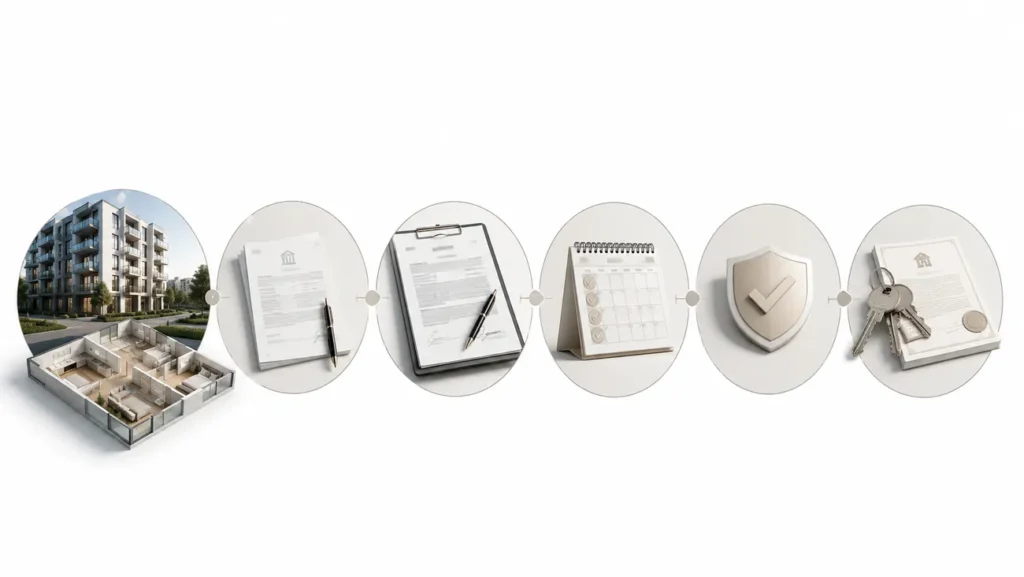
A simplified transaction chain looks like this:
Select a property → Agree the terms → Make a deposit → Sign the contract → Make payments according to the schedule → Final settlement → Handover and/or registration in accordance with the terms of the contract.
The timing of the transfer of the property and the formalisation of ownership depends on the specific terms set out in the contract and the current stage of the property’s status — further details on this can be found in the section on the registration of rights.
What do the instalment terms consist of?
Initial instalment
A deposit is the initial portion of the purchase price that the buyer must pay within the timeframe specified in the contract or as agreed in the terms of the transaction. For the developer, it serves as confirmation of the buyer’s serious intentions and provides partial funding for the construction at an early stage. For the buyer, it marks the point at which they enter into the transaction.
The size of the initial deposit depends on the specific project, the stage of construction and the developer’s policy. There is a wide variety of levels on the market: it would be incorrect to cite any particular range as a universal standard. In the early stages of construction, some developers offer more flexible payment plans, but the terms depend on the specific project and the seller’s commercial policy.
Amount of the first instalment perhaps affect the final price and other commercial terms: a higher deposit can sometimes secure better terms or shorten the timeframe. It is worth checking this with the developer in advance.
Payment terms and schedule
The duration of the instalment plan and the payment schedule are just as important as the price itself. There are various payment schedules:
- Equal monthly instalments — the simplest option is when the remainder is divided into equal parts.
- Quarterly or instalment payments — are linked to construction phases or specific dates.
- Personalised schedules — when the buyer and the developer agree on a non-standard allocation of costs.
- Balloon payment (a large final payment) — a scheme under which a significant portion of the total amount is paid in a single instalment at the end of the programme, often coinciding with the handover of the property.
It is particularly important to understand this last option correctly. A small monthly payment throughout the term may conceal a large final payment, which will require a significant sum of money all at once. When comparing two schemes, you should not focus solely on the size of the monthly instalment — you need to look at how the financial burden is spread over time.
Price and interest rates
This is the most important section, and at the same time the one that is most often oversimplified.
‘0% instalment plan’ and the absence of overpayment are not the same thing. A developer offering an interest-free instalment plan may set different prices depending on the payment method. If the property is paid for in full, the developer may offer a separate discount — so, to make a fair comparison, you should ask for the price of the same property under different payment terms.
The difference between the price when paying in instalments and the price when paying in full highlights the additional cost to the customer of choosing to pay in instalments — even if the specific interest rate is not stated anywhere. However, this difference does not reveal the internal structure of the developer’s pricing.
To describe the difference in prices as a ‘hidden interest rate’ would be an oversimplification. It could be a difference in commercial prices or a missed discount for paying in full. But for the buyer, it is the end result that matters: you need to compare the total amount payable in each scenario — instalments, full payment, a promotional offer or an increased deposit.
It is also worth checking whether the contract contains any commission charges, administration fees or other costs that might increase the total amount.
Table 1. What to compare when paying in instalments
| Parameter | What to check | Why is it important? |
|---|---|---|
| Price when paying in instalments | Total amount under the contract | Basis for comparison |
| Price when paying with 100% | Is there a discount for paying in full? | Additional cost of payment by instalments |
| First instalment | Amount and payment deadline | Defines the entry point |
| Instalment period | Number of months/stages | Financial burden outlook |
| Frequency of payments | Monthly, quarterly, in stages | Affects budget planning |
| Final payment | Is there a large payment at the end? | Do not omit from the calculations |
| Currency of prices and payments | In which currency is the price quoted, and in which currency should the actual payment be made? | Currency risk arising from a mismatch between the currencies of income and liabilities |
| Early payment | Is it possible? Does it affect the price? | Flexibility when plans change |
| Late payment penalty | Amount of the penalty, grace period | Consequences of a deviation from the schedule |
| Terms of cancellation | Refund procedure and amount | Exit strategy |
| The time at which rights are registered | When and what is processed | Legal protection for the buyer |
Which flats in Georgia can be bought on an instalment plan?
Instalment plans are most commonly found in new-build developments in Batumi and Tbilisi. The terms vary even between projects within the same city: the developer may adjust the initial deposit, the duration of the scheme and the payment schedule depending on the flat, the stage of construction and the current marketing offer.
Therefore, rather than looking for an abstract ‘36-month instalment plan’, it makes more sense to first set a budget and decide on an affordable monthly payment, and then compare the projects available within that budget.
Once you have set your budget and decided on a payment amount that suits you, you can move on to selecting a property: the experts at The Residence will help you compare current developments and find those offering the most suitable instalment terms – in terms of the size of the initial deposit, the duration and the payment schedule.
Find a property in Georgia with a payment plan
Take a look at the new-build properties in Gonio
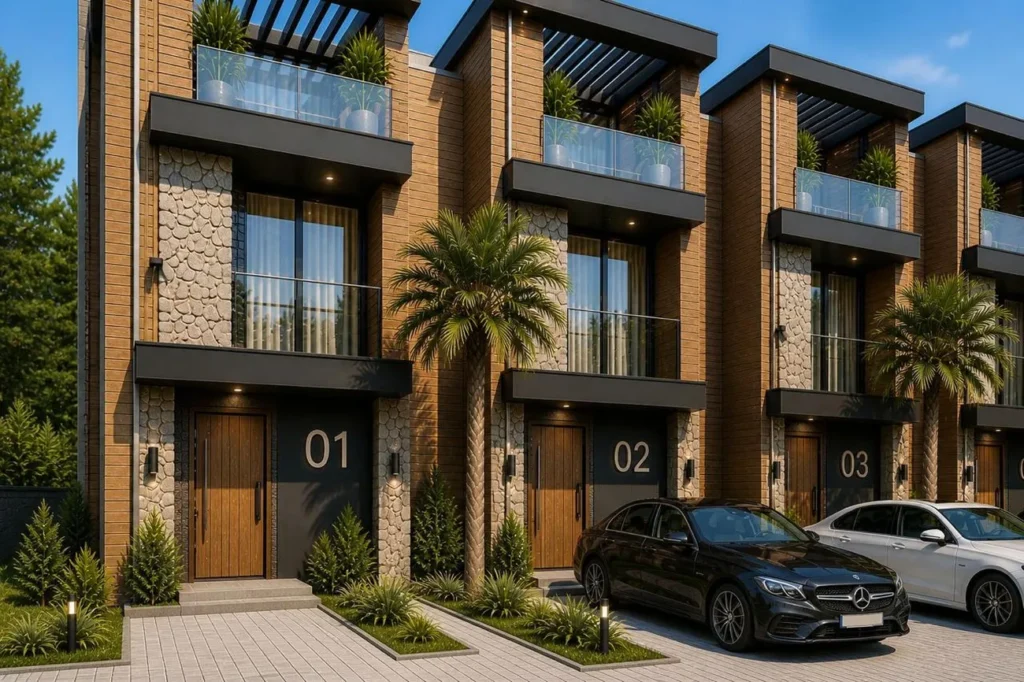





 Batumi, Gonio
 from 32.4m²
Instalment plans in Batumi and Tbilisi: is there a difference?
Instalment plans are available in new-build properties in both of the country’s largest markets, but you shouldn’t choose a city based solely on the length of the repayment schedule.
In Batumi A significant proportion of the new housing supply relates to holiday and investment properties. When comparing projects, it is particularly important to take into account the construction timeframe, the standard of finish, the costs incurred after taking possession of the flat, and whether the property is intended for permanent residence or primarily for letting.
In Tbilisi When making a choice, you should consider, first and foremost, the neighbourhood, transport links, the intended use of the flat and the features of the specific residential development. Prices and payment plan terms can vary significantly between neighbourhoods and developments.
In both cases, compare not only the initial deposit and the number of months, but also:
- the total cost of the flat when paying in instalments;
- the price of the same item when paying by 100%;
- stage of construction;
- transfer date;
- the condition of the flat at the time of handover;
- terms and conditions for early repayment;
- the possibility of assignment;
- the procedure for registering a right.
A long repayment period does not, in itself, make a project more profitable. A shorter repayment schedule for a suitable property may sometimes be a more sensible option than a long repayment period for a project with a less favourable price, location or contractual terms.
How to work out which flat you can buy on an instalment plan
Four numbers are needed for a preliminary assessment:
- the amount you are prepared to pay up front;
- the maximum affordable monthly repayment;
- the period for which they are prepared to pay;
- a reserve that will not be used for the purchase.
Simplified formula:
Available budget ≈ deposit + total of regular instalments + planned final payment.
For example, if the buyer is prepared to pay $25,000 upfront and up to $2,000 per month for two years, the total regular payments will amount to $48,000. Excluding the final payment, the preliminary budget for the transaction is approximately $73,000.
But that’s not all does not mean…that any flat costing $73,000 will be affordable: a particular developer may require a different deposit, set a shorter timeframe or stipulate a large payment at a certain stage of construction.
Therefore, the correct order is as follows:
Initial capital → affordable monthly repayment → term → available budget → projects with a suitable repayment schedule → review of the contract.
Don’t want to calculate dozens of graphs by hand? Please specify your budget, the amount of your initial deposit and a monthly repayment amount you’re comfortable with — we’ll select properties in Georgia that meet these criteria.
Find a flat that fits my budget
Example of an instalment calculation
Below is a hypothetical example for illustrative purposes. All figures are fictitious and do not represent a specific project proposal.
Let’s assume the price of the flat is — $100 000. The first instalment — 20% = $20 000. The remainder is — $80 000.
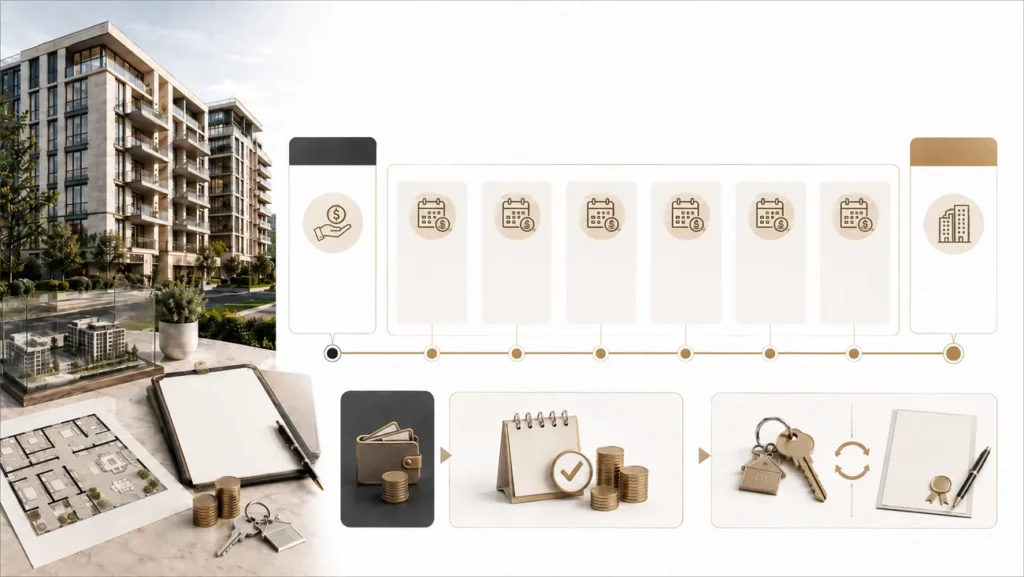
Scenario A — fixed monthly payments
The balance of $80,000 is divided into 24 equal parts: $3 333 per month. The cost is spread evenly; there is no final large payment.
Scenario B — monthly payments plus a final instalment
The buyer makes monthly payments of $2,000 for 24 months ($48,000 in total), and the balance $32 000 is paid as a lump sum when you hand over the house. The monthly payments are lower, but you need to plan for the final payment in advance.
Scenario C — increased deposit
The initial payment is 40% ($40,000), with the remaining $60,000 spread over 18 months: $3,333 per month. A shorter term, but a higher entry threshold. This is a hypothetical example; the current instalment terms for a specific project can be confirmed with The Residence’s specialists.
Table 2. Example payment schedule (illustrative)
| Scenario | First instalment | Monthly payment | Final payment | What to consider |
|---|---|---|---|---|
| A — uniformly | $20 000 (20%) | $3 333 × 24 months | No | Predictable load |
| B — with a final | $20 000 (20%) | $2 000 × 24 months | $32 000 | I need a deposit to complete the sale of the house |
| C — a large contribution | $40 000 (40%) | $3 333 × 18 months | No | The entry threshold is higher, and the term is shorter |
All figures are for illustrative purposes only and do not represent the terms of an actual project.
When comparing two actual schemes, you should not focus solely on the size of the monthly payment. Scenario B appears cheaper on a monthly basis, but requires a significant lump sum up front. The correct way to compare them is to look at the total amount of payments and the distribution of the burden over time, including the final payment and any additional costs.
Take a look at real flats available on an instalment plan
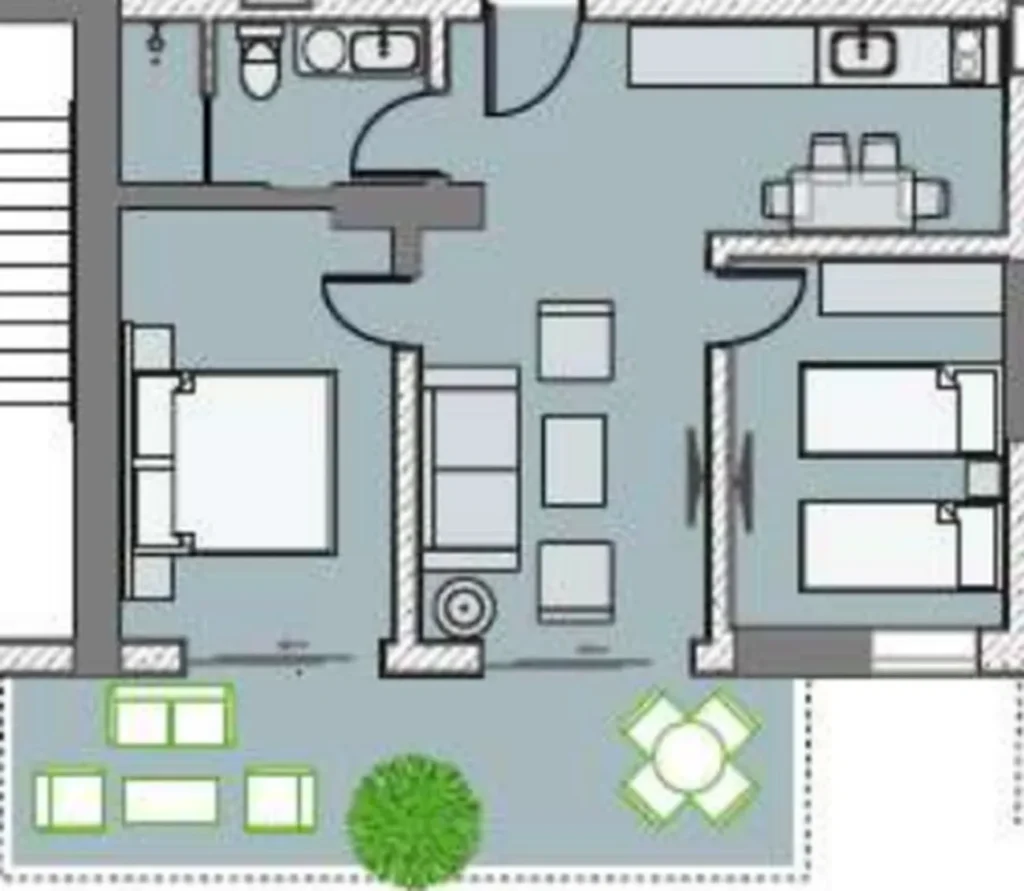
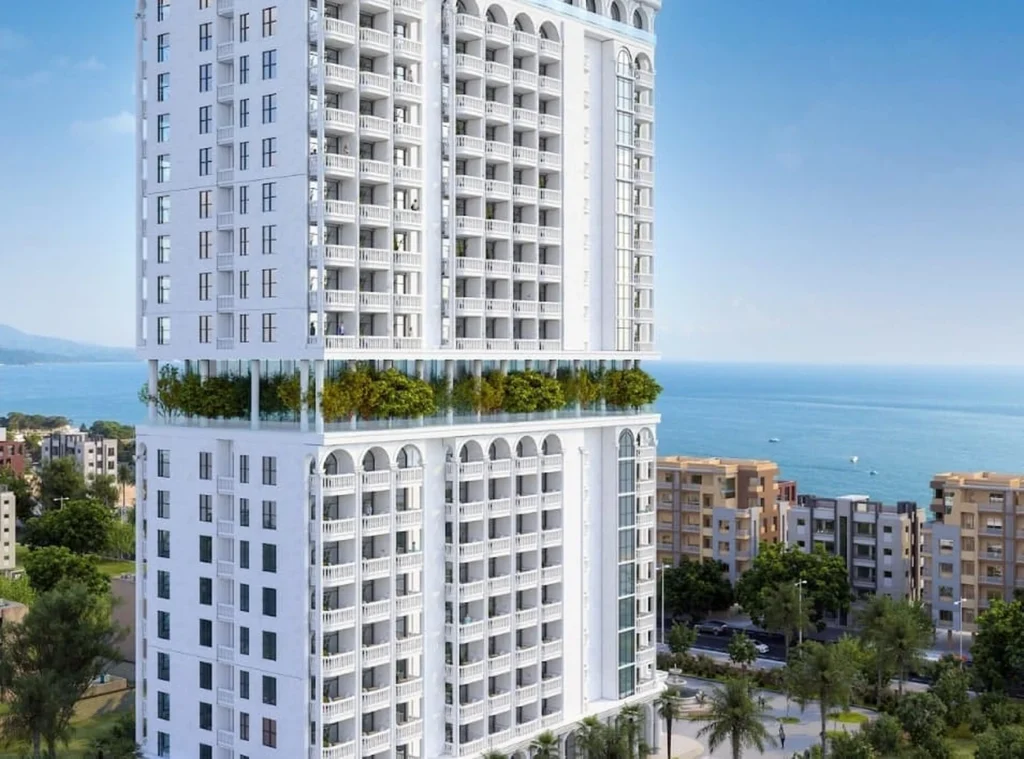
 Dreamland Oasis

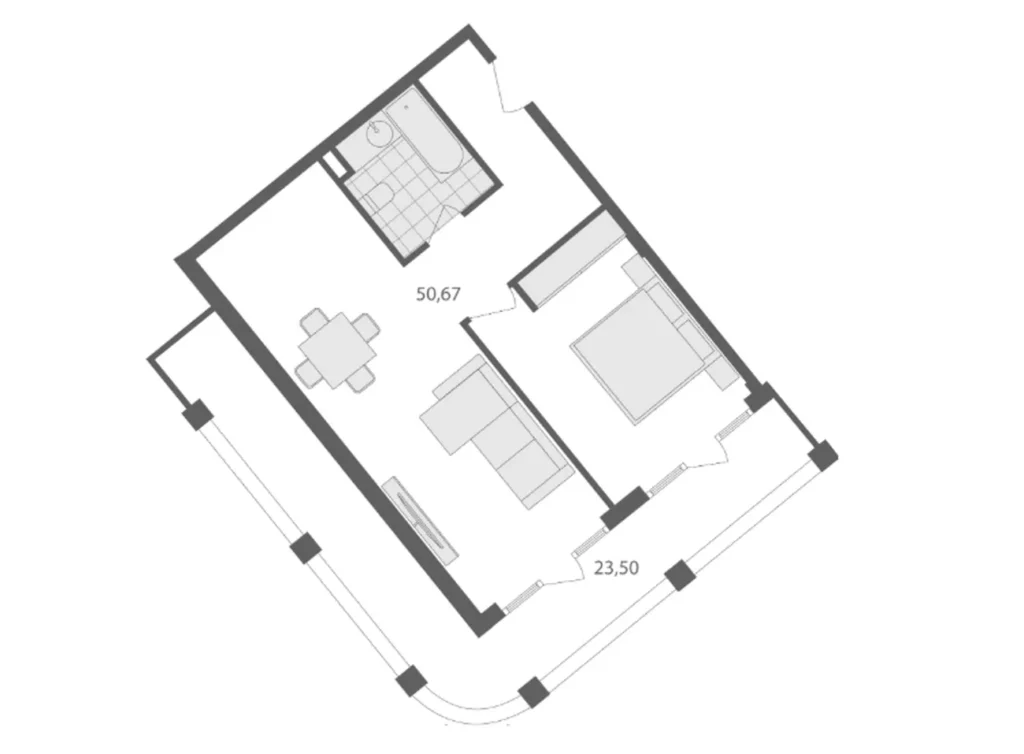 Batumi, New Boulevard
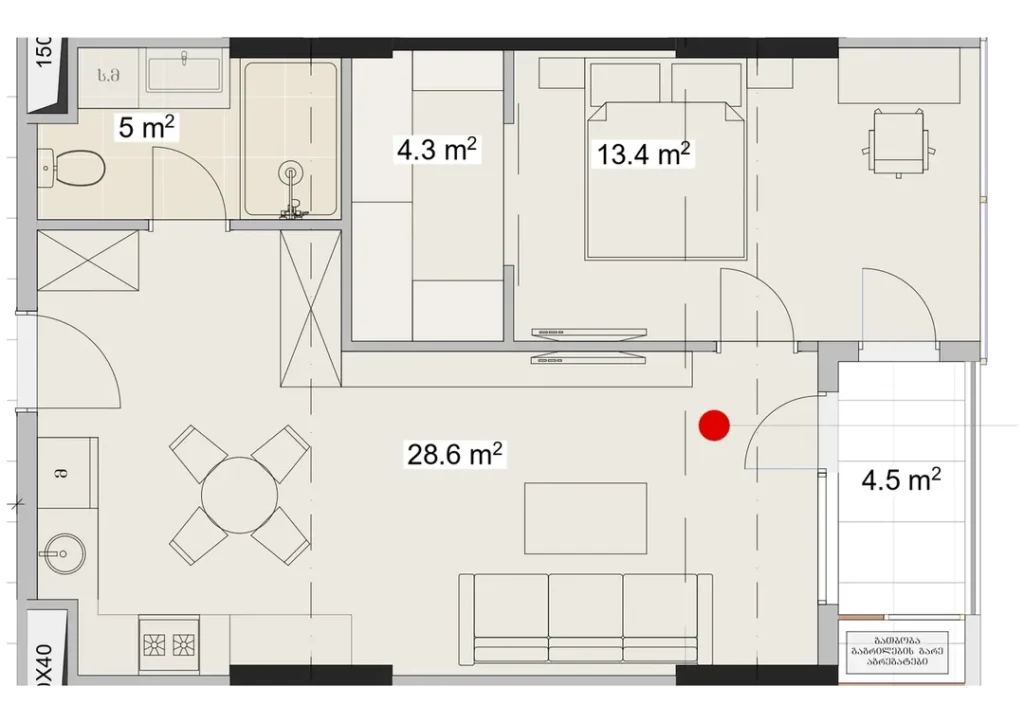 Batumi, New Boulevard
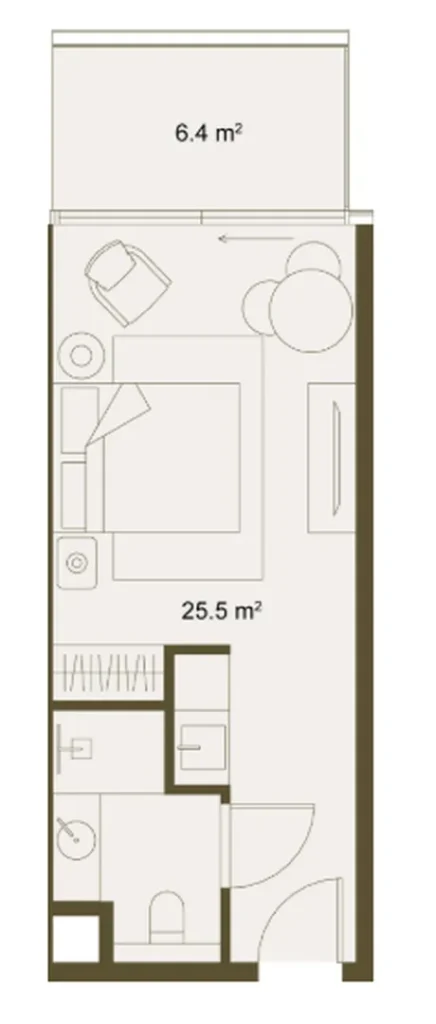
When the buyer becomes the owner
This issue is one of the most important and least clearly explained in most materials on payment plans.
Ownership of property arises upon registration of the relevant right in The Georgian Public Register (NAPR). The signing of a contract does not in itself automatically give rise to a registered title. Whether the parties submit documents for such registration — immediately after the conclusion of the transaction, after certain payments have been made, or at another stage specified in the contract — depends on the legal structure of the particular transaction.
The registration requirements when purchasing a new-build property on an instalment plan depend on several factors simultaneously: the stage of completion of the property, the legal status of the property at the time the contract is signed, and the structure of the transaction itself. This is precisely why it makes no sense to ask the question ‘when does ownership transfer?’ in abstract terms — the answer is always specific.
What the buyer needs to find out before signing:
- Who is registered as the owner of the plot of land and the property under construction? — verified against the Public Register.
- What exactly does the buyer acquire under the contract? — a finished flat, a claim or something else.
- What rights, obligations or restrictions provided for in a specific transaction may be registered in the Public Register? until final settlement.
- Where the contract provides for the submission of documents for the registration of title to the buyer.
- What conditions must be met for this to happen? — full payment and handover of the property, both conditions to be met simultaneously.
The National Agency of Public Registry of Georgia (NAPR) publishes official model contracts, including property sale and purchase agreement with payment in instalments (Purchase Agreement for Immovable Property with Payment by Instalments), as well as a contract combining a mortgage and payment by instalments. This confirms that such transactions have an established legal form. You can view them on the official NAPR website in the section ‘Sample documents’.
NAPR document templates
The registration of property rights with the NAPR is a fee-based service. As of August 2026, according to NAPR’s fees: standard registration (4 working days) costs 150 GEL, expedited registration (1 working day) costs 270 GEL, and same-day registration costs 350 GEL. Before proceeding with a transaction, you should double-check the current processing times and registration fees on the official NAPR website under the section ‘Timelines and Costs of Services’.
Timeframes and costs for property registration with NAPR
The most important question when paying in instalments is not just ‘how much to pay each month’, but ‘what rights the buyer acquires after signing the contract and what will be recorded in the Public Register until the balance has been paid in full’.
What should be included in the contract
The contract is one of the key documents in a transaction; however, it must be assessed in conjunction with the information in the Public Register and the legal status of the property. The key terms of the transaction and the undertakings on which the buyer is relying must be expressly set out in the contract and its annexes.
Below is a list of terms that it is advisable to check and include in the contract. Not all of these terms are regulated in the same way by law, but including each one reduces the risk of disputes:
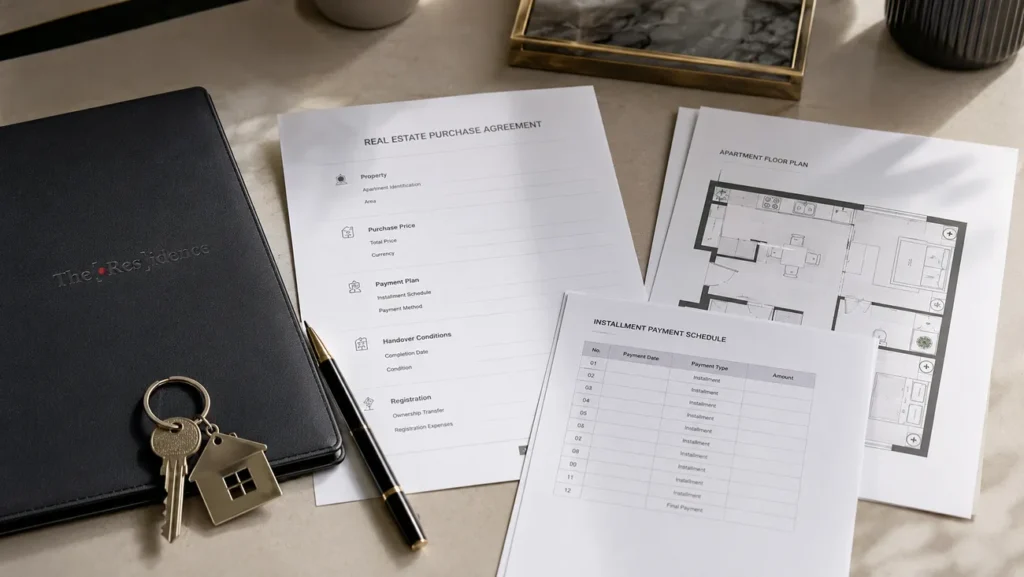
- A detailed description of the property — address, flat number, floor, block.
- Area — total and residential floor area; procedure to follow in the event of a discrepancy in the actual floor area.
- Specifications and finishes — what is included in the price and what isn’t.
- Total price — the total amount that the buyer undertakes to pay.
- Contract currency — the form in which the price is set and the form in which the actual payment is made.
- Amount and due date of the first instalment — the date and method of payment.
- Payment schedule — the specific dates and amounts of each payment.
- Accepted payment methods — bank transfer, cash, or other.
- Procedure for early repayment — Is it possible? Does it affect the price or the discount?
- Fines and late payment charges — the amount, the method of calculation, and the grace period.
- Deadline for the handover of the property — a specific date or period.
- Consequences of construction delays — what happens if the property is let later than planned?
- Grounds for terminating a contract — at the initiative of either party.
- Refund Policy — within what timeframe, to what extent, and under what conditions.
- Consequences of the buyer’s failure to pay on time — when the developer’s right to terminate the contract arises.
- Option to change the timetable — whether or not by mutual agreement.
- Assignment of rights — Can the buyer sell the flat before the mortgage has been paid off in full?
- The point at which the item is handed over to the buyer — handover certificate, deadlines.
- The time at which documents are submitted for the registration of title — conditions and procedures.
- Dispute resolution — jurisdiction, settlement procedure.
Before signing, it is also worth reading the article on ‘How to check a property in Georgia before buying“.
What happens if you miss a payment
Situations where a buyer fails to make a payment on time do occur in practice. Life circumstances change, and it is important to understand the consequences in advance — before signing the contract, rather than after the first delay.
The specific consequences of late payment are largely determined by the contract; however, the contract is governed by Georgian law. It is therefore necessary, prior to signing, to verify not only the amount of the penalty and the grounds for termination, but also the validity of the relevant terms under applicable law. No contractual term operates in complete isolation from the law.
Possible consequences, where provided for in the contract:
- Accrual penalty or fine for each day of delay.
- Grace period — a period of several days during which sanctions do not apply.
- Requirement settle the debt for a specified period.
- Termination of the contract in the event of a prolonged or repeated delay.
- If this is provided for in the contract and is permitted under applicable law — withholding of the agreed amounts or an alternative settlement arrangement upon termination.
- Revision of the timetable by mutual agreement between the parties — provided the developer is willing to do so.
The buyer’s practical task is — to work out all these scenarios in advance, whilst our negotiating position remains strong.
What to ask the developer before signing the contract:
- What happens if a payment is 5 days late? Or 30 days late?
- Is there a grace period during which no penalties are incurred?
- Is it possible to reschedule a payment if I give advance notice?
- Is it possible to temporarily reduce the amount of the payment?
- Is the initial deposit refunded if the contract is terminated?
- How is the refund amount calculated?
- When is the money paid out following termination?
The answers to these questions must be set out in the contract. If the developer is unable to answer or evades the question, this is a warning sign.
Instalments, a mortgage or full payment
The three tools serve different purposes and are suited to different categories of buyers. None of them is universally the best.
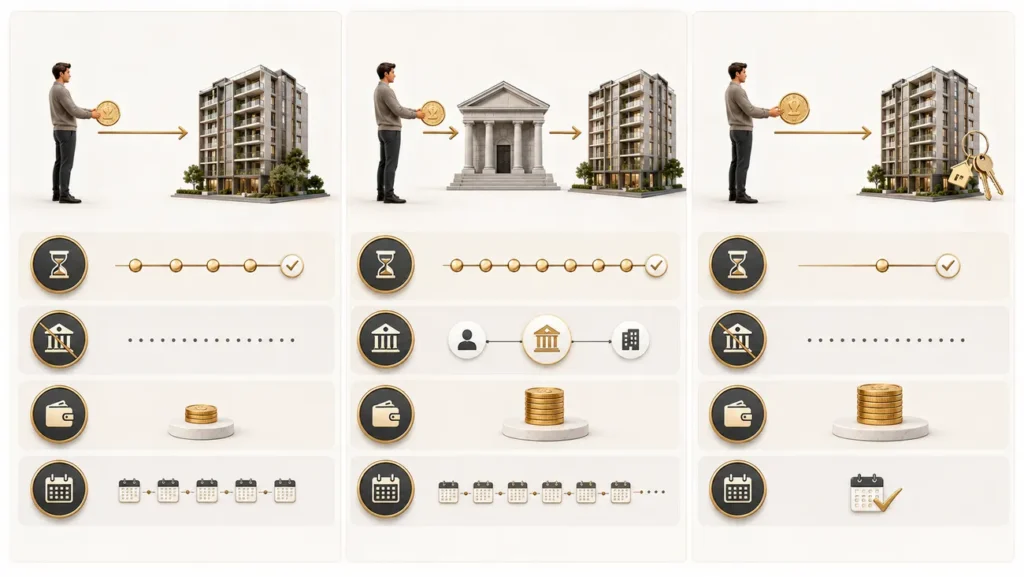
Table 3. Instalment plan vs mortgage vs full payment
| Criterion | Instalment payment | Mortgage | 100% payment |
|---|---|---|---|
| Who is funding it? | Property developer | Bank | The buyer themselves |
| Income verification | It depends on the contract | The bank assesses income and solvency in accordance with NBG requirements | Not required |
| Deadline | As specified in the programme and the contract | Perennial | One-off payment |
| Interest | It depends on the contract and the price difference | Bank rate | No |
| Start-up capital | A portion of the cost | Part of the cost + borrowing costs | The total amount |
| Flexibility of the timetable | It depends on the contract | Standardised by the bank | Not applicable |
| Risk of a change in conditions | Contractual | Bank rate + agreed rate | There is no risk associated with the future payment schedule; construction, contractual and legal risks remain |
| Possible discount | There may be no discount for paying in full | There may be no discount for paying in full | If payment is made in full, the developer may offer a discount; whether a discount is available and how much it is depends on the project |
| Suitable for whom | I have part of the amount now; the rest will follow later | Long-term funding is required | The full amount is available |
Bank lending to individuals in Georgia is regulated by the National Bank, including with regard to the assessment of a borrower’s solvency. For more information on supervisory policy, please visit the website National Bank of Georgia. The regulator’s requirements apply to banks and do not automatically extend to a property developer’s commercial instalment scheme.
The correct conclusion from the comparison:
- Instalment payment This may be suitable for a buyer who has part of the purchase price available now and is able to pay the balance within the timeframe set out in the scheme, without taking out a bank loan.
- Mortgage It may be more useful if you need long-term financing — spanning several years — but it requires going through the bank’s procedures. For more details, see the article ‘Mortgages in Georgia for foreigners“.
- Full payment It may give the buyer additional leverage in price negotiations, but requires payment of the full amount straight away.
What to choose in different situations
| The situation | What to consider first and foremost |
|---|---|
| There is a substantial initial deposit and the option to pay off the balance whilst the property is being built | Instalments |
| We need funding for a number of years | Mortgage |
| The full amount is already available | Compare the total price for a one-off payment and for payment by instalments |
| Income in another currency | Assess the currency risk of both options separately |
| Plans for a flat currently under construction | Compare the project risks and the legal structure of the transaction |
| I need a flat that’s ready to move into straight away | Compare completed properties, mortgages and available payment plans |
| The purchase is made remotely | Please also check the signing procedure, the power of attorney and the bank transfer |
The decision should not be based on the principle that ‘instalments are better than a mortgage’, but rather on the term of the finance, the total cost, the amount of available capital and the risks associated with the specific property.
Not sure whether to choose an instalment plan or a mortgage?
You don’t necessarily need to decide on a payment method before choosing a flat. Please let us know your budget, the size of the deposit you can afford, and your preferred monthly repayment amount. We’ll compare developments offering instalment plans with suitable alternatives and show you the full payment structure.
The risks of buying on instalments
An instalment plan offered by the developer allows you to spread the payments over time, but it is not without its risks. It is important to assess these risks systematically — not after signing the contract, but at the stage of selecting the development.
Construction risk
A delay in the handover of a property is one of the significant risks involved in buying a property under construction. The property may be handed over later than the stated date, or the floor plans or specifications may be altered. The contract must clearly set out what happens in the event of a delay and what rights this entitles the buyer to.
Developer risk
The developer’s financial position, their track record of completed projects, whether they hold the rights to the land, and the absence of any encumbrances on the project — all of these factors must be checked before making the first payment. The Georgian market attracts a variety of players, ranging from large companies with a long history to less experienced developers.
Contractual risk
Vague wording in the contract, penalties that are disproportionately favourable to the developer, and an unclear refund procedure — all of these can lead to serious problems should there be any deviation from the plan. The terms and conditions must be specific and clear.
Currency risk
Prices on the Georgian property market are often quoted in US dollars; however, the currency of the contract, the method of payment and the currency of the actual payment must be checked for each specific transaction. If the buyer’s income and liabilities are denominated in different currencies, exchange rate fluctuations may significantly alter the actual financial burden. It is impossible to predict the exchange rate, but this factor must be taken into account.
Risk to one’s own budget
The initial deposit is just the start. The buyer must realistically assess whether they will be able to meet their payments throughout the entire term, taking into account renovation, furnishing, property registration and future maintenance costs.
Tried-and-tested residential developments with payment plans in Batumi
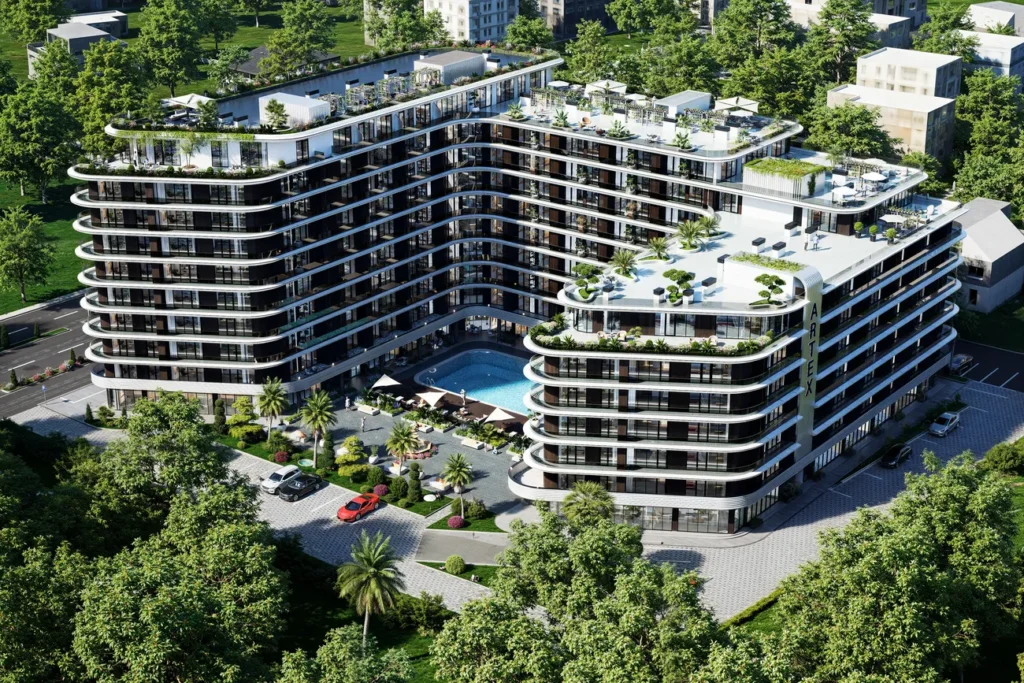
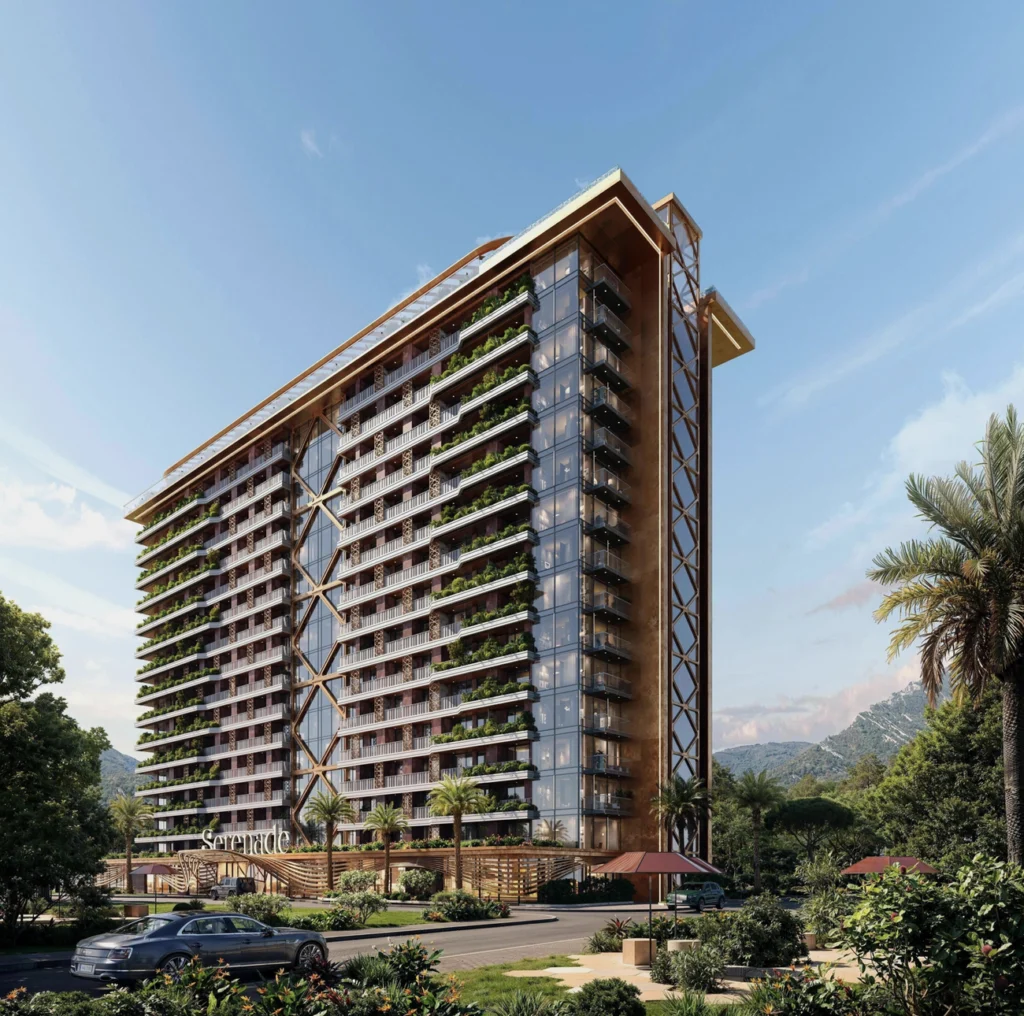



How to check a property and a developer
An inspection is not a mere formality, but an essential part of the purchase. This is particularly true when paying in instalments: the buyer commits to the project and the developer for the entire duration of the payments.
A practical procedure:
- Obtain information about the developer’s legal entity — full name, registration number, history of operations.
- Check the title to a plot of land — who the owner or tenant is, and whether there are any encumbrances, restrictions or charges.
- Check the details in the Public Register — registered rights, restrictions and encumbrances on the property.
- Review the planning permission documents — building permit, project compliance.
- View the developer’s completed projects — Were they actually handed over, and if so, when?
- Compare the flat described in the contract with the project documentation — layout, floor area, floor.
- Check the contract and the attached payment schedule — to ensure compliance with verbal agreements.
- Record the finishing specifications — what exactly is included in the price.
- To ensure transparency regarding the deadlines for handover — when the developer’s obligation under the contract arises.
- To clarify the procedure for registering rights — before the first payment, not after.
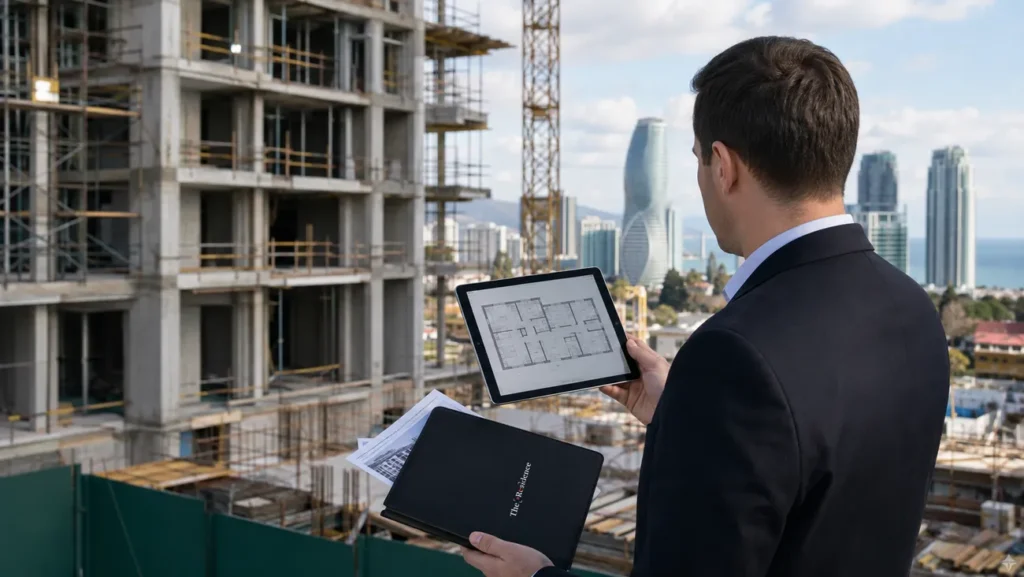
Would you like to find a property in Georgia that fits a specific budget and offers a suitable payment plan? Please answer a few questions, and the team at The Residence will narrow down the selection to those projects offering instalment plans that are right for you.
How to buy a flat in Georgia on an instalment plan: a step-by-step guide
Step 1. Set your budget. Note down the amount of the initial deposit, the maximum monthly repayment and the reserve.
Step 2. Select the projects. Compare not only the flats, but also the construction timeframe, the size of the initial deposit and the full payment schedule.
Step 3. Ask for two quotes. Find out the price of the same flat when paying in instalments and when paying in full.
Step 4. Obtain a full payment schedule. It must clearly show all dates, amounts and any final payment.
Step 5. Check the property and the seller. Review the data from the Public Register, the land rights, any encumbrances and the project documentation.
Step 6. Check the contract. Particular attention should be paid to the registration of rights, the transfer deadline, late payment, termination, refunds and assignment.
Step 7. Sign the contract and make the payments in accordance with the terms set out therein.
Step 8. Stick to the schedule. Please keep copies of the documents confirming each payment.
Step 9. Take possession of the flat. Please check that the property complies with the terms of the contract and the specifications.
Step 10. Register the title in accordance with the procedure set out in the transaction.
The specific procedure may vary depending on whether you are buying a flat that is ready for occupation or one that is under construction, and on when the contract stipulates that the relevant right is to be registered with the authorities.
Instalment plans for foreign nationals
The market for new-build properties in Georgia is aimed, amongst other things, at foreign buyers, and many developers work with citizens of other countries. Foreign nationals can generally purchase and register flats and other properties that are not subject to specific restrictions. Separate rules apply to agricultural land — This issue should be clarified on a case-by-case basis with regard to the specific property.
The specific requirements for foreign buyers are determined by the developer as part of its commercial policy. It cannot be said that all projects deal with non-residents on exactly the same terms.
Documents recognised under the relevant registration procedure are used to identify a foreign buyer. The specific list should be confirmed with the NAPR or the legal adviser assisting with the matter.
Special attention should be paid to the banking payment process. When making an international transfer of a large sum, the bank is entitled to request additional documents as part of its AML/KYC checks, including details of the source of funds and the economic rationale behind the transaction. This is not specific to Georgia — it is standard international practice. It is best to clarify the requirements in advance, rather than when making the first payment.
For more information on the practice of international translation, see the article ‘How to transfer money to Georgia to buy property“.
What documents might a foreign buyer need?
The exact set of documents depends on the structure of the transaction, the seller, the method of signing the documents and the bank transfer route. In practice, the buyer should be prepared in advance for the possibility that the following may be required:
- proof of identity;
- documents and information required to identify the party to the transaction;
- power of attorney — if a representative is acting on your behalf;
- translation of a foreign document into Georgian, where this is required for a specific procedure;
- the documents the bank will request when processing a payment and carrying out AML/KYC checks.
If the buyer is acting through a representative, the form of the power of attorney and the procedure for recognising a document drawn up outside Georgia are verified separately.
There is no single list of documents that applies to all instalment plans: a developer’s commercial requirements and the requirements for state registration or those of a bank are different matters.
Do I need proof of income?
In a direct instalment scheme, the developer does not arrange bank financing; therefore, the bank’s requirements for granting a mortgage do not automatically apply to such a transaction.
However, this does not mean that instalment plans are always arranged without any checks being carried out on the buyer. The developer may set its own requirements regarding documentation, whilst the bank is entitled to carry out the necessary AML/KYC checks when transferring funds.
Therefore, before booking, it is worth checking the following separately:
- what documents does the developer require;
- Is proof of the source of funds required?;
- what documents the bank might require;
- Is it possible to make a payment from a foreign bank account?
Is it possible to buy a flat remotely?
Certain stages of the transaction can be arranged remotely, and in some cases the entire procedure is carried out through a representative. The specific procedure depends on the documents involved, the representative’s powers, the developer’s requirements and the method of registration.
Object selection This can be arranged via a video viewing or a virtual tour. Documents – such as project documentation, title deeds for the plot and a sample contract – can also be reviewed remotely.
Signing of the contract In the case of a remote transaction, this is often arranged through an authorised representative. To use a foreign power of attorney in Georgia, it is necessary to check the procedure for recognising documents issued in the relevant country. Depending on the applicable international regime, an apostille or consular legalisation may be required, and a translation into Georgian may be necessary for the document to be used by Georgian authorities.
Bank transfer — one of the standard methods of payment for remote transactions. It is important to agree on the payment details and the purpose of the payment in advance.
How to compare two instalment plans
Let’s say a buyer is choosing between two schemes. Both are marketed as ‘0% instalment plan’. What should they compare?
Project A — a flat for $100,000, a deposit of 20%, 24 months, with no stated interest rate.
Project B — a flat for $96,000 if paid in full, or $102,000 on an instalment plan, with a deposit of 30%, over 36 months.
At first glance, Project A seems more attractive — the price is lower and the deposit is smaller. But this is only a superficial comparison.
In Project B, the price for the $6,000 instalment plan is higher than the price for full payment. For the buyer, this difference represents the additional cost of opting for the instalment plan, although it is not possible to determine the developer’s internal pricing structure from these figures. For Project A, it is necessary to clarify: is there a discount for full payment? If so, how much is it, and does it affect the overall cost-benefit of the transaction?
One cannot claim that Programme A is better simply because it involves ‘no extra charges’, or that Programme B is worse simply because the price is higher when paid in instalments. It is necessary to compare the total cost, exit terms, legal structure and liquidity of the property.

Table 4. Checklist for comparing two instalment plans
| A question for comparison | Project A | Project B |
|---|---|---|
| Price when paying in instalments | $100 000 | $102 000 |
| Price when paying with 100% | Clarify | $96 000 |
| First instalment | $20 000 (20%) | $30 600 (30%) |
| Instalment period | 24 months | 36 months |
| Monthly payment | ~$3 333 | ~$2 000 |
| Final large payment | Clarify | Clarify |
| Construction stage | Clarify | Clarify |
| Due dates | Clarify | Clarify |
| Terms and conditions for terminating the contract | Clarify | Clarify |
| Assignability | Clarify | Clarify |
| The time at which rights are registered | Clarify | Clarify |
All figures are illustrative and are intended to demonstrate the method.
The table deliberately leaves many cells blank: a genuine comparative analysis requires each item to be filled in with data from a specific project. This is the essence of the decision-making methodology — a systematic, rather than an intuitive, approach.
Instalments as a tool, not just a marketing label
Payment by instalments is a common feature of offers from Georgian property developers. They allow payments to be spread out over time, but are not without risks — and may be a suitable payment method provided that the buyer is able to meet the payment schedule and the contract and legal structure of the transaction have been checked in advance.
Before signing, it is worth asking yourself a few questions: what is the total amount payable, taking all payments into account? What exactly is, or will be, registered in the buyer’s name in the Public Register? What will happen if a payment is delayed? Is there a financial reserve for unforeseen expenses – such as repairs, furnishing and maintenance?
It is advisable to consult a Georgian lawyer regarding the specific instalment agreement, the registration procedure for the property under construction, penalties for late payment and the procedure for drawing up a power of attorney, in relation to the specific transaction.
The main thing to take away from this is: It is not the word ‘instalments’ that needs to be assessed, but the specific combination of price, payment schedule, contract, stage of construction and risks. Two projects with identical descriptions may differ significantly in terms of the actual economics of the transaction and the legal protection afforded to the buyer.
The Residence team specialises in the Georgian property market – Batumi, Tbilisi, Gonio and other locations – and helps clients compare developments, taking into account payment plans, the stage of construction and the legal structure of the transaction.
 Property in Montenegro
 Property in Cyprus
 Real estate in UAE
 Property in Bali
 Property in Thailand
 Property in Spain
 Property in Saudi Arabia
 Property in Turkey
 Property in Zanzibar
 +995 551 50 18 84
 hello@residence-estate.ge
 Georgia, Batumi, Sherif Khimshiashvili str. 1, office 1204



 Get catalogue of TOP-7 objects