
 +995 551 50 18 84




A foreign national can obtain a mortgage in Georgia — Georgian banks do indeed offer such products. However, the fact that a bank offers a product and the actual approval of a loan for a specific customer are two different matters. The decision depends on the amount and currency of the verified income, the size of the deposit, the property’s value as assessed by the bank, the bank’s lending policy and the current regulations of the National Bank of Georgia.
Mortgage terms cannot be reduced to a single line stating ‘interest rate from X%, deposit from Y%’. For a non-resident foreign national receiving income from abroad, the terms of the loan depend, amongst other things, on the currency of that income — particularly in light of the regulatory changes due to come into force in 2026. From 1 July 2026, The National Bank of Georgia (hereinafter ‘NBG’) has adjusted the threshold for unhedged foreign-currency loans: it has been raised to 1,000,000 GEL. What this means in practice is explained in a separate section.
This article provides a practical guide to: who is eligible for a loan, how a bank assesses foreign income, how much of your own money you will actually need, what documents to prepare, how the transaction works, and when an instalment plan offered by the developer might be a more suitable option.
Mortgages in Georgia for foreigners: the essentials in 1 minute
| Parameter | What you need to know in 2026 |
|---|---|
| Can a foreign national get a mortgage? | Yes, banks do consider foreign borrowers, including those with income from abroad |
| Do I need a residence permit? | This is not a universal requirement — it depends on the bank and the product |
| Maximum LTV (Loan-to-Value ratio, the ratio of the loan amount to the value of the collateral) in GEL | Until 90% collateral value |
| Maximum LTV in foreign currency | Until 70% |
| Threshold for foreign currency loans without corresponding income in the loan currency (unhedged) | 1,000,000 GEL from 1 July 2026 |
| Maximum term of a foreign-currency mortgage | Until 10 years in accordance with regulatory restrictions |
| Currencies | GEL, USD, EUR — availability depends on income and product |
| Example of a public bid | Halyk Bank Georgia: from 10.5% in GEL, 7% in USD and 5% in EUR for a mortgage product aimed at individuals with income from abroad |
| Down payment in the Halyk example | 30% |
| Registration of a right | 150 GEL within 4 working days, 270 GEL within 1 working day, 350 GEL on the day of application |
These are not standard terms and conditions applicable to all foreign nationals. The NBG sets the regulatory limits, whilst the bank determines the actual amount, interest rate, term and requirements on a case-by-case basis.
The current LTV limits for 90%/70% are confirmed by the National Bank of Georgia (NBG), The new threshold of 1 million GEL — an NBG decision from 2026, Halyk’s terms and conditions — the bank’s official website; registration fees — NAPR.
Can a foreigner take out a mortgage in Georgia?
Foreign nationals are generally permitted to purchase flats, houses and other property in Georgia, provided it is not agricultural land, and to apply for bank financing. A separate special regime applies to agricultural land, with restrictions for foreign nationals. However, the legal right to purchase residential property is not the same as obtaining bank approval for a loan. The bank assesses each borrower individually, based on its lending policy, the client’s financial performance and the characteristics of the property.
Citizenship in itself does not automatically entitle you to a loan. The bank is not interested in your passport, but in your ability to repay: how stable your income is, whether it can be verified with supporting documents, what your debt burden is, and what asset will be used as collateral.
A foreign national may apply for a mortgage in Georgia, but the size of the loan is determined not by their passport, but by a combination of their verified income, the currency of that income, the value of the collateral and the bank’s lending policy.
It is of fundamental importance for the bank to distinguish between three different groups of customers:
- A foreign national living in Georgia and receiving income there — may have a local banking and tax history, as well as a residence permit.
- A foreign national living in Georgia but receiving income from abroad — is physically present in the country; however, the bank will examine the foreign source and currency of the income.
- A foreign non-resident living and receiving income abroad — has no or only a limited local financial history, and their income is verified by foreign documents.
- A Georgian national working abroad — a separate category for which some banks offer special products for emigrants.
This distinction is crucial because some of the banks’ web pages — for example, TBC Bank’s separate ‘Mortgage for Emigrants’ scheme — set out the terms and conditions specifically for Georgian emigrants, rather than for any foreign national. The terms and conditions of such products cannot be applied to a non-resident foreigner.
RESIDENCE PERMIT In Georgia, this affects a customer’s status but is not a mandatory requirement for all banks. A number of banks work with customers who do not hold a Georgian residence permit, provided they can prove a stable income. Each bank sets its own specific requirements regarding residence status — you should check these directly with the bank before submitting your application.
Possession of a residence permit does not, in itself, constitute proof of financial standing. When assessing an application, the bank evaluates documented income, debt burden, own funds, the characteristics of the collateral and other factors in accordance with its lending policy. If your income is from a foreign source, the bank may require additional verification of your employer, bank statements, tax documents, the country of origin of the income and the source of the funds.
Key mortgage terms and conditions
When it comes to mortgages for foreign nationals, reference points such as ‘an interest rate starting at 7%’ or ‘a deposit of 30%’ do not represent market conditions as a whole, but rather the terms of a specific product offered by a specific bank to a particular category of customers. The actual terms are determined by a number of interrelated factors.
PTI (Payment-to-Income) — the ratio of the monthly loan repayment to the borrower’s verified income. This is a regulatory debt-to-income ratio: the National Bank of Georgia, as part of regulation of responsible lending requires the lender to assess the borrower’s ability to repay. The higher the verified income, the higher the permissible monthly repayment may be within the applicable PTI. The total loan amount also depends on the term, interest rate, existing liabilities, LTV and the bank’s lending policy.
Maximum PTI under NBG rules
| Net monthly income | FX loan where the currency of the income differs | GEL loan or FX loan where the currency of the income is the same |
|---|---|---|
| Less than 1,500 GEL | up to 20% | up to 25% |
| 1,500 GEL or more | up to 30% | up to 50% |
PTI — regulatory maximum. The bank may apply a more conservative limit and take into account existing loans, the composition of income, the loan term and its own risk model.
Example. The borrower’s net verified income is 4,000 GEL per month. For a loan in GEL, the regulatory PTI may be up to 50%, meaning the maximum monthly repayment under this limit is 2,000 GEL. However, this does not necessarily mean that the bank will grant a loan for any amount: the final limit depends on the interest rate, the term, existing liabilities and the LTV of the chosen property.
That is why a mortgage budget is always determined by two constraints at the same time: as far as one’s income allows (PTI) и up to what level the loan-to-value (LTV) ratio allows. The bank bases its decisions on the more restrictive of these factors.
LTV (Loan-to-Value) — the ratio of the loan amount to the value of the collateral, as determined by the bank. The National Bank of Georgia sets the maximum LTV at 90% for loans in GEL and up to 70% for foreign currency loans. This is a regulatory cap, not a guaranteed funding ratio: an individual bank may set a lower LTV depending on the borrower’s profile and the property in question.
Nominal rate — the percentage stated in the promotional offer or on the product. Effective rate — the actual cost of the loan, taking into account the mandatory charges specified in the product terms and conditions. When comparing offers from banks, you should look not only at the nominal rate but also at the annual percentage rate.
Why might the ‘from 7%’ rate change?
With mortgage products offered by Georgian banks, the interest rate may be index-linked. For example, Halyk Bank Georgia specifies the following index:
- GEL — against the refinancing rate of the National Bank of Georgia;
- USD — against the 6-month Term SOFR;
- EUR — to the 6-month EURIBOR.
This means that the initial interest rate and the future cost of the loan may depend on changes in the relevant index.
When comparing banks, ask them to provide not only the nominal rate ‘from X%’, but also the effective rate, the benchmark used, the bank’s margin and the terms for rate reviews.
Table 1. What determines the terms of a loan
| Parameter | What does this mean? | Why is it important for a foreigner? |
|---|---|---|
| Income | The borrower’s verified regular income | Determines the permissible PTI; the total loan amount also depends on the interest rate, the term and the LTV |
| Currency of income | GEL, USD, EUR or another currency | Affects the currency in which the loan is available and the presence of currency risk |
| Residence status | Resident / non-resident / residence permit | This may affect the availability of a particular product and the documentation requirements |
| Cost of the property | Price as set out in the contract of sale | The starting point for calculating the initial payment |
| Bank valuation | The value of the collateral as determined by the bank | The LTV is calculated based on this figure; if there is a discrepancy with the contract price, the buyer covers the difference |
| Initial instalment | The buyer’s own funds | A higher deposit reduces the LTV, but does not in itself guarantee that the loan will be approved |
| Loan term | Number of years to repayment | It depends on the currency of the loan and the product; regulatory restrictions are stricter for foreign-currency mortgages |
| Existing loans | The borrower’s current liabilities | Increase the PTI and reduce the maximum amount of a new loan |
| Property type | Completed / under construction / flats | Determines whether the bank is prepared to accept the asset as collateral |
It is important to understand: Even if the property generates a good income, it may not be acceptable to the bank as collateral — for example, if a house under construction is not accredited, the property has legal issues, or its liquidity is in doubt. For more details on this, see the section on types of property.
How much of your own money do you need?
When calculating your own funds, it is important to take into account more than just the stated initial deposit. The typical reasoning that ‘a deposit of 30% means that an apartment costing $120,000 requires $36,000’ is correct only under one condition: the value of the collateral, as determined by the bank, matches the contract price. If the valuation turns out to be lower, the picture changes.
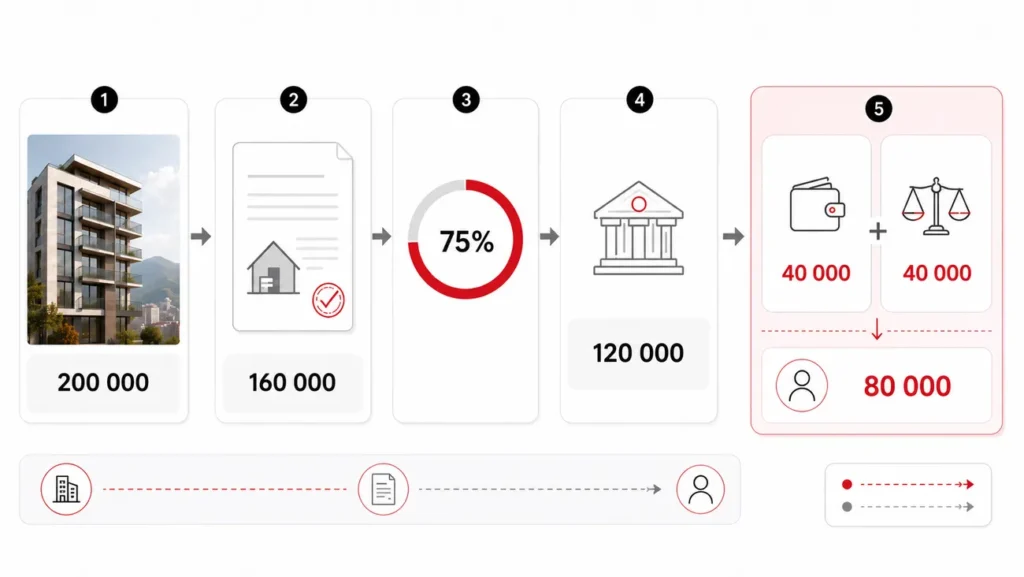
For LTV purposes, the bank uses the value of the collateral as determined in accordance with its methodology and the results of the valuation. If the loan amount calculated on the basis of this value and the applicable LTV does not cover the transaction price, the buyer must finance the difference from their own funds.
Example (all figures are for illustrative purposes only and do not represent an offer from any bank):
- Price of the flat: $200,000
- Value of collateral according to the bank’s valuation: $160,000
- LTV in this loan model: 75% based on the valuation = $120,000
- Equity: $200,000 − $120,000 = $80 000
One potential mistake when planning a budget is to base the down payment solely on the price of the flat. If the bank’s valuation turns out to be lower than the transaction price, the buyer will need additional funds of their own.
Table 2. Three hypothetical property purchase scenarios
All calculations are for illustrative purposes only. The examples use an LTV of 70% — the NBG’s regulatory maximum for foreign currency loans. For loans in GEL, the regulatory maximum is 90%; however, individual banks are entitled to set a lower limit. The final terms depend on the bank, the customer’s profile, the currency of the loan and the purpose of the loan. The figures do not constitute an offer or a promise of financing.
| Parameter | Scenario 1 | Scenario 2 | Scenario 3 |
|---|---|---|---|
| Price of the property | $80 000 | $120 000 | $200 000 |
| Provisional bank valuation | $75 000 | $110 000 | $185 000 |
| Notional LTV | 70% | 70% | 70% |
| Potential loan | $52 500 | $77 000 | $129 500 |
| Own funds (minimum) | $27 500 | $43 000 | $70 500 |
| Additional costs | bank valuation, bank fees, registration, document translation, insurance — if required, currency conversion | → | → |
The exact nature and amount of additional charges depend on the bank, the structure of the transaction and the country of origin of the documents. These are calculated on a case-by-case basis.
Example: the flat costs $100,000
Let’s assume:
- price of the flat — $100,000;
- the value of the collateral according to the bank’s valuation — $95,000;
- The bank is prepared to apply an LTV of 70%;
- maximum loan amount based on the collateral — $66 500;
- own funds for the transaction value — $33 500;
- In addition, you will need to allow for costs relating to registration, valuation, bank charges, document translation and any currency conversion.
But $66 500 — is that just the limit on LTV. If the borrower’s income from PTI If a smaller loan is granted, it is income that will be the actual limiting factor.
Not sure which properties fit your budget and are eligible for bank financing? The Residence can find suitable property options in Georgia, taking into account your initial capital, the purpose of the purchase and your preferred payment plan. Receive a selection of properties
Case Study 1: The buyer has $40,000, and the flat costs $120,000. Before making a reservation, three things need to be clarified: what amount the bank is prepared to finance given this income (PTI), what the value of the collateral is according to the bank’s valuation (LTV based on this), and whether $40,000 is sufficient to cover the actual deposit plus associated costs. Only once you have answers to these three questions can you assess the feasibility of the transaction.
Flats in Georgia that are worth considering when buying with a bank loan
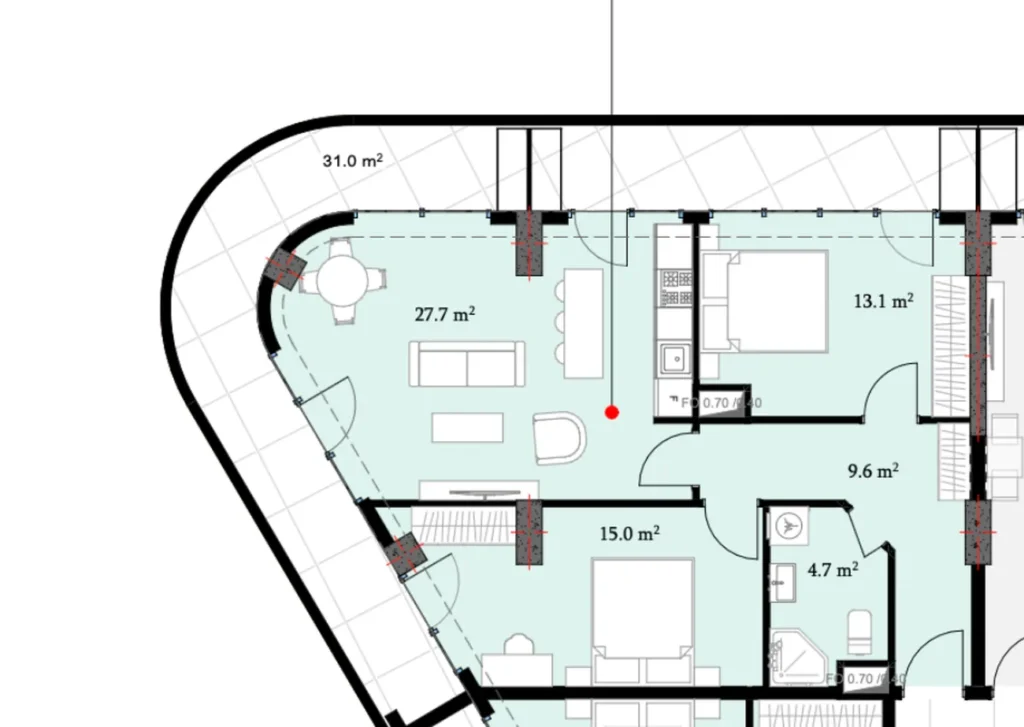
 Artex Gate

 101.1м²

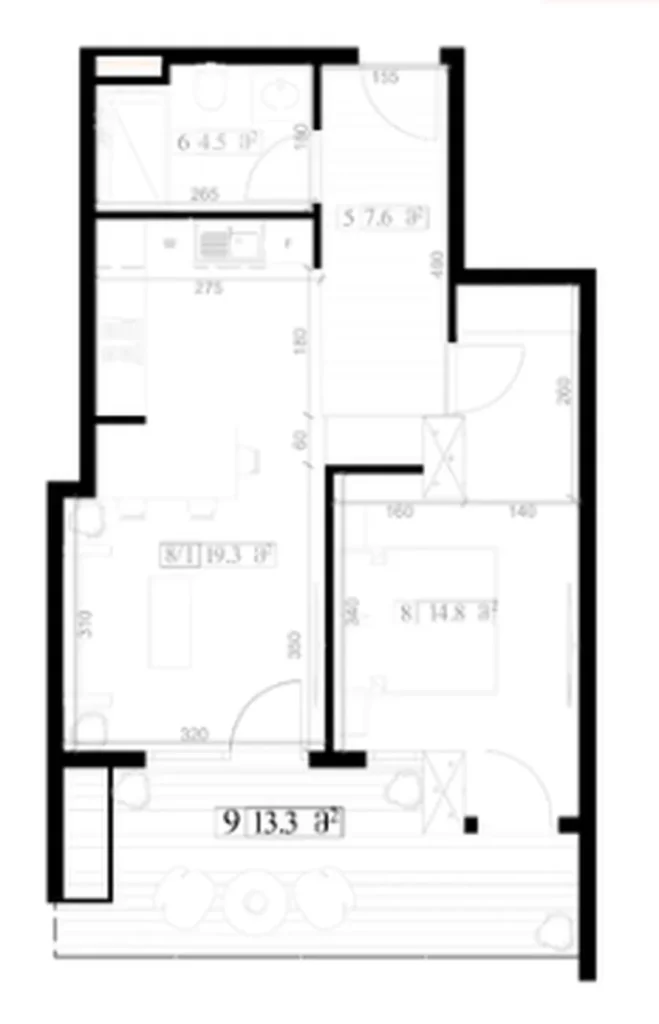
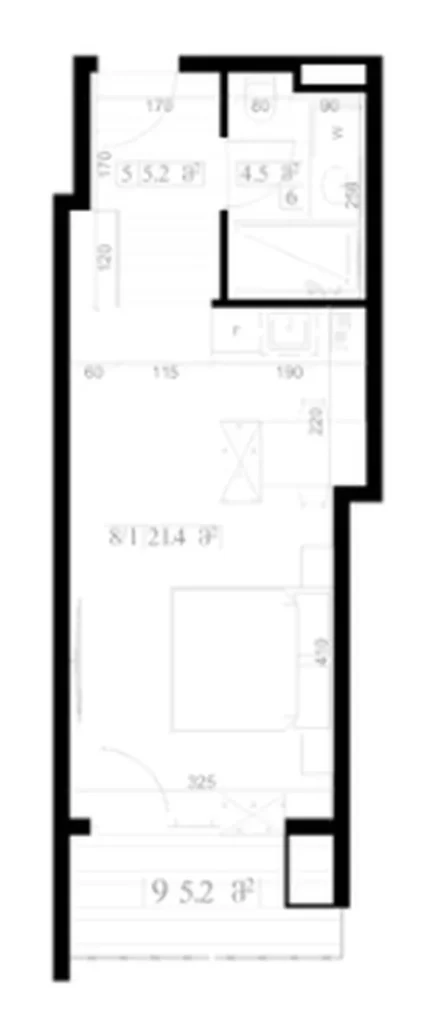

 Batumi, Kobuleti
How does a bank verify a foreign national’s income?

A borrower’s income may come from various sources:
- salary under an employment contract;
- income from one’s own business;
- income from freelance work or self-employment;
- income from letting property;
- regular, verifiable income from several sources.
Not every Georgian bank assesses all the types of income listed in the same way. The specific requirements regarding the form of proof depend on the bank’s lending policy.
If your salary is paid from another country
For an employee receiving income from abroad, the bank usually requests the following:
- bank statements for the period specified by the bank, showing the regularity and amount of incoming payments;
- employment contract or an official letter from your employer stating your salary;
- proof of income from the employer;
- tax documents and returns for the period specified by the bank;
- documents confirming source of funds for the initial deposit.
The bank pays particular attention to regularity: your salary must be paid consistently, without any prolonged gaps. One-off large payments that are not supported by documentation may require further explanation. The currency of the salary is of direct relevance: if the borrower is paid in EUR and wishes to take out a loan in USD, this raises an additional currency-related issue. This is discussed in the next section.
If your income comes from a business or freelance work
In this case, the bank needs to assess not only the amount but also the stability of the source of income. Irregular income may make it more difficult to prove your ability to repay the loan and could influence the bank’s decision.
The following may be required:
- documents proving business registration or self-employed status;
- tax returns and other documents relating to income for the period requested by the bank;
- bank statements for business and/or personal accounts;
- financial statements;
- contracts with clients confirming the regularity of the work;
- an explanation of the structure and sources of income.
What increases your chances of being approved:
- Transparent and fully documented income
- A consistent track record of revenue over a long period
- Sufficient start-up capital
- A reasonable debt burden — no outstanding loans, or only a small amount
- An asset that the bank is prepared to accept as collateral
- Absence of contradictions in the documents
- Preparing statements and confirmations in advance
- Proper verification of the source of funds in response to a bank’s request
Meeting these conditions does not guarantee approval, but it helps to avoid some of the problems associated with an incomplete or inconsistent set of documents.
Age and co-borrower: requirements vary from bank to bank
There is no single age limit that applies to all banking products. For example:
- Halyk specifies the age for products with overseas income Aged 21–70 at the end of the loan term;
- Liberty states the following regarding its product for emigrants: 18–75 years;
- Halyk allows family members with a stable income to be named as co-borrowers if the applicant’s own income is insufficient;
- Liberty states that there can be up to three parties to the loan — the main borrower and up to two co-borrowers.
These parameters relate to specific banking products and do not constitute a general rule applicable to all foreign nationals.
Mortgage currency and the 2026 limit
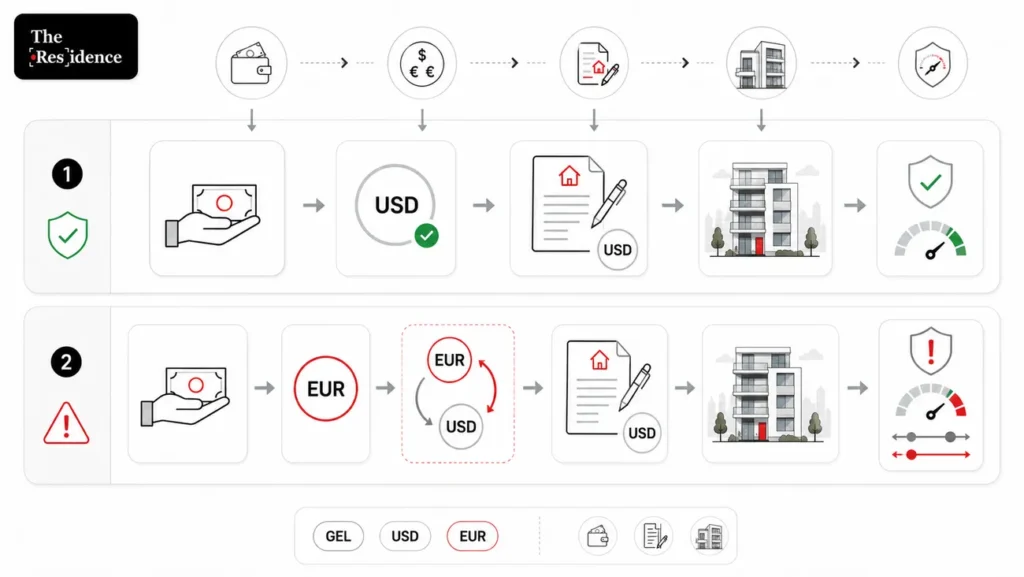
Georgian banks offer mortgages in several currencies: GEL (Georgian lari), USD and EUR. The choice of loan currency is not arbitrary — it is directly linked to the borrower’s income currency and regulatory requirements.
Hedged and unhedged — what do these terms mean in simple terms?
To put it in layman’s terms: there is no currency risk on a loan when the borrower’s regular income is received in the same currency as the loan — such a borrower is referred to, for simplicity, as ‘hedged’ (protected against currency risk). For example, income in USD and a loan in USD. However, if the income and the loan are denominated in different currencies — income in GEL, loan in USD, or income in EUR, loan in USD — fluctuations in the exchange rate between these currencies create additional currency risk for the borrower.
Under NBG regulations, the criteria for currency hedging are set out in greater detail; therefore, the bank determines the borrower’s final classification.
Why is this important in practice?
If income is received in GEL but the loan is denominated in USD, fluctuations in the exchange rate affect the borrower’s actual financial burden. NBG specifically highlights the higher risk associated with foreign-currency mortgages.
Example (illustrative calculation, not a forecast): a monthly payment of $600 at an exchange rate of 2.65 GEL/USD amounts to 1,590 GEL. At an exchange rate of 3.00 GEL/USD, the same payment in dollars amounts to 1,800 GEL – an increase of 13% with no change to the principal amount of the debt.
Latest change for 2026
The National Bank of Georgia has raised the threshold with effect from 1 July 2026 for unhedged foreign-currency loans, from 750,000 to 1,000,000 GEL. For loans below this threshold, restrictions apply to the granting of loans in foreign currency if the borrower does not meet the criteria for currency hedging or is not covered by any other exemption provided for by the regulations.
1,000,000 GEL is the regulatory foreign exchange threshold for unhedged FX loans; it is not the minimum value of a flat, nor is it the amount of the mandatory deposit.
Many articles have misinterpreted a similar previous threshold as the ‘minimum mortgage amount’ — this is incorrect. Older articles referring to thresholds of 500,000 or 750,000 GEL are also no longer relevant.
Table: GEL vs USD/EUR — the currency logic behind the loan
| Parameter | Loan in GEL | Loan in USD/EUR |
|---|---|---|
| Max. LTV (regulatory cap) | Up to 90% | Up to 70% |
| Limit on unhedged loans | Not applicable | Below 1,000,000 GEL — restrictions apply; regulatory exemptions apply |
| Currency risk on income in GEL | Not available for loans and income in GEL | This occurs when the currency of the loan does not match that of the income |
| Currency risk associated with foreign currency income | This occurs when the currency of the loan does not match that of the income | Does not apply when the currency of the income and the loan are the same; applies when they are different |
| Maximum duration | It depends on the product and the bank | NBG sets a maximum term of 10 years for mortgage loans in foreign currency |
As an example of a real banking product: as at 12 August 2026, Halyk Bank Georgia offers mortgages for individuals with income from abroad in three currencies — GEL, USD and EUR — with nominal rates starting at 10.5%, 7% and 5%, and effective rates starting at 11.86%, 7.82% and 5.38%, and a deposit of 30%. On the product page, the bank states a maximum term of up to 20 years; however, for mortgage loans in foreign currency, a term limit of up to 10 years set by the NBG applies. Therefore, the actual maximum term depends, amongst other things, on the currency of the loan. The bank also states that loans below 1,000,000 GEL are granted in the national currency, except where otherwise provided for by law. These are the official terms and conditions. a specific product from a specific bank as at the date of the audit — the bank may change them at any time.
Examples of banks’ publicly available mortgage products
| Bank / product | Terms and Conditions | Who is this product aimed at? |
|---|---|---|
| Halyk Bank Georgia — overseas income | GEL from 10.5%; USD from 7%; EUR from 5%; effective rate from 11.86% / 7.82% / 5.38%; deposit 30%; stated maximum term of the product — 20 years | People living and working abroad |
| Credo Bank — Mortgage Loans for Expatriates | Down payment from 20%; interest rate from 8%; term up to 15 years; GEL/USD/EUR; amount up to 500,000 GEL or equivalent | Expats |
| Liberty — Mortgage Loans for Emigrants | GEL from 11.8% (effective from 12.7%); USD from 8% (effective from 9.1%); EUR from 7.51 TP415T (effective from 8.521 TP415T); GEL up to 20 years, FX up to 10 years | This product is intended for emigrants; its applicability to a specific foreign national must be confirmed with the bank |
The fact that a banking product is advertised publicly does not mean that these terms and conditions are automatically available to any foreign national. The bank carries out a separate check on the customer’s nationality, country of residence, source and currency of income, purpose of the account and compliance profile.
What documents will you need?
The list of documents required depends on the bank, the type of income, the borrower’s country of residence and the property’s characteristics. The list provided is intended as a guide to help you prepare your application, rather than an official list from any specific bank.
From the borrower
- Passport (a valid foreign passport held by a foreign national)
- Address confirmation or residence status — if required by the bank
- Bank statements for the period specified by the bank, in respect of the account into which the income is paid
- Proof of income: a certificate from your employer, your employment contract, and tax documents covering the period requested by the bank
- Business documents — if the income is derived from business activities
- Confirmation of the initial payment: an account statement showing that there are funds in the account
- Documents proving the source of funds — upon request from the bank
- Co-borrower’s details — if he is involved in the transaction
By property
- Extract from the Public Register (NAPR) — shows the registered owner and the registered rights, restrictions and encumbrances on the property as at the date the extract was issued. It is advisable to check the property in the Public Register before purchasing it
- Documents evidencing title to the site
- Sale and purchase agreement or a draft thereof. The structure and key provisions of a contract of sale in Georgia
- Seller’s or developer’s details
- Outcome of the bank’s assessment — carried out by an accredited valuer or on the bank’s instructions
- Permit documentation for the project under construction — where applicable
Documents issued abroad may require a notarised translation into Georgian and, in some cases, an apostille or legalisation — depending on the country of origin of the document and the bank’s requirements.

How long does it take to get a mortgage?
There is no standard processing time for all foreign borrowers. The duration of the process is influenced by:
- that all income documents are complete;
- the need for an additional compliance check;
- translation and certification of foreign documents;
- bank valuation of the property;
- vetting the developer or the property;
- the need to provide further clarification regarding the source of funds.
Therefore, before paying a non-refundable deposit, it is advisable to obtain from your chosen bank not only a preliminary estimate of the loan amount, but also an indicative timeframe for the processing of your specific application.
A step-by-step guide to taking out a mortgage

The order in which you take action is of fundamental importance. One of the main risks is choosing a flat first, paying a deposit, and only then finding out whether the bank will grant a loan.
1. Determine your actual budget and the amount of your own funds Before you start looking for a property, you need to work out how much of your own money you have, how much of that can be used as a deposit, and how much you need to set aside for additional costs.
2. Check what income can be verified Gather the documents you have: bank statements, certificates, and your employment contract. Be honest when assessing how regular and verifiable your income is. This will determine the maximum possible monthly repayment (PTI) and, together with other factors, the loan amount.
3. Contact the bank to obtain a preliminary credit assessment A preliminary calculation gives you an idea of the range of loan amounts and the terms on which the bank is prepared to consider your application. This does not constitute final approval.
Preliminary approval of the budget does not necessarily mean that the bank will finance the chosen flat: the property is also subject to verification and valuation.
4. Choose a property in line with the bank’s requirements The property must meet the bank’s criteria: legal compliance, stage of construction, intended use and liquidity.
5. Do not pay a large, non-refundable deposit without fully understanding the financing arrangements Until preliminary approval has been obtained and at least a basic understanding of the loan terms has been established, the risk of losing the deposit should the bank refuse the application rests entirely with the buyer.
6. Submit the full set of documents to the bank The borrower must submit documents relating to themselves and the property. An incomplete or inconsistent set of documents will delay the assessment process.
7. Carry out a bank valuation of the property The bank commissions or arranges for an independent valuation of the property. It is the result of this valuation that determines the LTV and the actual loan amount.
8. Obtain the bank’s final decision Final approval refers to the confirmed loan amount, interest rate, term and conditions for a specific property. Only once this has been granted can the payment schedule for the transaction be finalised.
9. Sign the loan agreement and the security agreement At this stage, the parties sign the loan documentation. If the documentation is drawn up by a representative acting under a power of attorney, it must comply with the bank’s requirements and Georgian law.
10. Register the transaction and the mortgage charge In a standard mortgage purchase, the buyer’s title and the bank’s mortgage are registered in the Public Register as part of the transaction. The mortgage charge must also be registered. “How is property registration carried out in Georgia?" — find out more about the timelines and details of the procedure.
The difference between a preliminary decision and final approval is important for understanding the risks: a preliminary decision is usually based on information about the customer and is not linked to a specific property. Final approval is granted following an assessment of the property and an analysis of the entire transaction. Even if the bank has provisionally stated the amount available, the transaction cannot be considered guaranteed — the property may fail to pass the valuation or legal due diligence.
What sort of property can you buy with a mortgage?
Not every attractive flat automatically qualifies as collateral for a bank. It is important to understand this before choosing a specific property.
A ready-to-move-in flat on the secondary market — generally speaking, this is the category that is easiest for the bank to understand. Ownership is registered, the asset exists in physical form, and it can be valued. The bank checks its legal status, any encumbrances and its condition.
A newly built property — The property has been commissioned, and title has been registered or is in the process of being registered. The bank assesses and accepts the completed property as collateral.
Project under construction — The situation is more complicated. When financing properties under construction, banks often work with projects and developers that have passed their internal accreditation process. The list of such projects varies from bank to bank. You will need to check the availability of loans for a specific housing development and bank.
Flats and investment projects — a category requiring particular attention. Some investment projects or individual premises may be designated for non-residential use, which may affect the bank’s valuation and its willingness to accept the property as collateral. It is essential to clarify a specific bank’s position on a particular project before making a booking.
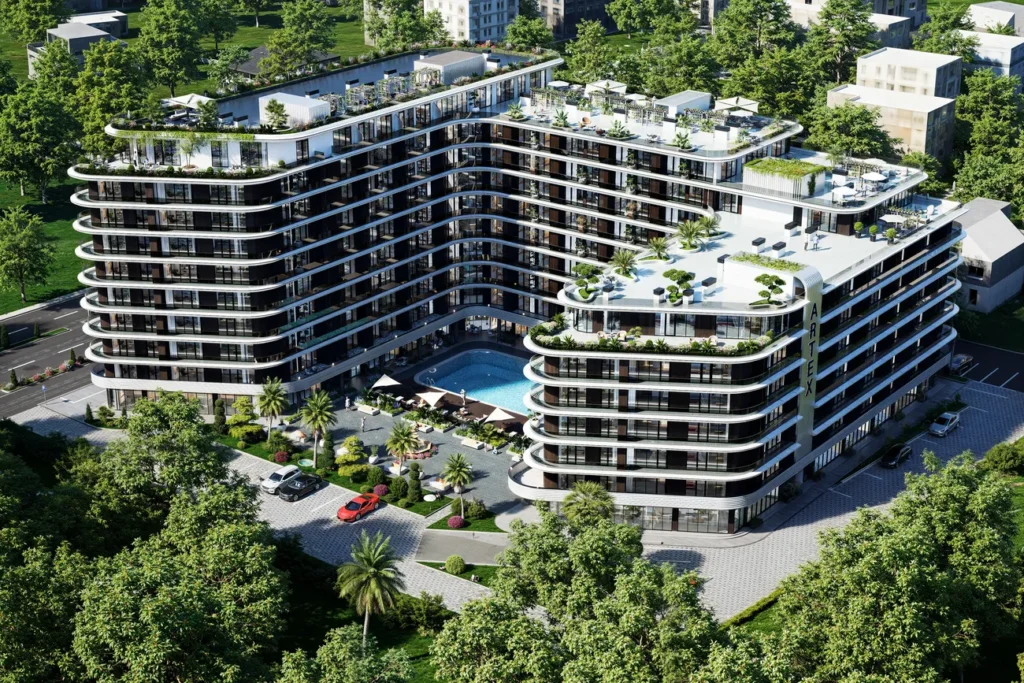
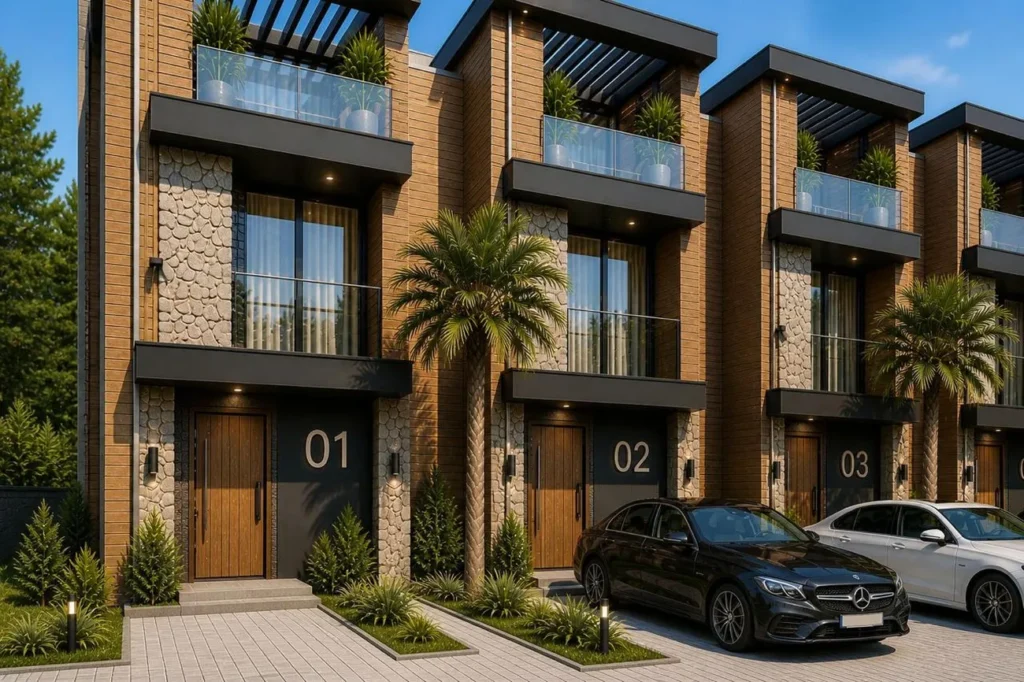
Projects currently under construction in Batumi





Are you unsure which is better value for money given your budget – a mortgage or a hire purchase plan?
Please enter the amount of your own funds and your preferred monthly repayment. We’ll find options with a suitable repayment structure and show you what questions to ask the bank or the developer.
Factors that the bank assesses on a case-by-case basis:
- Registered or pending title
- Legal compliance and the absence of any registered encumbrances at the time of the inspection
- Stage of construction and availability of planning permission
- Use of the property (residential / non-residential)
- Liquidity — how easily an asset can be sold on the open market
- Results of an independent assessment
- Developer accreditation — for properties under construction
There is a wide range of construction and investment projects in Batumi, so when buying a property with a mortgage, it is important to check the banking accreditation of your chosen development separately. “An overview of Batumi’s neighbourhoods and the property market" will help you find your way around the different areas. Tbilisi has a wide range of traditional housing and a thriving secondary market, but it is just as essential to inspect a property before taking out a mortgage.
A mortgage or an instalment plan from the developer
When buying a new-build property, foreign buyers often consider both options. There is no clear-cut answer as to which is better — the choice depends on the specific circumstances.

Table 3. Mortgage vs. instalment plan from the developer
| Criterion | Bank mortgage | Developer’s instalment plan |
|---|---|---|
| Deadline | This depends on the currency and the product; for certain GEL products, up to 20 years; for foreign-currency mortgages, no more than 10 years | Set by the developer; as a rule, it is considerably shorter than a mortgage |
| Income verification | The bank carries out its analysis in accordance with regulatory standards | The developer sets its own criteria, which may differ from the bank’s underwriting criteria |
| Initial payment | From 0% in certain promotions/projects; often 10–20%, but the terms are set by the specific developer | Set by the developer for a specific project |
| Percentage / price increase | Nominal + effective rate | The price when paying in instalments may differ from the price when paying in full; please compare the total amount of all payments |
| Requirements for the property | Banking assessment and potential accreditation | To be determined by the developer |
| Design | Loan agreement + registration of the charge in the Public Registry | Contract with the developer; the structure of the transaction is determined by the terms and conditions |
| Availability to non-residents | It depends on the bank and the customer’s profile | It depends on the developer and the project |
| Monthly workload | This is calculated on a case-by-case basis based on the loan amount, interest rate and term; a longer term usually reduces the monthly repayment but increases the total cost of the loan | It depends on the price, the deposit and the term. In some developments, payments start from $500 per month, but this is a condition specific to this particular project, not the market minimum |
| Risks | Currency risk in the event of a currency mismatch; cancellation may occur after selecting a property | Risks associated with the developer; the timing of the transfer of title depends on the structure of the contract |
| Early repayment | It depends on the terms of the agreement with the bank | It depends on the developer’s terms and conditions |
Key points to note:
- The term of an instalment plan is usually shorter than that of a bank mortgage, so for a comparable amount of finance, the regular repayment burden may be higher.
- The price of the item when paid in instalments may differ from the price when paid in full. You should compare total cash flow, rather than just the first instalment.
- In the case of payment by instalments, the timing of the registration of title depends on the terms of the contract and the structure of the transaction: it may be registered once payment has been made in full, or a different legal framework may be used to protect the parties’ rights.
- In a standard mortgage purchase, the title and the bank’s mortgage are registered in the Public Registry as part of the transaction structure; however, the property remains subject to a bank charge until the loan is repaid.
Developer’s instalment plan: The term is determined by the specific project. In-house interest-free instalment plans are often designed to cover the construction period — for example, 2–3 years; some projects offer 36–40 months. Longer schemes are also available, but may be combined with bank financing.
Is it possible to apply for a mortgage remotely?
Some of the initial communication with the bank can indeed take place remotely: consultations, submitting documents electronically, and preliminary calculations. However, it is up to the individual bank to determine which procedures can be carried out without the customer being physically present.
Some banking products provide for registration by power of attorney. Halyk Bank Georgia explicitly mentions this possibility in a product for people with income abroad. This is a genuine procedure, but it requires a properly drawn-up power of attorney.
Requirements for a power of attorney:
- It must meet the requirements of the specific bank
- It must be drawn up correctly in accordance with Georgian law
- Depending on the country in which the document is issued, an apostille or consular legalisation may be required
- Translation into Georgian is, as a rule, compulsory
Further details on the application process: “How to issue a power of attorney to buy or sell housing in Georgia“.
You shouldn’t assume that every bank will process a transaction entirely remotely by power of attorney — you need to check this in advance. Some banks may require the customer to be present in person, at least when signing the loan agreement.
For those planning to make a purchase from abroad: A comprehensive guide to buying property remotely explains how to organise the process without having to travel to each stage in person.
Additional costs
The deposit is not the only personal funds the buyer will need.
Table 4. What to include in the budget apart from the initial deposit
| Consumption | Landmark |
|---|---|
| Registration of title — 4 working days | 150 GEL |
| Registration of title — 1 working day | 270 GEL |
| Registration of the right — on the day of application | 350 GEL |
| NAPR statement — 1 working day | 20 GEL |
| NAPR certificate online — 1 working day | 13 GEL |
| Urgent statement issued on the day of your enquiry | 75 GEL |
| Urgent online statement | 52 GEL |
| Certification of the parties’ signatures on the document for registration | 7 GEL |
The exact amount of associated charges is calculated on a case-by-case basis, depending on the bank, the destination, the country of origin of the documents and the chosen remittance route. Please check the list of charges with the relevant bank in good time.
10 questions to ask the bank before submitting your application
- What is the maximum LTV that the bank will apply to my specific profile?
- How will the bank calculate my PTI based on my income and current loans?
- In which currency is the loan available to me?
- Is the rate fixed or index-linked?
- Which index is used, and how often is the rate reviewed?
- What is the annual percentage rate?
- Is there a fee for granting a loan?
- Do I need property or life insurance?
- What are the terms for early repayment?
- What requirements does the bank impose on a specific property and the developer?
If you’re sending money from abroad, you might find this guide useful: ‘How to transfer money to Georgia to buy property“.
When does a mortgage make sense?
A mortgage is a financing tool, not a one-size-fits-all solution. Whether it is the right choice depends on the buyer’s specific circumstances.
A mortgage may be appropriate when:
- It is important for the buyer not to withdraw all their capital from circulation in one go
- There is a stable, fully documented income
- Long-term ownership of the property is planned
- The monthly payment fits comfortably within the budget
- The buyer fully understands the currency risk and accepts it in full knowledge of the facts
- The asset meets the bank’s requirements as collateral
A mortgage may not be the most suitable option when:
- Income is irregular or difficult to document
- Most of the available capital is required as a deposit anyway — and the loan will be a small one
- A resale is planned in the near future
- The selected entity is not accredited or does not meet the bank’s requirements
- The developer is offering a short-term instalment plan on reasonable terms
- Currency risk is disproportionate to income
For those considering an investment opportunity. It is not enough to compare rental yields with the nominal mortgage rate. The calculation must take into account: periods when the property is vacant, management costs, repairs, taxes, sales commissions and the full cost of financing.
Possible reasons for the bank’s refusal:
- It is not possible to provide documentary evidence of the income
- Income is unstable or does not meet PTI’s requirements for the required amount
- The existing debt burden is too high
- Insufficient equity to meet the required LTV
- The asset fails the valuation or does not meet the bank’s requirements as collateral
- Legal issues relating to property
- Inconsistency between foreign exchange parameters and credit policy
- The bank is unable to determine the source of the funds for the initial deposit
- The bank’s internal risk model does not allow this customer profile to be approved
These are possible reasons, not an official list of all banks.
A practical guide for foreign buyers
The question for a foreigner is rarely whether mortgages exist in Georgia. The question is, what sort of mortgage actually matches his income and the property he has chosen — and how can this be ascertained before, rather than after, signing the deposit agreement?
Before booking an apartment, please check
- What level of income is the bank prepared to take into account?
- In which currency is the loan available?
- Which PTI applies to your income?
- What is the preliminary credit limit that has been granted?
- Is the property suitable for the bank?
- What is the bank’s valuation?
- Do I have enough of my own funds to cover the difference between the price and the LTV?
- What additional costs will be incurred?
- Has final approval been received prior to the non-refundable payment?
Whilst this procedure does not eliminate all uncertainties, it significantly reduces the risk of finding yourself in a situation where you have chosen a flat and paid a deposit, but the mortgage has not been approved, or has been approved for an amount insufficient to complete the transaction.
 Property in Montenegro
 Property in Cyprus
 Real estate in UAE
 Property in Bali
 Property in Thailand
 Property in Spain
 Property in Saudi Arabia
 Property in Turkey
 Property in Zanzibar
 +995 551 50 18 84
 hello@residence-estate.ge
 Georgia, Batumi, Sherif Khimshiashvili str. 1, office 1204



 Get catalogue of TOP-7 objects