
 +995 551 50 18 84


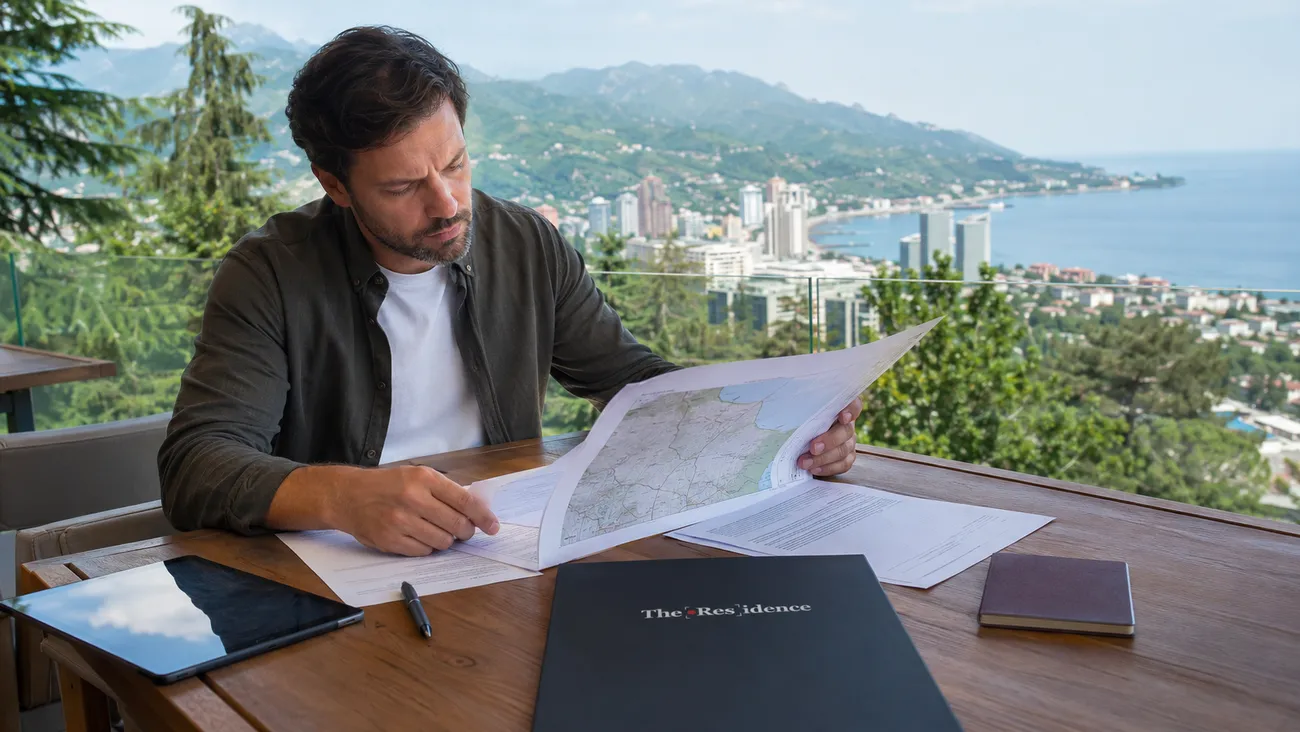

A foreign national in Georgia is entitled to purchase a plot of land — but not just any plot. The registered designated use of the land is of key importance, rather than its appearance, location or the seller’s claims. Non-agricultural plots are generally available to foreign buyers. Agricultural land is governed by a separate organic law and requires verification of the specific grounds for purchase.
A second important point that is often overlooked: The right to register a plot of land in one’s own name and the right to build the required structure on it are two separate matters. The plot may be registered as freehold, but its zoning, building coefficients or conservation restrictions may make construction impossible or require additional approvals. Therefore, the due diligence process should begin before a deposit or advance payment is made, rather than after the contract has been signed.
In this article, we will look at the categories of land available to foreign buyers, the differences between agricultural and non-agricultural land status, how to check a plot’s status using official data, how the transaction is carried out, and the most common risks involved.
As a general rule, a foreign national may register a plot of land for non-agricultural use in their own name. Agricultural land is governed by the Constitution of Georgia and a specific organic law — the possibility of acquiring such land depends on the status of the purchaser, the grounds for acquisition and the conditions laid down by the legislation in force at the time of the transaction.
Key terms explained in simple terms
| Term | What does this mean? |
|---|---|
| Cadastral code | A unique reference number used to locate a plot in the Public Register and on the cadastral map |
| Land use | The registered legal status of the plot, including whether it is agricultural or non-agricultural |
| Functional area | Planning regulations for the area, setting out permitted uses and development parameters |
| Encumbrance | Registered encumbrance on the title: mortgage, attachment, easement or other charge |
| Easement | The limited right to use another person’s land, for example for passage, access or the installation of utilities |
| Cadastral plan | A document setting out the configuration, area and registered boundaries of the plot |
| Technical Specifications | The supplier’s requirements regarding connections to the electricity, water, sewerage, gas or other utility networks |
What kind of land can a foreigner buy?
Foreign nationals may, as a general rule, purchase plots of land registered as non-agricultural. However, the specific possibility of building a residential house, hotel, commercial or industrial property is determined not only by the land’s designated use, but also by the functional zone, town planning regulations and development parameters. You should look not at what is growing on the plot or what it looks like, but at the official information in the Public Register.
Non-agricultural plots — In general, these are available to foreign buyers for direct purchase. This is the most common option for those wishing to build a house, a villa or a commercial property. However, cadastral designation and functional zoning are different levels of regulation: the non-agricultural status of a plot does not automatically determine what exactly can be built on it.
Agricultural land is regulated separately. Georgia’s Organic Law on Ownership of Agricultural Land imposes restrictions on foreign nationals. The presence of a small house, a fence or neighbouring buildings on such a plot does not in itself alter the registered designated use. Actual use and cadastral status may differ — and it is the cadastral data that is legally binding.
A plot of land with a house on it — a special case. If a house is registered as a property and stands on non-agricultural land, a foreign national may purchase both the house and the plot of land on which it stands. If the land on which the house stands retains its agricultural status, the situation requires further verification: the presence of a building does not automatically change the land’s category.
Areas subject to special regulations — border areas, protected natural areas and coastal zones — may be subject to additional restrictions, which must be verified against the specific cadastral code and current legislation.
The fact that you can purchase a plot of land does not mean that you are permitted to build a structure on it of the desired size, number of storeys and use. This is a separate matter, which is determined by analysing the town planning documentation.
Table 1. Which plots are available to foreign buyers
| Type of plot | Can a foreigner buy a property? | What to check | Principal risk |
|---|---|---|---|
| Non-agricultural land for development | This is usually permitted | Functional zone, development parameters | Restrictions on height, indentation and density |
| A plot of land with a registered house on non-agricultural land | This is usually permitted | Land use, rights to the house and plot | Discrepancy in floor area, co-owners |
| Agricultural land | Special arrangements are in place | Grounds for acquisition; legal requirements | Refusal to register |
| A plot of land with a house on it, where the land is classified as agricultural land | A separate check is required | Land status, legal provisions | Agricultural restrictions may apply to the entire site |
| Border zone or protected area | A separate check is required | Zone mode, permissions | Further approvals or a ban |
| Recreational or woodland area | A separate check is required | Category, terms of use | Limited construction capacity |
The table reflects the general principle rather than a legal opinion on a specific property. The status of each plot is checked individually against the current extract from Public Registry.
Why is agricultural land limited?
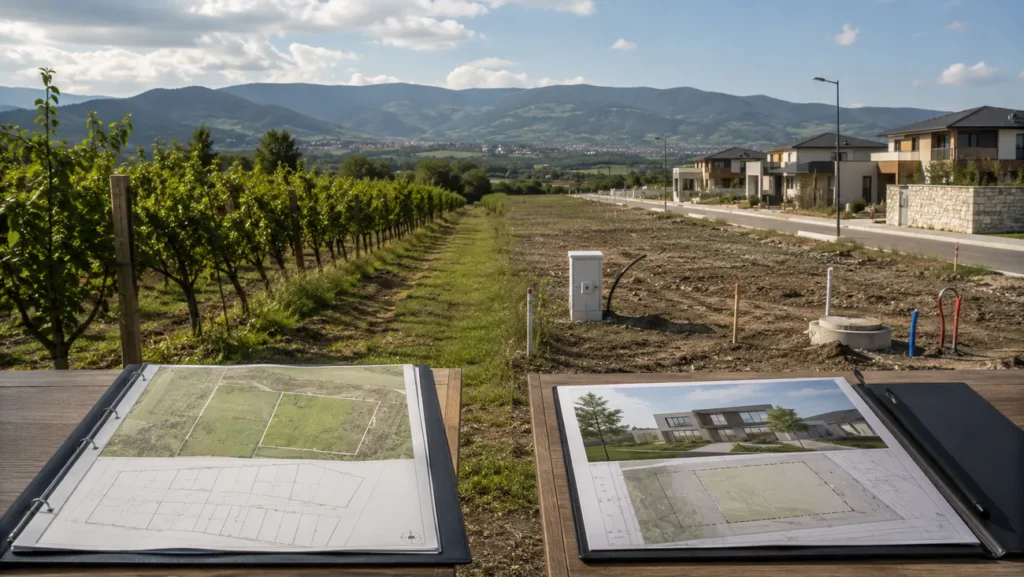
Restrictions on the ownership of agricultural land are enshrined in the Georgian Constitution and set out in detail in the Organic Law on Ownership of Agricultural Land. This is not an administrative instruction that can be easily amended, but a constitutionally protected provision. It is precisely for this reason that the rules governing the purchase of a flat or non-residential premises cannot be automatically applied to agricultural land.
For the purposes of this Act, a foreign person is defined as a natural person who is not a Georgian citizen, as well as a legal entity in which a foreign national is the controlling partner — the specific criteria are set out in the current version of the Act. It is not advisable to rely on articles containing outdated citations or summaries written several years ago: the text of the law and law enforcement practice may change, and the current version must be checked on the date of the transaction against the official text on the Georgian Legislative Gazette portal — matsne.gov.ge.
A common misconception is that a change in the actual use of land automatically alters its cadastral status. This is not the case. The reclassification of a plot from agricultural to non-agricultural use is a separate administrative procedure with its own requirements, and one that does not guarantee a positive outcome.
How the land use designation changes
| Question | What you need to know |
|---|---|
| Where is the change recorded? | At the National Public Register Agency |
| What is required | Application and supporting documents demonstrating the justified need for the change |
| Is the local authority involved? | NAPR may request information taking into account the town-planning conditions of the area |
| Is the change guaranteed? | No, the application may not result in a favourable decision |
| How much does registration cost? | 150, 270 or 350 GEL, depending on the term selected |
| Could there be an additional charge? | Where agricultural land is converted to non-agricultural use, the law provides for compensation in specified cases |
| Does the new status grant the right to build? | No, the functional zone and the building regulations are checked separately |
The amount of potential compensation cannot be calculated using a standard rate applicable across the whole of Georgia. It must be assessed on a case-by-case basis, taking into account the specific plot of land, the municipality and the regulations in force at the time of the application.
Inheritance and exceptions
A foreign national may register ownership of an agricultural plot acquired by inheritance: this ground is expressly provided for in the current organic law. When completing the registration, it is necessary to confirm the inheritance rights and register the transfer of ownership in the Public Register. The specific conditions of each inheritance case should be checked individually; however, The Organic Law currently in force does not provide for a general obligation on the part of a foreign heir to sell an agricultural plot within a specified period..
Certain investment mechanisms may also provide for special conditions. A company registered in Georgia and controlled by a foreign majority shareholder may acquire agricultural land on the basis of an investment plan and a decision by the Georgian Government. However, failure to comply with the investment plan will result in an obligation to dispose of the land for such a company — but not for a foreign individual who has inherited the land. Before considering any of these grounds as a viable scenario, it is essential to review the current version of the law with an independent lawyer.
Purchasing through a company
There is a widespread belief amongst foreign buyers that registering a Georgian limited liability company automatically grants access to the purchase of agricultural land.
The law takes into account not only the jurisdiction in which the company is registered, but also the composition of its shareholders. A legal entity registered in Georgia but with a foreign controlling partner may acquire agricultural land only on the basis of an investment plan and a decision by the Georgian Government. The precise list of criteria is set out in the current version of the law.
Registering a plot of land in the name of a Georgian citizen, subject to an informal agreement that a foreign national will be the actual owner, does not confer a registered right of ownership on the foreign national. Such an arrangement carries a high risk of losing control over the property, of disputes arising, and of individual agreements being declared invalid. Nominee ownership should not be used as a means of circumventing restrictions. Any corporate structure for the acquisition of land must be reviewed by an independent specialist in Georgian law.
Table 2. Options for action if a plot has agricultural status
| Option | When considering | What you’ll need | Limitations and risks |
|---|---|---|---|
| Select a different area | When the aim is a quick, hassle-free purchase | Search for a non-agricultural equivalent | It may take a little longer to find a suitable match |
| Check whether a change of use is permitted | When a site is of strategic importance | Application and supporting documents submitted to NAPR; where necessary, information from the relevant local authority | Approval is not guaranteed; the process takes time |
| Long-term lease | When a purchase isn’t an option, but long-term monitoring is required | Lease agreement, registration of an encumbrance | No title to the property; limited development potential |
| Special investment procedure | For large-scale projects, where there are grounds for doing so | Investment plan, decision by the Georgian Government | Requires compliance with the provisions of the law |
| Inheritance | Where there is a legal basis | Documents relating to inheritance rights; registration in the Public Register | The specific circumstances of each case are examined separately |
| A lawful corporate structure that complies with the requirements | Provided there is an investment plan and a Government decision | Legal analysis of the composition of participants, investment plan | No guarantee of results without verification and approval |
None of these options is a one-size-fits-all solution. Each requires a case-by-case legal assessment, taking into account the specific plot of land and the buyer’s status.
What to do if you’ve found a plot of agricultural land you like
If the extract specifies agricultural status, you should not pay a deposit on the assumption that the issue can be resolved after the purchase. You must first establish whether there is a legal basis for this particular buyer to acquire the plot.
- Obtain a current extract and a cadastral plan.
- Do not sign the main contract and do not pay the non-refundable deposit.
- Check whether the buyer is entitled to purchase the plot of land on one of the grounds provided for by law.
- Find out whether it is possible to change the purpose of the property and who should submit the application.
- Check the functional zone and the feasibility of the planned construction separately.
- Get a preliminary estimate of the costs and duration of the procedure.
- If the transaction is contingent upon a change of use, the relevant condition should be set out in the preliminary agreement.
- Check the statement again just before the main transaction.
- If it is not possible to acquire the land legally, choose a non-agricultural plot or consider a legally verified lease agreement.
A change of use shall not be deemed to have taken effect until it has been registered in the Public Register. A verbal undertaking by the seller or the submission of an application is not sufficient.
Plots of land that you can buy:
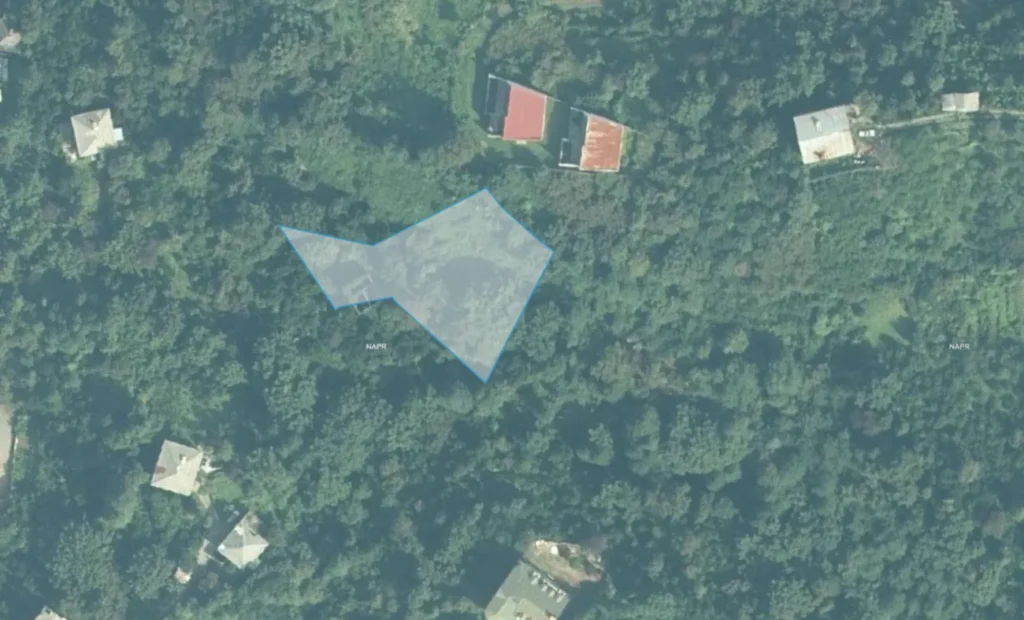

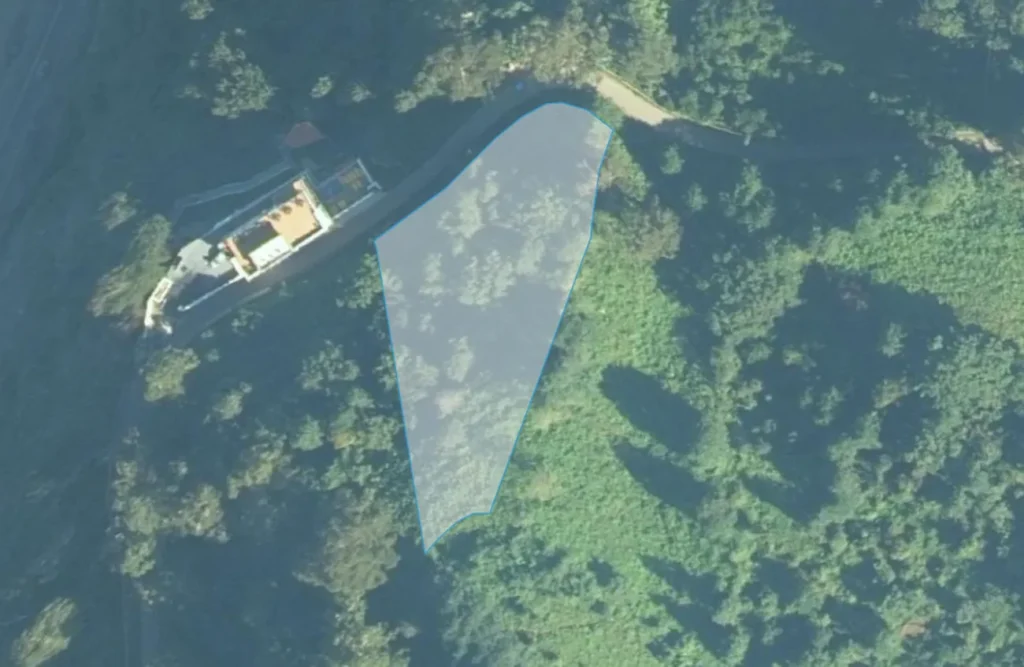
 Georgia, Gonio

 from 1080m²
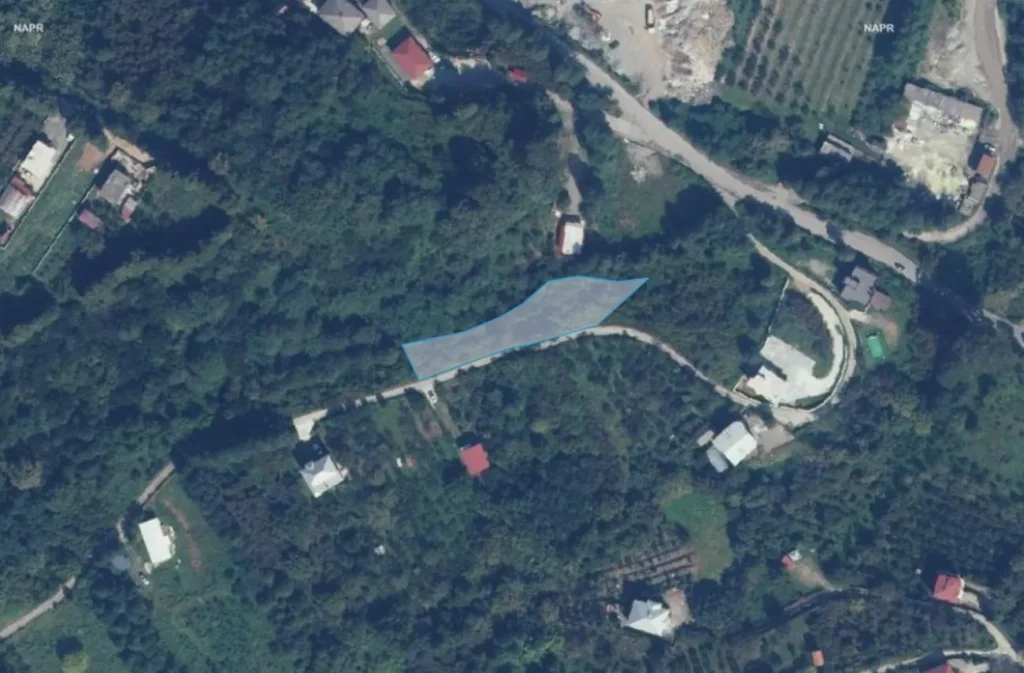
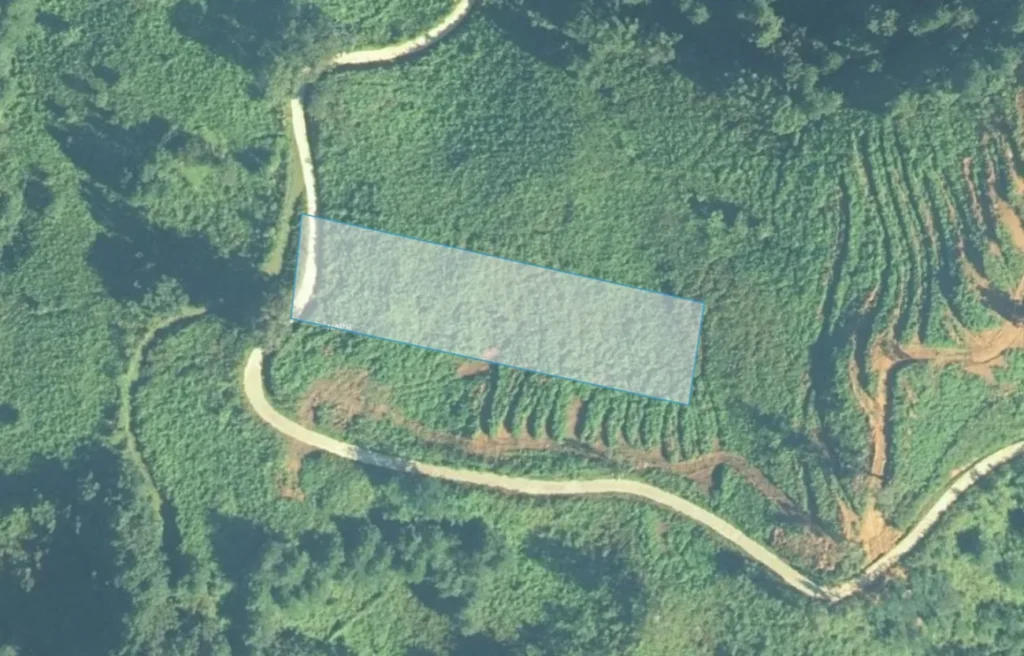
 Georgia, Kvariati-Sarpi
 Georgia, Kvariati
 Have you found a plot but aren’t sure of its status?
Please send us the cadastral code or a link to the listing. We will carry out a preliminary check of the land’s designated use, location and key details of the property, and advise you on what checks will be required before you make a deposit.
How to check the status of a plot
The verification process begins with obtaining an up-to-date extract from the Georgian Public Register. The extract contains the information registered at the time of its preparation: the cadastral code, area, intended use of the plot, owner, registered rights, obligations and public-law restrictions. However, the absence of an entry in the extract does not confirm the absence of any actual issues regarding boundaries, access, neighbours or utilities. A copy of an old extract provided by the seller is not acceptable — it may not reflect the current status of the rights to the property.
You should request the extract yourself or through a representative, using the plot’s cadastral code, as close as possible to the date on which the transaction is signed and registered. If there is a time lag between checking the information, making payment and registration, you should check the information again. The National Public Register Agency provides access to information on registered property via official services on the portal napr.gov.ge.
When carrying out the check, you must ensure the following:
- registered appointment matches what the sales assistant says;
- owner in the extract, corresponds to the person selling the plot;
- area the details on the statement match those of the property offered for sale;
- not available mortgage, attachment, easement or other encumbrances;
- no co-owners’ shares, who are not party to the transaction;
- title deed is specified and can be verified;
- the address and the cadastral code match;
- The statement is up to date — received immediately prior to the transaction.
If the entire plot is being sold, the contract must be signed by all registered owners or their duly authorised representatives. If only a share is being sold, it is necessary to check the applicable rules regarding the right of first refusal of other co-owners and to provide documentary evidence of compliance with these rules. The specific procedure depends on the status of the plot and the terms of the transaction.
What to ask the seller before paying a deposit:
- A current extract from the Public Register, obtained as close as possible to the date of signing the contract.
- A cadastral plan showing the boundaries of the plot.
- Title document: contract of sale, certificate of inheritance, or other supporting document.
- Information confirming the absence of encumbrances, or written disclosure of such encumbrances.
- Confirmation that there are no legal disputes relating to the property.
- Documents confirming lawful access to the plot (if this is not obvious).
- A town planning certificate or information regarding the functional zone of the plot.
- Technical specifications for the connection of utilities, if these have already been received.
How to read an extract from the Public Register
The extract confirms the details on record at the time it was drawn up. It does not reflect all the actual circumstances: the condition of boundary markers, informal disputes with neighbours, the actual width of the road, the condition of the ground and the cost of connecting to utilities must be checked separately.
| Statement field | What to check | Red Flag |
|---|---|---|
| Cadastral code | Does it match the code in the advertisement, the plan and the contract? | The seller is showing the documents for another plot of land |
| Owner | Does this match the seller’s passport? | The owner is another person, or there are several owners listed |
| Area | Does it correspond to the cadastral plan and the proposal? | The area for sale is larger than the registered area |
| Purpose | Is this in line with the foreign buyer’s capabilities? | Agricultural status in the case of a planned direct purchase |
| Supporting document | Can the seller provide it? | No grounds are provided, or the grounds are questionable |
| Mortgages and Seizure | Are there any registered restrictions? | The restriction has not been disclosed by the seller |
| Easement | Where does it take place, and in whose favour is it established? | It hinders construction or does not provide the necessary access |
| Obligations | Are there any third-party rights? | The restrictions run counter to the purpose of the purchase |
Are you unsure what is stated in the NAPR statement?
Send it to our specialist via WhatsApp. We’ll let you know where you can find details of the plot’s designated use, the owners and any registered restrictions, as well as which points you should pay attention to before carrying out a more detailed check.
Analysing a WhatsApp chat history
A preliminary analysis of the extract does not constitute a legal opinion and is not a substitute for a comprehensive inspection of the site.
What is an easement and why is it important?
An easement is a registered right to limited use of another person’s land. It has direct practical implications for the buyer.
The most common scenarios are: access to the plot is via a neighbour’s land; utilities (water pipes, electricity cables) run through someone else’s land; or, conversely, a third party has a right of way across the plot being purchased. A registered easement must be recorded in the Public Register. It is essential to check its content, boundaries, duration, legal basis and the person in whose favour it has been established. Actual right of way, access or the location of utilities without a registered right creates uncertainty. After the transaction, it may transpire that the buyer is not entitled to use the neighbouring plot or, conversely, that third parties claim a right of way across the acquired land.
What to check: whether the extract mentions any easements; in whose favour they have been established; whether a registered easement restricts the possibility of building; and whether there are any actual right-of-ways or utility lines that are not recorded in the register. If an easement exists, it is necessary to ascertain whether it constitutes a burden on the buyer or, conversely, guarantees them access through the neighbouring property.
This list is not exhaustive for every specific situation — the list of documents required depends on the characteristics of the property. For more details on the general inspection procedure, please refer to our guide: ‘How to buy property in Georgia“.
How to check a plot of land yourself online
Part of the check can be carried out before travelling to the site and before price negotiations — via official services.
- Ask the seller for the cadastral code. Without it, it is not possible to reliably match the property listing, the extract, the cadastral plan and the actual plot of land. You can also try to find the code on the public cadastral map by searching for the property’s location.
- Order a NAPR extract — via the official portal napr.gov.ge: it will show the owner, the floor area, the intended use and any registered encumbrances.
- Check restrictions — any mortgages, seizures or easements are shown on the same statement.
- Specify the functional area — via the local council’s planning department or public town planning documents; some local authorities publish zoning maps on their websites.
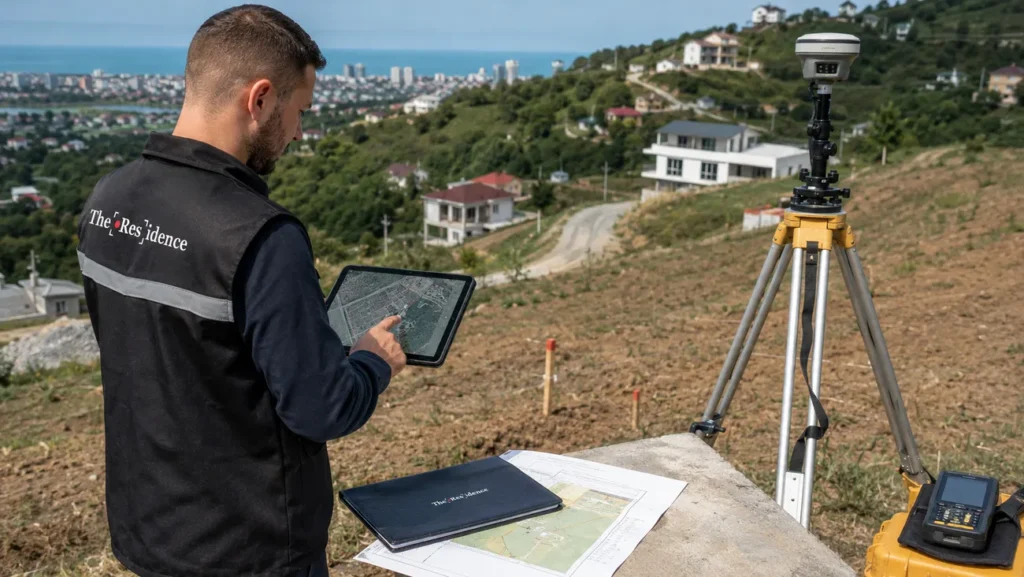
- Check the coordinates — The public cadastral map allows you to visually match the boundaries of the plot with the surrounding area.
- Check the actual entrance — compare the cadastral map with satellite images to ensure that the access road to the plot exists and does not run entirely across someone else’s land.
- Check that the seller is the same person as the owner — The details in the extract must match those in the documents of the person offering the plot for sale.
Things you cannot check online alone
| You can check this online in advance | This needs to be checked further, either on site or by a specialist |
|---|---|
| Registered owner | The identity and powers of the de facto party to the transaction |
| Cadastral code and area | Actual boundaries and boundary points |
| Purpose of the site | Soil conditions and topography |
| Registered mortgages, attachments and easements | Informal disputes with neighbours |
| Site layout on the map | The actual width and condition of the entrance |
| The road visible on the satellite image | The legal right to use this road |
| Published functional zone | The opportunity to agree on a specific project |
| Approximate location of the networks | Technical feasibility and cost of connection |
An online check helps to filter out some problematic sites, but does not confirm the physical boundaries, right of way, ground conditions, the actual presence of utility networks, or the feasibility of a specific project. Before any advance payment is made, the results of the remote check must be verified by supporting documents, an on-site visit and reports from the relevant specialists.
Is it possible to build on the plot?
Registration of ownership does not constitute planning permission. This discrepancy between the two different legal statuses is a source of the most costly mistakes when purchasing land.
An extract from the Public Register confirms the registered rights and restrictions relating to the plot. It does not replace an urban planning check and does not guarantee that construction of a building of the required size, use and number of storeys is permitted on the plot.
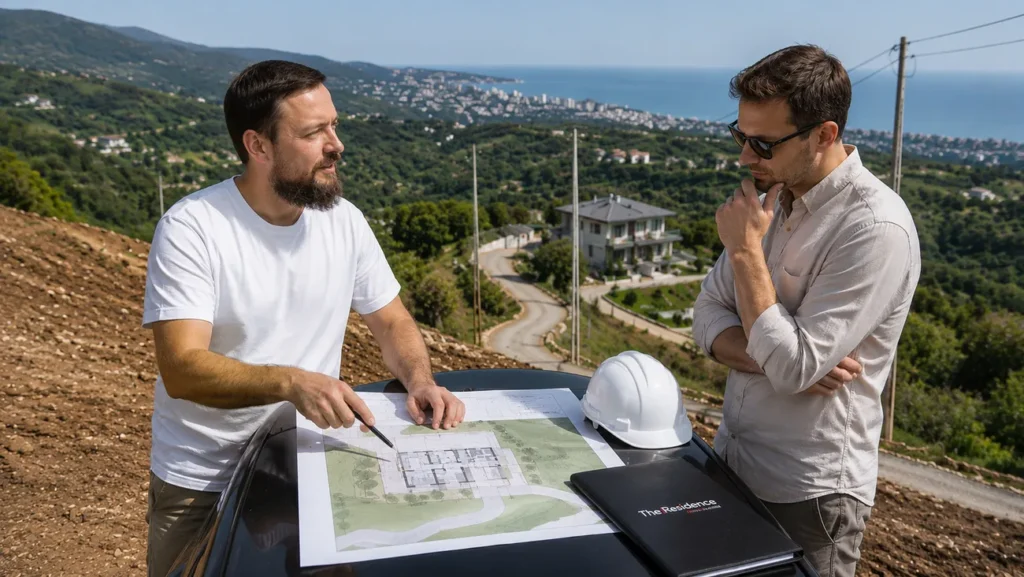
Before making a purchase, you must find out the following, either on your own or with the help of an architect and a surveyor:
- functional area the plot as set out in the municipality’s town planning documents;
- permitted uses in this area — residential, commercial, tourist and mixed-use;
- building coverage ratio and land use intensity ratio — they specify what percentage of the plot’s area may be built on and how many square metres may be constructed;
- maximum height of structures and restrictions on the number of storeys;
- mandatory indentations from the boundaries of the plot, neighbouring buildings and building lines;
- protected areas — cultural heritage sites, forests, water protection zones, coastal restrictions;
- geological conditions and topography — particularly relevant for mountainous and coastal areas;
- physical and legal access Regarding the plot: whether there is a road leading to a public street, its width, and its status;
- the technical capability to connect electricity, water, sewerage and gas — and the cost of connection.
The difference between buying a flat and a plot of land lies not only in the paperwork, but also in the scope of the checks required. The table below sets out the steps that are specifically required for a plot of land.
| Verification | Flat | Land plot |
|---|---|---|
| Status and rights of the owner | Yes | Yes |
| Purpose of the facility | It’s usually obvious | Must be on the statement |
| Functional area | As a rule, it is not necessary | Obligatory |
| Construction parameters | No longer relevant | Yes — before making a purchase |
| Inspection of the entrance hall | As a rule, it is not necessary | Yes |
| Communications | Minimum | Obligatory |
| Geology and topography | As a rule, it is not necessary | In areas with complex terrain |
| Easements | Rarely relevant | It is important to check |
That is precisely why buying a plot of land requires the services of a cadastral engineer and an architect — specialists who are not usually needed when buying a flat.
Scenario 1: a plot of land for a detached house or villa. Non-agricultural status is a necessary but not sufficient condition. You need to ensure that the functional zone permits residential development, that the plot ratio allows for the construction of a house of the required size, that the setbacks from the boundaries comply with the design specifications, and that the plot has a formalised access road. For plots with complex topography, it is advisable to obtain a preliminary assessment from a geologist or structural engineer before purchasing. The necessity and scope of engineering-geological surveys depend on the project, the soil characteristics and the requirements for planning permission.
Scenario 2: a plot of land for an aparthotel, hotel or commercial development. The requirements here are stricter. The functional zone must explicitly permit commercial or tourist use. The permissible development volume may turn out to be lower than that assumed in the preliminary financial model. Furthermore, approvals from the local authority, environmental assessments or special permits may be required.
The fact that two plots share the same ‘non-agricultural’ status does not mean they offer the same development potential. Two neighbouring plots with formally similar characteristics may present fundamentally different opportunities for development.
Table 3. What to check before buying a plot of land for building
| Verification | Where or from whom should I check? | Why it's important | What could go wrong? |
|---|---|---|---|
| Functional area | Municipal Architecture Department, town planning documentation | Defines permitted uses | The zone does not allow the required type of object |
| Building coverage ratios | Planning regulations, architect | Limits the floor area and volume of the building | The object does not meet the permitted specifications |
| Maximum height and number of storeys | Planning regulations, local authority | Crucial for multi-storey buildings | Height restrictions apply — we cannot carry out the project |
| Access to the road | Cadastral plan, title deeds | Without a legal access route, the plot is effectively inaccessible | Is the road private or not? |
| Protected and water protection zones | Public register, relevant government departments | They may prohibit or restrict construction | Fines, demolition orders |
| Communications | Resource suppliers, technical specifications | The connection may be expensive or technically difficult | The cost of connection significantly increases the overall budget |
| Geology and topography | Geologist, design engineer | Complex terrain affects the type of foundation and the cost of construction | Construction is considerably more expensive than expected |
On challenging sections, the costs of earthworks, retaining structures, foundations and utilities can have a significant impact on the overall project budget. These should be assessed in advance in accordance with the technical specifications and the project cost estimate.
How does the process of buying land work?
The procedure for purchasing a plot of land in Georgia consists of several consecutive stages. It is advisable to follow these stages in the order specified, as some of the checks lose their practical significance once the money has been transferred and the title registered.
Step-by-step guide to purchasing:
- Determine the purpose of the purchase — house, villa, hotel, commercial property, resale. The purpose determines the requirements regarding use and location.
- Carry out a preliminary check of the purpose and functional area — before any serious negotiations take place and before an advance payment is made.
- Obtain a current extract from the Public Register — either in person or through a representative, using the plot’s cadastral code, immediately prior to the transaction.
- Check the owner, encumbrances and legal risks — to ensure that the seller is the rightful owner and that there are no attachments, mortgages, easements or outstanding disputes.
- Check the cadastral boundaries — visit the site with the cadastral plan, check the physical boundary markers, or arrange for the boundaries to be marked out on site.
- Check the construction specifications — functional zone, coefficients, number of storeys, security restrictions, access.
- Agree on the price, currency and payment terms — to set out the terms in writing before the contract is drawn up.
- Draw up a contract of sale — taking into account all verified data. For registration, a document in Georgian or a document accompanied by a translation in a form acceptable to the registrar must be submitted. In practice, the parties may sign either a Georgian or a bilingual version of the contract; the buyer must receive a translation they can understand before signing.
- Arrange for the translation of documents — if the buyer does not speak Georgian, an interpreter is present during the transaction or translates key documents in advance.
- Carry out the calculation in a documented manner — Agree on a payment arrangement that is consistent with the structure of the transaction: bank transfer, bank escrow or another mechanism approved by the parties and their advisers. The timing of the payment should be linked to the submission of documents and the registration of title.
- Submit documents for registration at the House of Justice or through a notary, if notarisation is required or agreed by the parties. Notarisation is not mandatory for all property transactions in Georgia, but is required in certain cases at the request of the parties or by law.
- Get a new statement in the buyer’s name once registration is complete.
A property purchase can be carried out remotely via a notarised power of attorney granted to a representative. For more information on how to arrange a transaction from another country, please read the article ‘How to buy property in Georgia remotely“.
According to NAPR tariffsUnder the regulations in force at the time of the audit (July 2026), registration of the acquisition of a right to immovable property can be completed within four working days, one working day, or on the day the application is submitted. The processing time and fee depend on the service selected; before proceeding with the transaction, you should check the current rates on the agency’s official website.
Documents and expenses
Buyer’s documents
A foreign national is usually required to provide the following for a transaction:
- passport — a valid identity document;
- certified translation of a passport, if required by a notary or the registering authority;
- a notarised power of attorney — when purchasing remotely through a representative;
- the representative’s documents — when purchasing by power of attorney;
- banking documents — proof of the source of the funds, if requested by the bank or a party to the transaction.
Documents relating to the plot
The following will be required for verification and registration:
- a current extract from the Public Register — received immediately prior to the signing of the contract;
- cadastral plan specifying the boundaries;
- title deed previous transactions or grounds for possession;
- information on encumbrances or documents confirming their removal;
- documents proving lawful access to the plot, if this is not clear from the cadastral plan;
- urban planning documents — a certificate detailing the zone and development parameters;
- technical specifications for utilities, if they have already been received.
Additional costs
In addition to the price of the plot and the official fees charged by the Public Register, the buyer may need to engage the services of an interpreter, a notary, a solicitor, a cadastral engineer and technical specialists. There is no standard rate for these costs: the price depends on the documents involved, the characteristics of the plot and the complexity of the transaction.
| Object of expenditure | Price guide | When required | What determines the price? |
|---|---|---|---|
| Translation of passports and documents | from 20–25 GEL per page | When the buyer does not speak Georgian or foreign documents are used | Language, volume, urgency and the need for certification |
| Certified or legal translation | approximately 40–45 GEL per page | For contracts, powers of attorney and documents requiring certification | Language, text complexity, form of certification |
| Notarised power of attorney | at the notary’s standard rate | When purchasing through a representative | Scope of authority, language, number of copies, translation |
| Apostille or legalisation of a power of attorney | at the rates applicable in the country of registration | If the power of attorney was drawn up outside Georgia and requires certification | Country, type of document and applicable international procedure |
| Legal due diligence on the plot of land and the contract | approximately $400–800 for a comprehensive inspection | Before purchasing a plot of land, a share or a property with a complicated history | Number of owners, encumbrances, history of transfers of title, scope of support services |
| Marking out boundaries on site | based on an individual estimate | If the boundary points are not visible or there is uncertainty regarding the boundaries | Area, shape, topography and access to the plot |
| Cadastral survey or boundary demarcation | based on an individual estimate | In the event of a discrepancy between actual and recorded data | Scope of measurements and the need to record changes |
| Urban planning analysis | based on an individual estimate | Before buying a plot of land for building | Municipality, area, proposed project and scope of documentation |
| Preliminary architectural analysis | based on an individual estimate | To assess the permissible area, height and location of the structure | The complexity of the project and the site characteristics |
| Engineering-geological survey | based on an individual estimate | For sites with complex terrain, slopes and large-scale projects | Area, number of survey points and project specifications |
| Obtaining technical specifications | at the supplier’s standard rate or on an individual basis | To connect to the electricity, water, sewerage or gas mains | Distance from the grid, capacity and the need for new lines |
| Bank transfer | according to the banks’ rates | When paying the seller by bank transfer | Amount, currency, country of origin and correspondent banks |
| Escrow or another payment mechanism | in accordance with the bank’s or service provider’s terms and conditions | When the transfer of funds is linked to the registration of a right | Transaction amount and selected payment method |
| Tax and land maintenance | are calculated on a case-by-case basis | Following the registration of the property | Value of the property, household income, use of the plot and subsequent sale |
The market prices quoted for translation and legal review are indicative only and do not constitute official government rates. Before entering into a transaction, you should request a written quotation from the specific service provider.
How much does it cost to register a plot of land?
Unlike the services provided by private specialists, the fees for registration, the issue of a certificate and the cadastral plan are set by the official tariffs of the NAPR. The amount of the fee depends on the chosen timeframe for the service. According to the National Public Register Agency’s tariffs, verified in July 2026, the registration of ownership rights takes between four working days and the day the application is submitted.
Before submitting your application, you should check the fees again on the official NAPR website: government charges are subject to change.
| NAPR service | Deadline | Official fee |
|---|---|---|
| Registration of ownership | 4 working days | 150 GEL |
| Registration of ownership | 1 working day | 270 GEL |
| Registration of ownership | On the day the application is submitted | 350 GEL |
| Extract from the Public Register following a standard application | 1 working day | 20 GEL |
| Statement for standard applications | On the day the application is submitted | 75 GEL |
| Online bank statement | 1 working day | 13 GEL |
| Online bank statement | On the day the application is submitted | 52 GEL |
| Cadastral plan | 1 working day | 7 GEL |
| Cadastral plan | On the day the application is submitted | 26 GEL |
A statement in English is issued for an additional fee. At the time of checking, the additional fee was 26 GEL.
The table lists only the NAPR government fees. The services of a solicitor, translator, notary, cadastral engineer, architect and bank are paid for separately and are not subject to a standard government tariff. Before proceeding with the transaction, you should obtain individual cost estimates and double-check the official fees.
The main risks for the buyer
Buying land requires more thorough due diligence than buying a ready-built flat. Some of the risks are reflected in the land registry, whilst others can only be identified through a cadastral, town-planning or engineering survey.
1. A misunderstanding of the status of the land. The seller describes the plot as ‘for building’ or ‘for a holiday home’, but it is listed as agricultural land in the land register. A foreign buyer signs the contract — only to find that it is impossible to register ownership.
2. A promise to change the intended use after the transaction. The seller assures us that reclassification from agricultural land will take just a few months. In practice, however, this is an administrative procedure with the NAPR for which there is no guarantee of a successful outcome. Buying a plot ‘with a view to reclassification’ means taking on an uncertain construction risk.
3. Discrepancies between cadastral and actual boundaries. The actual plot may be smaller than stated, may overlap with a neighbour’s plot, or may include land for which no legal title has been registered. This is not apparent without visiting the site and carrying out a survey.
4. Lack of a legal right of way. The plot is accessible via a neighbour’s driveway or a private access road, which is used ‘by mutual agreement’. There is no legally formalised right of way — access may be denied if a neighbour moves out or relations deteriorate.
5. Breach of the rules when selling a share or the entire plot. The sale of the entire property requires the involvement of all registered owners. When selling a share, the applicable rules regarding co-owners’ right of first refusal must be observed. Failure to comply with these conditions creates a risk of legal dispute.
6. Mortgage, attachment, easement or dispute. These restrictions are recorded in the register — but only if the extract is obtained immediately prior to the transaction. An extract obtained well before the contract is signed will not protect against any encumbrances that have arisen recently.
7. The inability to construct a building of the required size. The plot ratio or zoning regulations prevent the planned project from being carried out. The buyer pays the full price but is unable to use the plot as intended.
8. Unforeseen costs relating to site preparation and utilities. On challenging sites, the costs of earthworks, retaining structures, foundations and the connection of utility networks can have a significant impact on the overall project budget. These should be assessed before the price of the site is agreed.
9. A scheme involving a nominee owner. Registering a plot of land in the name of a Georgian citizen, with an informal agreement that a foreign national is the actual owner, does not create a registered right. There is a high risk of losing control over the property and of the agreements being contested.
10. Paying a large deposit before verification. Paying in advance without checking the documents is a common mistake made when in a hurry or under pressure from the seller.
11. The contract is only in a language I do not understand. If the buyer cannot read Georgian and there is no translation, they will not know exactly what they are signing.
12. A purchase made by a proxy without verification of the proxy’s authority. A forged, expired or revoked power of attorney may constitute grounds for refusing registration or for subsequently challenging the transaction. Before signing, it is essential to check its term, the scope of the powers granted, its form and that it has not been revoked.
The price of the plot does not take into account any legal or building restrictions. If the designated use, boundaries, access and development parameters are not confirmed by documentation, the property cannot be considered fully verified.
When you should not sign a contract or pay a deposit:
- the cadastral designation has not been verified against the current extract;
- the seller did not provide the title documents;
- the extract contains a mortgage, a seizure order or an easement without any explanation;
- the boundaries have not been verified on the ground, and there is no cadastral plan;
- there is no evidence of lawful access to the plot;
- The designated land use zone does not permit the planned construction;
- when the entire plot is sold, not all registered owners are involved in the transaction;
- the contract is drawn up solely in a language which the buyer does not understand, without a translation;
- The seller is demanding an urgent deposit ‘before the paperwork is finalised’.
What questions to ask the seller before paying a deposit
The documents answer the question ‘what is registered?’. Speaking to the seller helps you understand the property’s history and any potential hidden issues. The answers are not legally binding, but they help to identify inconsistencies and decide whether to carry out a more thorough check.
Before making an advance payment, it is worth asking:
- Why is the plot being sold? A change of plans is a perfectly normal reason. An urgent sale or an evasive response, however, is a reason to look into the matter further.
- Have any attempts been made to change the designated use of the land? If so, what was the reason for the rejection or why was the procedure not completed?
- Have there been any legal disputes concerning the plot, or any complaints from neighbours? The register shows registered restrictions, but not the history of informal disputes.
- Have the technical specifications for connecting the utilities been received? If so, ask to see their documents.
- Are there any similar buildings on neighbouring plots? This indirectly confirms that the functional zone permits the intended use.
- Were there any problems with access to the plot or with the neighbours regarding the right of way? The response helps to identify unregistered easements or conflicts.
Questions are asked not to catch the salesperson out, but to gain further context ahead of a professional check.
Common mistakes made by foreign buyers
Even after checking the documents, a buyer may misjudge the practical suitability of the plot. More often than not, the problem stems not from a lack of information, but from drawing the wrong conclusions from it.
- They choose a plot without having a specific aim in mind. Land intended for a private house, a hotel or resale requires different specifications and checks.
- They compare offers based solely on the total price. A cheap plot of land may involve significant costs for the access road, foundations, drainage and utilities.
- Only the plot itself is valued; the neighbouring land is not included. Future development in the vicinity could alter the appearance, traffic levels and appeal of the site.
- The presence of neighbouring houses is seen as a guarantee that planning permission will be granted. The legal status and parameters of neighbouring developments do not confirm the suitability of this particular plot.
- They commission a legal due diligence check, but overlook the building regulations check. A plot of land that is legally free of encumbrances may not be suitable for the planned development.
Legal, cadastral and town-planning checks address different issues. None of them can replace the others. I am currently at the preliminary check stage — before any money is transferred.
Inspection of the site in Batumi and Gonio
Plots of land in Batumi, Gonio and the surrounding suburbs are available in both the residential and investment sectors. Some of the properties are situated on plots with challenging terrain, which has a significant impact on construction costs and the scope of preliminary surveys.
| Type of site or location | What to check first | A possible consequence |
|---|---|---|
| A plot on a hillside | Gradient, soil, drainage, accessibility for machinery | Additional earthworks and reinforcement works |
| Gonio or Quariati with sea views | Functional area, height, neighbouring projects | Limitation of parameters or loss of visibility |
| Batumi suburb | Roads, electricity, water, sewerage | High costs or technical difficulties involved in setting up the connection |
| A plot of land next to the sea, a river or a canal | Coastal, water protection and other restrictions | Reduction in the available building area |
| A densely built-up urban area | Red lines, setbacks, plot shape | The design does not fit within the required area |
| A plot of land with a right of way across neighbours’ land | Right of way or registered easement | Loss of access after purchase |
The table is no substitute for checking the specific area: even neighbouring plots may have different registered rights, layouts, land-use designations and building specifications.
| A more expensive plot of land | A cheaper plot of land |
|---|---|
| Flat terrain | A steep slope |
| Landscaped entrance | Right of way across neighbouring land |
| Nearby shops | The connection requires a separate project |
| Suitable area | Construction plans have not been confirmed |
| Clear boundaries | A cadastral update is required |
A low purchase price does not necessarily mean a low project budget. When comparing plots, it is important to take into account not only the price per square metre, but also the costs of site preparation, access, utilities and the permitted building volume.
A significant difference in ground level may complicate the construction of the foundations and require retaining structures, drainage systems and additional earthworks. The need for such solutions is determined on the basis of the results of an engineering assessment and design. For each such site, it is necessary to assess individually the gradient, soil conditions, drainage, access to the road and the distance to utility connection points. Proximity to the sea does not in itself determine the feasibility of construction. For a specific plot, it is necessary to check the functional zone, any special territorial restrictions, the permitted building height and other parameters in accordance with current town planning documentation.
The actual access road is another common problem. The road may physically exist, but may not have legally formalised access: it is either private or not registered in the land registry. When choosing a plot, you should assess the actual width of the access road, the ability for vehicles to pass each other, and access for construction machinery, including during periods of heavy traffic.
Utilities in certain suburban areas may be some distance from existing networks, and the cost of connection may be substantial. This should be calculated separately before the price for the plot is agreed.
The current surroundings do not guarantee that the appearance and density of the development will remain unchanged. If town planning regulations permit new developments on neighbouring plots, the surroundings of the site may change over time. A plot purchased today with a panoramic view may, in a few years’ time, find itself surrounded by residential blocks or apartment complexes — and there are no legal means to protect the view if the zone permits high-rise development.
When analysing plots in Batumi and Gonio, we recommend checking not only the documents but also the municipality’s town planning schemes for the surrounding areas.
How to stay safe
Buying a plot of land safely does not begin with choosing a beautiful location, but with defining your purpose: exactly what you need the plot for.

A step-by-step guide to choosing and purchasing a plot of land safely:
- Define the objective: a residential property, a villa, a hotel, a commercial property, for resale or long-term ownership. The purpose determines the requirements regarding use, location and specifications.
- Check the land category According to the latest extract from the Public Register. Do not rely on the seller’s word alone.
- Check rights and encumbrances: owner, mortgage, attachment, easement, co-owners.
- Go to the site and check the boundaries with the cadastral plan. Consult a cadastral engineer if necessary.
- Carry out an urban planning analysis: functional zone, coefficients, height, setbacks, conservation restrictions.
- Rate the communications: availability, accessibility, connection costs.
- To agree the terms of the contract with the assistance of an independent lawyer, ensure that a clear translation is available.
- Carry out a documented calculation — to agree on a payment arrangement linked to the registration of title.
- Register ownership in the Public Register and obtain a final extract in the buyer’s name.
Table 4. What sort of specialist is required at different stages
| Stage | Specialist | What does it check? | Result |
|---|---|---|---|
| Selection and preliminary analysis | Estate agent | Market, properties, match to enquiry | List of suitable options |
| Legal review | Independent solicitor | Land status, rights, encumbrances, transaction risks | Legal opinion on the property |
| Translation of documents | Translator | Contract, statement, documents of the parties | Clear text in the customer’s language |
| Border checks | Cadastral Engineer | Actual boundaries, boundary markers, conformity with the register | Certificate of Boundary Marking on Site |
| Construction analysis | Architect or urban planner | Area, parameters, permitted object | Assessment of the project’s feasibility |
| Geology and topography | Geologist or structural engineer | Soil conditions, topography, engineering conditions | Preliminary report on the site |
| Calculations and funding | Banking specialist | Funds transfer, proof of origin | An agreed and documented payment procedure. |
A estate agent helps with finding a property and organising the transaction, but does not replace legal, engineering or architectural expertise. Each specialist is responsible only for their own area of expertise. Engaging one of them does not mean that legal, cadastral, construction and financial risks have all been assessed at the same time.
When choosing a plot of land, price and location are not the only factors to consider. The buyer’s nationality, the land’s designated use, the purpose of the development, the budget, the terrain, utilities and the permitted specifications for the property are all important considerations. Please complete a short questionnaire so that The Residence team can suggest suitable options in Batumi, Gonio, Tbilisi and other regions of Georgia: Find a property in Georgia
Key points to remember
A foreign national is entitled to purchase a non-agricultural plot of land in Georgia — this is the general rule, which applies to most cases of land purchase for residential or commercial development. Agricultural land is regulated separately: the possibility of acquiring it depends on specific grounds and the provisions of the applicable law, which must be verified at the time of the transaction.
The designated use of a plot of land must be confirmed solely by means of an official extract from the Public Register — not based on what the seller says, nor on its appearance, nor on the presence of any buildings. Cadastral data and the actual use of the land often differ.
Registration of ownership does not automatically confer the right to build. Before purchasing, you must separately check the zoning classification, development parameters, conservation restrictions, access to a road and the possibility of connecting to utilities. A plot may be legally sound but unsuitable for the planned project due to its building parameters.
Before paying a deposit or advance payment You should check the boundaries, encumbrances, access and the area. After that, you should finalise the contract, engage an interpreter if necessary, and carry out the settlement in a documented manner linked to the registration process. For a complex transaction, it makes sense to carry out an assessment in conjunction with an independent solicitor, a cadastral engineer and an architect – these are different specialisms that cover different risks.
Regulations and administrative practices in Georgia are subject to change; therefore, before each transaction, it is essential to check the current version of the law and the latest information relating to the specific cadastral code. This article is for information purposes only and does not constitute legal advice regarding a specific property or transaction.
 Property in Montenegro
 Property in Cyprus
 Real estate in UAE
 Property in Bali
 Property in Thailand
 Property in Spain
 Property in Saudi Arabia
 Property in Turkey
 Property in Zanzibar
 +995 551 50 18 84
 hello@residence-estate.ge
 Georgia, Batumi, Sherif Khimshiashvili str. 1, office 1204



 Get catalogue of TOP-7 objects