
 +995 551 50 18 84




Relevance: October 2026. This document has been prepared on the basis of Georgian legislation, official guidance from the Chamber of Notaries and the fee schedule of the National Public Registry Agency.
This information is for guidance only. For a specific inheritance case, you must determine the applicable law and have the documents checked by a notary or a solicitor.
A foreign national may inherit a flat, a house, commercial premises and even agricultural land in Georgia. Georgian citizenship or a residence permit is not required for this. However, there is no single ‘one-size-fits-all’ procedure: the process depends on the type of property, whether the deceased left a will, and international circumstances — such as the deceased’s nationality, country of residence and the place where the documents were drawn up.
A typical scenario is as follows: a relative who lived in Batumi has left behind a flat, whilst the heirs are in Moscow, Almaty or Berlin. Or the inheritance includes a plot of land near Kobuleti, the classification of which nobody in the family is entirely sure about. In both cases, it is better to make key decisions before visiting the notary, rather than afterwards.
First and foremost, there are four things you should check:
- the category of the plot of land as recorded in the public register;
- the circle of heirs and the existence of a will;
- a six-month period for accepting an inheritance;
- title deeds and the property’s registration status.
Inheriting property in Georgia: the key points in a minute
| Question | Short answer |
|---|---|
| Can a foreign national inherit a flat? | Yes, without Georgian citizenship or a residence permit |
| Can agricultural land be inherited? | Yes, on specific legal grounds |
| Time limit for accepting an inheritance | 6 months from the date the estate was opened |
| Time limit for renouncing an inheritance | Usually three months from the date on which the heir became aware, or ought to have become aware, of the summons |
| When is the certificate issued? | Usually after 6 months; exceptions may apply |
| Is it possible to complete the process without visiting in person? | Yes, in the cases provided for, through a representative |
| Registration of property with the NAPR | 150 / 270 / 350 GEL depending on the urgency |
| NAPR online statement | 13 GEL for standard collection |
| Inheritance tax | An exemption is provided for tax categories I and II |
| Is it compulsory to sell inherited agricultural land? | The current law does not specify a general time limit for compulsory sale |
The rules governing inheritance depend on the applicable law, the relevant documents, the composition of the heirs and the type of property. The rates are valid as at October 2026; notary fees, bank transfers and additional services are calculated separately.
Can a foreign national inherit property in Georgia?
The right to inherit in Georgia is not linked to citizenship. A foreign national may be an heir either by law or by will. The succession commences upon the death of the testator; however, in order to acquire the inheritance, the heir must accept it in accordance with the procedure laid down by law. This rule applies equally to foreign nationals and Georgian citizens, and does not depend on where the heir lives or whether they hold a Georgian residence permit. Holding a passport from another country affects the administrative aspects — translations, apostilles, powers of attorney — but not the right itself to receive the property.
It is important to distinguish between two concepts here: The right to inherit and the right to buy freely are different legal matters. Georgia allows foreigners to purchase flats, houses and non-agricultural land, but restricts the purchase of agricultural land. The law makes a specific exception for inheritance, which means that a foreigner can legally become the owner of land that they would not otherwise be able to purchase.
In practice, it works like this. A Russian citizen inherits a flat in Batumi from his father — as a general rule, there are no special restrictions for him; the formalities are dealt with through a notary and the public register. A Kazakhstani citizen inherits a house in the suburbs of Tbilisi – she will need to check separately how the plot of land on which the house stands is registered. A nephew from Germany has been bequeathed a plot of land – he first needs to find out its category. An heir who has never been to Georgia may act through a representative under a power of attorney.
What kind of property can a foreign national inherit?
| Property | Inheritance capability | Key features | What to check before applying |
|---|---|---|---|
| Flat | Yes | General procedure via a notary and NAPR | The owner as stated on the account statement, mortgage, seizures, outstanding debts |
| Detached house | Yes | The house and the plot of land on which it stands may be registered separately | The existence and category of the land on which the house stands, and the boundaries of the plot |
| Commercial premises | Yes | There may be existing tenancy agreements | Tenancy agreements, encumbrances, cadastral data |
| Non-agricultural plot | Yes | As a general rule, restrictions on foreign nationals do not apply | Category in the register, easements, town planning status |
| Agricultural land | Yes, on specific legal grounds | Inheritance — an exception to the ban on foreign ownership | Category, further restrictions on sale and pledging |
| Share in property | Yes | It is a share that is inherited, not specific rooms or square metres | Size of the share; rights of other co-owners |
The category of a plot of land determines which legal regime applies to it. The Georgian Constitution classifies agricultural land as a resource of special importance and, as a general rule, permits ownership only by the State, Georgian citizens and certain organisations. Exceptions are provided for The Organic Law of Georgia ‘On Ownership of Agricultural Land’, and inheritance is specifically mentioned amongst them. Therefore, for a flat, the question of category does not arise, whereas for a plot of land, it determines everything else: what actions the owner will be able to take and to whom they will be able to sell the land.
Inheritance by law and by will
In cases of succession involving an international element, the first step is to determine the applicable law — the law of the country that defines the circle of heirs and their shares. According to Article 55 The Georgian Law ‘On Private International Law’, the main criterion is the testator’s nationality at the time of death. However, citizenship serves merely as a starting point: if the testator held foreign citizenship, owned property in several countries or had other ties to other states, the final answer requires an analysis of the conflict-of-laws rules of those countries and international treaties. For example, the law of a number of states, including Russia, subjects the inheritance of immovable property to the law of the place where it is situated, and this may lead to Georgian law being applied to a flat in Tbilisi. Such a conclusion is reached on a case-by-case basis, rather than automatically. The registration of title to property situated in Georgia is, in all cases, carried out in accordance with Georgian procedures — even if the shares are calculated in accordance with foreign law.
If the owner of a flat in Georgia has died abroad
When it comes to the inheritance of a foreign national’s property, a distinction must be made between the law governing inheritance and the Georgian rules on the registration of immovable property.
The Georgian Chamber of Notaries deals separately with cases where the deceased owned property in Georgia but was a citizen of another country at the time of death. Its guidance stipulates that a certificate of inheritance must be obtained in the country of the deceased’s nationality and subsequently submitted to a Georgian notary for the registration of property located in Georgia.
This does not mean that a single procedure applies in all cases. International treaties, nationality, last place of residence, the existence of a will and the composition of the estate may affect the necessary steps to be taken.
Therefore, if the deceased was a foreign national, you should clarify in advance where the initial inheritance document is to be drawn up and what document will be required to register the flat in Georgia.
If there is no will
The following rules apply where succession is governed by Georgian law. Heirs at law are ranked in order of priority — there are five such orders, which are set out in Article 1336 The Civil Code of Georgia. Each subsequent class is called up only if there are no heirs from the previous one.
- First order of succession: children (including those born after the testator’s death and adopted children), the spouse, and the parents. Grandchildren and great-grandchildren inherit if their parent has died by the time the estate is opened; they share the deceased parent’s share.
- Second in line: brothers and sisters; their children — by right of representation.
- Third in line: grandparents; if they are not present, great-grandparents.
- The fourth group: uncles and aunts.
- Fifth order of succession: first cousins; in their absence, their children.
As a general rule, heirs in the same class inherit in equal shares; in the case of succession by right of representation and in other cases provided for by law, the distribution is calculated separately. Marital property is treated separately: if a flat was acquired during the marriage as joint property, the surviving spouse’s share is first set aside, and only the deceased’s share forms part of the estate. A spouse may therefore acquire property on two grounds — as a co-owner and as a first-order heir. If the marriage was contracted abroad, the matrimonial property regime is determined separately.
A hypothetical example. The calculation is based on the assumption that Georgian law applies, that there is no will, and that there are no other heirs or circumstances affecting the shares. The flat, valued at $120,000, belonged solely to the deceased. The first-order heirs are the spouse, two children and the mother. Each receives one-quarter, i.e. $30,000 each. If, however, the flat was acquired jointly during the marriage, the spouse is first entitled to half of it (60,000), and the remaining half is divided amongst the four heirs – 15,000 each. Illustrative example: the actual calculation is carried out by a notary, taking into account all documents and circumstances.
If there is a will
A will allows you to leave your estate to any person — a relative, a friend, an organisation, or even a foreign national. However, the freedom to make a will is subject to certain restrictions mandatory share: Under Article 1371 of the Civil Code, the testator’s children, parents and spouse are entitled, irrespective of the contents of the will, to half of the share they would have received had the estate been distributed in accordance with the law. Where Georgian inheritance law applies, the testator’s children, spouse and parents are entitled to a compulsory share in the cases provided for by law. Therefore, even a will bequeathing the entire estate to a third party does not always preclude the inheritance rights of the testator’s closest relatives.
A hypothetical example. An apartment worth $120,000 has been bequeathed to a friend. If Georgian law applies and the only first-order heirs are two children (with no spouse or parents), then by law each child would receive 1/2, and each child’s compulsory share would amount to 1/4 of the estate, approximately $30,000. The friend receives the remaining half. If a child has been bequeathed less than half of their statutory share, they are entitled to claim the difference.
When using a foreign will, it is necessary to check its form, validity and applicability in Georgia. Section 56 of the Law on Private International Law recognises a will as formally valid if it complies with the law of the testator’s country of nationality, their country of habitual residence or the country where the bequeathed property is situated. This broadens the scope for recognising a foreign will; however, it is necessary to verify its validity, ensure it has not been revoked, check any translation requirements, and determine whether an apostille or legalisation is required, taking into account international treaties. Disputes over the validity of a will are a separate legal matter, and at the first signs of a dispute, it is best to consult a solicitor straight away.
Where to go to claim an inheritance in Georgia
If you have learnt that a relative has left you a flat or a plot of land in Georgia, the first thing you should do is establish the date of death and check whether the deadline for accepting the inheritance has passed. You do not necessarily need to travel to Batumi or Tbilisi straight away: some of the preparatory steps can be carried out remotely.
The first step is to contact a Georgian notary, who will be able to determine the procedure for handling the inheritance case. You should provide the notary with the deceased’s nationality, date of death, last place of residence, details of the heirs and the location of the property.
At the same time, you can request an extract from the National Public Register Agency (NAPR) to check the registered owner and any encumbrances.
Useful official resources:
- Notarial Chamber of Georgia — information about notaries and notarial procedures.
- NAPR — information on property registration and registry services.
- Matsne — current legislation.
If the deceased held foreign nationality, the applicable law and the procedure for recognising foreign inheritance documents must be determined separately before submitting the documents.
How to claim an inheritance in Georgia
It is helpful to think of the procedure as a sequence of stages. Some of these can be carried out in parallel, but the logic remains the same.
Procedure for foreign heirs
- To determine the composition of the estate and the circle of heirs. Draw up a list of assets: flats, plots of land, shares, bank accounts. Find out who else may be entitled to a share of the inheritance. A common mistake is to ‘forget’ about children from a previous marriage or the testator’s parents: this could later become a cause for a dispute over the inheritance.
- To ascertain whether there is a will and whether it is valid. A will could have been certified by a Georgian notary, a foreign notary or a consul. The notary checks the details of the will, but it is advisable for the heir to gather all the relevant documents held by the family in advance.
- Check the documents and information in the public register. Using the cadastral code or address, obtain a NAPR extract: this will show the registered owner, the area, the land category, any mortgages and any enforcement orders. Sometimes it turns out that the property was never re-registered in the name of the deceased — in which case, this issue must be resolved first.
- Consult a notary to accept an inheritance. The heir must submit a declaration of acceptance, either in person or through a representative. This is a crucial step that must be completed within six months. Check with the notary to see whether they are authorised to handle the probate case, taking into account the place where the estate was opened.
- To settle matters with the other heirs. If there are several heirs, discuss who will accept the inheritance, who will renounce it, and how the estate will be distributed. Bear in mind that renouncing an inheritance in favour of another heir has specific consequences: under Article 1421(4) of the Civil Code, such an action is regarded as acceptance of the inheritance. The procedure and eligible recipients of such a renunciation are set out, in particular, in Article 1439.
- Obtain a certificate of entitlement to an inheritance. The notary issues the certificate after checking the documents and, as a rule, no earlier than six months from the date the estate was opened.
- Register the right with NAPR. The certificate serves as the basis for entering the new owner in the public register. The procedure is described in more detail in the article entitled ‘How is property registration carried out in Georgia?“.
The stages of settling an inheritance: what the outcome should be
| Stage | What does an heir do? | Result |
|---|---|---|
| Asset verification | Receives NAPR data | Understanding the composition and status of property |
| Determining heirs | Verifies family relationships, wills and the applicable law | Basis for registration |
| Acceptance of an inheritance | Submits an application or confirms actual acceptance | Compliance with the deadline for acceptance |
| Verification by a notary | Submits documents and the necessary evidence | Preparation of the certificate |
| Obtaining a certificate | Receives a notarised document | Confirmation of inheritance rights |
| Registration with NAPR | Submits documents for registration | Extract showing the heir’s registered entitlement |
The six-month period relates to the acceptance of the inheritance. Obtaining the certificate and registration are separate stages, the timeframes for which depend on the circumstances.
It is important to make a clear distinction between these three legal events. Acceptance of an inheritance — an expression of the heir’s intention, which must be made within the prescribed time limit; it preserves the heir’s right to the property. Certificate of entitlement to an inheritance — a notarised document confirming who inherited and what share they received. Registration in the public register — the registration of the owner, following which the heir acquires a documented, registered right. They will be able to dispose of the property subject to any encumbrances, the rights of co-owners and statutory restrictions. An heir who has accepted the inheritance but has not received a certificate and has not registered their title will no longer lose the property due to the expiry of the six-month period; however, they will not yet be able to sell it.
It is not possible to specify the duration of the entire procedure in advance. The timeframe depends on when the certificate is issued, the completeness of the documents and whether there are other heirs. Foreign documents, multiple heirs, discrepancies in the land registry or a dispute may significantly prolong the process.

If you have inherited a flat or a plot of land and are considering selling it or purchasing another property, the specialists at The Residence will help you assess the options available on the market. Legal matters relating to inheritance must be discussed with a notary.
What documents will you need?
The basic set of documents is typical for most cases, but the final list is determined by the notary: they are entitled to request additional supporting documents if they have any doubts.
Documents required for the settlement of an inheritance
| Document | What is it for? | When required | Potential difficulties |
|---|---|---|---|
| Heir’s passport | Identity verification | Always | Discrepancies in transliteration compared with other documents |
| Death certificate | Confirmation of the opening of a succession | Always | For foreign certificates, whether an apostille or legalisation is required depends on the country of issue and international treaties; a translation into Georgian is usually required |
| Documents proving kinship | Confirmation of the right to inherit by operation of law | In the case of intestate succession | A long chain of documents for distant relatives |
| Will | Grounds for inheritance in accordance with the deceased’s will | If available | Foreign form, request for cancellation or amendment |
| Property documents | Proof that the property belonged to the testator | Usually | Old Soviet documents, lack of registration |
| Cadastral code, NAPR extract | Property identification and checking for encumbrances | Always for property | The property is not registered or the details are out of date |
| Other official foreign documents | Marriage certificates, certificates of change of surname, certificates | As appropriate | Apostille, consular legalisation, translation |
| Power of Attorney for a Representative | Acting on behalf of an heir | When applying remotely | Insufficient scope of authority |
| Additional documents | Consents, refusals, court rulings | As appropriate | Delivery times from overseas |
The formal requirements for foreign securities are often a source of confusion. Translation It is translated into Georgian so that a notary can process the document; a translation certified by a notary is usually required. Notarisation certifies the authenticity of the signature or copy. Apostille — a simplified form of certification for official documents for countries that are parties to the 1961 Hague Convention, to which Georgia is also a signatory. If an apostille is not required, you should check Georgia’s international treaties with the country issuing the document: depending on the treaty, the following may be required consular legalisation, or the document may be accepted without it. The requirements also depend on the type of document. It is therefore advisable to agree on the certification procedure before the documents are dispatched.
One of the common practical problems is discrepancies in the spelling of names. The same surname may be written in three different ways in a Russian passport, a Georgian extract and an old birth certificate. If a woman has changed her surname upon marriage, a chain of documents linking all her surnames is required. Errors in dates, patronymics and house numbers are also common. Another typical situation is where a property is listed in the register without specified cadastral details or under an old address.
It is best to have foreign documents checked by a notary before submitting an application to accept an inheritance. A single error in transliteration could result in additional costs and delays in the process.
What to check in the documents before visiting a notary
- whether the spelling of first names and surnames is consistent across all documents;
- Are there any documents confirming the change of surname?;
- whether an apostille has been affixed or the document has been legalised, if required;
- Has the translation into Georgian been carried out and has its accuracy been certified?;
- whether the address and floor area stated in the documents correspond to the details in the NAPR extract;
- whether the passport and power of attorney have expired;
- Are the powers set out in the power of attorney sufficient to cover all stages of the process?
Time limits for accepting an inheritance
An estate is opened upon the death of the testator. If a person is declared dead by a court order, the date specified in that order is deemed to be the date of death. The main time limit begins to run from that date — six months to accept an inheritance (Article 1424 of the Civil Code).
Article 1421 provides for two methods of acceptance. The first is to submit a declaration of acceptance of the inheritance to a notary. The second is to actually take possession of or manage the inherited property in such a way that this indisputably demonstrates acceptance: for example, living in the flat, paying utility bills and taxes, letting the property, or carrying out repairs. Taking actual possession of part of the estate implies acceptance of the entire inheritance, wherever it may be located. As a general rule, one cannot accept only the favourable part of an inheritance — for example, taking an flat whilst renouncing the debts. However, the Civil Code provides for exceptions: an heir who is not engaged in agriculture may renounce agricultural land, equipment and livestock without renouncing the inheritance as a whole (Article 1436), whilst an heir entitled to shares on different grounds may accept one and renounce the other (Article 1437). Furthermore, Article 1438 permits the renunciation of that part of the inheritance to which an heir is entitled by way of accretion, independently of the remainder of the inheritance. The possibility of partial renunciation must be assessed on a case-by-case basis.
How to prove that an inheritance has in fact been accepted
If an heir has not submitted an application to a notary but has, within the prescribed period, actually held or managed the inherited property, this may be taken as confirmation of acceptance of the inheritance.
| Possible evidence | What does this confirm? |
|---|---|
| Documents relating to shared accommodation | The heir and the testator living together during a legally relevant period |
| Utility bills | Payment of expenses relating to the inherited property |
| Documents relating to the payment of property taxes | Fulfilment of obligations relating to property |
| Banking or insurance documents | Fulfilment of the deceased’s obligations |
| Documents relating to the management of the property | Actual involvement in the administration of an estate |
| Other official confirmations | Additional circumstances relating to de facto acceptance |
A single payment does not in itself guarantee that the inheritance will be deemed to have been accepted. The notary assesses the documents and circumstances as a whole, and in the event of a dispute, the matter may be settled by the court.
It is also possible to renounce an inheritance. There is a specific time limit for this: under Article 1434, renunciation is possible within three months of the date on which the heir became aware, or ought to have become aware, of their entitlement to the inheritance; where there are valid grounds, the court may extend this period by no more than two months. The renunciation must be formalised before a notary. The withdrawal period does not coincide with the six-month acceptance period, and it is worth bearing this in mind if you have not yet decided whether to accept the inheritance.
For a foreign heir, actual possession is a less reliable route: they will have to prove it with documents, and payments made from abroad or verbal agreements with neighbours are not always convincing. Submitting a declaration to a notary is simpler and more transparent.
A certificate of entitlement to an inheritance under Article 1500 is issued at any time after the expiry of six months from the date on which the succession was opened. It may not be obtained earlier unless the notary has information confirming that there are no other heirs.
If the six-month period has expired and the inheritance has not been accepted either by a declaration to a notary or by actual actions, the heir risks losing the opportunity to acquire the inheritance in the usual manner. Article 1426 provides for two options: the court may extend the time limit if it considers the reasons for the delay to be valid, or, without court proceedings, the inheritance may be accepted at a later date with the consent of all heirs who have already accepted it. Neither option is guaranteed.
A hypothetical example. The heir learnt of the flat in Batumi eight months after the owner’s death. First, it is worth establishing whether he has, in fact, accepted the inheritance. Paying the costs associated with the flat may be one piece of evidence, but the notary or the court will assess the totality of circumstances confirming actual possession or administration of the estate. Next, it must be established which of the other heirs have already accepted the inheritance and whether they are prepared to give their consent. If consent is not forthcoming, the only option is to apply to the court with evidence of valid grounds: for example, that the heir was unaware of the death. The outcome depends on the circumstances and the evidence.
The six-month period applies only to the acceptance of the inheritance. It does not mean that you have to obtain the certificate and register the flat in the land register within that same timeframe: these steps often take longer, and that is perfectly normal.

Inheritance of a plot of land
When it comes to land, it all starts with its classification. In Georgia, a distinction is made between agricultural and non-agricultural land, and for a foreigner, this distinction determines almost everything: whether one can own a plot, to whom one can subsequently sell it, and whether a particular form of security is permitted. The category is recorded in the public register — not based on visual assessment, not on actual use, and not on whether the plot is ‘by the sea’ or ‘within the city limits’.
Agricultural land
Under Article 4(2)(a) of the Georgian Organic Law ‘On Ownership of Agricultural Land’, agricultural land may be owned by a foreign national if it has been inherited by them, subject to the restrictions laid down in the law itself. This is a specific ground: As a general rule, a foreigner cannot buy such land, but they can inherit it. The official translation of the provision refers to land inherited, without distinguishing between inheritance by law and inheritance by will; it is advisable to check with a notary to clarify how the provision applies to a specific will.
The common claim that a foreign national is obliged to sell inherited agricultural land within six months or a year is not supported by current legislation. The obligation to dispose of such land, as set out in this law, applies to companies that received land under an investment plan and failed to fulfil it, not to heirs. Such time limits are found in older publications based on the 1996 law, which is no longer in force. However, The six-month period for accepting an inheritance has no bearing whatsoever on the sale of the land.
There are, however, restrictions on foreign heirs, and these relate to subsequent actions. Before a sale, it is necessary to check whether a particular buyer is entitled to purchase the plot in accordance with Article 4 of the Organic Law, including the exceptions provided for by law. For natural persons, this primarily concerns Georgian citizens; for legal entities, not only the country of registration is relevant, but also the control structure and, in certain cases, the existence of a specific ground for acquisition. The law prohibits the pledging of agricultural land on the condition that ownership is transferred to a foreign national. It also provides for the state’s priority right to purchase agricultural land in cases specified by law. Finally, inheritance does not entitle a foreign national to purchase neighbouring plots.
The inheritance of agricultural land by a foreign national should not be equated with its purchase: it constitutes a separate basis for acquisition, and restrictions arise in the event of subsequent sale or mortgaging.
Further details on how the restrictions on land purchases work are set out in the article ‘Can a foreigner buy land in Georgia?“.
The land beneath the house and other plots
When inheriting a detached house, the legal status of the plot must be checked separately. There are various possibilities here.
A plot of land adjacent to a residential property may be registered as non-agricultural — in which case the specific restrictions on the ownership of agricultural land by foreign nationals do not apply to it, although encumbrances and restrictions on use, as with any plot of land, may apply. However, in villages and suburban areas, the plot under and around a house is often classified as agricultural (for example, as a household plot), and is subject to a special regime. A plot of land within the boundaries of a settlement is not always non-agricultural either: it is the entry in the land register that determines this, rather than the town’s boundaries. For plots in Gonio, Makhinjauri and other suburbs of Batumi, it is worth checking the category particularly carefully: plots with different statuses may be located next to one another.
A particular complication arises with properties that have multiple cadastral records: the house is registered separately, the land on which it stands is registered separately, and part of the plot is not registered at all. If part of the plot is not registered, it will be necessary to establish whether the deceased had a confirmed right to it and whether its registration or recognition is permissible: the absence of an entry in the register and the absence of a right of ownership are different situations. Inheriting a share in a plot of land means becoming a co-owner alongside other co-owners: ‘one’s own’ share can only be separated by agreement or through the courts, subject to the minimum plot sizes.
Agricultural and non-agricultural land
| Criterion | Agricultural land | Non-agricultural land |
|---|---|---|
| The right of a foreign national to inherit | Yes, on specific legal grounds | Yes, on the same terms |
| General restrictions | Sale restricted to persons entitled to own such land; restrictions on pledging | As a general rule, there are no specific restrictions on foreign nationals |
| Required checks | Category in the register, area, boundaries, third-party rights | Category, town planning status, easements |
| Legal risks | Misconceptions about ‘compulsory sale’, difficulties with buyers | Discrepancies between cadastral data and actual boundaries |
| Next steps for the owner | Use, letting, sale to an eligible purchaser | Use, development in accordance with planning permission, and sale in compliance with general legal requirements and registered restrictions |
You can find out the plot’s category and any registered restrictions by obtaining an extract from the public register: this specifies the cadastral code, area, category, owner, any mortgages, seizures and other encumbrances. You can order an extract online using the cadastral code. If there is no information on the category, or if it contradicts other documents, you will need the assistance of a certified surveyor and may need to have the cadastral data updated.
Sometimes heirs consider changing the category of an agricultural plot in order to broaden the pool of potential buyers. Changing the land category should not be confused with changing its designated use: the possibility of altering a plot’s registered characteristics or designated use must be assessed in accordance with current land and registration regulations. This is neither a guaranteed nor a straightforward way to circumvent restrictions. For further details, see the article on ‘How to change the designated use of a plot of land in Georgia“.

Land plots in Georgia


 Georgia, Kvariati-Sarpi

 1400м²
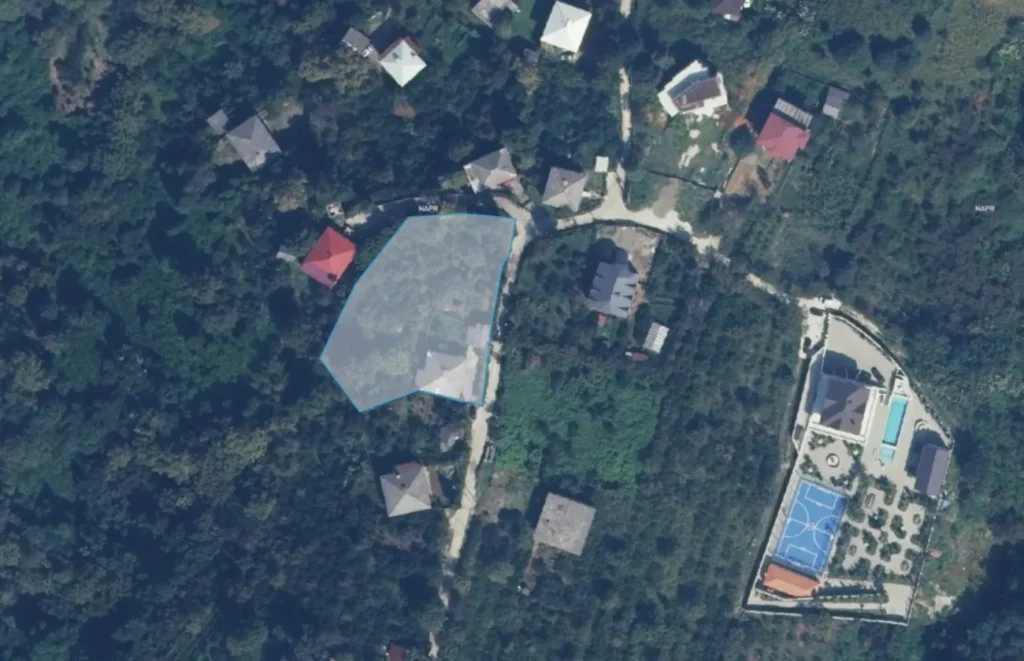
 Georgia, Kvariati
 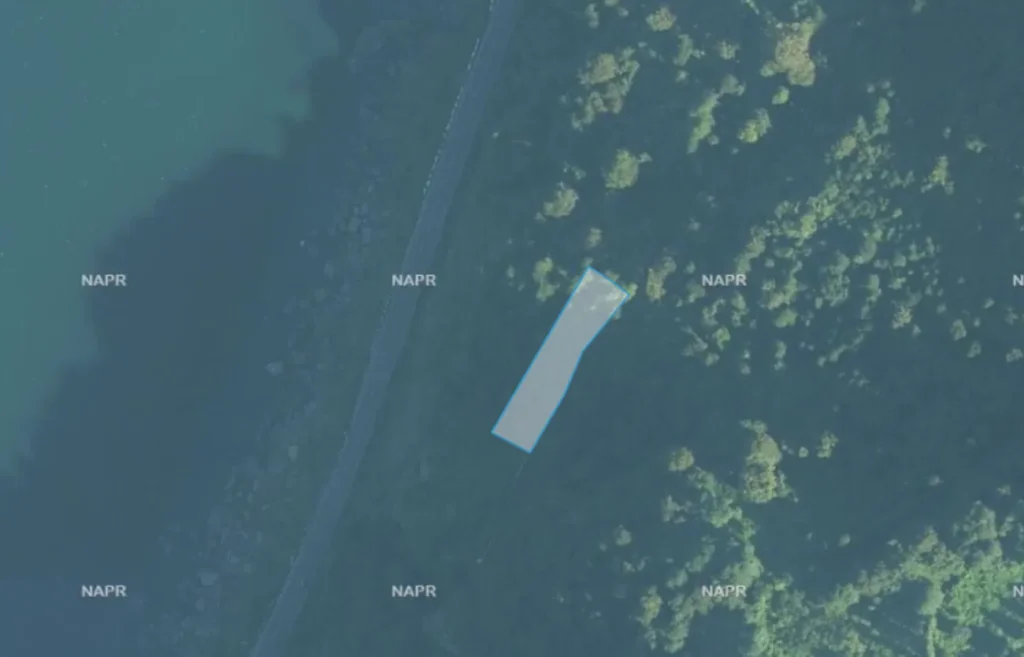 Georgia, Sarpi
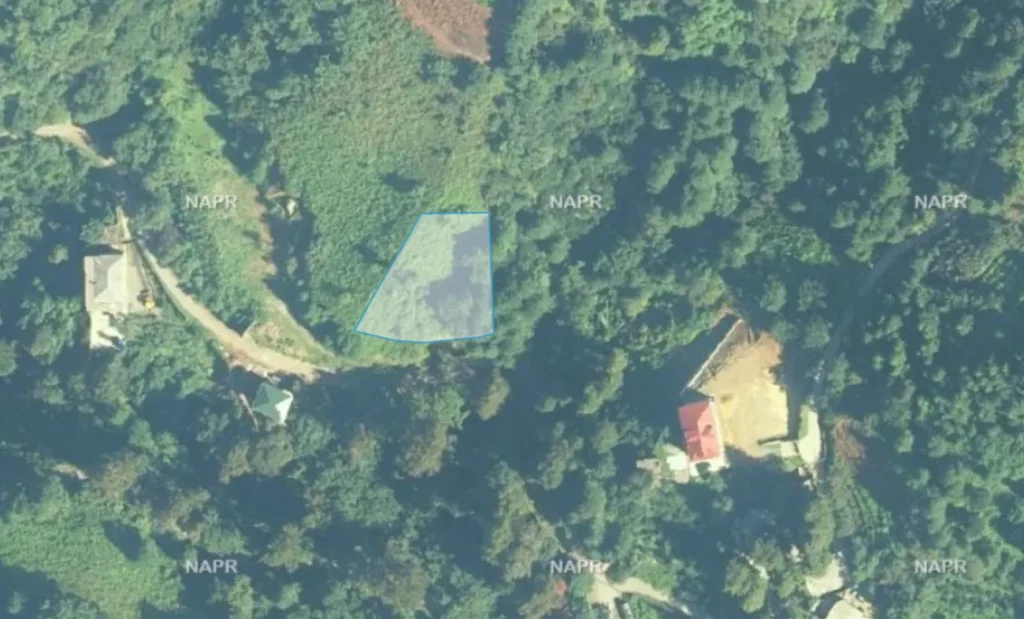 Georgia, Kvariati-Sarpi
Arranging an inheritance from abroad
A foreign heir may settle their inheritance without travelling to Georgia in person, in the circumstances provided for by law. Many stages of the process can be carried out through a representative — a relative, an acquaintance or a solicitor — provided that the power of attorney contains the necessary authorisations and meets the applicable requirements. The power of attorney must be drawn up by a notary in the heir’s country of residence or at a Georgian consulate; it must then, if necessary, be apostilled and translated into Georgian. The signature on the power of attorney must be duly certified; otherwise, a notary in Georgia will not accept it.
The scope of the representative’s powers is crucial. The representative must have the right to submit an application to accept the inheritance, obtain certificates and statements, represent the heir’s interests before a notary and the NAPR, obtain a certificate of inheritance, and register the title to the property. If the heir intends to sell the property, the right to sell should be set out separately and clearly. The principles for drafting such a document are described in the article entitled ‘How to issue a power of attorney to buy or sell housing in Georgia“, but A power of attorney for inheritance matters, in terms of the scope of authority, differs from a power of attorney for a specific transaction: The ‘flat for sale’ template may not be suitable for accepting an inheritance.
Before sending the documents, it is worth clarifying a few points with the Georgian notary: what form of power of attorney they will accept, whether an apostille is required for documents from your country, who will carry out the translation, and whether they accept scans for preliminary checking. This saves you from having to resend documents.
At present, it is not possible to guarantee that the inheritance process can be completed entirely online. Some of NAPR’s services are available online, and certain procedures can be carried out remotely, but key notarial procedures usually require the heir or their representative to be present in person. Therefore, a realistic approach for a foreign national is to ‘manage the process remotely via a representative’, rather than ‘doing everything via the website’.
What to prepare before arranging an inheritance remotely
- choose a representative you trust and agree on a plan of action with them;
- obtain the requirements for the text of the power of attorney from a Georgian notary;
- draw up a power of attorney covering all stages, including registration;
- obtain an apostille or have the document legalised, if necessary;
- collect documents proving family relationships and deaths, together with translations;
- obtain an online NAPR extract using the cadastral code;
- Think about how you will obtain copies of the certificate and the registration extract.

Example: the heir lives in Russia; the flat is in Batumi
Let us suppose that a Russian citizen has inherited a flat from his father, who owned property in Batumi. The heir resides permanently outside Georgia and is unable to travel there to complete the necessary paperwork.
His course of action might look something like this:
- Determine the date of your father’s death, and check whether there is a will and whether there are any other heirs.
- Contact a Georgian notary to find out which law applies, the procedure for handling the case and the list of documents required.
- Obtain a NAPR certificate for the flat.
- Please prepare the death certificate, documents proving kinship and your passport.
- To finalise the wording of a power of attorney for a representative in Georgia.
- Ensure that the inheritance is accepted within the specified time limit.
- Once the documents have been verified by a notary, obtain a certificate of inheritance.
- Register ownership with NAPR.
If the deceased was a foreign national, it may be necessary to complete additional inheritance paperwork in their country of nationality. The specific procedure must be agreed with the notary before submitting the application.
This example illustrates a possible course of action, rather than a standard procedure applicable to all foreign heirs.
Inheritance-related costs and taxes
It is impossible to put a figure on the total cost of settling an inheritance: it comprises several components, each of which depends on the specific case.
Costs involved in settling an inheritance
| Object of expenditure | When it happens | What does the amount depend on? |
|---|---|---|
| Notarial acts | Acceptance of an inheritance, issue of a certificate | Rates set by law, the value and composition of assets |
| Translations of documents | For foreign documents submitted to a notary — depending on their type and the applicable requirements | Volume of documents, language, certification of translation |
| Apostille and legalisation | For foreign official documents, where required by the applicable regulations | Country of issue, international treaties, number of documents |
| Representative services | When applying remotely | Scope of work, complexity of the case |
| NAPR registrations and extracts | Registration of title, inspection of the property | Selected registration period, number of statements |
| Cadastral work | In the event of discrepancies in the data or unregistered land | Area, complexity of land demarcation |
| Legal costs | If the deadline is missed or in the event of a dispute | Nature of the dispute, court fees, legal services |
How much does it cost to register an inheritance for a flat in Georgia?
The cost comprises notarial fees, registration of title, the issue of extracts and additional services. The notarial fee depends on the value of the inherited property and the share for which the certificate is issued. It is regulated by Georgian Government Decree No. 507.
| Consumption | Amount or method of calculation |
|---|---|
| Certificate of entitlement to an inheritance | In accordance with the notarial fee scale, taking into account the value of the estate |
| Registration of the right with NAPR, 4 working days | 150 GEL |
| Registration within 1 working day | 270 GEL |
| Registration on the day of your visit | 350 GEL |
| NAPR certificate online, 1 working day | 13 GEL |
| Urgent online statement | 52 GEL |
| Standard statement, 1 working day | 20 GEL |
| Translations and certification of documents | In terms of volume and document requirements |
| Power of attorney and representative | In terms of scope of authority and services |
| Land registry or legal costs | If necessary |
Example. An heir receives a flat worth 200,000 GEL. When drawing up the certificate of inheritance, the notary’s fee is calculated on the basis of the applicable scale, the value of the inherited share and the composition of the estate. There is an additional charge for registering the title with the NAPR and for the necessary documents. You should therefore ask the notary for the final amount before proceeding with the formalities.
Official sources: Resolution No. 507, NAPR rates
The NAPR’s state tariffs have been published on the agency’s official page on dates and fares. According to the information on this page as of October 2026, the registration of the creation or amendment of a property right costs 150 lari with a processing time of four working days, 270 lari for one working day, and 350 lari on the day the application is submitted. An extract from the register costs 20 lari, or 13 lari if ordered online. Fees are subject to change, so it is worth checking them again before submitting your application.
A separate note on taxation. There is no specific inheritance tax in Georgia: the acquisition of property is treated as part of income tax, and the law provides for exemptions. Article 82 of the Tax Code of Georgia exempts the value of inherited property from income tax for heirs in the first and second categories as defined by tax legislation. This classification does not fully correspond to the orders of succession under the Civil Code: for tax purposes, the first category comprises spouses, children and adopted children, grandchildren, great-grandchildren and their children, parents and adoptive parents; the second category comprises brothers, sisters, nephews and nieces and their children. For the third and fourth categories (grandmothers, grandfathers, uncles and aunts), the exemption applies up to 150,000 lari per tax year. For cousins and persons not related to the deceased, no such exemption applies, and the tax implications must be assessed in advance.
Inheritance tax in Georgia: does it depend on the family relationship?
| Beneficiary of an inheritance | General principle |
|---|---|
| Spouse, children, parents and other persons in tax category I | Inheritance tax exemption on inherited property |
| Brothers, sisters and other persons in Category II | Liberation |
| Grandmothers, grandfathers, uncles and aunts — falling within categories III–IV | Tax allowance of up to 150,000 GEL per tax year |
| Cousins | The general concession for categories I–IV does not apply |
| A friend or another person with whom there is no family relationship | The general concession for categories I–IV does not apply |
The categories are defined by the Tax Code, rather than by the common-law concept of the closeness of kinship. For the third and fourth categories, if the established threshold is exceeded, obligations to declare and pay tax may arise. In the case of cross-border inheritance, the tax legislation of the heir’s country of residence must also be taken into account.
Once the property has been registered, the owner is subject to certain ongoing obligations: the property tax for private individuals depends on the family’s annual income, whilst separate rules apply to land. When selling an inherited property, the tax implications depend on the length of ownership, the type of property, its intended use and the seller’s status. Any capital gain from the sale of a residential flat or house with an adjoining plot of land may be exempt from income tax if the property has been owned for more than two years and the other requirements of the Tax Code are met. An heir in the first tax category may include the testator’s period of ownership in this calculation; for other heirs, the period and tax base must be calculated separately.
Finally, the heir may be required to declare the property received, or the income from its sale, in their country of tax residence. Georgian tax relief does not affect these rules.
Seven mistakes to avoid when settling an inheritance in Georgia
- Wait until the end of the six-month period before consulting a notary. The time limit for accepting an inheritance runs from the date the estate is opened, not from the date the certificate is received.
- It is a mistake to confuse the acceptance of an inheritance with the registration of a flat. These are different procedures with different legal consequences.
- Do not check for other heirs. A will does not always exclude a person’s right to a compulsory share.
- Using a power of attorney without specific authorisation. The representative may not be authorised to submit an application or register a right.
- Do not check the land category. The plot of land attached to a residential property may be classified as agricultural land.
- The absence of an apostille should not be regarded as an error in all cases. The requirements depend on the issuing country and international treaties.
- Ignoring the deceased’s debts. Inheritance may entail liability for the deceased’s transferable obligations.
Before finalising the paperwork, it is advisable to have the documents checked by a notary; if there is an international element or a dispute, they should be checked by a specialist lawyer.
Are you planning to sell an inherited flat and buy another one?
Compare properties in Batumi, Tbilisi and the surrounding areas, taking into account your budget, location and reasons for buying
Get a selection of flats
Disputes, debts and other risks
An inheritance is not just a flat, but everything associated with it. Typical complications include the following:
- several heirs are claiming the same asset and cannot reach an agreement;
- the statement shows a mortgage in favour of the bank;
- the deceased had outstanding debts to creditors or tax liabilities;
- the person listed as the owner in the register is not the person the family believed to be the owner;
- the cadastral records differ from the title deeds;
- the deadline for accepting the inheritance has been missed;
- a dispute has arisen concerning a will or a compulsory share;
- The flat has been made available for use by third parties — tenants or relatives.
Therefore, the heir must investigate not only the physical condition of the property, but also its legal status. A beautiful flat with a sea view may be subject to a mortgage, under seizure, or held in joint ownership with people you were unaware of. Many of the checks described in the article on ‘How to check a property in Georgia before buying“, also apply to an inherited property, although the inheritance process itself differs from a sale and purchase transaction.
What to check before registering an inheritance
- who is listed as the owner in the current NAPR extract;
- whether there is a mortgage, a seizure order, a tax lien or a restriction on disposal;
- whether the area, address and cadastral code match those in the documents;
- Are there any current tenancy agreements or people actually living on the premises?;
- whether there are any outstanding utility bills or tax arrears;
- whether any claims have been made by other heirs or beneficiaries of a compulsory share;
- Is the plot of land under the house registered, and what is its category?
A separate point regarding debts. Accepting an inheritance may entail liability for the deceased’s transferable obligations. Under Article 1484 of the Civil Code Heirs are liable to creditors up to the value of the estate they have accepted, in proportion to their shares; if the deceased’s debts were joint and several, the heirs are jointly and severally liable, and this liability also extends to those entitled to a compulsory share. Article 1485 places the onus on the heir to prove that the debts exceed the value of the estate — unless a notary has drawn up an inventory of the estate. It is therefore advisable, before accepting an inheritance with substantial debts, to verify the creditors’ claims and discuss the preparation of an inventory with a notary.
What to do with property after inheriting it
Once the registration is complete, the heir becomes the full owner and may choose one of the following options: live in the flat themselves, let it out on a long-term or daily basis, sell it, or leave it vacant for the time being. In the latter case, it is worth making arrangements for utility bills, insurance and a trusted person to check on the property from time to time — in coastal areas such as Batumi, it is important to bear in mind the high humidity and the need for ventilation.
If there are several owners, it is best to set out the arrangements between them in writing: who uses the property, who pays the expenses, how the rental income is divided, and under what conditions a sale may take place. A lack of written agreements is a common cause of future disputes.
In the event of a subsequent sale, the buyer or the financing bank may request the full set of documents: a certificate of inheritance, a registration extract, and confirmation that there are no disputes with other heirs. If only a short time has passed since the testator’s death and there were several heirs, be prepared to show that the other heirs have accepted or renounced the inheritance in accordance with the prescribed procedure.
Before selling, you will need a current NAPR extract, confirmation that there are no encumbrances, and, in the case of agricultural land, a buyer who is entitled to own it. If you are letting the property, it is worth checking the tax status of the income and the local council’s requirements for short-term lets.
If, once the inheritance has been finalised, you plan to sell the property and purchase another property in Batumi, Tbilisi or Gonio, you should first assess the legal status, location and condition of your existing property. The Residence will help you navigate the market: find a property that suits your needs.
Conclusion
A foreign national may inherit property in Georgia — an flat, a house, commercial premises and even agricultural land. However, the specific procedure depends on the type of property, the composition of the heirs, the existence of a will and international circumstances: the testator’s nationality, the place where the documents were drawn up, and the heir’s country of residence.
There are three key steps to take. Firstly, check the legal status of the property using the NAPR extract, including the land category and any encumbrances. Secondly, accept the inheritance in good time — within six months of the date it is opened. Thirdly, agree with the notary on the set of documents required, including the requirements for certification and translation, so that you can obtain the certificate and register your title without unnecessary delays.
If the case involves a dispute between heirs, a foreign will, agricultural land or a complex ownership structure, please consult a notary or a solicitor specialising in Georgian inheritance law. A preliminary legal review can help minimise the risk of subsequent costs and disputes.
 Property in Montenegro
 Property in Cyprus
 Real estate in UAE
 Property in Bali
 Property in Thailand
 Property in Spain
 Property in Saudi Arabia
 Property in Turkey
 Property in Zanzibar
 +995 551 50 18 84
 hello@residence-estate.ge
 Georgia, Batumi, Sherif Khimshiashvili str. 1, office 1204



 Get catalogue of TOP-7 objects