
 +995 551 50 18 84



Information valid as of: October 2026. NAPR tariffs, rules governing the ownership of agricultural land and requirements relating to the investment mechanism are subject to change. Before entering into a transaction, it is essential to check the current version of the legislation and the documents relating to the specific plot of land.
‘Set up a Georgian limited liability company and register the land in the company’s name’ — this is the advice foreign buyers hear from sellers, estate agents and in investor chat groups. It sounds convincing and is almost always presented as a one-size-fits-all solution. But it oversimplifies the picture: Purchasing land in Georgia through a company does not override the restrictions imposed by law, but simply changes the questions that need to be checked.
The short answer is as follows. For non-agricultural plots, a foreign national can generally purchase land without setting up a company; a company is only required for specific business purposes. Separate rules apply to agricultural land, and registering a limited liability company does not exempt one from these rules. If the controlling partner of a Georgian company is a foreign national or a foreign legal entity, or if the controlling partner cannot be identified according to the criteria set out in the law, agricultural land is only accessible through a special mechanism linked to an investment plan and a decision by the Georgian Government. And even when it is possible to own a plot of land, this does not mean that you are permitted to build exactly what you have in mind on it.
Below, we explain how the process of a foreigner purchasing land in Georgia through a Georgian limited liability company works, highlighting where such a company is genuinely beneficial and where it merely adds to the costs and risks.
Buying land through a company: the essentials in 30 seconds
| Question | Short answer |
|---|---|
| Can a foreign national buy non-agricultural land? | Generally speaking, yes, you don’t need a company to do this |
| Is it possible for a foreign national to purchase agricultural land through the standard procedure? | No; the law provides for certain exceptions |
| Does registering a Georgian limited liability company solve the problem? | No, in the case of agricultural land, the controlling partner is checked |
| A limited liability company with a foreign majority shareholder | A special mechanism, involving an investment plan and a Government decision, applies to agricultural land |
| Registration of a limited liability company | 200 GEL per working day or 400 GEL on the day of application |
| Registration of land rights | 150 GEL for 4 working days, 270 GEL for 1 working day, 350 GEL on the day of application |
| NAPR electronic statement | 13 GEL per working day or 52 GEL on the day of application |
| Cadastral plan | 7 GEL in 1 working day or 26 GEL on the day of the visit |
| Fee for reviewing an investment plan | 1% investment, minimum 1,000 and maximum 30,000 GEL |
| Guarantee following approval of the investment plan | 2% investment obligation |
NAPR fees are government charges. Legal checks, translation, surveying, banking services, accountancy and design work are charged separately. For a specific transaction, you should check the current fees and the applicable legal framework.
The figures are confirmed by the limited liability company NAPR: 200/400 GEL. Property registration — 150/270/350 GEL, electronic extract — 13/52 GEL, cadastral plan — 7/26 GEL.
Is it possible to buy land through a company?
There is no clear-cut ‘yes’ or ‘no’ here. The answer depends on two things: What is the official purpose of the site? и who is the controlling partner of the acquiring company. It is therefore useful to consider three scenarios.
The first category is a foreign individual. In general, such individuals may purchase non-agricultural land. A foreign individual cannot acquire agricultural land through a standard sale and purchase transaction; the law provides for certain exceptions, in particular for land inherited by a foreigner.
The second is a Georgian legal entity whose controlling shareholder falls within the categories permitted by law. If the shareholder is another legal entity, the structure of the controlling shareholding must be examined further down the chain.
The third type is a Georgian company whose controlling partner is a foreign national or a foreign legal entity, or whose identity cannot be established in accordance with the criteria set out in the law. It is precisely this scenario that is most often implied when people refer to an ‘LLC for a foreigner’. For non-agricultural land, this usually does not pose any particular obstacles. For agricultural land, a special legal mechanism is required; this is discussed in detail in a separate section.
Table 1. Who is permitted to purchase which types of land
| Buyer | Non-agricultural land | Agricultural land | What's important to check |
|---|---|---|---|
| Foreign individual | All in all, it is possible | It is not possible under a standard transaction; there are exceptions, such as inheritance | Land-use designation, special regulations and restrictions applicable to a specific area |
| A Georgian limited liability company whose controlling partner falls within the categories permitted by law | Perhaps | Possibly under the standard regime | Who is the controlling partner, including within the chain of legal entities |
| A Georgian limited liability company with a foreign controlling partner or with a partner whose identity cannot be established by law | Perhaps | Only through a specific mechanism: an investment plan and a Government decision | Identification of the dominant partner, project, obligations |
A practical conclusion can be drawn from the table: The question ‘Is it possible to do this through a company?’ always breaks down into two more specific questions: ‘What type of land is it?’ and ‘Who is the controlling partner in the company under the law?’. As there is no confirmed answer to either of these questions yet, it is too early to discuss the price and the deposit. The general rules for overseas buyers are explained in the article ‘Can a foreigner buy land in Georgia?“, whereas this article focuses specifically on the corporate model.”
Not sure whether a particular plot is suitable for a foreign buyer?
Please send us the cadastral code or describe your requirements — we’ll help you identify which plots are worth considering and which purchase structure best suits your situation.
[Find a plot of land in Georgia]
Agricultural and non-agricultural: what’s the difference?
The official designation of a plot determines who may own it and under what conditions. In Georgia, this is recorded in the Public Registry (National Agency for Public Registry, NAPR) together with the cadastral code. Advertisements, verbal assurances from the seller and even the plot’s appearance do not replace this.
This leads to a practical implication: phrases such as ‘land for a villa’, ‘a plot for a hotel’ or ‘surrounded by built-up areas’ do not, in themselves, guarantee anything. The seller may genuinely consider the plot to be ‘almost urban’, whilst in the land register it is still listed as agricultural land. The opposite situation is also possible: the plot may look like a vegetable garden or a field, but be designated for non-agricultural use.
The land registry must be checked even when there is a house on the plot. In Gonio, Kvariati and other settlements, the mere presence of a registered house does not in itself allow one to draw conclusions about the land’s designated use: this must be confirmed separately using data from the land registry.
It is best to bear the key principle of this section in mind right from the start:
the right to own a plot of land ≠ the designated use of the land ≠ the right to carry out a specific building project.
These are three different questions with three different sources of information.
The first question is whether this particular buyer can become the owner. The answer depends on the land’s designated use, the buyer’s status and the company’s structure.
Secondly, what is the plot’s designated use? The register provides the answer.
Thirdly, can you actually build what you have in mind? The answer is provided by the town planning documentation: the functional zone, development parameters, protected areas, access routes, utilities and, finally, the planning permission. The procedure is explained in more detail in the article on ‘Building permits in Georgia“.
| Question | Where to look for the answer |
|---|---|
| Who owns the plot? | Public Registry / NAPR |
| What is the purpose of the land? | Public Register |
| Is there a mortgage or any restrictions? | Current registration details |
| Where are the boundaries? | Cadastral data + surveying, where required |
| What sort of functional area? | Town planning documentation |
| How many can be built? | Applicable development parameters |
| Is there a legal access route? | Land Registry + documents relating to access/easement |
| Is there water, electricity and a sewage system? | Checking networks and connection conditions |
| Is it possible to carry out this particular project? | Comprehensive legal, town-planning and technical review |
Here are a few examples to illustrate how this works. A plot of land in the Gonio area zoned for non-agricultural use can be purchased and registered, but if it is situated in a zone where the maximum building height or density does not permit the construction of the planned mini-hotel, then from a project perspective this is an unfavourable purchase. In Kvariati, a plot may have the appropriate land use designation but lack a legally registered access road, in which case the design work and connecting utilities could become significantly more complicated. In Tbilisi, a plot may be legally sound and available to a foreigner, but it may fall within a zone subject to height restrictions or within the conservation area of a listed monument. In all three cases, ownership rights exist, but the project remains difficult to realise.
Sometimes a buyer hopes to change the land’s designated use: to buy it more cheaply as agricultural land and then reclassify it into another category. However, there is another important point to consider: a change of land use is not always possible, is not guaranteed in advance, and does not in itself resolve issues relating to the buyer’s foreign status or building regulations. Buying land on the assumption that ‘we’ll change it later’ is a financially risky strategy.
Plots of land that could be considered for purchase
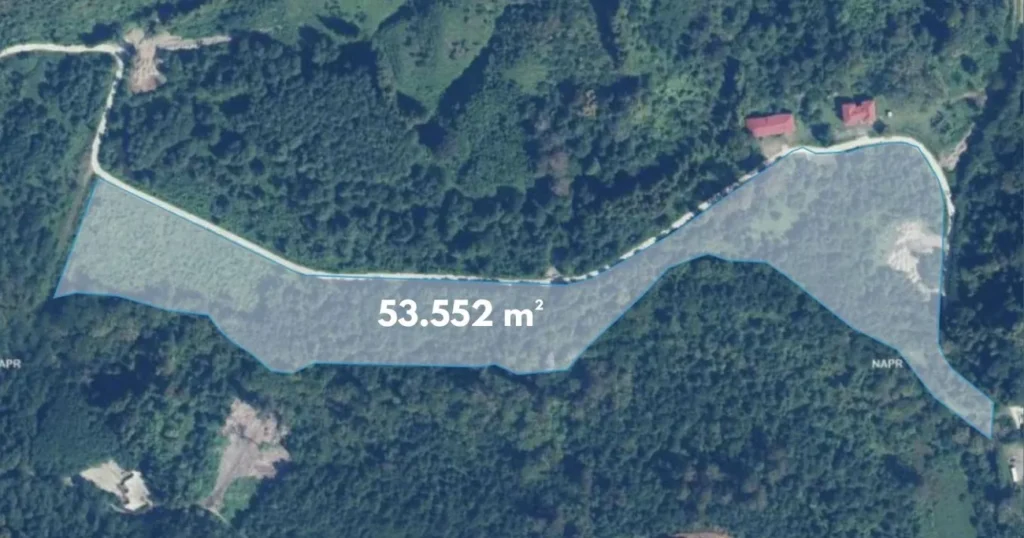
 Вторичная недвижимость

 52552м²
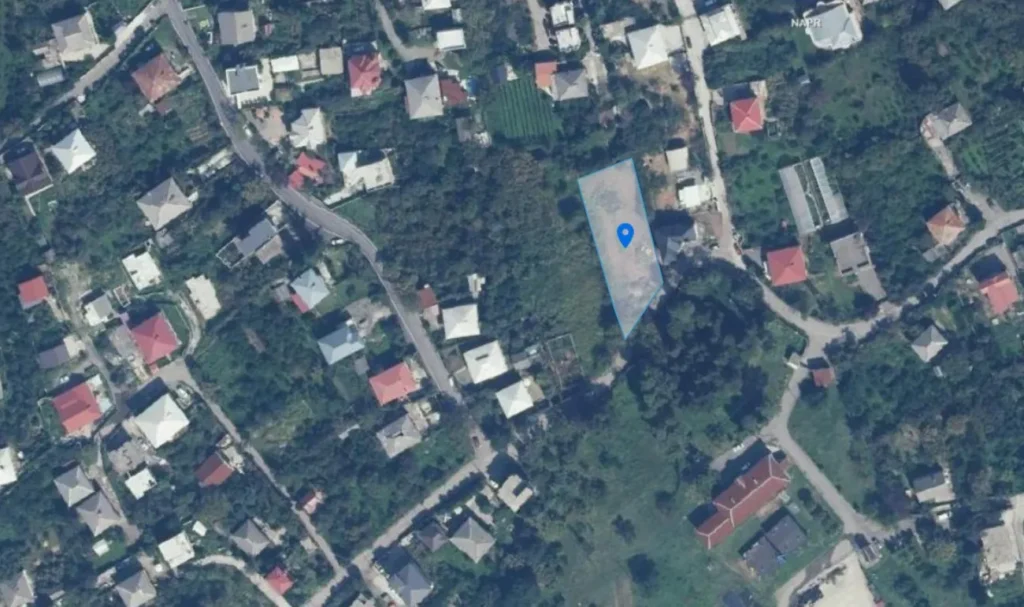

 Georgia, Akhalsopeli
 Georgia, Kvariati-Sarpi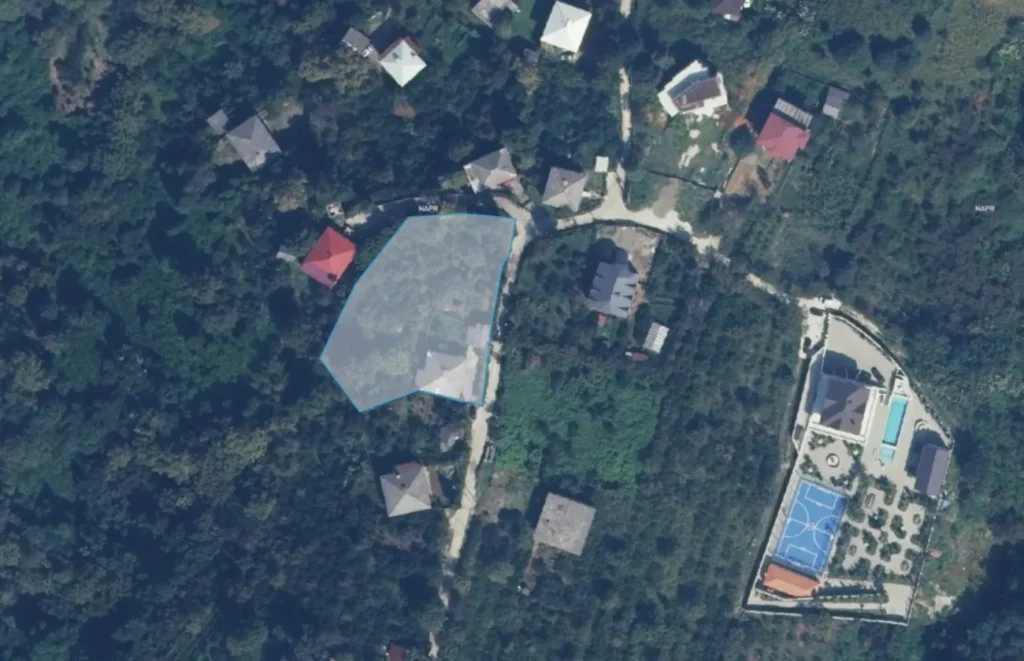

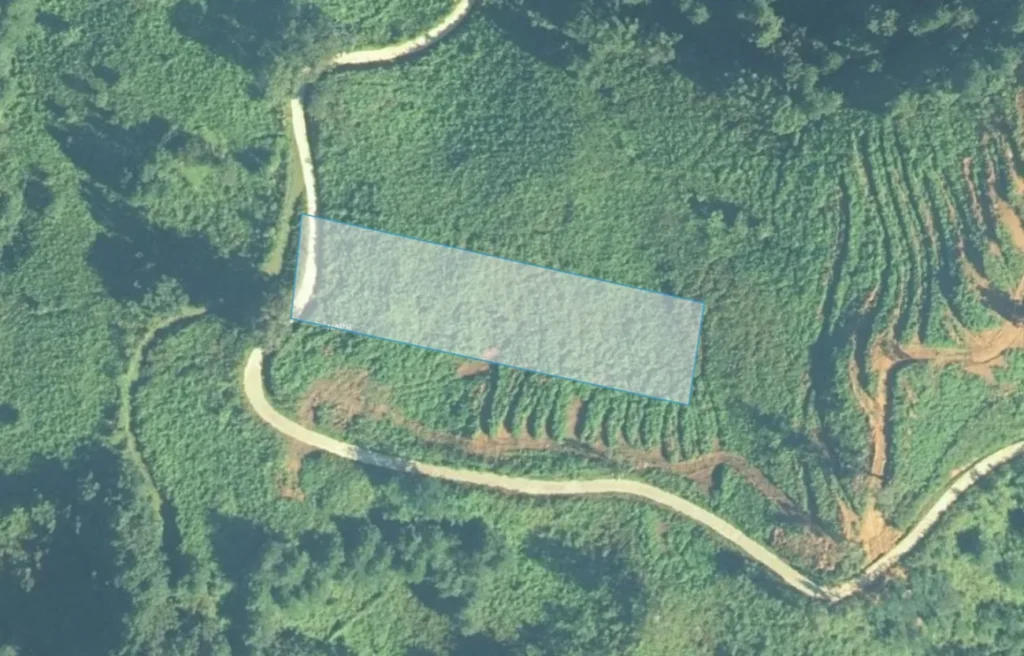 Georgia, Kvariati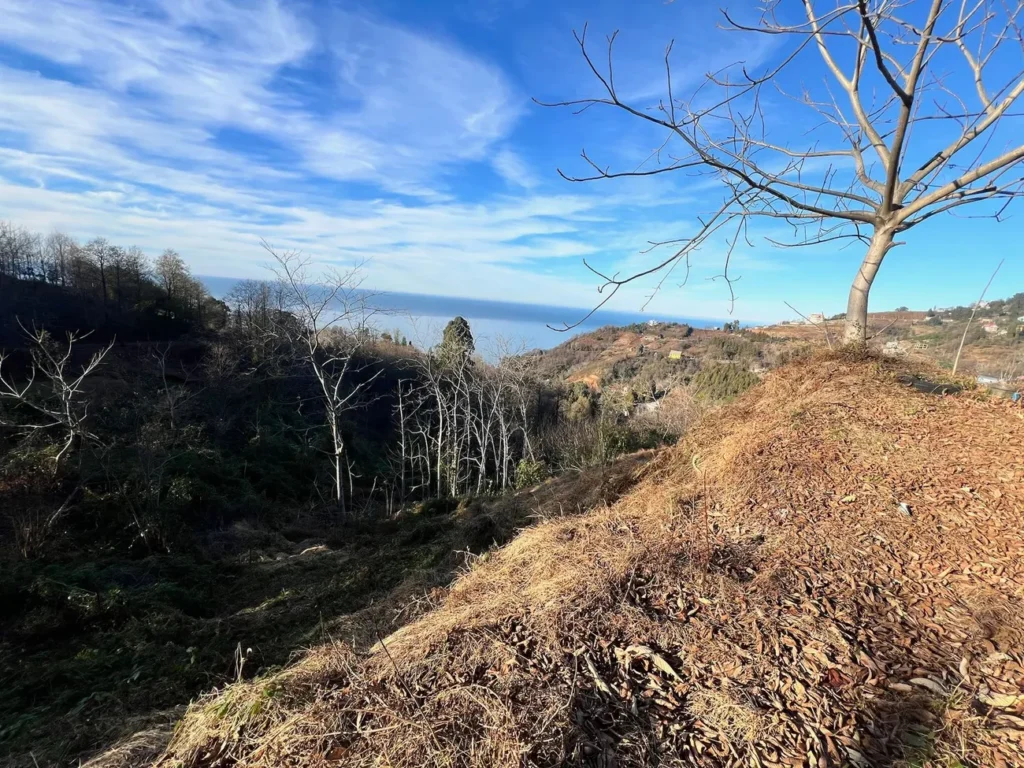
Do you need a company? A simple guide
Step 1. Is the land non-agricultural?
→ Yes → A foreign individual may, in general, purchase it directly.
→ No, agricultural → proceed to the special regime check.
Step 2. Is the purchase related to a business, a property development or a group of investors?
→ No → An LLC often offers no practical advantage.
→ Yes → Compare purchasing as a private individual versus through a company, taking into account tax, accounting and exiting the project.
Step 3. Is the buyer a limited liability company and does this concern agricultural land?
→ Identify the dominant partner under the Organic Law.
→ If it is foreign or cannot be determined → a special mechanism involving an investment plan and a Government decision is examined.
How does purchasing through an LLC work?
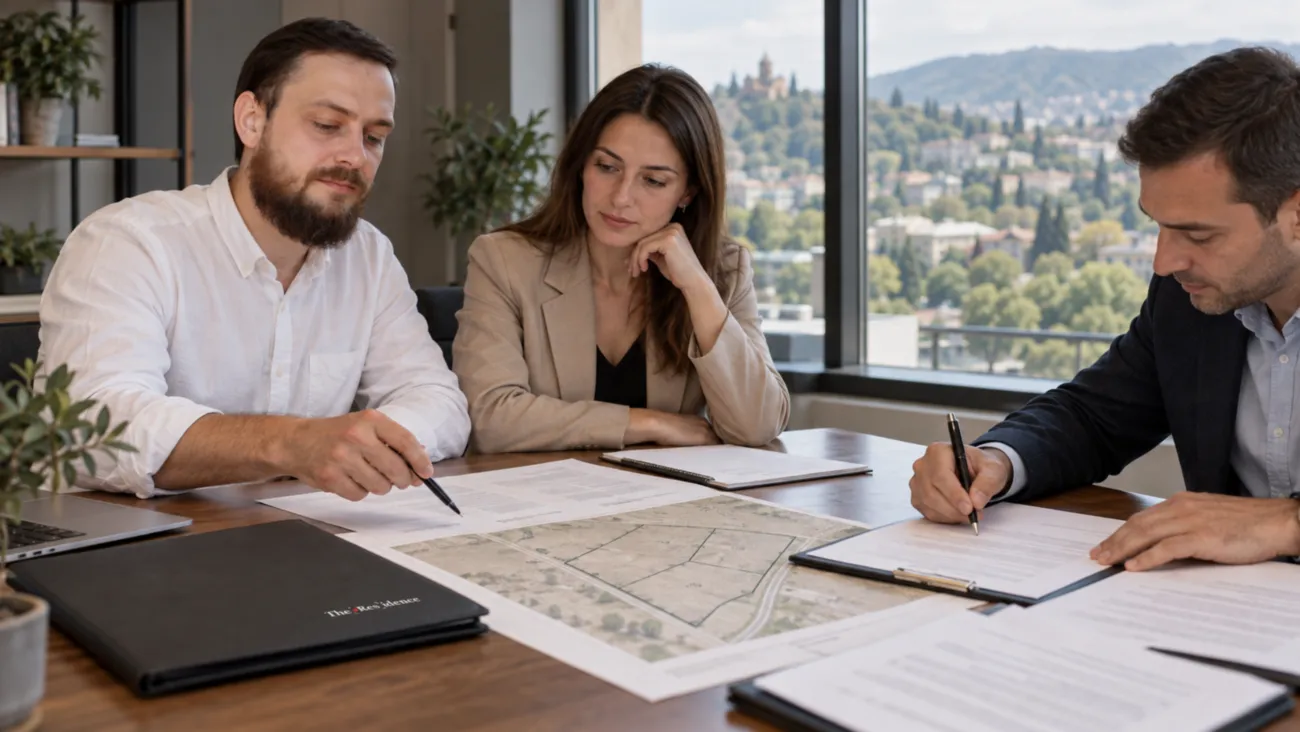
The registration of a limited liability company (LLC) and the company’s right to acquire a specific plot of land are separate legal matters. The type of land a company is entitled to acquire is determined by law, not by the mere fact of its registration. Under current NAPR fees, the registration of a business entity takes one working day at a cost of 200 GEL, or can be completed on the day the application is submitted for 400 GEL.
A foreign national is permitted to hold a stake in a Georgian company. This in itself raises no issues: foreign shareholders in Georgian limited liability companies are common practice. Issues arise when the company acquires agricultural land, at which point the concept of a controlling partner comes to the fore.
Who is the dominant partner?
For the purposes of the Agricultural Land Act, a controlling partner is determined not solely on the basis of actual influence. The Act takes into account the established criterion of shareholding (in particular, a shareholding exceeding 50%) or a majority of partners in the cases provided for, and at the same time the practical ability to exert a decisive influence on the company’s decisions regarding agricultural land. This is not simply a choice between ‘a shareholding or de facto control’, but a combination of factors that determine the outcome.
This gives rise to a number of practical implications.
The structure must be assessed on the basis of the precise wording of the definition, rather than on a general perception of ‘who is in charge’ within the company. Where there are several participants, it is important to establish exactly who meets all the elements of the definition. If it is not possible to identify a dominant partner according to the criteria set out in the law, the company also falls under the special mechanism of the investment plan.
If a Georgian company has another legal entity as a shareholder, the mere fact that it is registered in Georgia does not conclude the due diligence process. The law requires the controlling shareholder of that legal entity to be identified and, where necessary, the analysis to be continued at each subsequent level of the ownership structure.
A Georgian nominee shareholder who ‘simply holds a stake’ should not be presented as a safe, one-size-fits-all solution. Apart from legal uncertainty, such an arrangement creates specific risks: disputes over the stake, refusal to sign resolutions, and the death or bankruptcy of the nominee.
The exact wording is set out in the text Organic Law of Georgia on Agricultural Land Ownership on the Legislative Herald of Georgia website. These should be checked against the current version as it applies to the specific company.
Table 2. The impact of purchasing structure
| Purchase structure | The main legal issue | Practical conclusion |
|---|---|---|
| Foreign individual | Is it possible to own land designated for this purpose? | Suitable for non-agricultural land; agricultural land is not available through standard transactions |
| A limited liability company with a foreign controlling partner or with a partner whose identity cannot be established by law | Is a special mechanism applicable to agricultural land? | An investment plan and a government decision are required; approval is not guaranteed |
| a limited liability company whose controlling partner falls within the categories permitted by law | Who is the controlling partner as defined by law, including within the chain of legal entities? | We need an analysis of the structure of participation across the entire chain |
| Non-agricultural land | Land use designation according to the register, special territorial regimes | A company is not a legal requirement; it is justified by a business objective, not a legal necessity |
The main point that emerges from this table is: The buyer’s profile is determined after the land has been inspected, not before. If you set up a company first and then look for a plot of land to go with it, you may end up with a corporate structure that is unsuitable for the chosen transaction. No guarantees can be given here: each structure is assessed on a case-by-case basis for the specific plot of land and the specific parties involved.
Agricultural land and the investment plan
This is the central legal issue of the whole topic. Agricultural land in Georgia is governed by a separate organic law, and the regime for foreign capital is structured in a specific way within it. If the controlling partner of a private-law legal entity registered in Georgia is a foreign national or a legal entity registered abroad, or if the controlling partner cannot be determined according to the criteria set out in the law, the acquisition of agricultural land is only possible through a specific mechanism provided for by law. This involves an investment plan and a decision by the Georgian Government. The original text of the law is available on the website Matsne, and before entering into any transaction, one should read the current version in full, rather than relying on second-hand accounts.
The registration of a limited liability company does not, in itself, make agricultural land an asset freely accessible to foreign investors. It is first necessary to check the designated use of the plot, the company’s structure and the applicable legal framework.
What is an investment plan?
An investment plan is not just a formal piece of paper for a file, but a document in which a company sets out a project on the ground. The procedure for reviewing it is determined by Resolution of the Government of Georgia, and the decision is taken by the Government. The mechanism has several important features.
It is designed for a genuine investment project, rather than the mere formal acquisition of a plot of land. The rules require disclosure of the amount and source of investment, the timeframe, employment figures, infrastructure and other project parameters. They also set out a criterion for a significant increase in the capabilities, capacity and/or value of an existing asset: such an increase is considered significant if the expenditure associated with the investment plan amounts to at least four times the value of the plot of land being acquired. Therefore, the purchase of a small private plot ‘for personal use’ does not in itself constitute an investment project, and it is not worth attempting to register it as such.
The scheme also has specific financial requirements. A service fee is charged for the review of the plan, amounting to 1% of the declared investment amount, subject to a minimum of 1,000 and a maximum of 30,000 GEL. Following approval, an unconditional and irrevocable guarantee must be provided in the amount of 2% of the investment commitment; this must be issued by a banking institution or an insurance organisation licensed in Georgia. These costs must be taken into account before selecting the transaction structure, and all figures must be checked against the current version of the regulation before submission.
Approval is not guaranteed and cannot be promised: the Government has the right either to approve the plan or to reject it. Any intermediary who claims that ‘the Government will definitely approve it’ either does not understand the procedure or understands it but is keeping quiet.
The obligations set out in the plan must be actually fulfilled. Failure to comply may result in a fine, the granting of an extension to meet the deadline, the transfer of the guarantee sum to the state budget and, in the event of confirmed non-compliance, the registration of an obligation to dispose of agricultural land. Therefore, the plan must be drawn up in such a way that it can be implemented, rather than simply to look good when submitted.
It is risky to draw up a plan based on a deposit that has already been paid, because you will find yourself at the mercy of the seller. For a foreign investor wishing to work specifically with agricultural land, a way forward does exist, but it differs fundamentally from the usual ‘walk in, sign on the dotted line’ purchase: it involves obtaining government approval for the project, in which the plot of land is only part of the equation.
Have you found some agricultural land but aren’t sure whether the scheme via a company is right for you?
Do not pay a deposit simply on the basis of the seller’s promise that ‘we’ll sort it out through the limited liability company’. You must first check the designated use of the plot, the company’s structure and whether the special mechanism applies.
[Check the purchase scenario]
When a company is really needed
An LLC should not be presented as a mandatory requirement for any land purchase in Georgia. Setting up a company is justified when there is a genuine business purpose behind it, rather than a desire to ‘play it safe’.
A company usually makes sense when:
- the purchase is linked to a genuine business: the land will form part of the business’s day-to-day operations;
- a hotel, guest house or other tourism project is being planned;
- this refers to property development, where a plot of land is intended for the construction and sale of properties;
- Several investors wish to own the asset jointly, and transparent shareholdings are required;
- the asset must be separated from operating activities;
- the project will need to attract an additional investor;
- it is envisaged that the shares will be sold rather than the plot itself; if the company owns agricultural land, any change in the composition of the shareholders and the controlling partner must be assessed separately in accordance with the Organic Law;
- The project will involve a significant flow of expenditure and income, which is more convenient to manage through a legal entity.
There is often no need to set up a company if a foreign national is purchasing a standard non-agricultural plot of land for a private house, if there is no operational business and none is planned, or if the sole purpose of the limited liability company is to attempt to circumvent restrictions. In the latter case, the company does not solve the problem but merely shifts it to the level of the corporate structure, where the issues only multiply.
Table 3. Individual or company
| Criterion | Purchase by an individual | Purchasing through a company |
|---|---|---|
| Simplicity | Put simply: fewer participants and less paperwork | More complicated: registration, articles of association and governing bodies are required |
| Administration | Minimum | Ongoing: reporting, members’ decisions, representation |
| Accounts Department | Separate accounting is not required | Accounting is mandatory; the function is either carried out in-house or outsourced to an external specialist |
| Business applications | Limited | Suitable for operational activities |
| Joint investors | Joint ownership, less flexible | Shares in the company: it is easier to add and remove members |
| For sale | Land for sale | It is possible to sell a plot of land or shares in a company; for a company owning agricultural land, a change in shareholders requires a separate audit |
| Agricultural land | Not available under a standard transaction | Only under a special mechanism where the controlling partner is foreign or unidentified |
| Fixed costs | Minimum | Regular: accounts, bank, maintenance |
The conclusion to be drawn from the table is this: the company comes out on top where there is a business, several parties involved or a scenario involving the sale of shares, and comes off worse where the task is straightforward. For a private house on a non-agricultural plot, an LLC tends to create more obligations than it offers benefits. It cannot be said that a company is universally more advantageous than a sole trader: it depends on the project, the tax profile and the exit strategy.
What documents will you need?
The exact set of documents depends on the structure of the transaction, but to make a purchase via a Georgian limited liability company, you usually need to prepare documents in four categories:
| From whom | What you will need to check or prepare |
|---|---|
| The purchasing company | a current extract from the Register of Businesses, the articles of association/incorporation documents, and the powers of the director or other authorised signatory |
| Foreign participants | documents enabling the identification of participants; for foreign corporate participants — documents detailing the ownership structure |
| Salesperson | proof of identity or corporate documents, as well as confirmation of the representative’s authority, if a representative is acting on behalf of the organisation |
| Plot | A current extract from the Public Registry, including the cadastral code and plan, details of the property’s designated use, registered rights and restrictions |
| In the case of representation | a power of attorney and, if it was drawn up outside Georgia, verification of the requirements for its legalisation/apostille and translation |
| For the special regime for agricultural land | documents relating to the ownership structure and investment plan in accordance with the applicable procedure |
You should not simply gather documents based on a generic checklist found online and pay the seller straight away. First, the specific plot of land and the buyer’s legal status must be determined, after which a set of documents for that particular transaction is compiled.
How the purchase works
A basic check of the plot – owner, land registry, encumbrances and town planning parameters – is required regardless of the structure of the purchase. However, the legal procedure for the acquisition varies. For example, when a Georgian company with a foreign majority shareholder purchases agricultural land, a separate investment plan mechanism with its own stages applies. The general procedure is outlined below; at step 6, it may branch off.
- Determine the purpose of the purchase. A private house, a villa to let, a hotel, a property development, a long-term investment — everything else depends on this.
- Obtain a cadastral code. This is the plot identifier in the Public Register; it is used to retrieve all relevant information.
- Determine the land use. Whether it is agricultural or not, and which specific category is listed in the register.
- Check the owner. Is the seller the same person as the registered owner, and do they have the right to dispose of the plot?
- Check for restrictions and encumbrances. Mortgages, attachment, prohibition on disposal, third-party rights.
- Determine the appropriate buyer structure and procedure. An individual, a company or a company with a foreign shareholder — depending on the land’s designated use and the objectives; for agricultural land where there is a foreign or unidentified controlling partner, an investment plan must also be submitted.
- Check the parameters for a potential construction project. Functional zone, permitted height and density, access, utilities.
- To approve the contract. Terms of payment, liability of the parties, the seller’s warranties, and the handover procedure.
- Perform the calculation. Agree on the method of payment specified in the contract and provide documentary evidence of the payment. A bank transfer is convenient as it records the amount, the payer, the payee and the reason for payment.
- Register the transfer of ownership. The law requires not only a written agreement, but also the registration of the purchaser’s title in the register. NAPR offers several timeframes for registering the title to the property: 4 working days — 150 GEL, 1 working day – 270 GEL, on the day the application is submitted – 350 GEL. Once registration is complete, you must obtain an up-to-date extract and check that the buyer is listed as the registered owner.
How can you tell that you’ve completed a stage?
| Stage | What the buyer needs to have |
|---|---|
| Site inspection | cadastral code and a current extract |
| Verification of the appointment | Confirmed as agricultural/non-agricultural use |
| Verification of entitlement | the owner and their powers have been established |
| Due diligence | a clear understanding of mortgages, seizures, restrictions and the rights of third parties |
| Border checks | The cadastral and actual boundaries have been compared |
| Construction inspection | the area, development parameters and restrictions are clear |
| Choosing a structure | Decided: an individual or a limited liability company |
| Contract | the price, payment, liability and refund terms have been agreed |
| Payment | Documents confirming the calculation have been retained |
| Registration | A new extract from the Public Registry has been received, showing the purchaser as the owner |
It is worth emphasising in particular that: A contract of sale and the registration of title are not the same thing. A signed contract does not yet make you the owner in the eyes of the land registry.
7 red flags to watch out for even at the site selection stage
Do not proceed to the deposit stage until you have received an explanation, if:
- the seller won’t provide the cadastral code;
- The land’s designated use is referred to solely as ‘for construction’;
- they promise to ‘reclassify the land from agricultural to non-agricultural use after purchase’;
- The access road runs across someone else’s land, but no right of way has been registered;
- the area on site differs significantly from the cadastral area;
- promise a specific number of storeys without any town planning documents;
- Foreigners are advised to ‘simply set up a limited liability company’ or to appoint a local nominee shareholder without a written legal analysis.
What to check before receiving an advance payment
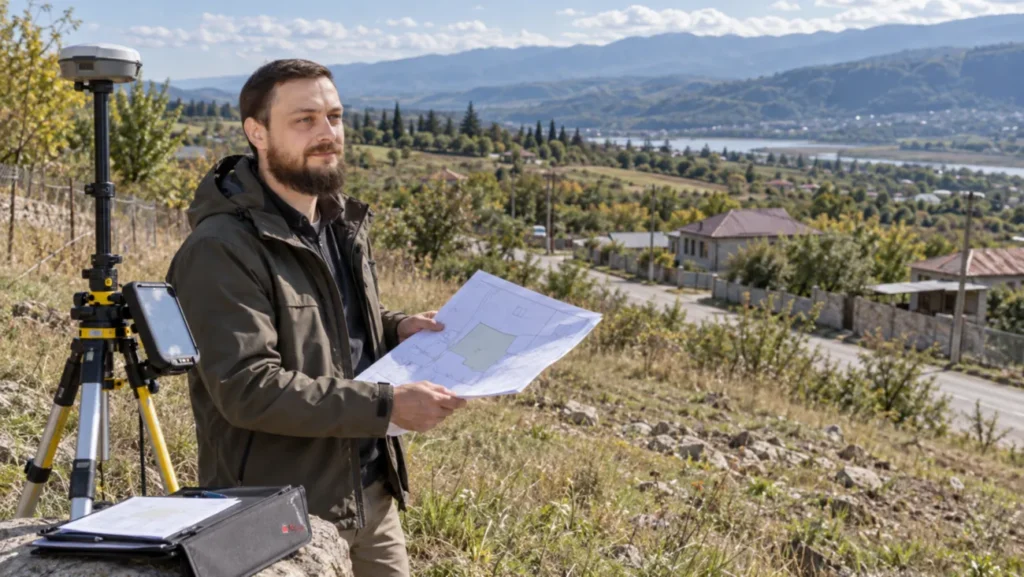
In practice, a seller or estate agent may suggest paying a deposit even before a full inspection of the plot has been completed. For the buyer, this increases the risk: the money is tied up, their negotiating position is weaker, and the due diligence may reveal problems. It is therefore advisable to agree the terms for the return of the deposit and the outcome of the due diligence before making the payment.
What to look for in an extract from the Public Register
It is not enough simply to obtain a statement — you need to check exactly what it says.
Before making a deposit, please compare at least the following:
- cadastral code;
- the registered owner;
- plot area;
- land use;
- registered rights and restrictions;
- mortgages and other encumbrances;
- information relating to restrictions on the disposal of the plot.
The cadastral details must then be cross-checked against the actual plot. The extract confirms the registered details, but does not in itself answer questions regarding the soil, the actual access route, the capacity of the utilities or the economic viability of the construction project.
A NAPR electronic statement currently costs 13 GEL for same-day delivery or 52 GEL on the day of the request.
The basic principles of property inspection are outlined in the article ‘How to check a property in Georgia before buying‘… For a plot of land, the list is more extensive, as urban planning and engineering issues are added to the legal ones.’
Table 4. Land plot inspection checklist
| Block | What to check | Why it's important |
|---|---|---|
| Law | Owner, cadastral code, area | A transaction is concluded by the person authorised to act on behalf of the owner |
| Borders | Actual and registered boundaries | Compare the registered boundaries with the actual ones and check for any potential overlap with neighbouring plots. If in doubt, arrange for a survey to be carried out before purchasing: the area stated in the advert or the visible boundaries of the fence are no substitute for the cadastral data. |
| Purpose | Land use, agricultural classification (if applicable) | Determines who is eligible to be a buyer |
| Encumbrances | Mortgages, tax liens/mortgages, seizures, prohibitions on disposal and other registered restrictions | They may block the registration or transfer it to a new owner |
| Third-party rights | Easements, rights of way and access, disputes | Restrictions on use and development |
| Buildings | Existing buildings and their design | The property may not be registered or may be used for a different purpose |
| Access | Official entrance, right of way | The lack of formalised access may complicate, and in some cases render impossible, the approval of the project |
| Urban planning parameters | Functional zone, permissible height, density, indents | They show that it really is possible to build |
| Protected areas | Coastline, power lines, protection zones | They are reducing the area of development or ruling it out |
| Communications | Water, electricity, sewerage | The cost of connection may affect the project’s financial viability |
| Natural conditions | Topography, drainage and geological risks, where applicable | Factors affecting the cost of the foundations and safety |
This table illustrates three levels of risk: legal (whether ownership is permitted), planning (whether construction is permitted) and physical (whether it can be done at a reasonable cost). A plot of land with a clear title may turn out to be a poor investment if the buyer is unable to carry out the desired project on it. For example, the paperwork is in order, but the only way to access the building is via a neighbour’s road, for which no rights have been registered.
Consider the utilities separately. On hilly plots near Batumi and in the vicinity of Gonio, connecting water and electricity supplies, as well as organising drainage, may prove to be a significant expense. The terrain affects the foundations, retaining walls and drainage.
Before paying a deposit, an investor must receive answers to at least three questions: can I own this land, what am I permitted to do with the plot, and is it possible to carry out my specific project?
Information on registered rights and restrictions should be checked against the Public Registry and a current extract NAPR, rather than relying on the seller’s explanations. For the third question, it is important to consult the town planning documentation and check the conditions for the future planning permission.
Would you rather not have to sort out land status, the land registry and plot restrictions yourself? The Residence can find a property or plot of land in Georgia to suit your requirements and budget. Take a short assessment
How much does it cost to buy land through a company?
The price of the plot is only the first part of the budget. The minimum official costs can be broken down into company registration, obtaining the necessary documents for the plot, and registering ownership.
| Consumption | Official rate |
|---|---|
| Registration of a limited liability company in 1 working day | 200 GEL |
| Registration of a limited liability company on the day of application | 400 GEL |
| NAPR electronic statement within 1 working day | 13 GEL |
| NAPR electronic statement issued on the day of the request | 52 GEL |
| Cadastral plan within 1 working day | 7 GEL |
| A cadastral plan on the day of application | 26 GEL |
| Property registration within 4 working days | 150 GEL |
| Property registration in 1 working day | 270 GEL |
| Property registration on the day of application | 350 GEL |
Thus, the state registration of a limited liability company and the ownership rights themselves cost relatively little. However, This is not the full budget for the transaction. Separately, the following may be required: a legal due diligence review, the translation of foreign documents, a power of attorney, surveying, boundary checks, an urban planning analysis, bank charges and accounting support for the company.
For agricultural land with a foreign or unidentified controlling partner, the budget is fundamentally different: in addition to the usual expenses, there are requirements relating to a special investment mechanism.
NAPR’s official tariffs confirm these figures.
Company expenses, taxes and administration
The costs of purchasing land through a company are generally recognised at the time of the transaction. However, in the corporate model, a significant proportion of the costs are incurred after the purchase. The cost of registering a limited liability company is not the main expense. It is more important to understand the company’s future obligations.
One-off expenses usually include:
- company formation and registration procedures;
- a legal review of the plot of land and the structure of the transaction;
- the translation and legalisation of documents, if the participants are from abroad;
- notary or agency fees, if someone signs documents under a power of attorney;
- surveying and boundary demarcation;
- urban planning review and preliminary design work;
- costs of registering the title;
- For agricultural land where the partner is foreign or the controlling partner is unidentified: a service fee and a guarantee in accordance with the investment plan.
Recurring costs arise after the transaction:
- accounting support: the company is required to maintain accounts and comply with the relevant reporting requirements; this function is either organised in-house or outsourced to an external specialist;
- bank account management;
- administrative procedures and decisions taken by participants;
- corporate tax and tax relating to the land, to the extent that they apply;
- Costs associated with the sale: both of the plot itself and of the shares.
A separate issue is the owner receiving money from the company. This must have a proper legal and tax basis. The distribution of profits in the form of dividends is governed by the Tax Code and may give rise to tax liabilities for both the company and the recipient upon payment. The specific outcome depends on the recipient’s status and the structure involved; therefore, no rates are given here: before proceeding with the transaction, these should be checked against current official sources or with a tax adviser.
A rule of thumb: before setting up a company, draw up a three-year budget for its running costs and compare it with the actual benefits the structure will bring. If the benefits cannot be quantified or do not relate to a specific legal requirement, you probably do not need the company.
The main mistakes made by buyers
The same types of risks regularly arise in land transactions. Here are some typical mistakes that can lead to financial losses.
- To regard any Georgian limited liability company as a solution to the issue of agricultural land. The company does not waive the special regime in cases where the controlling partner is foreign or unidentified.
- Do not challenge the dominant partner. The formal shareholding and the designation ‘Georgian company’ say nothing about who is in control under the law, particularly if there are other legal entities in the chain.
- Rely on what the sales assistant says rather than the price list. Purpose, encumbrances and boundaries are confirmed by documents, not by a confident tone.
- Buying land with the intention of ‘changing its designated use later’. This change is not guaranteed and does not resolve any other limitations.
- Do not confuse non-agricultural use with the possibility of building. These are different questions with different sources of information.
- Pay a deposit before the inspection. Once you’ve paid the deposit, you’re at the seller’s mercy.
- Ignore the main entrance. The lack of legally formalised access may complicate the approval of the project or, in some cases, render it impossible.
- Use a nominee participant without a legal assessment. Such an arrangement creates corporate and personal risks for all parties.
- Do not take into account accounting and corporate expenses. The company outlasts the transaction itself.
A design is particularly risky if it is justified by the argument that ‘that’s how all foreigners do it’, but cannot be substantiated by legislation or documentation relating to the specific plot of land.
Practical scenarios
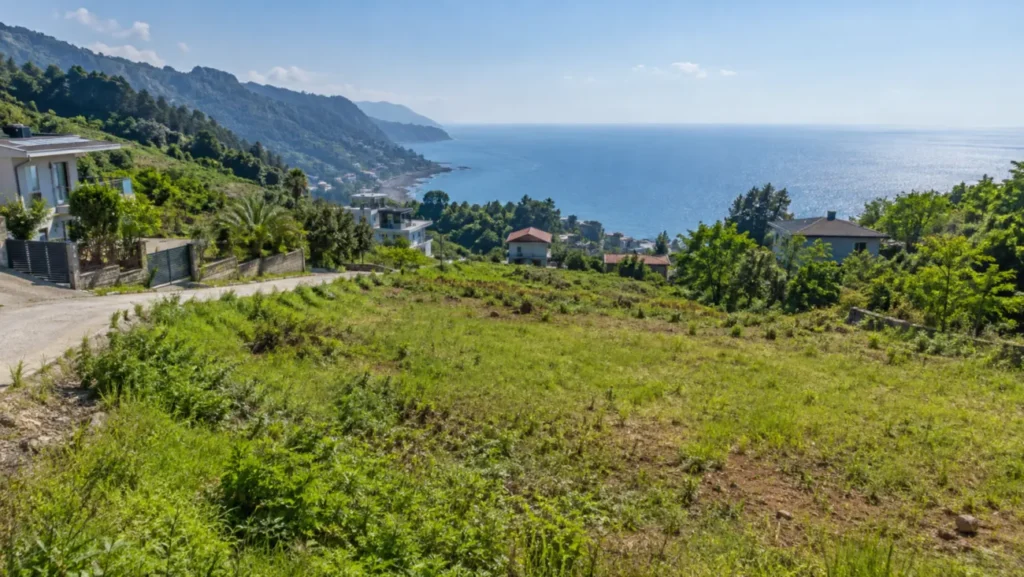
Below are four typical scenarios. These are not individual legal recommendations, but rather serve to illustrate the logic of the article.
A foreigner is buying a plot of land for a detached house
If the plot is not agricultural and there are no business objectives, a company is most likely unnecessary. Buying as a private individual is simpler and cheaper to manage. The main issues do not lie in the corporate sphere: designated use as per the register, encumbrances, access, and development parameters. A plot in Kvariati may look ideal, but it may not have a legally registered access road, in which case the problem lies not with the buyer’s status, but with access.
Two investors want to build a small hotel
The company structure here may make sense: two partners, a shared asset, future operational activities, and the option to issue shares. However, the structure itself does not answer the question of whether it is possible to build a hotel specifically. The functional zone, permissible density, access routes and utility capacity are all assessed separately. Investors should agree on rights and exit strategies in advance: a shareholders’ agreement is just as essential as a sale and purchase agreement.
A foreign company is considering agricultural land for a tourism project
A specific mechanism needs to be analysed: the investment plan, the Government’s decision and the ownership structure. The first step is not to search for a plot or pay a deposit, but to carry out a legal assessment of whether the project is suitable for this mechanism, taking into account, amongst other things, the ratio of costs to the value of the plot, the fee and the guarantee. The applicability of the mechanism depends on the circumstances of the project, and no outcome can be guaranteed.
The buyer is being offered agricultural land through a limited liability company with a local partner
This is one of those situations that requires a particularly thorough examination of the ownership structure. The presence of a local party does not, in itself, answer the question of who is the controlling partner as defined by law. It is necessary to check who meets all the elements of the definition, whether there are any other legal entities in the chain, and what is actually set out in the articles of association and the memorandum of association. The specific transaction is then assessed, along with the applicability of the law to it. If there is no legal basis for the arrangement, and the only justification is the phrase ‘that’s how it’s done’, this is a red flag. For such a structure, you will need to consult a Georgian lawyer specialising in property and corporate law.
Conclusion: first the plot, then the structure
The procedure for purchasing land in Georgia is always the same. First, the intended use of the plot is determined. Next, it is established whether the specific buyer is entitled to own it. After that, the structure of the transaction is chosen. A separate step involves checking whether construction is permitted.
A Georgian limited liability company is not a one-size-fits-all solution for purchasing land. For non-agricultural plots, a company is not always necessary and its use must be justified by specific business objectives. As for agricultural land, it does not remove restrictions: where there is a foreign controlling partner or a partner whose identity cannot be established by law, a special mechanism is required, and the outcome cannot be guaranteed in advance. This is the market segment subject to the most rigorous scrutiny, and it is risky to cut corners on legal due diligence here.
From a risk management perspective, it is sensible to transfer the funds and the deposit after due diligence has been carried out: once you have an extract from the land register, a clear picture of any encumbrances, the access to the property and the development parameters, and the buyer’s legal structure has been confirmed as compliant with the law. If you are choosing between an individual and a company, bear in mind: First, the site and the legal framework for ownership are assessed; only then is a decision made regarding the company — not the other way round.
 Property in Montenegro
 Property in Cyprus
 Real estate in UAE
 Property in Bali
 Property in Thailand
 Property in Spain
 Property in Saudi Arabia
 Property in Turkey
 Property in Zanzibar
 +995 551 50 18 84
 hello@residence-estate.ge
 Georgia, Batumi, Sherif Khimshiashvili str. 1, office 1204



 Get catalogue of TOP-7 objects